
COVER
2027: NITDA Raises The Alarm Over AI-driven Election Manipulation

By Elijah Oguche, Abuja
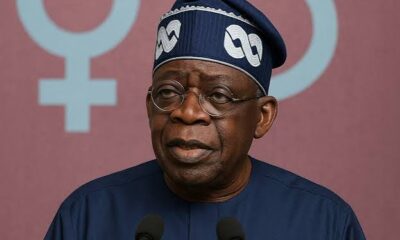
The National Information Technology Development Agency (NITDA) has warned that artificial intelligence (AI)-powered misinformation, deepfake videos and sophisticated cyberattacks could be deployed to manipulate Nigerians ahead of the 2027 general elections.
The Director-General of NITDA, Kashifu Abdullahi, raised the alarm on Wednesday during a press briefing at the agency’s headquarters in Abuja on preparations for the International Cybersecurity Conference 2026.
He expressed concern over the growing use of AI to generate convincing but misleading political messages, warning that the trend could undermine public trust, distort information and threaten national cybersecurity.
Abdullahi said cybercriminals were increasingly exploiting human weaknesses through social engineering, rather than relying solely on attacks against computer systems.
“We are in an election period where people are using misinformation everywhere to manipulate. So that’s why we look at it. How can we defend our minds? Because today, as a hacker, it’s easier for me to hack humans than to hack systems,” he said.
According to him, advances in AI have made it easier to produce deceptive audio recordings, videos and online content capable of misleading the public and influencing political decisions.
He warned that Nigerians’ growing reliance on social media for news and information could expose them to coordinated disinformation campaigns, particularly during election periods.
“Imagine someone using AI-generated content, manipulating us, controlling what to see, what to believe, and so on,” he said.
The NITDA chief urged Nigerians to verify information before believing or sharing political messages online, stressing the need for caution in identifying AI-generated content designed to deceive the public.
“Many people today will generate content, will generate political messages using AI. And as we are in an election period, people need to be mindful of what they see, what they believe, and what they share online,” Abdullahi added.
Beyond election-related misinformation, he said AI was reshaping cybercrime by making attacks more sophisticated while also creating opportunities to improve digital security.
He explained that organisations were increasingly deploying AI agents to automate business operations, warning that such systems could become targets for cybercriminals if adequate safeguards were not in place.
“So imagine someone hijacking your AI agent. It’s like someone taking over control of your staff,” he said.
Abdullahi noted that although AI could improve the detection and prevention of cyber threats, criminals could also use the technology to develop more convincing scams and automate malicious activities.
He further stressed the need to address human error, which he identified as a major factor in cybersecurity breaches.
“More than 95 per cent of all cyber breaches are as a result of human error,” he said.
He called on individuals and organisations to strengthen digital literacy, review AI-generated materials before circulating them and ensure that human oversight remained part of their use of the technology.
On the forthcoming conference, Abdullahi disclosed that the event had been upgraded from the National Cybersecurity Conference to an international gathering following growing interest from participants across Africa and beyond.
He said the expansion reflected the cross-border nature of cyber threats and the need for stronger collaboration among governments, businesses and international security organisations.
The conference, themed “Cyber Resilience in the Age of AI: Defending Minds, Networks, and Nations,” will address emerging threats, including deepfakes, cognitive manipulation, cybercrime and attacks on critical infrastructure.
According to him, the event will feature 13 keynote addresses and 16 panel discussions, alongside a cybersecurity hackathon expected to attract about 1,946 participants from secondary schools, tertiary institutions, professional bodies and government agencies.
He identified the Office of the National Security Adviser and the Nigerian Communications Commission as principal partners in the conference.
Abdullahi said the gathering would promote collaboration, develop local cybersecurity expertise and strengthen Nigeria’s capacity to anticipate, detect and respond to emerging digital threats.
He also described cybersecurity as essential to the growth of Nigeria’s digital economy, warning that weak security systems could erode public confidence in electronic transactions.
According to him, fears of online fraud already discourage some Nigerians from embracing e-commerce, limiting the benefits of digital business and services.
He urged public and private organisations to invest in cybersecurity, improve their preparedness for security incidents and integrate protective measures into digital infrastructure from the outset.
The NITDA director-general further identified agriculture, financial services, education, healthcare and small businesses as sectors where responsible technology adoption could improve productivity and support economic growth.
He maintained that protecting digital systems and strengthening public trust would be crucial to ensuring that Nigeria benefits from AI-driven innovation without exposing citizens, businesses and critical infrastructure to avoidable risks.





By Tony Obiechina, Abuja
A committee of the Revenue Mobilisation, Allocation and Fiscal Commission (RMAFC) has received Anambra State’s request for N70 billion from the Stabilization Fund. The money would pay for priority projects and other investments in key sectors of the state’s economy.
The Indices and Disbursement Committee heard the state’s presentation at a technical session at the Commission’s headquarters in Abuja on Tuesday, 20th October 2026.
The request covers security, environmental management, infrastructure, healthcare, education, agriculture, solid minerals and tourism.The committee chairman, who is also the Commissioner representing Lagos State, Prof. Olusegun Adekunle Wright, praised the Anambra government for bringing its financial challenges before the committee. He explained that the Stabilization Fund is meant to help states in genuine need, but only within set rules.
In a statement issued on Wednesday by the Head of the Commission’s Information and Public Relations Unit, Hajia Umar Maryam Yusuf, Prof. Wright said the Fund is “an important fiscal intervention mechanism intended to provide assistance in deserving circumstances, subject to established guidelines, availability of resources and the appropriate approval processes.”
He made it clear that the session does not mean the money has been approved. The technical review, he said, “did not constitute automatic approval.” The request remains open to further checks and possible recommendations to the full Commission, known as the plenary.
Wright said the Commission’s rules require any state seeking money from the Fund to first make a formal presentation. Only after that can officials visit the state to inspect the proposed projects on the ground. The committee will check whether the state’s financial records can be trusted, whether the projects are workable and their costs reasonable, what is needed to carry them out, and what benefits ordinary people in the state will get.
Representing Anambra, the Secretary to the State Government, Chiamaka Nnake, described the state’s economy, its income, its spending pressures and its development plans.
She said Anambra has 21 local government areas and 179 communities. It has an estimated 8.9 million people, a gross domestic product of about $12.7 billion and a projected 2026 budget of ₦766 billion.
Nnake said the state has raised its internally generated revenue from about ₦2.2 billion to about ₦7.2 billion. She said its economy is driven by the commercial and industrial centres of Awka, Onitsha and Nnewi, as well as its oil-producing areas.
She named insecurity, erosion, flooding, inflation and the rising cost of public services as the main pressures on the state’s finances. Sit-at-home orders and restrictions on movement, she said, have disrupted business, reduced government income and made investors less confident.
On the erosion ravaging the state, she said Anambra has more than 1,000 erosion sites, with 146 communities affected to varying degrees. She estimated that about ₦170 billion would be needed to fix the most serious sites. That is more than twice the ₦70 billion being requested. She listed work already going on, including erosion control, flood management, road repairs, land reclamation, clearing of waterways and tree planting. The state has also restricted sand mining near vulnerable areas. She asked for more resources to protect communities and key infrastructure.
On security, Nnake said the state has passed a Homeland Security Law, set up a state security outfit and works with a joint task force. She said extra funds would buy patrol vehicles, surveillance and communication equipment, and pay for staff training and better coordination. This, she said, would protect lives and property, bring back investor confidence and revive economic activity.
On health, she said the state’s free antenatal care and delivery programme has supported more than 206,000 deliveries, including 642 Caesarean sections, at no cost to the women involved. In education, she said the state has recruited 8,415 teachers and introduced free education from nursery to Senior Secondary School Three.
She said these programmes have raised the demand for doctors and nurses, equipment, medicines, classrooms and learning materials. The state must therefore keep spending to maintain quality and reach more people.
Nnake described agriculture as a major chance for the state to earn from more than one source. She said it has given out more than 2.3 million coconut and oil-palm seedlings. She called for investment in processing, storage, irrigation, cold-chain facilities and market access, so that farmers produce more, lose less after harvest and create jobs.
She also pointed to the state’s minerals, which include kaolin, bentonite, lignite, silica sand, gypsum and laterite, along with oil-related opportunities. To attract investors, she said, the state needs geological surveys, processing plants and supporting infrastructure.
On tourism, she cited Agulu Lake and other natural and heritage sites. Better access roads, visitor facilities and supporting infrastructure, she said, would make the state a more attractive destination and bring jobs, investment and income.
Concluding, she repeated the request for ₦70 billion. The money, she said, would add to what the government is already spending, keep essential services running, protect livelihoods, improve investor confidence and help build a stronger economy that does not depend on one source of income.
In his closing remarks, the Commissioner representing Anambra State, Dr. Enefe Ekene, thanked the committee chairman for presiding. He also thanked fellow commissioners for their patience and sharp observations, and the committee secretariat for its guidance.
He said the observations made at the session would help the Anambra delegation improve its presentation before the planned visit to the state. He said he was hopeful the engagement would produce good results.
The committee said its decision would depend on the financial documents supplied, the feasibility of the projects, their costs, what is needed to carry them out and the expected benefits. It added that any recommendation would still be subject to further checks and the proper procedures.

By Tony Obiechina, Abuja
The Federal Government has reaffirmed its commitment to strengthening Nigeria’s bilateral relations with Germany, with renewed focus on economic cooperation, investment promotion, energy partnerships, and the effective implementation of existing agreements.
Minister of Budget and Economic Planning, Senator Abubakar Atiku Bagudu, made this statement during a visit to the Ministry in Abuja on Monday by the Ambassador of the Federal Republic of Germany to Nigeria, Stefan Rössel.
The minister welcomed the ambassador and his delegation, expressing Nigeria’s appreciation for Germany’s longstanding partnership and support for the country’s economic reform programme, particularly in the early stages of implementation.
He recalled that when German Chancellor Olaf Scholz visited Nigeria, the Federal Government was pursuing significant economic reforms that required support from international partners, including Germany, the World Bank, the International Monetary Fund and the European Union.
The minister said Germany’s support has contributed to Nigeria’s progress in its reform efforts, adding that the country remains grateful for the cooperation and assistance it has received from its development partners.
He also acknowledged Germany’s role in facilitating high-level engagements between the two countries, particularly in trade, investment and energy cooperation, noting that discussions during the Nigerian President’s visit to Germany advanced talks on key energy agreements.
Senator Bagudu further commended Germany’s commitment to multilateral cooperation and international engagement, emphasising the importance of sustained partnerships to address evolving global economic and political challenges.
He noted that Nigeria and Germany had built a strong foundation for bilateral cooperation over the years, with significant opportunities to expand their partnership in areas that support economic growth and development.
The minister disclosed that discussions had covered cooperation involving €25 million and €300 million in export credit guarantees, identifying these as important areas for continued engagement as Nigeria seeks to expand investment opportunities and strengthen its capacity to utilise available resources effectively.
According to him, Nigeria’s reform efforts have created an opportunity to place greater emphasis on attracting investment, strengthening productive capacity, and translating international partnerships into tangible economic outcomes.
He assured the German ambassador that the ministry was prepared to work closely with the German government and its relevant institutions to deepen bilateral relations and broaden areas of mutual interest.
Earlier, Ambassador Rössel expressed appreciation for the warm reception he received, describing the relationship between Nigeria and Germany as strong and longstanding.
The ambassador, who arrived in Nigeria a few weeks ago, reaffirmed Germany’s commitment to building on the partnership’s achievements and to exploring opportunities for further cooperation.
He acknowledged that both countries were operating in an increasingly complex global environment characterised by evolving strategic, political and economic challenges.
Despite these circumstances, Ambassador Rössel expressed confidence that the longstanding relationship between Nigeria and Germany would provide a solid foundation for addressing emerging issues and sustaining mutually beneficial cooperation in the years ahead.
He also welcomed the ministry’s readiness to continue working with Germany, noting the importance of maintaining established partnerships while adapting to evolving circumstances.
In her remarks, the Minister of State for Budget and Economic Planning, Dr Doris Uzoka-Anite, congratulated Ambassador Rössel on his appointment, welcomed him to Nigeria, and expressed the ministry’s readiness to collaborate with him and with relevant German agencies.
She emphasised the importance of translating bilateral agreements and shared commitments into practical outcomes, noting that effective implementation remained critical to achieving the partnership’s objectives.
Dr Uzoka-Anite assured the ambassador that the ministry would continue to facilitate collaboration and support efforts to ensure joint initiatives progressed efficiently and delivered meaningful results.
The Permanent Secretary of the Federal Ministry of Budget and Economic Planning, Dr Deborah Odoh, also welcomed the German delegation, describing Germany as a reliable partner whose technical expertise, knowledge exchange and experience had contributed to Nigeria’s development.
She said the ministry expects the ambassador’s tenure to create further opportunities to strengthen cooperation and to advance the longstanding relationship between the two countries.
The courtesy visit reaffirmed Nigeria and Germany’s shared commitment to sustaining bilateral engagement, deepening economic cooperation, and exploring opportunities for expanded investment and development collaboration.

By Laide Akinboade, Abuja
As part of efforts to reposition the newspaper for optimum corporate performance, the management of Asset Newspapers Limited, Publishers of DAILY ASSET, has announced the appointment of David Torough as the Editor of the Abuja-based national daily.
A statement by the management said the appointments were part of the company’s new strategy to further penetrate the various states in the country and raise its readership and patronage.
“DAILY ASSET is widely acceptable across the country and to maintain our leadership position, we need to increase management presence, hence the need to create new Bureau offices in some locations outside Abuja and Lagos,” the statement quoted the Publisher/ Editor-in-Chief, Dr Cletus Akwaya to have said.
In a statement yesterday, Publisher and Editor-in-Chief of the fast-growing daily, Dr. Cletus Akwaya said the appointment was part of the new strategy to properly situate the paper for better productivity.
“DAILY ASSET has a commitment with the Nigerian people. We are determined to weather the storm and give Nigerian readers a Newspaper that satisfies their yearnings and reading pleasure and we can only do that with the right set of professionals,” the statement said.
Akwaya, a former Commissioner of Information from Benue State said the difficult times being faced by Nigerians posed a great challenge to the media as the people deserved credible information with which to make choices.
“We have a bond with the people, to offer credible information at all times in the best tradition of the Nigerian Press and on this scale of objectivity, truth and fairness, we pledge to remain steadfast no matter the challenges,” Akwaya was quoted to have said.
He said the newspaper will maiantin its daily print run and circulation to all states of the federation and urged advertisers to take advantage of the deep penetration of the Daily Asset brand to send their messages.
Torough, the new Editor has had a steady rise in the Newspaper in the last five years.
A graduate of Mass communication of the Benue State University, Makurdi, Torough joined the company in 2022 as Benue State Correspondent. He was spotted for his brilliance and redeployed to Abuja the following year and promoted to Deputy News Editor. He was subswuently named Deputy Editor of the paper, a position he held until the recent appointment.
Torough has attended several journalistic workshops and trainings to properly equip himself for the task ahead.
The statement also said the Management named Eze Okechukwu as Deputy Editor.
Before his elevation as Deputy Editor, Eze has been Deputy Politics Editor and DAILY ASSET Newspaper correspondent covering the Senate, having joined the organization in 2021.
Born on March 10, 1975, Eze holds a Masters Degree in Mass Communication from the Enugu State University of Science and Technology.
Eze began his journalism career with Daily Star, Enugu and later worked with Daily Trust Newspaper, Abuja as sports reporter.
Aside from his journalistic excellence, he has a great deal of passion for sports.



2027: NITDA Raises The Alarm Over AI-driven Election Manipulation
Share By Elijah Oguche, Abuja The National Information Technology Development Agency (NITDA) has warned that artificial intelligence (AI)-powered misinformation, deepfake...

RMAFC Begins Review of Anambra N70bn Stabilization Fund Request
ShareBy Tony Obiechina, Abuja A committee of the Revenue Mobilisation, Allocation and Fiscal Commission (RMAFC) has received Anambra State’s request...


Nigeria, Rwanda Target Regional Security Through Military Partnership
ShareBy Tambaya Julius, Abuja Nigeria and Rwanda are exploring new areas of military cooperation, including personnel exchanges, specialised training and...


NAGAFF Seeks One-Year Extension for Customs Officers Facing Retirement
ShareBy Tambaya Julius, Abuja The National Association of Government Approved Freight Forwarders (NAGAFF) has appealed to President Bola Tinubu to...
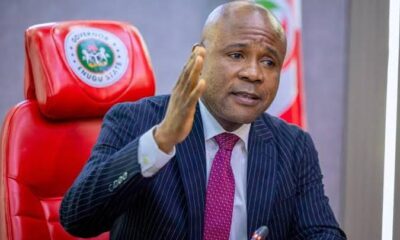

“It’s Not Debatable, We Can’t Go Back,” Mbah Backs Tinubu on Fuel Subsidy Removal
ShareFrom Sylvia Udegbunam Enugu Governor of Enug State, Dr. Peter Mbah, has doubled down in his support for the removal...
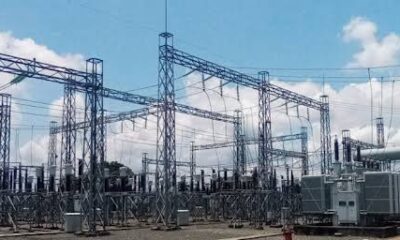

News Engineering, Indian Firm Partner for Niger State’s 100MW Solar Project
ShareFrom Dan Amasingha, Minna In a major bid to bolster renewable energy infrastructure in North-Central Nigeria, News Engineering Nigeria Limited,...

2027: Over 100 Opposition Members Defect to APC in Kogi
ShareFrom Joseph Amedu, Lokoja More than 100 members of the African Democratic Congress (ADC), Nigeria Democratic Congress (NDC), Peoples Democratic...


Custody Death: NSDC Detention Officer Breaks Down, Apologises over 37 Miners
Share From Dan Amasingha, Minna An Assistant Superintendent of Corps (ASC), Usman Isah Ndamaka, was moved to tears yesterday as...

Uduaghan: Bayelsa, South-South Govs Condole With Delta, Family
ShareBayelsa State Government and the South-South Governors Forum (SSGF) have extended their condolences to the government and people of Delta...


Delta Tops States in Liquidity Rating, Says Tilije
ShareFrom Francis Sadhere, Delta Delta State has emerged as the best-performing state in liquidity rating among Nigeria’s 36 states, Commissioner...