
NEWS
Tinubu’s Three Bills and the Burden of Government

By Tom Chiahemen
A government that asks its citizens to endure the pain of economic reform must demonstrate a corresponding willingness to examine the cost of governing them. Sacrifice becomes difficult to defend when households are compelled to adjust while the machinery of the state appears exempt from the same discipline.
This is the broader question raised by President Bola Tinubu’s recent transmission of three executive bills to the House of Representatives.
The proposals concern drug law enforcement, transport safety investigation and the replacement of the Administrative Staff College of Nigeria (ASCON) with a National School of Government. punchng.comEach addresses an important public responsibility. Nigeria needs effective action against illicit drugs, safer transport systems and public officials capable of translating policy into results. The issue is whether the proposed legal changes offer the clearest, most economical and most accountable means of achieving those objectives.
At a time of considerable hardship, the government must explain what every institutional reform will improve, what it will cost and why existing arrangements cannot deliver the same result.
The three proposals should, however, be assessed separately. Consolidating legislation, expanding an agency’s responsibilities and replacing an institution are different exercises. None automatically amounts to creating another bureaucracy. Equally, none deserves approval merely because it carries the promise of reform.
The drug enforcement proposal illustrates the point. Bringing relevant laws into a consolidated framework could improve clarity and enforcement. Its value will depend on the provisions lawmakers eventually approve and the safeguards accompanying the powers they confer. A stronger legal framework must support effective enforcement, due process and an appropriate balance between punishment, prevention and rehabilitation.
My more immediate concerns relate to transport safety investigation and the proposed National School of Government. Both invite a closer examination of institutional boundaries and the use of resources already committed to existing organisations.
On transport safety, an important clarification is necessary. Although reports of the proposed amendment describe an expansion beyond aviation, NSIB’s own published account states that the 2022 legislation already extended its mandate to maritime, rail and other transport modes. The question for lawmakers is therefore precisely what the new amendment adds, changes or clarifies. NSIB
That distinction matters. Legislative scrutiny should begin with a comparison of the existing law and the proposed provisions. Nigerians deserve to know which shortcomings have been identified and how the amendment would remedy them.
There is a reasonable case for a body capable of investigating serious transport accidents across different sectors. Shared technical resources and coordinated investigations could strengthen safety. But a wider mandate must be matched by specialist personnel, equipment, funding and clear operational limits.
An aircraft accident, a railway derailment, a boat mishap and a highway collision present different investigative demands. An institution cannot acquire the necessary expertise simply because an Act assigns it responsibility.
This brings me to the Federal Road Safety Corps (FRSC), established in 1988. Its work in road safety education, enforcement, crash prevention and emergency response gives it an important place in any discussion of road transport investigations. frsc.gov.ng
Where the proposed arrangements affect road crashes, the relationship between NSIB and FRSC must be explicit. Which incidents would require an independent technical investigation? Who would preserve evidence, coordinate access and communicate findings? How would agencies share information without duplicating expenditure?
There is also a distinction between enforcing safety rules and independently investigating why an accident occurred. A technical investigation may need to examine failures involving operators, infrastructure, equipment and the regulatory system itself. Strengthening FRSC remains necessary, but it does not remove the need to consider how independent investigation should work.
My concern, therefore, is that institutional responsibilities should be carefully defined. Cooperation should be designed into the law, rather than left to the goodwill of officials after a tragedy.
The reported proposal to transfer supervisory oversight to the Presidency deserves similar scrutiny. The decisive issue is whether investigators will have the freedom and resources to pursue evidence, publish findings and make recommendations without improper interference. Administrative proximity to the Presidency cannot, by itself, guarantee independence.
The proposed National School of Government raises another question: what is missing from Nigeria’s existing arrangements for developing public-sector leadership?
ASCON already undertakes management training, research and consultancy. Before replacing it, the government should explain whether its shortcomings arise from its legal mandate, curriculum, funding, management or the failure to apply what participants learn. ascon.gov.ng
Different problems require different remedies. An outdated curriculum can be revised. Weak management can be addressed. Inadequate facilities can be improved. If the present legal framework prevents necessary changes, that case should be made openly.
A new institution may be justified. But a new name cannot carry the burden of proof.
It is equally important to recognise that the proposal is described as a replacement for ASCON. It would therefore be premature to assume that it necessarily adds another agency to the existing total. The proper questions concern transition costs, staffing, assets, governance and the relationship between the successor institution and other training bodies.
Government should set out what would happen to ASCON’s facilities, personnel, obligations and accumulated experience. It should also show what additional public value the new arrangement would deliver.
The Public Service Institute of Nigeria belongs in this discussion. Would closer collaboration, shared programmes or a carefully designed merger produce better results? Has the government compared those options with the cost and benefits of replacing ASCON?
The National Institute for Policy and Strategic Studies at Kuru also forms part of the wider institutional landscape. So do universities and polytechnics offering programmes in public administration, governance and leadership.
These organisations are not interchangeable. Academic education, strategic policy studies and practical executive training serve different purposes. Their existence nevertheless makes a review of overlapping programmes and expenditure essential. Nigeria should know what capacity it already possesses before committing resources to another institutional arrangement.
The Citizenship and Leadership Training Centre deserves particular attention. Established in 1951 and now under the Federal Ministry of Youth Development, it promotes citizenship education, leadership, civic responsibility and national values through practical and experiential learning. Citizenship and Leadership Training Centre
Its emphasis on discipline, teamwork, service and responsibility addresses an aspect of leadership that technical qualifications alone cannot supply. Public administration requires competence; public trust also requires character.
I would therefore urge the President to consider strengthening the Centre’s facilities, professional capacity and partnerships. Its experiential approach could complement the work of institutions concerned with policy and executive management.
Any upgrade should preserve that distinctive purpose. Turning every training organisation into another conventional certificate-awarding institution would risk weakening the very contribution that makes it useful.
What Nigeria needs is a coherent arrangement in which institutions understand their responsibilities, share resources where sensible and demonstrate results. Training should be judged by improvements in public service, just as safety investigations should be judged by whether their findings help prevent further loss of life.
For the National Assembly, these bills provide an opportunity to insist on that discipline. Relevant committees should request clear comparisons between existing and proposed mandates, credible cost estimates, transition plans and measurable objectives. They should hear from the affected institutions and the people who use their services.
The President’s request for expeditious consideration is understandable. Yet speed should serve sound legislation. Questions about duplication, independence and expenditure are central to the work lawmakers have been elected to do.
Nor should the pursuit of lower costs become an excuse to weaken essential public services. Some responsibilities require greater investment. The obligation is to demonstrate why that investment is necessary and how its benefits will be measured.
My appeal is for consistency. A government advancing difficult economic reforms must subject its own institutions to rigorous examination. Citizens who are repeatedly asked to make do with less deserve evidence that the government is making better use of what it already has.
Ultimately, the worth of these bills will be measured beyond the chambers in which they are debated. It will be seen in safer journeys, more effective public institutions and officials who serve with competence and restraint. For the Nigerian struggling to meet ordinary needs, reform acquires meaning when the state becomes more useful—and when the burden of sustaining it becomes easier to bear.
From Mike Tayese, Yenagoa
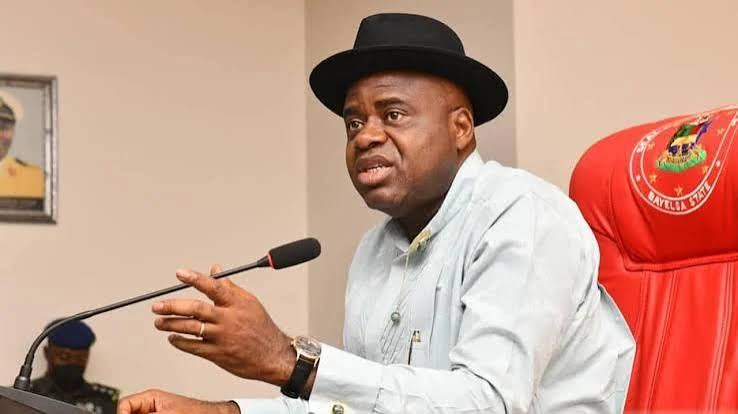
The Deputy Governor of Bayelsa State, Dr. Peter Akpe, has urged Nigerians to make selfless service their watchword, asserting that true reward comes only from God who elevates people into higher positions of leadership and responsibility.
Dr Akpe made the call at the grand finale of the Legacy, Impact and Future Award Dinner organised by the Special Evangelistic Association and Leadership Society (SEALS) in conjunction with the Zadok Foundation, held at the Best Western Plus Hotel, Yenagoa, on Tuesday.
Speaking as Special Guest of Honour and recipient of the Defender of the Christian Faith Award at the event, the Deputy Governor said no appreciable progress would be made in any organisation or society where more emphasis is placed on reward at the expense of good work.
Highlighting the relationship between effective service delivery, productivity and prosperity, the Deputy Governor said he had always put service first in all the positions he had held in life, stressing that through service, God promotes men by opening doors for reward and higher service.
Dr. Akpe, while making a biblical allusion to the inspiring story of Rebekah in Genesis chapter 24, where she provided water and fodder for the camels of Abraham’s servant, said she never knew that her act of kindness to a complete stranger was tied to her destiny.
He therefore reminded the political class and Christians holding various positions of responsibility in the house of God to avoid showmanship, adding that God is the One who truly rewards every man according to his service.
In his exhortation, Apostle David Zilly-Aggrey provided a scriptural insight and justification for the awards, citing the case of the Roman centurion, for whom the Jewish leaders approached the Lord Jesus and testified about his worthy contributions to the service of God, including building a synagogue.
Apostle Zilly-Aggrey, who is the Grand Patron of SEALS in Bayelsa State, said the awards were given to individuals and some Christian organisations in recognition of their distinguished services to the body of Christ.
According to the Founder of the Zadok Foundation and the Royal House of Grace International Church, the awards were in four major categories, including the Defenders of the Christian Faith Award, the Longest Serving Male and Female Ministers Awards, among others.
The Chairman of SEALS, Revd Vincent Dowell, said the Legacy, Impact and Future Awards Dinner was the crowning moment of a journey marked by vision, excellence and sacrifice.
Revd Dowell, who appreciated the Zadok Foundation for supporting the activities of SEALS over the years, noted that the goal of the ceremony was to inspire a culture of service in the body of Christ, as well as build a society where excellence and effective service are encouraged and rewarded.
The highpoint of the event was the presentation of the various awards by Apostle Zilly-Aggrey, including the Distinguished Defender of Christian Faith Award to Dr. Peter Akpe as the first Pastor to emerge as Deputy Governor in Bayelsa State.
Other recipients of the Defender of Christian Faith Award included Senator Konbowei Benson, the late Justice Kate Abiri, Pastor Julius Obegha Oworibo, Prof. Ongoebi Etebu, Engr Gesi Asamowei, Chief Robert Ayalla Enogha and Dr. Rowland Akpolo.
The Longest Serving Gospel Minister Award went to 103-year-old Revd Samuel Arabina and Dr Irene Buseri, while a special award was given to Evangelist Bannerman Embiowei and Evang. Abraham Ikiouks, for their contributions to the promotion of Ijaw gospel music over the years.
The Christian Leaders Award went to all past CAN State Chairmen, Rev. Jacob Akpiri, Bishop Israel Ege, Reverend Father Joseph Opelema and the incumbent, Rev. Abili Samuel Abili.
Churches recognised for special awards include the Deeper Christian Life Ministry, Assemblies of God, the Living Faith Church, also known as Winners Chapel, and the Greater Evangelism World Crusade.
By David Torough, Abuja
The Chartered Institute of Professional Printers of Nigeria (CIPPON) has renewed its call on the Federal Government to introduce targeted incentives for the printing industry, enforce local content policies and establish the Office of the Printer General of the Federation (PGF), following an assessment visit to the state-of-the-art facilities of Marvelous Mike Press Limited in Abuja.
The call followed an inspection tour by the Industrial Development and Export Concessions (IDEC) Committee of CIPPON, led by the Institute’s President, Koko T.
Clement, alongside the Ex-Officio, Dr. Samson Omoniyi Adesoye, and members of the Industry, Trade and Investment Committee, headed by Suleiman Usman Olowoniyi.The visit formed part of CIPPON’s nationwide assessment of printing facilities to determine the industry’s investment capacity and identify operators eligible for available industrial development and export concessions.
At Marvelous Mike Press Limited, the delegation was received by the company’s Managing Director, Printer Michael Akinola, who conducted the team around the facility and showcased its extensive production infrastructure and advanced printing technologies.
The delegation expressed amazement at the scale of investment and technological sophistication deployed by a single Nigerian-owned printing company without significant government incentives.
The facilities inspected demonstrated the industry’s capacity to handle large-scale printing, packaging and security document production to international standards.
Speaking after the inspection, CIPPON President, Koko Clement, described the investment as a strong indication that Nigeria possesses the resources, technology and professional expertise required to meet its domestic printing needs and compete effectively in the international market.
He said the experience had strengthened the Institute’s resolve to intensify its engagement with the Federal Government, particularly on the need to ensure that educational books and other government-related printing jobs are undertaken within Nigeria.
“What we have witnessed at Marvelous Mike Press is beyond imagination. The scale of investment by a single Nigerian entrepreneur, without government incentives, demonstrates the enormous capacity and readiness of our printing industry. If government recognises and supports this capacity, there will be no justification for taking our educational book printing jobs outside the country,” Koko stated.
He expressed concern that despite its enormous economic potential, employment opportunities and contribution to national development, the printing industry has continued to receive inadequate attention in government incentive programmes, concessions and industrial interventions.
According to him, the facilities visited possess modern technologies capable of producing millions of copies of books, packaging materials and security documents while meeting internationally recognised quality standards.
Koko further disclosed that Nigerian printing companies are already undertaking substantial printing and packaging contracts for other African countries, demonstrating their competitiveness and readiness to serve wider regional markets.
“This is not just about printing. We have facilities in Nigeria handling high-volume printing and packaging assignments for other African countries with precision and quality comparable to the best in the world. Nigerian printers are not asking the government to create capacity for them.
“We already have the technology, expertise, manpower and investment. What we need is the right policy framework and political will to unlock this potential,” he said.
The CIPPON President explained that retaining printing contracts within Nigeria would generate far-reaching economic benefits beyond the printing companies themselves. Such a policy, he noted, would stimulate demand for locally produced paper, printing inks, finishing materials and packaging products, thereby strengthening several interconnected industries.
He maintained that the initiative would advance the local content objectives of President Bola Ahmed Tinubu’s Renewed Hope Agenda while reducing capital flight, conserving foreign exchange and expanding employment opportunities for Nigerian youths.
In a major policy recommendation, CIPPON urged President Bola Ahmed Tinubu to consider establishing the Office of the Printer General of the Federation (PGF) or the Printers Commission of Nigeria (PCN) to provide institutional leadership, coordination and effective regulation of the country’s printing industry.
The Institute believes that such an institution would provide a dedicated government framework for developing printing policies, promoting local production, protecting domestic printing jobs, coordinating industry stakeholders and strengthening the entire printing value chain.
“The establishment of the Printer General of the Federation will give the Federal Government a focused institutional structure for coordinating printing policies, enforcing local printing requirements, protecting employment and ensuring that printing contracts generated in Nigeria are retained for Nigerian printers. This is the missing link in building a productive and globally competitive printing economy,” Koko added.
CIPPON also called on the Federal Ministry of Education, the Universal Basic Education Commission (UBEC), Tertiary Education Trust Fund (TETFund) and all state governments to immediately strengthen the implementation of local content policies by ensuring that educational books at primary, secondary and tertiary levels are printed in Nigeria.
The Institute stressed that the country stands to save billions of naira in foreign exchange, create hundreds of thousands of employment opportunities, expand the operations of local paper mills, stimulate ink and packaging manufacturing, and accelerate economic growth if printing activities are domiciled within the country.
Koko therefore appealed to the Federal Government to recognise the printing industry as a strategic pillar of national industrialisation and give Nigerian printers the necessary policy support to maximise its potential.
“Printing in Nigeria is a huge economic opportunity. It can save billions of naira in foreign exchange, create jobs for our youths, revive our paper mills, strengthen manufacturing and grow the national economy. It is time for the government to believe in Nigerian printers and give them the opportunity to handle the country’s printing needs. Nigerian printing jobs must remain in Nigeria for Nigerians,” he declared.
Meanwhile, CIPPON disclosed that the IDEC assessment exercise would continue across other printing facilities nationwide as part of efforts to identify investments and operators that can benefit from the scheme.
The Institute consequently appealed to printing companies and individual practitioners who have invested in modern printing equipment and machinery to contact the CIPPON President to initiate the necessary IDEC assessment processes and procedures.
The Institute reaffirmed its commitment to promoting investment, strengthening professional standards, expanding local printing capacity and positioning Nigeria as a major printing and packaging hub in Africa.
From Sylvia Udegbunam Enugu
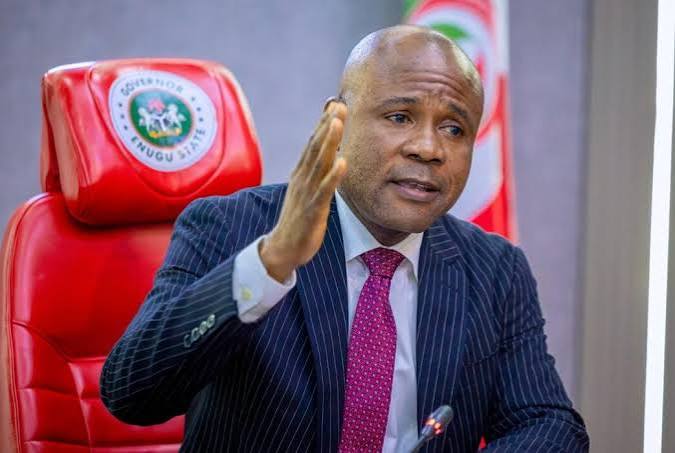
Enugu State Governor, Peter Mbah has declared an emergency on the Nsukka-Adani Road, describing it as a critical economic corridor and promising to commence work on it before the end of the month.
Mbah also said that with the rains receding, his administration would commence the construction of the Edem-Nrobo-Abbi-Nimbo Road in earnest.
This was even as he took a swipe at his opponents in the 2027 governorship race, accusing them of wasting precious time in Abuja shopping for shortcuts and ways to compromise the polls rather than face the people of Enugu to canvass programmes that would benefit the state.
He spoke at Adani and Ugbene Ajima during a campaign tour of Ogboli and Igbo-Ano Development Centres in Uzo Uwani Local Government Area of the state on Tuesday.
On the Nsukka-Adani Road, Mbah said, “We have committed to doing the Nsukka-Adani Road. But I think that that road is now a matter of utmost urgency. We cannot wait for another season. We are sending contractors immediately to that road. We are going to fix that road. So, before the end of this month, we are going to move contractors there,” he pledged.
The Governor, while thanking the people for voting for him in the 2023 governorship election, expressed happiness that the issue of insecurity in the area had been well addressed.
He said the Smart Schools initiative would introduce the children of Enugu State to contemporary skills and prepare them for the present and future global economy.
Meanwhile, Mbah recalled that his opponents were yet to present any manifesto because they had nothing to offer, adding that they only specialised in multiple certificate forgery.
The Governor also made a stopover at Our Lady Health of the Sick Maternity Hospital (Arụ Ike Ndi Ọya), Adani, where he cleared all the medical bills of patients, running into millions, and also promised to equip the facility to the standard of the state’s Type 2 Primary Healthcare Centre, in addition to providing ultrasound equipment.
In their speeches, Deputy Governor of Enugu State, Barr. Ifeanyi Ossai; Senator Ikeje Asogwa; Council Chairman of Uzo Uwani, Barr. Chijioke Ezegwu; Director General of the All Progressives Congress (APC), Enugu, Campaign Council, Chief Charlie Mbah; Nollywood star, Rachael Okonkwo (Nkoli Nwa Nsukka), among others, commended the Governor for the tremendous development recorded in the state under his leadership, promising to support the, APC from top to bottom.
They acknowledged that the development challenges he inherited could be solved in three years and a few months, noting that the important thing was that he was delivering on his campaign promises at great speed.
Other stalwarts present include Senator Chukwuka; Deputy DG of Enugu APC Campaign Council, Dr. Dan Shere; House of Representatives candidate for Igbo Etiti/Uzo Uwani Federal Constituency, Hon. Cornelius Onwubuya; Commissioner for Agriculture and Agro-Industrialisation, Dr. Patrick Ubru; Member representing Uzo Uwani State Constituency, Hon. Chukwuma Ekwueme.
Mbah, who was warmly received by the students of Santa Maria Nursery and Primary School, Adani, pledged to construct a classroom block and set up an innovation hub for the school.



Bayelsa Deputy Gov Tasks Nigerians on Effective Service
ShareFrom Mike Tayese, Yenagoa The Deputy Governor of Bayelsa State, Dr. Peter Akpe, has urged Nigerians to make selfless service...
CIPPON Urges FG to Protect Nigerian Printing Industry
ShareBy David Torough, Abuja The Chartered Institute of Professional Printers of Nigeria (CIPPON) has renewed its call on the Federal...

Mbah Declares Emergency on Nsukka-Adani Road
ShareFrom Sylvia Udegbunam Enugu Enugu State Governor, Peter Mbah has declared an emergency on the Nsukka-Adani Road, describing it as...


Oborevwori Mobilises Support for Tinubu, APC 2027 Victory
ShareFrom Francis Sadhere, Delta Delta State Governor, Rt. Hon. Sheriff Oborevwori, has called for massive support for President Bola Ahmed...
Growing Threat to Opposition Politics and Democracy
ShareBy Pius Mordi Democracy thrives on competition, tolerance, freedom of expression and the willingness of those in power to accommodate...

NCDMB, NLNG Commit $9m to Endowment of Professorial Research Chairs in Six Varsities
ShareFrom Mike Tayese, Yenagoa The Nigerian Content Development and Monitoring Board (NCDMB) and the Nigeria LNG Limited (NLNG) have launched...


2027: Obi Visits Benue, Vow to Unite Nigeria if Elected
ShareFrom Attah Ede, Makurdi The presidential candidate of the Nigeria Democratic Congress (NDC), Peter Obi, has vowed to unite Nigeria,...

Wike Targets Tourist Destination Status for Apo-Karshi Road
ShareBy Laide Akinboade, Abuja The Minister of the Federal Capital Territory (FCT), Nyesom Wike, has announced plans to transform the...

Alt Bank Appoints Gul Khan as Managing Director
ShareThe Alternative Bank Ltd (Alt Bank) has appointed Gul Khan as its new Managing Director, following approval by the Central...


2027: APC Restricts Campaign Spokespersons to Yari, Alake, Idris
ShareBy David Torough, Abuja The All Progressives Congress (APC) Presidential Campaign Council has overhauled its Directorate of Media and Strategic...