
NEWS
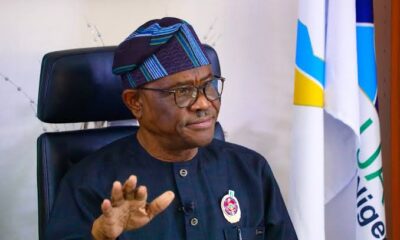
2027: We’ll Deliver Rivers, FCT for Tinubu – Wike

By Laide Akinboade, Abuja
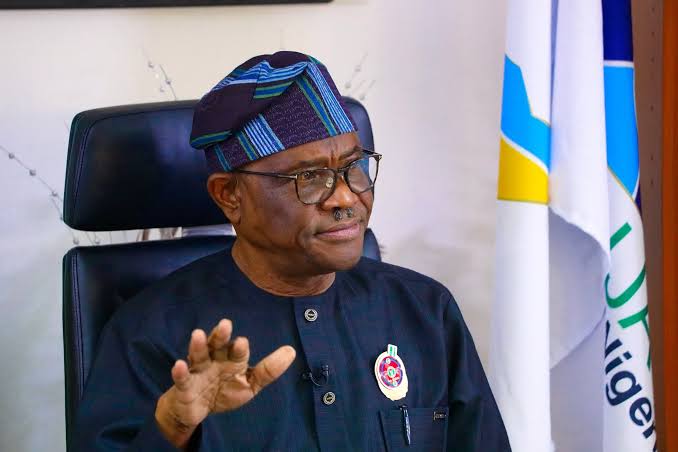
The Minister of the Federal Capital Territory (FCT), Nyesom Wike, has declared that the All Progressives Congress (APC), under the Rainbow Coalition, will secure victory for President Bola Tinubu in the 2027 general elections.
Wike vowed to deliver massive votes for Tinubu in Rivers State and the Federal Capital Territory (FCT), insisting that opposition threats and political intrigues would not derail the President’s re-election bid.
Addressing Rivers Rainbow Coalition Youths, in Port Harcourt on Tuesday, the former Rivers State governor said the administration’s infrastructure projects and policy interventions had strengthened its appeal among Nigerians.
He maintained that political leaders should be judged by their performance and benefits to the people, not campaign promises.
Wike said the Rainbow Coalition was formed to support what he described as purposeful leadership and sustain development across the country.
He cited roads and bridges as evidence of the administration’s commitment to improving Nigerians’ lives, particularly at the grassroots.
“We are not playing politics for the sake of it without bringing benefits to our people. After all, we are not looking for those who are fine or finer. We are looking for those who will do something that will positively impact Nigerians and the Rivers people,” he said.
The minister insisted that Rivers State’s political future must be determined by its people’s interests and the benefits they stand to gain from the Federal Government.
Wike particularly pointed out that no fewer than 49 indigenes of Rivers State currently hold prominent Federal Government positions.
“What is important is: where is Rivers State, Where are we going, and how will the election benefit Rivers State? That’s what we’re talking about,” he said.
Wike criticised opposition politicians, describing some as political gamblers who lacked consistency and had failed to demonstrate a clear commitment to voters.
He warned against supporting politicians who make promises without delivering tangible results.
“You cannot vote for a political gambler. Every time, they come around making empty promises, but our people know better now,” he said.
Wike expressed confidence that voters would assess candidates by their records and the practical impact of their policies rather than political rhetoric.
“We want to win this election with a difference,” he added.
The FCT minister emphasised youth participation in the coalition’s mobilisation efforts ahead of the 2027 elections.
He directed that young people be adequately represented on committees organising presidential rallies and other campaign activities.
“The committee for the presidential rally must put a reasonable number of our youths,” Wike said, stressing that their energy and involvement would be crucial to the coalition’s success.
He urged supporters to remain united, strengthen grassroots structures and mobilise voters for the elections.
At a meeting with Rivers Rainbow Coalition youths, Wike criticised opposition figures, including former Vice-President Atiku Abubakar and former Anambra State governor Peter Obi, questioning their credibility and suitability for the presidency.
He described Atiku as untrustworthy and called Obi a “fake man”, declaring that the coalition remained firmly behind Tinubu’s re-election bid.
The All Progressives Congress (APC) Governorship candidate, Kingsley Chinda has promised a youth-friendly and inclusive government, with compulsory bursary payments by local government councils and improved technical education for young people.
He said the proposed administration would prioritise youth development, education and vocational training, stressing that empowering young people was critical to the development of the state.
Chinda thanked members of the Rainbow Coalition Youths, for their support for the political movement led by the FCT Minister, Nyesom Wike.
He said the meeting was convened to appreciate the youths for standing by the political leadership through difficult times, assuring them that their contributions would not be forgotten.
He said; “Our leader very sincerely appreciates that. And that is why he said, even if it is for five or 10 minutes. What we have come to do is to say thank you for what you have done. You are not forgotten. We appreciate you and will continue to appreciate you in different ways”.
Chinda described Wike as a youth-friendly leader, adding that those working with him would sustain his commitment to youth development.
He said the Rainbow Coalition would promote unity among political stakeholders in Rivers State, insisting that collective action was necessary to achieve its political objectives.
He declared the coalition’s support for President Bola Tinubu’s re-election bid in 2027, saying the youths of Rivers State were prepared to mobilise behind the President.
“The message we are sending out today is that the youths of Rivers State are unapologetically, unconditionally standing firm with Tinubu for President,” he said.
He added that Wike’s political engagements across the state were aimed at bringing people together and strengthening the coalition ahead of future political contests.
On youth development, he pledged that the proposed government would be inclusive and responsive to the needs and aspirations of young people.
He specifically said bursary payments would receive serious attention, with local government council chairmen expected to make students’ welfare a priority.
“In fact, when you talked about bursary, he whispered to me, ‘You must take it very seriously.’
“So it will be compulsory for every local government council chairman to take the issues of bursary seriously. Compulsory, without compromise,” he said.
He also promised reforms in the state’s education system, particularly the expansion of technical and vocational education to equip young people with practical skills.
The Rivers State Coordinator of the Rainbow Coalition Youth and South-South Coordinator of City Boys, Chima Aguma, assured Wike of massive grassroots mobilisation to secure victory for Tinubu and other coalition-backed candidates in the state.
The President of the National Union of Rivers State Students (NURSS), Justice Uranta, pledged to mobilise students across the state’s 23 local government areas, tertiary institutions and the diaspora for Tinubu and the coalition’s governorship candidate, Kingsley Chinda.
They pledged to mobilise grassroots support for President Tinubu and other candidates endorsed by the Rainbow Coalition ahead of the 2027 elections.
By Tom Chiahemen
A government that asks its citizens to endure the pain of economic reform must demonstrate a corresponding willingness to examine the cost of governing them. Sacrifice becomes difficult to defend when households are compelled to adjust while the machinery of the state appears exempt from the same discipline.
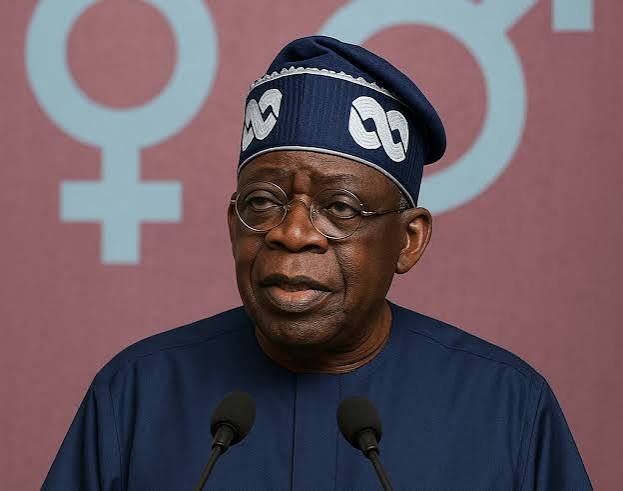
This is the broader question raised by President Bola Tinubu’s recent transmission of three executive bills to the House of Representatives.
The proposals concern drug law enforcement, transport safety investigation and the replacement of the Administrative Staff College of Nigeria (ASCON) with a National School of Government. punchng.comEach addresses an important public responsibility. Nigeria needs effective action against illicit drugs, safer transport systems and public officials capable of translating policy into results. The issue is whether the proposed legal changes offer the clearest, most economical and most accountable means of achieving those objectives.
At a time of considerable hardship, the government must explain what every institutional reform will improve, what it will cost and why existing arrangements cannot deliver the same result.
The three proposals should, however, be assessed separately. Consolidating legislation, expanding an agency’s responsibilities and replacing an institution are different exercises. None automatically amounts to creating another bureaucracy. Equally, none deserves approval merely because it carries the promise of reform.
The drug enforcement proposal illustrates the point. Bringing relevant laws into a consolidated framework could improve clarity and enforcement. Its value will depend on the provisions lawmakers eventually approve and the safeguards accompanying the powers they confer. A stronger legal framework must support effective enforcement, due process and an appropriate balance between punishment, prevention and rehabilitation.
My more immediate concerns relate to transport safety investigation and the proposed National School of Government. Both invite a closer examination of institutional boundaries and the use of resources already committed to existing organisations.
On transport safety, an important clarification is necessary. Although reports of the proposed amendment describe an expansion beyond aviation, NSIB’s own published account states that the 2022 legislation already extended its mandate to maritime, rail and other transport modes. The question for lawmakers is therefore precisely what the new amendment adds, changes or clarifies. NSIB
That distinction matters. Legislative scrutiny should begin with a comparison of the existing law and the proposed provisions. Nigerians deserve to know which shortcomings have been identified and how the amendment would remedy them.
There is a reasonable case for a body capable of investigating serious transport accidents across different sectors. Shared technical resources and coordinated investigations could strengthen safety. But a wider mandate must be matched by specialist personnel, equipment, funding and clear operational limits.
An aircraft accident, a railway derailment, a boat mishap and a highway collision present different investigative demands. An institution cannot acquire the necessary expertise simply because an Act assigns it responsibility.
This brings me to the Federal Road Safety Corps (FRSC), established in 1988. Its work in road safety education, enforcement, crash prevention and emergency response gives it an important place in any discussion of road transport investigations. frsc.gov.ng
Where the proposed arrangements affect road crashes, the relationship between NSIB and FRSC must be explicit. Which incidents would require an independent technical investigation? Who would preserve evidence, coordinate access and communicate findings? How would agencies share information without duplicating expenditure?
There is also a distinction between enforcing safety rules and independently investigating why an accident occurred. A technical investigation may need to examine failures involving operators, infrastructure, equipment and the regulatory system itself. Strengthening FRSC remains necessary, but it does not remove the need to consider how independent investigation should work.
My concern, therefore, is that institutional responsibilities should be carefully defined. Cooperation should be designed into the law, rather than left to the goodwill of officials after a tragedy.
The reported proposal to transfer supervisory oversight to the Presidency deserves similar scrutiny. The decisive issue is whether investigators will have the freedom and resources to pursue evidence, publish findings and make recommendations without improper interference. Administrative proximity to the Presidency cannot, by itself, guarantee independence.
The proposed National School of Government raises another question: what is missing from Nigeria’s existing arrangements for developing public-sector leadership?
ASCON already undertakes management training, research and consultancy. Before replacing it, the government should explain whether its shortcomings arise from its legal mandate, curriculum, funding, management or the failure to apply what participants learn. ascon.gov.ng
Different problems require different remedies. An outdated curriculum can be revised. Weak management can be addressed. Inadequate facilities can be improved. If the present legal framework prevents necessary changes, that case should be made openly.
A new institution may be justified. But a new name cannot carry the burden of proof.
It is equally important to recognise that the proposal is described as a replacement for ASCON. It would therefore be premature to assume that it necessarily adds another agency to the existing total. The proper questions concern transition costs, staffing, assets, governance and the relationship between the successor institution and other training bodies.
Government should set out what would happen to ASCON’s facilities, personnel, obligations and accumulated experience. It should also show what additional public value the new arrangement would deliver.
The Public Service Institute of Nigeria belongs in this discussion. Would closer collaboration, shared programmes or a carefully designed merger produce better results? Has the government compared those options with the cost and benefits of replacing ASCON?
The National Institute for Policy and Strategic Studies at Kuru also forms part of the wider institutional landscape. So do universities and polytechnics offering programmes in public administration, governance and leadership.
These organisations are not interchangeable. Academic education, strategic policy studies and practical executive training serve different purposes. Their existence nevertheless makes a review of overlapping programmes and expenditure essential. Nigeria should know what capacity it already possesses before committing resources to another institutional arrangement.
The Citizenship and Leadership Training Centre deserves particular attention. Established in 1951 and now under the Federal Ministry of Youth Development, it promotes citizenship education, leadership, civic responsibility and national values through practical and experiential learning. Citizenship and Leadership Training Centre
Its emphasis on discipline, teamwork, service and responsibility addresses an aspect of leadership that technical qualifications alone cannot supply. Public administration requires competence; public trust also requires character.
I would therefore urge the President to consider strengthening the Centre’s facilities, professional capacity and partnerships. Its experiential approach could complement the work of institutions concerned with policy and executive management.
Any upgrade should preserve that distinctive purpose. Turning every training organisation into another conventional certificate-awarding institution would risk weakening the very contribution that makes it useful.
What Nigeria needs is a coherent arrangement in which institutions understand their responsibilities, share resources where sensible and demonstrate results. Training should be judged by improvements in public service, just as safety investigations should be judged by whether their findings help prevent further loss of life.
For the National Assembly, these bills provide an opportunity to insist on that discipline. Relevant committees should request clear comparisons between existing and proposed mandates, credible cost estimates, transition plans and measurable objectives. They should hear from the affected institutions and the people who use their services.
The President’s request for expeditious consideration is understandable. Yet speed should serve sound legislation. Questions about duplication, independence and expenditure are central to the work lawmakers have been elected to do.
Nor should the pursuit of lower costs become an excuse to weaken essential public services. Some responsibilities require greater investment. The obligation is to demonstrate why that investment is necessary and how its benefits will be measured.
My appeal is for consistency. A government advancing difficult economic reforms must subject its own institutions to rigorous examination. Citizens who are repeatedly asked to make do with less deserve evidence that the government is making better use of what it already has.
Ultimately, the worth of these bills will be measured beyond the chambers in which they are debated. It will be seen in safer journeys, more effective public institutions and officials who serve with competence and restraint. For the Nigerian struggling to meet ordinary needs, reform acquires meaning when the state becomes more useful—and when the burden of sustaining it becomes easier to bear.
By Tony Obiechina, Abuja
Yields on Federal Government of Nigeria (FGN) bonds increased by as much as 50 basis points at the October 19, 2026, bond auction, as the Debt Management Office (DMO) allotted N1.
22trn to investors through the sale of three reopened debt instruments.The increase in yields on the longer-dated bonds came as the DMO accepted higher rates to raise funds, with the stop rate on the September 2036 bond climbing to 17.
29 per cent from 16.79 per cent at the September auction.The June 2038 bond also recorded an increase in its stop rate to 17.
19 per cent from 16.85 per cent, representing a rise of 34 basis points, while the February 2034 bond settled at 16.99 per cent.The N1.22tn market allotment represented an increase of approximately 63.5 per cent over the N748.64bn allotted at the September auction, reflecting the higher volume of funds raised through the primary market.
In addition to the market allotment, the DMO allocated another N800bn through non-competitive bids, split equally between the February 2034 and September 2036 bonds.
This brought total allotments at the October auction to N2.02trn, comprising N1.22tn allotted through competitive bidding and N800 billion through non-competitive allotments.
The auction results showed that the DMO reopened three existing bonds and offered a combined N1.75trn to investors. Total bids also stood at N1.75tn, although the agency allotted N1.22tn through the competitive market, rejecting approximately N523.58bn, or about 30 per cent of subscriptions.
The outcome translated into a bid-to-cover ratio of approximately 1.4 times, indicating that investors submitted bids equivalent to about 1.4 times the amount ultimately allotted through the market.
The increase in stop rates on the longer-dated securities highlights the pricing conditions under which the Federal Government is raising funds from the domestic debt market, with investors bidding at varying rates across the three instruments.
The February 2034 bond attracted bids worth N304.08bn against an offer of N500bn, representing a bid-to-offer ratio of 0.61 times.
The DMO allotted N92.14bn to the market through the instrument, equivalent to approximately 30 per cent of the bids received. Bid rates ranged from 16.00 per cent to 19.00 per cent, while the stop rate was fixed at 16.99 per cent.
The September 2036 bond attracted the largest volume of subscriptions among the three instruments, with investors submitting bids worth N925.35bn against an offer of N800bn.
This represented a bid-to-offer ratio of approximately 1.16 times. The DMO allotted N781.31bn through the market, equivalent to about 84 per cent of the bids received.
The stop rate on the bond rose to 17.29 per cent from 16.79 per cent at the previous auction, making it the instrument with the highest reported stop rate among the three securities offered.
For the June 2038 bond, investors submitted bids totalling N518.32bn against an offer of N450bn, resulting in a bid-to-offer ratio of approximately 1.15 times.
The DMO allotted N350.72bn through the market at a stop rate of 17.19 per cent, compared with 16.85 per cent in September.
The results showed that the DMO allotted less than the amounts offered for the February 2034 and June 2038 bonds, while the September 2036 instrument accounted for the largest share of the competitive market allotment.
By Laide Akinboade, Abuja
The Federal Government (FG), on yesterday confirmed one case of Ebola disease in the Federal Capital Territory (FCT), following laboratory confirmation.
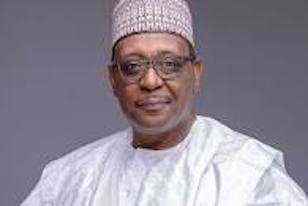
Minister of Health and Social Welfare, Prof.
Muhammad Ali Pate, stated this while briefing journalists in Abuja.He said the patient, a woman, who was from Uganda, was admitted in Abuja and the diagnosis has been confirmed.
The statement reads, “The patient, a woman who recently arrived in Nigeria on an international flight from Uganda, was admitted to a private hospital in the FCT, where she received care for several days before the diagnosis was confirmed.
She is currently in isolation and receiving medical care.“The Federal Minister of Health and Social Welfare and NCDC are working closely with the FCT Health Services Secretariat and other relevant authorities to contain the infection and prevent further spread..
“Contact tracing has commenced with 44 close contacts identified presently, with public health teams identifying and monitoring people who may have been exposed, including healthcare workers, patients, caregivers and travel contacts. Surveillance has been intensified, and the hospital is receiving immediate support to strengthen infection prevention and control measures.
“The FG calls on all public and private healthcare facilities nationwide to be on high alert. Healthcare workers must maintain a high index of suspicion, promptly identify and isolate suspected cases, observe strict infection prevention and control measures, and immediately report suspected cases to public health authorities.
“What Nigerians Should Know and Do
Ebola spreads through direct contact with the blood or body fluids of someone who is sick with the disease or has died from it, or through contact with contaminated materials. A person with Ebola cannot spread the disease before symptoms begin”.
The Federal Government therefore advised residents to remain calm but vigilant.
“Remain calm but vigilant. There is no need for panic. Practise regular hand hygiene and avoid contact with the body fluids of anyone suspected to have Ebola.
Watch for symptoms, including fever, severe weakness, headache, vomiting and diarrhoea, particularly following possible exposure.
“Report any possible exposure immediately, even if you feel well. If you develop symptoms, avoid close contact with others and call public health authorities for guidance before visiting a healthcare facility.
” Cooperate with public health teams. Anyone contacted during contact tracing, including relevant airline passengers, should provide the necessary information and follow public health advice.
“Avoid rumours and stigma. Share only verified information from official health authorities” .
The Minister recalled, “Our Assurance to Nigerians. Nigeria successfully contained Ebola in 2014, and we have the experience and public health systems to respond to this case. However, containing Ebola requires everyone to play their part.
“The Federal Government, FCT authorities and other partners are working together to protect healthcare workers, patients and the wider public. Investigations are ongoing, and we will continue to provide accurate and timely information.
” We urge Nigerians to remain calm, stay vigilant and cooperate with public health authorities. Early detection, prompt reporting and everyone’s cooperation are critical to preventing further spread.
“The Government of Nigeria through the Presidential Taskforce on EVD and NCDC will continue to provide updates.
NCDC free call centre is available 24 hours a day, seven days a week. For information or to report a suspected case, please call NCDC toll-free number 6232″.



2027: We’ll Deliver Rivers, FCT for Tinubu – Wike
ShareBy Laide Akinboade, Abuja The Minister of the Federal Capital Territory (FCT), Nyesom Wike, has declared that the All Progressives...

Tinubu’s Three Bills and the Burden of Government
ShareBy Tom Chiahemen A government that asks its citizens to endure the pain of economic reform must demonstrate a corresponding...
DMO Raises N2.02trn As FGN Bond Yields Rise To 17.29 Per Cent
ShareBy Tony Obiechina, Abuja Yields on Federal Government of Nigeria (FGN) bonds increased by as much as 50 basis points...

Anxiety Grips FCT Residents As FG Confirms Ebola Disease Case
ShareBy Laide Akinboade, Abuja The Federal Government (FG), on yesterday confirmed one case of Ebola disease in the Federal Capital...

Again, Tinubu Rules Out Return to Petrol Subsidy Regime
ShareBy Tambaya Julius, Abuja President Bola Ahmed Tinubu has ruled out a return to petrol subsidy, insisting that his administration...

Former Delta Governor Uduaghan Dies at 70
ShareFrom Francis Sadhere, Delta Former Governor of Delta State, Dr. Emmanuel Eweta Uduaghan, has died. Uduaghan, who governed the state...


Customs Opens Review for Disqualified Recruits, Flags 397 Applicants
ShareBy Tambaya Julius, Abuja The Nigeria Customs Service (NCS) has opened a review process for applicants disqualified during its recent...

World Bank Tasks FG, States on Sustainable Cash Transfers
ShareBy Tambaya Julius, Abuja The World Bank has urged the Federal Government and state governments to establish a sustainable social...

NDLEA Nabs 85-year-old Woman, Seizes 407kg Cannabis
ShareThe National Drug Law Enforcement Agency (NDLEA) has arrested an 85-year-old grandmother and five other suspected drug traffickers during coordinated...

Economy would’ve Collapsed without Tinubu’s Reforms, Says Shettima
ShareVice President Kashim Shettima has said Nigeria’s economy would have collapsed had President Bola Tinubu not taken what he called...