
NEWS
NUJ to Partner Third Phase Ex-agitators

From Tayese Mike, Yenagoa
The chairman of the Nigeria Union of Journalists (NUJ) Bayelsa state Council, comrade Samuel Numonengi, has urged the Third Phase Amnesty group to tow the line of peace and dialogue to achieve their agitation.
The number one journalists handed down this when the third phase amnesty group paid a courtesy visit to the council in Yenagoa, saying without the group towing the line of peace there would be no peace in Niger Delta and Nigeria.
Numonengi said as a journalist we give a level playing ground for everybody, whether politician, the low and the mighty in the society and the union will also extend the same hands of fellowship to the third face group without bias.
“Always tow the line of peace and dialogue and by doing so, you will enjoy more benefits and long life. You get result when you tow the line of peace. We shall do our best to support your course,” he said.
He also used the medium to advise the leadership of the third face to always consider those that are not getting from the system whenever the benefits comes since they are all in the struggle together.
Earlier speaking, the leader of the group, Oscar Jackson, said they deem it feet to visit NUJ leadership to seek partnership, saying without the media they cannot succeed.
He said they are being confronted with pressing issues and it’s the media that are in the best position to help them out.
Oscar said for a long time they were known for violence, blocking of highways especially the East/West road, go to Abuja for agitation amongst others, but saying they have decided to tow the line of peace and dialogue and shun every act of violence.
“For a long time we have not carried out any form of violent activities because we want peace. The Amnesty office too should reciprocate by doing the needful fish out leaders of the third phase. We tow the path of peace because we want our right to be given to us.
Apart from our little stipend, we have not been given any other benefits. Let the leadership come up with something tangible for us”.
According to him, the 1st, 2nd and 3rd phase were awarded contract during the time of Charles Dokubo in 2019 to the tune of three hundred and ninety million naira (#390,000,000.00) of which one hundred and thirty million naira (#130,000,000.00) each were paid to the three phases.
“We expect that the current Interim Management led by Col. Millard Dikkio (rtd) will continue with the contract because we still have a leftover of N2 million that have not been paid.”
Oscar speaking further said they want their slots to be fully given to them instead of the five slots. “Till date we are still fighting for our slots to be given to us. They should retrieve it from whom so ever and give it back to us”.

By Festus Adedayo
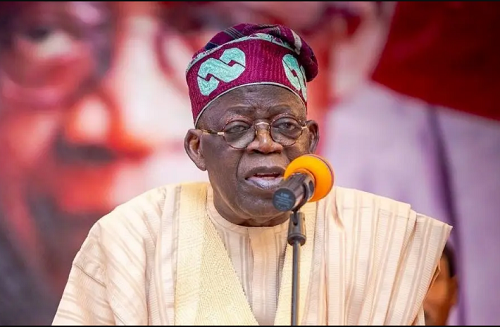
On Thursday last week, President Bola Tinubu perfectly played the role of the General of a troop going to war. He gave a pep talk to APC party troops marching state-wards for the primary election. It was a speech garnished with onions and flavoured by aromatic spices of currie and thyme.
The eventual cuisine from the presidential pot exuded a tantalizing aroma that colonised the nose.
The president was pleased with that “historic moment” as “the party we formed just like yesterday is gearing up for its fourth election cycle”.Then he waxed lyrical about progressive politics and values embedded in the APC. The party, he said, was one “founded… on the firm principles of progressive politics…personal devotion and sacrifice…selflessness”.
He then urged unity among the ranks of the party as “our opponents are waiting for us to be against each other; we should disappoint them.”Principle. What principle? Two concepts dropped on my mind as I read that pep-talk statement. One is a famous aphorism of the president’s Yoruba people. The thematic concern of that wise saying is hypocrisy. It goes thus: It is only a hypocrite who, face to face with a masquerader, greets him, ‘it’s been a while’; what affinity do the living have with the dead? In its raw Yoruba form, that wise saying is rendered as, “Alábòsí èdá níí kí eégún pé ‘ó tó ojó méta’; ní’bo l’ará ayé ti bá ará òrun tan?” The aphorism sits on the cosmological perception of the Yoruba that masquerades are “ará òrun” – beings from the other world. The masked ones, they believe, are earthly manifestation of their deceased ancestors who visit from the terrestrial world. The yearly pilgrimages of the masquerades are believed to be connections of spiritual intermediaries with the living.
The second concept provoked by the president’s pseudo sanctimony is Àtubòtán. It emerged from these same president’s people’s centuries of values of everyday living. Many attempts at interpreting Àtubòtán have failed to hit the bull’s eye. Some say it is the end of a human being or end of their action; to some others, it approximates consequences. Àtubòtán is however deeper.
It can be said to be the posterior of human actions and inaction, the final outcome of life’s script. To the Yoruba, no one is considered lucky until the final script, the denouement of life’s stagecraft. That, to them, is the point of Àtubòtán.
In musically drilling into the concept of Àtubòtán, late Yoruba Fuji music icon, Sikiru Ayinde Barrister, once sang that the hypocrite (Alábòsí) could be wealthy; they give birth; they build magnificent edifices, etc. but the Àtubòtán of the Alábòsí is always calamitous. In the same vein, in his “Oramedia as a Vehicle for Development in Africa: The Imperative for the Ethical Paradigm of Development,” Prof Abiodun Salawu of the North-West University, Mmabatho, South Africa, affirmed this symbiosis when he said, “the end of the mischievous, the fraudulent, the corrupt is never pleasant (Àtubòtán alábòsí kìí dára)”.
So, the president wants peace in the APC? That is interesting. Again, my mind dashed down to my Jamaican reggae music idol, Peter Tosh and his iconic track, “Feel No Way”. The message of the song is founded on justice. It offers spiritual endurance to those confronting hardship and steely hands of oppressors. Strewn together in raw Jamaican patois, “Feel No Way” means, “don’t worry”. It is a message of assurance; that every person will get their due reward as this is a natural, logical symmetry of life.
Often referred to as “No Bother Feel No Way” or “Payday”, in the track, Tosh sang: “No bother feel no way/It’s coming close to payday, I say…/Every man get paid accord his work this day/…It’s coming close to payday I say…/Cannot plant peas and reap rice/Cannot plant cocoa and reap yam/Cannot plant turnip and reap tomato/Cannot plant breadfruit and reap potato…Cannot tell lie and hear truth/Cannot live bad and love good/Cannot live up and get down/Cannot give a dollar and want a pound…”
Tosh’s cause-and-effect homily finds corroboration in holy writs. The Bhagavad Gita, ancient 700-verse Hindu scripture, believed to serve as a practical, spiritual guide to navigating life’s challenges, emphasizes the symbiosis of good and evil. In it, the natural chronology of evil begetting evil has its roots in the universal law of karma: action creates an inevitable reaction.
Lord Krishna, one of the most widely revered deities in Hinduism, worshiped as the eighth incarnation, avatar, of Lord Vishnu and as the Supreme God, explains that any action done with selfish attachment and harmful intent sparks negative energy. The evil of today is a catalyst for future suffering. In the same vein, the teachings of both the Bible and Quran are that actions have consequences. To them, God is a just judge who not only rewards good deeds but holds every individual accountable for the evil they commit.
At the drop of a hat, the president unapologetically gloats about the dwindling fate of Nigerian opposition parties. Whether as a Freudian slip, presidential flippancy borne out of a Kabiyesi mentality, or his usual you-can-go-jump-inside-the-river boldness, the president has already willingly offered himself as an accomplice in the unprecedented famishing of Nigeria’s vibrant multi-partism.
In a State of the Nation address at a joint session of the National Assembly, held in Abuja in June, 2025, Tinubu told the opposition, “It is, indeed, a pleasure to witness you in such disarray”. Again, at the inauguration of the Nigeria Revenue Service, NRS, headquarters in Abuja last month, he cracked a wry joke of destruction of the opposition. Turning to his side-kick, the senate president, he said, “I will send you to the other side to represent me. And then you can scatter them to any way you want. They are confused!”
That violent “scattering” inclination of the president has trickled down. Former Speaker of the House of Representatives and his Chief of Staff, Femi Gbajabiamila, apparently taking a cue from the president’s obviously un-statesmanlike public statement, doubled down on this recourse to violence. It reminds me of Malian author Yambo Ouologuem’s Bound to Violence.
A 1968 tragic-comedic epic which exposes the brutal, bloody history of the fictional African empire of Nakem, Ouologuem brutally indicts the duo of the oppressive indigenous Saïfs dynasty and European colonizers, using a Paris-educated protagonist who struggled against both forces as his canvass.
So, last month, at a dinner marking the birthday of the wife of Leke Abejide, Kogi State lawmaker representing Yagba Federal Constituency, Gbajabiamila urged Abejide not to leave the ADC but to stay in the party and “fight and scatter” the party. “My charge to you is to stay in that same ADC. Fight them. Scatter them… We like what you are doing. Continue,” he said.
Such comments, given imprimatur by the president himself, have further fuelled and fouled the political climate. The decibel of political violence in Nigeria is so high today, close to a year before the election proper, that it invokes dread and concern.
This has invariably confirmed the wonky logic of electoral competition in Nigeria as a zero-sum game where survival of the fittest and elimination of the weakest reign. But the Nigerian opposition is also not helping matters. Like fissiparous seeds of a walnut pod, the Nigerian opposition is in such an embarrassing disarray today, their greed for power and inability to coalesce round a single candidate being the Achilles heel that Tinubu capitalises upon to wreak his havoc on multiparty democracy.
Regime grovelers have, ad nauseam, mouthed the president’s distancing from the fate of the opposition. Which is self-serving. Motive being the first consideration in a crime investigation, the president and his APC have the most robust motive in the destruction of the opposition. Psycho analyses have fingered Tinubu as being mortally afraid of losing the 2027 election.
While it is not a crime to gloat at the disintegration and castration of the opposition, it is criminal to sow seeds of discord in their midst, using the instrumentality of the electoral institution as well as judicial manipulation. Open innuendo that smacks of admittance of a hand in the opposition’s disintegration, as exhibited by the president and his chief of staff, is a stimulus for the kind of chaos and uncertainty that we witness in Nigerian politics today.
Government is not hiding its desperation to hold the opposition down. For instance, an underhand tactic cloaked in the robe of judicial pronouncement has held a major opposition leader, Nasir El_Rufai, in detention for what is, even in criminal justice estimation, an overkill, a surplusage of judicial retribution.
A recent release by ADC leader, Atiku Abubakar, sees El-Rufai’s continued incarceration as a deliberate ploy to keep him out of circulation until a final nail is rammed into the coffin of the ADC. I agree. The ex-Kaduna State governor is seen as a major strategic brain-box of that opposition party.
Now, the president wants peace in his APC. Didn’t Tosh warn him that “It’s coming close to payday”? His inversion of Karmic law reminds me of Tatalo Alamu, Ibadan’s legendary bard. He who walks in the terrace of disrespect, if he attracts disgrace, there is no harm in it, Tatalo sang, which he renders in Yoruba as, “eni f’abuku, t’o ba f’oju kan ete o, ko si laburu nibe o!”
APC kicked off its primary election across the country yesterday and Àtubòtán, Karma if you like, is already manifest. The chaotic situation in the party across the country is a replica of the Yoruba Àáràgbá tree that is neither accommodated within nor without.
In incantation chants, Yoruba translate this state of discomfort as “Ilé ò gbàá, ònà ò gbàá níí se ewé àáràgbá”. In the Karmic world, APC’s hen has perched on a rope and neither the rope nor the hen is able to find peace. In Tosh’s words, APC and its leaders “cannot plant turnip and reap tomato”.
Listening to Professor Femi Otubanjo yesterday on an Arise TV interview seems to reveal to me that total destruction will be the only solution to the current Nigerian chaos. It was what Bob Marley saw in his Ouija board almost five decades ago.
Otubanjo’s flaming review of Nigeria’s party politics’ dysfunction coincided with my reflection on the intra-party chaos among Nigerian APC governors which occurred a little over a week ago. That chaos, like a disturbing whoosh of vapour, vamoosed as disturbingly as it came. It led to the near-removal of Hope Uzodinma, Imo State governor, as Chair of governors who called themselves progressive but whose minds are as regressive as the sideways walk of a crab.
A newspaper report had alleged that the sum of N800 billion warehoused to fund the President’s 2027 re-election campaign, was misappropriated. This momentarily led to the factionalisation of the Governors’ Forum. As we speak, apart from an amorphous group which calls itself the South East APC chapter, which gave a tepid rebuttal of the humongous heist, the man at the center of the allegation has remained mum.
For 31 state governors to cause a diversion of monies meant for their people’s development from the federation account into the personal election drive of a single person, is not only a criminal theft of their people’s patrimony but an indicator of the systemic rot Nigeria confronts. Prior to this allegation, there was an allegation that the sum of N100 billion develops wings monthly from the Nigerian federation account. A N20 trillion is also alleged to be missing from the same federation account.
None of these allegations is disturbing enough to get the president’s comment, nor action from the system. The anti-graft agencies have however lived happily in silence thereafter. Even Nigerians whose money was allegedly stolen and diverted are silent.
Anyone who reads me on this platform will bear me out that, from inception, I have always attested to the Ogundabede, (head or chief of thieves – Olórí Olè) spirit that governs the hearts of the present runners of Nigeria. They have chests that are as hard as the carapace of a tortoise. In the Yoruba Ifá corpus, Ògúndábède, also known as Ògúndá Ogbè, is a prominent and complex figure.
It is a divination sign called Odu that is often associated with the archetype trickster Tortoise and legendary thief who deploys his wits and manipulative tendencies to outsmart others. When divined as an Odù in a divination, Ògúndábède divines significant financial windfalls or blessings which rain unexpectedly on its beneficiary. It sometimes comes with minimal physical exertion. Regardless of its linkage with trickery, however, Ògúndábède teaches the fatality awaiting free wealth, importance of truth and integrity.
Yes, from independence and even prior, Nigeria has been ravaged by an endemic and persistent political Ògúndábède spirit that has led to severe crisis in the country’s economic, social and political development. Never however has Nigerian leadership been faced with this level of concentration of termites in high places, in an orgy of pandemic corruption. The pathological effects of this are manifest as corruption-ridden democratic instability, political assassination, nil or low governmental legitimacy, perpetual insecurity, abject poverty, infrastructural decay and electoral crisis. They are all with us.
In that Arise TV interview, Otubanjo provided the nexus between endemic political corruption in Nigeria and Nigeria’s perpetual underdevelopment. The worst part of it is, thinking that a manifestly corrupt government and system as we have today could offer the people hope, is akin to waiting for Samuel Beckett’s Godot.
Anyone hoping that Nigerian political parties, as they are currently constituted, can bring about any change is day-dreaming, says the former University of Ibadan professor. The chaos and plunder we see today reflect the nature of Nigeria as a dysfunctional state. That nature of state produces this nature of politics and political parties that lack substance and format. No Nigerian political party, Otubanjo said, is democratic as they are mere instruments of getting power. Nigeria and its party system are inherently enveloped in a corrupted system.
The Àtubòtán the APC is cooking in all the 36 states of the federation, in the name of primary and consensus, in the words of Otubanjo, is a ruse, a cloak for authoritarian decision making. It cannot but lead to anarchy. It is a means of recruiting bendable people the president and his people can control and an avenue to shrink democratic choices.
Governors have become so powerful and stupendously rich that they hold the leash of their parties and recruit their Yes-men into elective offices. Dapo Abiodun of Ogun State is fighting to install himself and hirelings in political offices like the Ibadan Alapansanpa masquerade.
So also are other governors. With the consensus gambit that Tinubu brought to the states, a tragedy has befallen our political party system under this Leviathan. You could see a mini-emperor, Gbajabiamila, strutting like a peacock in the Surulere Lagos constituency and magisterially anointing candidates like a Kábíyèsí. They all feed into the rot, revealing the Kabiyesis in power today.
But, Àtubòtán is most times slow in its judgment. It will nevertheless strike. These ones have thrown a stone that hit the Iroko and are feverishly looking backwards waiting for its strike. They should be told that the Olúweri, the spirit inside the tree, is painstaking, even in its wrath.
Festus Adedayo is an Ibadan-based journalist.
A Non-Governmental Organisation, MAHCare Foundation, has called for increased awareness and support to address period poverty among women and girls in the country.
The President of the foundation, Maryam Musa, made the call during a “Walk for Her Dignity” awareness campaign in Kaduna on Saturday, organised to highlight challenges surrounding menstrual hygiene and access to sanitary products.
Musa said the initiative was to educate the public on the dangers of period poverty and the health risks associated with the use of unhygienic menstrual materials.
She added that “period poverty is not something to be neglected, it is something to be tackled. Sanitary pads are so expensive that many women and girls now use unhygienic products that affect their health, education and daily activities.
”She explained that the awareness campaign would continue beyond the walk, adding that the organisation planned to distribute sanitary products to vulnerable groups and communities.
She noted that the foundation was also promoting the use of reusable sanitary pads to support girls who could not afford disposable products.
“We educate them on how to properly manage reusable pads because not everybody can afford disposable ones. We are also trying to correct misconceptions that sanitary products are against religion or culture”, she said
She added that women and girls should understand that using sanitary pads was important for their health and hygiene.
Sahura Maidoki, the Chairperson of the Nigeria Association of Women Journalists (NAWOJ), said the campaign was necessary to educate communities on menstrual hygiene and end the stigma surrounding menstruation.
Maidoki stressed the need to involve men in menstrual hygiene education, noting that “some parents failed to educate their daughters on proper menstrual care.
“We also have issues with some men because they do not educate their children on the importance of taking care of themselves during menstruation.”
She explained that sensitisation talks would help people to understand the importance of providing sanitary pads for their daughters and wives and ensure that menstruation was not seen as a barrier for the girl-child.
A Water, Sanitation and Hygiene (WASH) advocate, Doris Zakama, who spoke at the event said many girls, especially those in rural communities, lacked access to menstrual hygiene products and adequate education on menstrual health.
Zakama urged the government to subsidise menstrual hygiene products, make them affordable for girls and women struggling with rising cost of living.
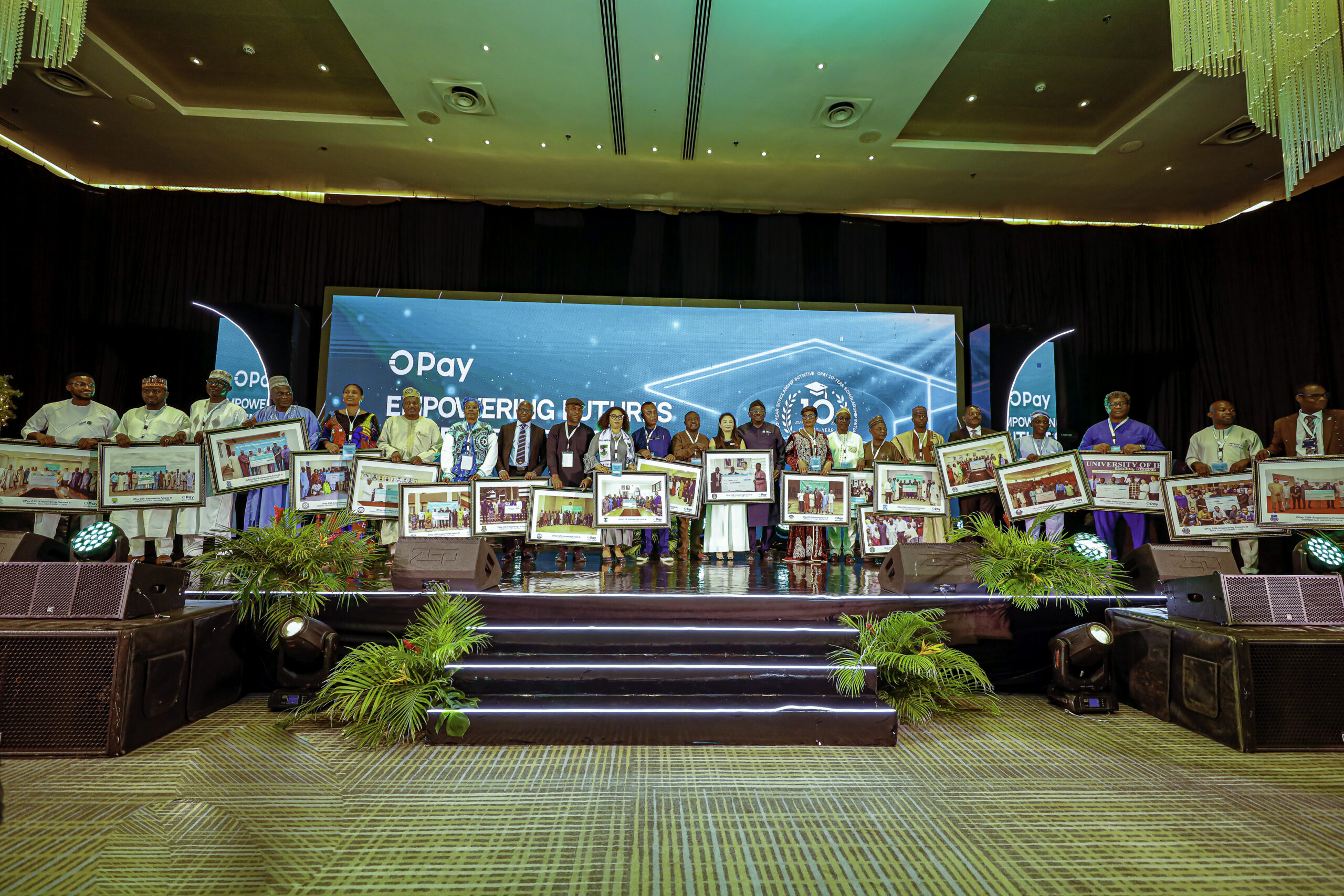
Getting into a tertiary institution is only half the journey. Staying in school, paying fees on time, and having the right support system can be the bigger challenge. Over the past year,
OPay has stepped into that gap, not just as a fintech company, but as a partner in the ambition and aspirations of thousands of students.
Through its long-term scholarship initiative, OPay has committed N1.
2 billion over 10 years to support outstanding and indigent students across more than 20 partner tertiary institutions nationwide. What began as tuition support has grown into something more profound, a structured investment in young people who have the capacity but need financial backing to stay focused on their studies.In campuses from Ife to Zaria and Calabar, OPay scholarship beneficiaries have shared stories of relief and renewed confidence. For many, the scholarship meant their parents no longer had to borrow money for school fees. For others, it meant more time in the library and less time worrying about part-time work. In a country where education remains one of the strongest ladders to upward mobility, this kind of support goes beyond money; it restores dignity and hope.
But OPay’s Corporate Social Responsibility (CSR) journey is not stopping at the scholarship initiative.
Building on the strong foundation already laid, OPay is launching OPay Scholars, a bold expansion that moves from financial support to full career development. The 2026 edition will introduce OPay Futures and a National Innovation Challenge, where students can propose practical solutions to real-world problems. It will also feature a focused webinar session and a bootcamp led by industry experts, providing scholars with direct access to knowledge in technology, entrepreneurship, and career growth.
Most notably, the 2026 edition will create a structured career development pathway, culminating in a grand finale of OPay’s second annual Empowering Futures Conference.
This platform will not only celebrate academic excellence but also spotlight creativity, leadership, and innovation among Nigerian students.
At a time when many young Nigerians are asking, “What next after school?”, OPay is helping to answer that question. By combining financial aid with mentorship, exposure and opportunities for innovation, the company is positioning education as both a safety net and a springboard.
OPay’s impact over the past year proves one thing clearly: when businesses invest consistently in people, communities grow stronger. And in 2026, OPay Scholars is set to support ambitions and actively shape the future, one student, one idea, and one opportunity at a time.


Kigbu Withdraws from Lafia-Obi APC Reps Primary, Denies N50m Inducement Claim
ShareFrom Abel Zwanke, Lafia A former aspirant for the Lafia/Obi Federal Constituency seat under the ruling All Progressives Congress (APC),...


Four Reps Members from Cross River Loose Primaries
ShareFrom Ene Asuquo, Calabar Ahead of next year’s elections, four serving members out of the eight Federal House of Representatives...

Airport Proliferation: Misplaced Priorities by Governors?
ShareBy Kayode Adebiyi There is a growing trend among state governments to initiate ambitious airport infrastructure projects, regardless of their...


APC Governors’ Forum’s Missing N800bn
ShareBy Festus Adedayo On Thursday last week, President Bola Tinubu perfectly played the role of the General of a troop...

Museveni’s Seventh Term and Africa’s Gerontocracy Debate
ShareBy Fortune Abang Uganda’s President Yoweri Museveni, 81, sworn in for a seventh term after nearly four decades in power,...
Driving Africa’s Fair Energy Transition through Technology and Innovation
ShareBy Bart Nnaji Africa’s energy journey is often portrayed as a stark choice between climate responsibility and development. In reality,...
Finding and Selecting ‘A’ Players
ShareBy Omagbitse Barrow I met with a CEO and HR Manager of a leading company in Nigeria to discuss this...
Xenophobia: Have Young South Africans Forgotten Pan-African Solidarity?
ShareBy Chijioke Okoronkwo In late April, a new wave of violent anti-migrant protests erupted in South Africa, claiming lives and...
Why I’m Not Afraid to Face Tinubu in 2027 — Adebayo
ShareSays Hunger, Poverty More Important Than Regional Politics By Mike Odiakose, Abuja The presidential candidate of the Social Democratic Party...


COAS Welfare Flight Moves 341 Personnel into, Out of North East Theatre – Army
ShareThe Nigerian Army has successfully conducted its Chief of Army Staff (COAS) second welfare flight for May, facilitating the movement...