
NEWS
FG Has Identified, Blocked Terrorism Financiers in Nigeria – Malami

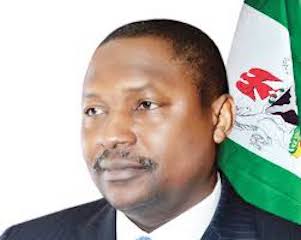
The Federal Government has suceeded in blocking terrorism financing in Nigeria, the Attorney General of the Federation (AGF) and Minister of Justice, Abubakar Malami, has said.
Malami told the News Agency of Nigeria (NAN) in New York that the federal government had also succeeded in identifying and detaining “high profile individuals” responsible for funding terrorists’ activities in the country.
The AGF had announced in May that Nigerian government was about to begin the prosecution of about 400 suspected Boko Haram financiers and was profiling some high-profile Nigerians strongly suspected to be financing terrorism for prosecution.
The delay in their prosecution and unveiling the suspects have been criticised in certain quarters, but Malami assured the federal government was determined to take stringent measures to counter insurgency in the country.
“We have succeeded in identifying those that are responsible for funding terrorists,” the minister said.
“We have also blocked the leakages associated with funding and then embarking on aggressive investigation that is indeed impacting positively in term of the fight against terrorism.
“But then, the truth of the matter is that investigation is ongoing, is advancing and for the purpose of investigation, I wouldn’t like to be pre-emptive in terms of making disclosures that would have the effect of undermining the successes we are recording as far as investigation is concerned.
“But one thing I can tell you for sure is that whatever we do in terms of detention and in terms of arrest is indeed backed by judicial process.
“We have indeed obtained a legitimate court order taking into consideration what we have presented before the court; the court eventually exercised its discretion in terms of granting orders that we can have them in custody.
“This is pending the conclusion of investigation, which investigation in essence is indeed deeply taking place and we are making a lot of successes and recording a lot of progress in the direction of investigation.”
The chief law officer of Nigeria, however, said the issue of terrorism financing was a work in progress and would not like to be pre-emptive in terms of investigation.
“But one thing I can say for sure is, arising from such arrests, the terrorist funding and financing has indeed been crippled substantially and that eventually translated to some major improvements being recorded as far as crippling the strength of terrorists is concerned within the nation.
“You can see visibly that we are indeed witnessing tremendous successes associated with the Boko Haram, which translate to significant decimation of the Boko Haram terrorists.
“They (Boko Haram) have been decimated to a larger extent and you can see what is unfolding as far as the North West banditry activities are concerned.
“They (bandits) are as well been decimated to a larger degree. All these are indeed the effect of what we have done,” he said.
Malami also said that Nigeria was creating a consensus building towards making assets recovery easier for countries.
The minister recalled that Nigeria had recovered 322 million dollars from Switzerland in 2017 and 311 million dollars from the U.S. in 2020.
He said Nigeria was looking at the possibility of recovering further 200 million pounds from the U.S. aside other associated assets being pursued in some other countries.
“We are pursuing a lot of assets across the globe and we intend very soon, we are coordinating a further meeting relating to huge recovery in U.K. associated with certain personalities.
“But I would not like to give further disclosure in respect of that to put into consideration the need not to be pre-emptive as far as our strategies are concerned.
He said the 311 million dollars recovered from Switzerland was deployed to execute the Abuja-Kano highway, the Lagos-Ibadan highway and the Second Niger Bridge.
“So I think we are doing wonderfully well in terms of deploying the recovery of the looted assets and deploying same in projects that impact positively on the lives of people,” he said. (NAN)




By Julius Tambaya, Abuja
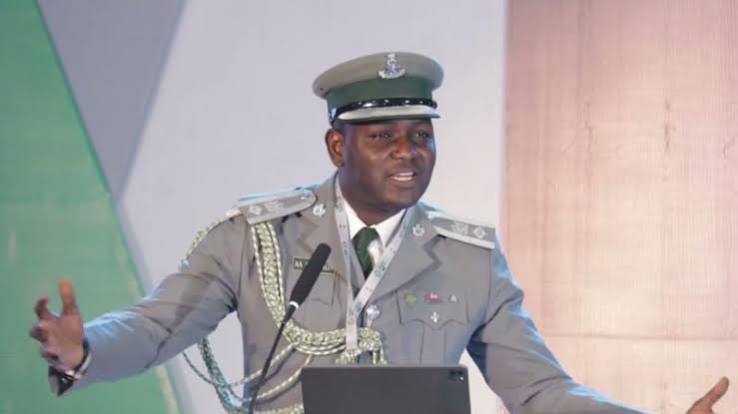
The Nigeria Customs Service (NCS) generated a total of N1.419 trillion in revenue between September and October 2026, while recording seizures of prohibited and restricted goods with a combined duty-paid value exceeding N8.
1bn.The figures were disclosed by the NCS National Public Relations Officer, Abdullahi Maiwada, during a joint security press briefing held last week at the National Counter-Terrorism Centre, under the Office of the National Security Adviser.
In a statement issued on Sunday, Maiwada said the revenue performance reflected the service’s ongoing efforts to facilitate legitimate trade, improve cargo clearance procedures and strengthen revenue generation through digital initiatives and collaboration with stakeholders.
According to him, the service collected N697bn in September and N722bn in October, bringing its total revenue for the two-month period to approximately N1.4tn.
He explained that the NCS processed 9,195 Pre-Arrival Assessment Reports and 99,839 Single Goods Declarations within the period.
A breakdown showed that 2,102 PAARs were processed in September, compared with 7,093 in October. Similarly, the number of SGDs rose from 48,832 in September to 51,007 in October.
Maiwada also highlighted improvements in export trade facilitation, particularly at the Lilypond Export Command, noting the contribution of ongoing measures to promote non-oil exports.
He said the service had continued to strengthen enforcement operations, resulting in the interception of prohibited and restricted items valued at more than N8.1bn in duty-paid terms.
The seized items included illicit drugs, pharmaceutical products, prohibited goods and petroleum products.
He added that the NCS was working with relevant regulatory and security agencies to ensure the proper handling and disposal of confiscated items.
On its anti-money laundering and counter-financing of terrorism responsibilities, Maiwada disclosed that the service was participating in an ongoing World Customs Organisation Mentoring Mission inaugurated on October 19, 2026.
The four-week programme, scheduled to run until November 13, is aimed at strengthening the capacity of customs officers to identify, investigate and tackle trade-based money laundering and other illicit financial activities linked to cross-border trade.
As part of the initiative, the NCS held engagements with six relevant agencies between October 27 and 29. The agencies included the Economic and Financial Crimes Commission, the Nigeria Financial Intelligence Unit and the National Counter-Terrorism Centre.
Maiwada further disclosed that the service had transitioned to an electronic currency declaration platform to improve transparency, strengthen monitoring and enhance the detection of illicit financial flows across Nigeria’s borders.
He said the various initiatives demonstrated the service’s commitment to balancing trade facilitation, revenue generation and national security.
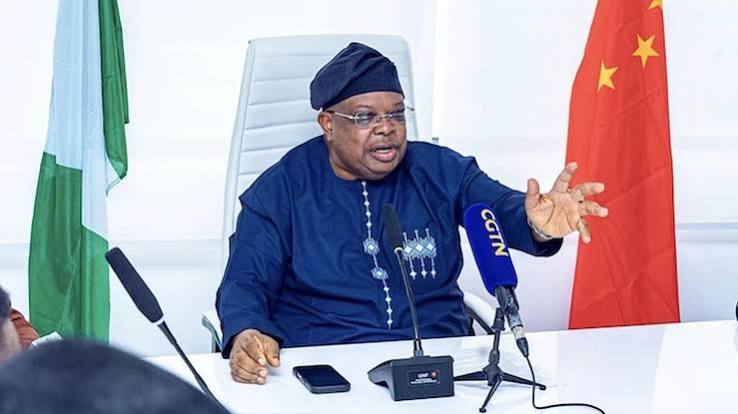
The Minister of Power, Joseph Tegbe, has assured Nigerians experiencing reduced electricity supply in parts of the country of a swift restoration of normal supply.
Tegbe gave the assurance in a statement made available to newsmen on Friday evening in Lagos.
He said that electricity supply would soon improve in Lagos, Abuja, Ogun and Kwara, among other affected areas, which had recently recorded noticeable improvements in power supply before the current disruptions.
The minister acknowledged the inconvenience caused to households, businesses and public institutions, saying the government understood the frustration of consumers.
“We recognise what every hour without power means for individuals, families and businesses, and we do not take it lightly,” he said.
According to him, preliminary assessments indicate that the disruptions are not caused by any major or systemic failure of the national grid.
He attributed the outages to maintenance and operational challenges within parts of the power sector, alongside reduced electricity generation caused by gas supply constraints to thermal power stations and lower water inflows into hydroelectric reservoirs.
“All of these are being addressed,” he said.
Tegbe said that the ministry was working closely with the Transmission Company of Nigeria (TCN), Nigerian Independent System Operator (NISO) and electricity Distribution Companies (DisCos) to restore normal supply.
He said that he had engaged the relevant operators to resolve operational challenges, accelerate ongoing maintenance and keep consumers informed of developments.
The minister reaffirmed the government’s commitment to sustaining improvements in the power sector and enhancing the reliability and quality of electricity supply nationwide.
He thanked Nigerians for their patience and understanding, promising to provide further updates as restoration efforts progressed. (NAN)
By David Torough, Abuja
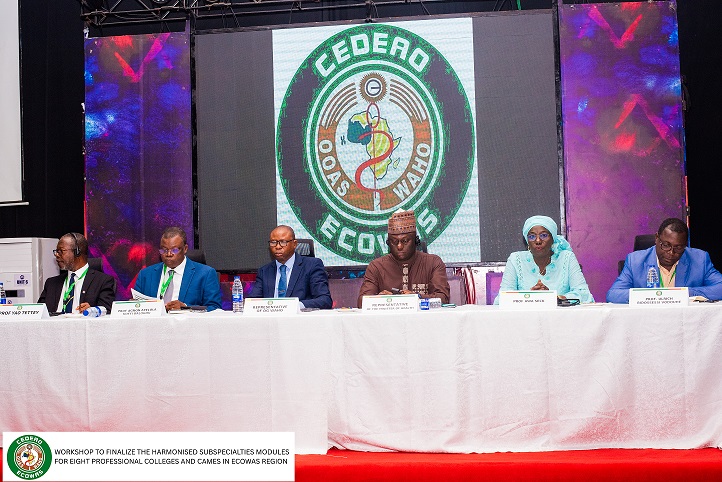
Accredited health professional colleges, training institutions and regulatory bodies across the Economic Community of West African States (ECOWAS) region have commenced efforts to finalise harmonised subspecialty training modules for eight professional colleges and the West African postgraduate medical education framework under the West African Health Organization (WAHO) and the African and Malagasy Council for Higher Education (CAMES).
The initiative, discussed at an integration meeting in Abuja on Monday, is aimed at strengthening regional cooperation, improving the quality of specialist training, facilitating professional mobility and reducing the need for patients to travel outside West Africa to access advanced medical care.
The meeting brought together representatives of ECOWAS member states, professional regulatory bodies, accredited training institutions, health ministries and regional health organisations to review and finalise the harmonised subspecialty modules ahead of their implementation.
Speaking on behalf of the Coordinating Minister of Health and Social Welfare, Professor Muhammad Ali Pate, Nigeria’s Liaison Officer to WAHO and the African Union at the Federal Ministry of Health and Social Welfare, Dr Dakum Londji, said harmonising health professional education was essential to building a stronger and more resilient West African health system.
In his address titled “Strengthening Regional Integration and Harmonization of Health Professional Education for a Stronger West Africa,” Pate welcomed participants to Nigeria and stressed that health challenges across the region required collective solutions.
He noted that diseases did not respect national boundaries and that knowledge, expertise and health professionals should similarly be able to move across borders through effective regional cooperation.
According to him, differences in curricula, training standards and accreditation procedures have historically created barriers to professional mobility, limited the quality of training and made it difficult for qualified health professionals to practise across the subregion.
He said the integration process was not intended to impose uniformity but to establish common standards of excellence while respecting the peculiarities and national contexts of individual countries.
The minister identified three major priorities for the regional initiative: harmonisation of curricula and training standards, mutual recognition of professional qualifications to promote mobility, and strengthened quality assurance and accountability among regulatory institutions.
He explained that harmonising core competencies, minimum training requirements and accreditation criteria would help ensure that health professionals trained in different ECOWAS countries attained comparable standards.
Pate also emphasised the need for regulatory bodies to strengthen collaboration through information sharing, ethical enforcement and improved professional oversight to guarantee that graduates were competent, compassionate and fit to practise.
He said the initiative aligned with Nigeria’s Renewed Hope Agenda and ongoing health sector reforms, which include investments in training institutions, expansion of accreditation, stronger regulation and the promotion of digital learning and innovation.
The minister urged participants to ensure that the meeting produced concrete decisions, a practical implementation roadmap and clear timelines, describing regional integration as a necessity rather than an option.
He commended WAHO, the ECOWAS Commission, professional regulatory bodies, training institutions and development partners for their contributions to advancing health workforce development in West Africa before formally declaring the meeting open.
WAHO highlights persistent health workforce crisis
In his remarks, the Director-General of WAHO, Professor Palokinam Pitche, represented by the organisation’s Programme Manager, Professor Joseph Olorunda, described the integration meeting as an important step towards addressing the persistent shortage of skilled health professionals and weaknesses in healthcare delivery across the ECOWAS region.
He expressed appreciation to President Bola Ahmed Tinubu and the Coordinating Minister of Health and Social Welfare for supporting the organisation of the meeting in Nigeria.
Olorunda observed that despite several international and regional commitments to achieving health for all, many West African countries continued to struggle with inadequate health financing, weak disease surveillance systems, poor public health infrastructure and insufficient human resources for health.
He said the challenges had been compounded by inadequate funding for training institutions, employment restrictions, poor working conditions, low remuneration and limited opportunities for professional advancement.
These factors, he explained, had contributed to the migration of skilled health professionals within and outside the region, further weakening healthcare delivery, particularly in rural and underserved communities.
Citing findings from a 2025 review by the WHO Regional Office for Africa’s West African Office, he noted that most of the 15 ECOWAS member states had fewer than one physician, nurse and midwife per 1,000 inhabitants, while only two countries recorded health workforce density ratios between one and 2.2 per 1,000 inhabitants.
He said the figures underscored the significant workforce gap confronting the region as countries work towards achieving universal health coverage by 2030.
Olorunda also recalled that previous assessments had highlighted the need for at least 2.5 health workers per 1,000 population to make meaningful progress in reducing maternal mortality, describing the human resources shortage as a major obstacle to sustainable development.
The WAHO representative outlined several interventions undertaken by the organisation to strengthen health professional education and workforce development.
He disclosed that WAHO had facilitated the harmonisation of 58 training curricula at basic and post-basic levels across different health professional categories.
Other interventions, he said, included the development of harmonised training modules for community-based health workers, scholarships for 44 health professionals in critical areas, and financial assistance to member states implementing harmonised curricula.
The organisation had also developed trainers’ manuals, supported research and academic publications by professional colleges, and established a regional action plan for motivating and retaining health professionals in difficult terrains.
He further highlighted WAHO’s support for the continuous training of 23 health professionals from ECOWAS countries in antibiotherapy and vaccinology, as well as support for professional colleges and academic institutions to strengthen research and knowledge development.
The colleges benefiting from various forms of support include the West African colleges of Surgeons, Physicians, Pharmacists, Nursing and Midwifery, Environmental Health and Medical Laboratory Science, as well as the Society of Obstetricians and Gynaecologists.
Olorunda reiterated WAHO’s commitment to working with governments, professional institutions and development partners to implement regional decisions on health workforce development.
He identified five critical priorities emerging from the WHO’s 2025 review: ensuring that health workers receive quality training, protecting and supporting health personnel, improving workforce efficiency throughout their professional careers, addressing inequalities and imbalances in workforce distribution, and strengthening partnerships and trust to support fragile health systems.
Speaking on behalf of the West African professional colleges, Professor Yao Tettey commended WAHO for facilitating the harmonisation exercise, describing the ongoing process as a significant development in the evolution of postgraduate health professional education in the region.
He recalled that ECOWAS Heads of State and Government had previously expressed concerns about the lengthy duration of postgraduate fellowship training and the limited availability of middle-level specialists to serve the wider population.
According to him, the concerns prompted discussions through the Assembly of Health Ministers, leading professional colleges to introduce Part One membership examinations as an exit point for doctors who could subsequently serve as specialists in district hospitals.
Tettey explained that while the introduction of membership qualifications addressed the need for middle-level specialists, the colleges recognised the growing demand for highly specialised medical services across West Africa.
He said the professional colleges subsequently developed subspecialty programmes to address advanced healthcare needs and reduce dependence on countries outside the region for highly specialised treatment.
He commended WAHO for supporting the development and harmonisation of the programmes, noting that the current exercise would consolidate the progress already achieved in harmonising training from basic professional education through fellowship and now subspecialty levels.
Tettey, however, expressed concern about the high cost of subspecialty healthcare and the lack of appropriate equipment and infrastructure in some countries, which had forced highly trained specialists to leave after returning home.
Using Ghana as an example, he said some specialists who returned after advanced training had been unable to practise effectively because the facilities and equipment required for their expertise were unavailable.
He noted that the emergence of centres of excellence across the subregion was gradually creating opportunities for highly trained specialists to return and practise their skills.
He cited developments in Nigeria in areas such as interventional cardiology and renal transplantation as examples of the growing capacity for advanced healthcare delivery within the region.
The college representative therefore appealed to ECOWAS leadership and national governments to provide adequate financial support, equipment and infrastructure for subspecialty programmes to enable trained professionals to deliver the services for which they had been prepared.
He said the ultimate objective should be to build a West African healthcare system capable of providing advanced medical services locally, eliminating the need for patients to travel to the United Kingdom, United States, France and other countries for specialised treatment.
The Abuja integration meeting represents another phase in the broader effort to establish a coordinated framework for health professional education and specialist development across West Africa.
With the harmonisation of subspecialty modules, participating institutions are expected to strengthen common training standards, improve the comparability of professional qualifications and create opportunities for greater collaboration among accredited colleges and regulatory authorities.
The discussions also highlighted the importance of matching investments in specialist training with adequate healthcare infrastructure, equipment, funding and incentives to retain skilled professionals.
Participants are expected to review and finalise the harmonised documents during the meeting, laying the groundwork for their implementation across participating institutions and ECOWAS member states.



2027: Tompolo Deploys 50 Vehicles in Enugu, Cross River for Tinubu’s Re-election
ShareGrand Patron of the PBAT Door-to-Door Movement, High Chief Oweizidei Government Ekpemupolo, has donated 50 vehicles for President Bola Tinubu’s...

Customs Generates N1.4tn Revenue in Two Months
ShareBy Julius Tambaya, Abuja The Nigeria Customs Service (NCS) generated a total of N1.419 trillion in revenue between September and...

Tegbe Assures Nigerians of Swift Restoration of Power Supply
ShareThe Minister of Power, Joseph Tegbe, has assured Nigerians experiencing reduced electricity supply in parts of the country of a...
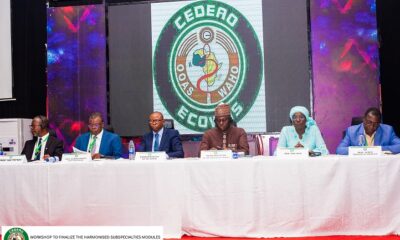

WAHO Leads Drive to Harmonise Subspecialty Training Across ECOWAS
ShareBy David Torough, Abuja Accredited health professional colleges, training institutions and regulatory bodies across the Economic Community of West African...


Bishop Oyedepo Re-affirms strong support for Pastor Ibiyeomie, Pastor Komaiya’s Ministry
ShareBy David Torough, Abuja The Founder and Presiding Bishop of Living Faith Church Worldwide, Bishop David Oyedepo, has reaffirm strong...


West Africa: How WAHO Successfully Harmonized Procedure Manuals for Health Disciplines and Professions
ShareBy David Torough After three days of serious brain-storming sessions in Abuja, the West African Health Organization (WAHO), has successfully...


2027: CAN Seeks Return of Sacked Traditional Rulers in Kaduna
ShareFrom Shabanyan Kantiok, Kaduna The Christian Association of Nigeria in Chikun Local Government Area of Kaduna State has urged Christian...


OPay Opens New Kano Office, Strengthens Commitment to Nigeria’s Financial Inclusion
ShareOPay, Nigeria’s leading digital bank, has opened a new office in Kano State, strengthening its presence in Nigeria and bringing...

Rigging Years Before Elections: Why Tinubu, Parliament Favours Staggered Balloting
Share Silhouette of Donald Andoor e‐mail; doandoor@gmail.com There is a growing need for Nigerians to look beyond the ballot box and...

Akpabio Congratulates Nigeria’s Golden Girls, Flamingos
ShareThe President of the Senate, Godswill Akpabio has sent a hearty congratulations to the Nigerian Under-17 Women’s National Team on...