
Business Analysis
Unmaking and Tweaking Nigeria’s FTZs’ Susceptibilities


By Martins Odeh
Gradually, but steadily, the grandiloquence narrations of the acclaimed outright under-performance of the Nigeria’s Free Trade Zones’ concept in the last 29 years of its adoption to drive the country’s industrialisation is been obliterated by new crop of data mavens using the latest digital infrastructure to capture, analyse and measure the contributions of this concept to the country’s Gross Domestic Product (GDP) and national growth more succinctly.
Indeed, the Federal Government having seen the way and manner China, Dubai in the United Arab Emirate and the western world had leveraged on this global economic model to speed up their socio-economic growth, embraced it in 1992 with an enactment that bestows NEPZA with the sole powers to monitor and manage the structure.
Successive management teams of the Authority had ensured that this concept that provides the filaments for this special business ecosystem is guided; leaving the country with two public zones and 43 private zones harbouring over 500 enterprises with cumulative investments worth over US 20 billion dollars, and accelerating employment generation hovering around 50,000 direct jobs and about 100,000 indirect jobs respectively.
Now with Prof. Adesoji Adesugba in the saddle as Managing Director and Chief Executive Officer, a more resilient and result oriented monitoring and management strategies are been deployed to reposition the zones’ operation for effective monitoring and measuring of the various contributory indices to national growth.
Adesugba, been a thoroughbred Professor of Business Administration and a tested Investment Promoter, has in the last one year focused on unmaking and tweaking the nation’s free zone susceptibilities by also widening the scope of search for innovation, business quality control mechanism and other forms of sophisticated approaches that could transform the country’s free zones into genuine business destination hot spots.
The public must come to the understanding that the free zone scheme is a global concept and not a Nigeria’s concept, and therefore, leaves us with no option but to strictly adhere to its modus operandi in order to fully reap from the structure.
No wonder, the new management has spent quality time in educating and sensitizing key stakeholders on the ideals of this business enclave.“The choice of this topic stems from the backdrop of the knowledge gap that exists in the free trade zone scheme in our nation.
This is not much to do with the lurks and perks of the scheme as it is with our inability to genuinely leverage on the pros and cons of the scheme like other nations that are making success of it. “Free Trade Zone refers to an area enclosed by a fence or wall with supervised entry and exit points where certain economic fiscal advantages are granted to facilitate world market trade,’’ Adesugba said.
More than anything else, the managing director is pained that much of the strides made by the Authority over the years toward the country’s economic growth were not properly captured in the nation’s GDP.
This underscores why NEPZA struck the long-awaited partnership with the National Bureau for Statistics (NBS) in ensuring that data from zones and the Authority’s Headquarters are collated, computed and inputted into the national growth indices regularly.Adesugba explained that the partnership with NBS was aimed at assisting the Authority at robustly re-defining the import and export data points for analysis and for decision making through the free trade zone gateways.
“This synergy is also directed at sharing relevant data between the two agencies in order to regularly highlight the zone scheme’s contribution to the country’s Gross Domestic Product (GDP), Foreign Direct Investment (FDI) and employment generation outlook,’’ he said.
Responding, Dr Yemi Kale, Statistician-General/CEO of the National Bureau for Statistics (NBS) said that the bureau was set up to monitor indices of the productive sector, adding that any contemplated partnership toward that direction was welcomed.
“NEPZA is a strategic agency of government established to use the zone scheme to drive industrialization. it is therefore imperative to keep statistical track of the Authority’ contribution to the economy,’’ the NBS boss said.
Similar partnership to ensure a uniform computation of indices generated from the free zones wad recently entered between the Authority and the Central bank of Nigeria (CBN) clearly epitomizes Adesugba’s virtue of Due process, transparency, accountability and open governance. It is also imperative to further state that the Authority now brags of what one can term “digital- wiz mavens’’ positioned to timeously collate data on import and export points for analysis and for decision making on a daily basis.
It is evident that this new NEPZA management is doing what has not been done before to unequivocally enable the agency spearhead both the country’s economic recovery and its industrialization process.
Needless, however, to say that this rebranded Authority requires unflinching support of the presidency, the National Assembly and other sister agencies of government to pull through these daunting tasks.No doubt, the continuous calls for the amendment of the NEPZA Act 63 of 1992 have become most expedient so as to weed out those legal frameworks that have continued to hamper the successful management of the concept once and for all.
For examples, key stakeholders in the sector have among other things suggested that NEPZA can become more virile and productive if it seized affiliation with the Ministry of Trade, Industry and Investment and brought under direct supervision of the presidency as with other successful zones’ regulatory bodies abroad.
The other concern raised hinges on the inadequate funding of the structure which have arguably left the zones less competitive for many years. However, credit must be given to President Muhammadu Buhari for jerking up the Authority’s capital appropriations substantially for consecutively six years now, nevertheless a lot more is needed to bring this special business ecosystem to a competitive level.
It is in this light that the Authority during the 2022 budget presentation on November 10 solicited the intervention of the National Assembly for a sustained and robust appropriation for the development of Special Economic Zones across the country.Adesugba, who led the team of NEPZA management explained that ensuring improved system and the re-alignment of operations of the free trade zone could only be propelled by huge investments on infrastructure.
“Infrastructure development in the zones is the ultimate attraction to this concept. We shall not be dissipating too much energy in promoting the concept if the right infrastructure is in place.“China has about 3000 state-of-the-art free trade zones and has leveraged on them to transform its economy to an enviable form.
This is indicative of the socio-economic possibilities embedded in this global concept.“We need to, therefore, rethink our strategies to improve appropriation and funding of the free trade zones if the country truly aims at using it to accelerate economic growth,’’ he said.
Meanwhile, Sen. Sa’idu Alkali, Senate Committee Chairman on Trade, Industry and Investment, described the free trade zone as a veritable economic intervention scheme that could fix the country’s many economic challenges if adequately funded.He said that the committee was not averse to ensuring NEPZA got adequate funding for proper development of the scheme.
Similarly, Hon. Femi Fakeye, Chairman, House Committee on Commerce aligned himself with Sen. Alkali, stating that the committee had enormous powers of appropriation that could empower NEPZA to propel the development of the scheme for the overall benefit of citizens.
The present NEPZA management team under Adesugba has continued to score high points in sensitizing, educating and galvanizing both local and international business communities to invest in the zones.
In ensuring that the Special Economic Zones’ model is effectively deployed to close the deficits in sectors of the economy, the managing director enlisted to establish Medical & Pharmaceutical SEZ; Mining & Mineral SEZ; Agriculture & Allied Industries SEZ; as well as Information and Technology Parks SEZ across the country.
Already, the efforts are yielding results with above-mentioned zone types at various levels of development in Sokoto, Taraba, Katsina, Kwara, Ebonyi, Ekiti and Lagos states respectively.
On the international front, the Authority has invigorated collaborations with various bodies to help attract investments into the country’s zones with Adesugba promising to libralise some of its strict regulations if need be to ease entries into the zones.
The NEPZA boss on November 21, being the last day of the 2021 Intra-African Trade Fair held Durban in South Africa, specifically revealed that investors from the African continent shall be given consideration to ease their entries into the Nigeria free zones landscape, as according to him, doing so will position the country to attracting chunk of the 40 billion US dollars projected trade and investment deals on the continent for 2022.
The fair was a key event meant to boost trade in Africa with a theme that focused on the newly launched African Continental Free Trade Area (AfCFTA) that sought a single market for goods and services across 55 African countries.
Adesugba further explained that there was no better time to leverage on the huge business opportunities provided by the IATF to speedily grow the Nigeria’s economy, adding that the Authority had seized the opportunity of the gathering to vigorously promote the country’s free zone ecosystem to rich African investors and enterprises.
He added that: “already, we have in our net some promising enterprises willing to either operate in established zones or apply to own their zones in the country.’’
In conclusion, one can firmly hold that this past one year of Adesugba as chief executive officer of NEPZA has truly been remarkable following his resoluteness in deconstructing inhibitive bureaucratic contexts that have prevented the country from reaping the great potentials of the free trade zone concept.Odeh is the Head, Corporate Communications, NEPZA


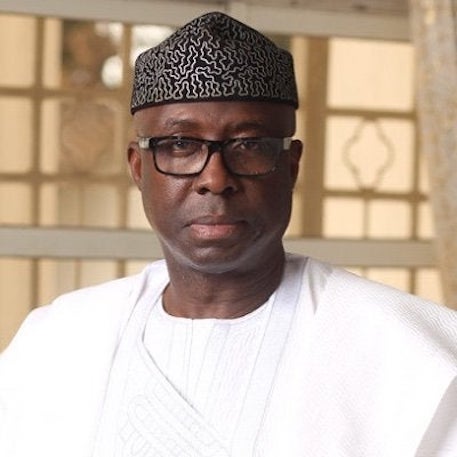
By Joel Oladele, Abuja
The Nigeria Customs Service (NSC) has generated an impressive N1,751,502,252,298.05 in revenue during the first quarter of 2025.
The Comptroller-General (CG) of the Service, Bashir Adeniyi, disclosed this yesterday, during a press briefing in Abuja.
According to Adeniyi, the achievement not only surpasses the quarterly target but also marks a substantial increase compared to the same period last year, reflecting the effectiveness of recent reforms and the dedication of customs officers across the nation.
“This first quarter of 2025 has seen our officers working tirelessly at borders and ports across the nation.
I’m proud to report we’ve made real progress on multiple fronts—from increasing revenue collections to intercepting dangerous shipments,” Adeniyi stated.He attributed this success to the reforms initiated under President Bola Tinubu’s administration and the guidance of the Honourable Minister of Finance and Coordinating Minister of the Economy, Olawale Edun.
The CG noted that the revenue collection for Q1 2025 exceeded the quarterly benchmark of N1,645,000,000,000.00 by N106.5 billion, achieving 106.47% of the target. This performance represents a remarkable 29.96% increase compared to the N1,347,705,251,658.31 collected in Q1 2024.
Adeniyi highlighted the month-by-month growth, noting that January’s collection of N647,880,245,243.67 surpassed its target by 18.12%, while February and March also showed positive trends.
“I’m pleased to report the Service’s revenue collection for Q1 2025 totaled N1,751,502,252,298.05.
“Against our annual target of N6,580,000,000,000.00, the first quarter’s proportional benchmark stood at N1,645,000,000,000.00. I’m proud to announce we’ve exceeded this target by N106.5 billion, achieving 106.47% of our quarterly projection. This outstanding performance represents a substantial 29.96% increase compared to the same period in 2024, where we collected N1,347,705,251,658.31.
“Our month-by-month analysis reveals even more encouraging details of this growth trajectory,” Adeniyi said.
In addition to revenue collection, Adeniyi said the NCS maintained robust anti-smuggling operations, recording 298 seizures with a total Duty Paid Value (DPV) of ₦7,698,557,347.67.
He stated that rice was the most seized commodity, with 135,474 bags intercepted, followed by petroleum products and narcotics.
“From rice to wildlife, these seizures show our targeted approach,” Adeniyi remarked, noting the NCS’s commitment to combating smuggling and protecting national revenue.
Adeniyi also highlighted key initiatives, including the expansion of the B’Odogwu customs clearance platform and the launch of the Authorized Economic Operators Programme, which aims to streamline processes for compliant businesses. The NCS’s Corporate Social Responsibility Programme, “Customs Cares,” was also launched, focusing on education, health, and environmental sustainability.
Despite these achievements, the CG noted that the NCS faced challenges, including exchange rate volatility and non-compliance issues. Adeniyi acknowledged the need for ongoing adaptation and collaboration with stakeholders to address these challenges effectively.
Looking ahead, the NCS aims to continue its modernization efforts and enhance service delivery, ensuring that it remains a critical institution in Nigeria’s economic and security landscape.
“Results speak louder than plans; faster clearances through B’Odogwu, trusted traders in the AEO program, and measurable food price relief from our exemptions. We’ll keep scaling what works,” he concluded.
 |
By Tony Obiechina Abuja
The Nigeria Sovereign Investment Authority (NSIA) yesterday disclosed that its net assets grew from N156bn in 2013 to N4.35 trillion in 2024.
Similarly, the Authority has remained profitable for 12 consecutive years, leading to cumulative retained earnings of N3.
74 trillion in 2024.Managing Director and Chief Executive Officer of NSIA, Aminu Umar- Sadiq made these disclosures at a media engagement in Abuja, highlighting its audited financial results for the 2024 fiscal year.
According to him, the results underscored the resilience of the authority’s investment strategy and the strength of its earnings, driven by a well-diversified revenue base and robust risk management practices, despite a challenging global macroeconomic and geopolitical environment.
Total operating profits, excluding share of profits from associates and Joint Venture (JV) entities, increased from N1.17 trillion in 2023 to N1.86 trillion in 2024, driven by the strong performance of
NSIA’s diversified investment portfolio, infrastructure assets, gains from foreign exchange movements, and derivative valuations.
In addition, Total Comprehensive Income (TCI), inclusive of share of profits from associates and JV entities, reached N1.89 trillion in 2024, reflecting a 59 per cent increase from N1.18 trillion in 2023.
Core TCI (excluding foreign exchange and derivative valuation gains) rose by 148 per cent to N407.9 billion in 2024 compared to N164.7 billion in 2023, supported by robust returns on financial assets measured at fair value through profit and loss, including collateralised securities, private equity, hedge funds, and Exchange-Traded Funds (ETFs).
Umar-Sadiq said the authority’s outstanding financial performance in 2024 reflected the “strength of our strategic vision, disciplined execution and unwavering commitment to sustainable socio-economic advancement.”
He said, “By leveraging innovation, strategic partnerships and sound risk management, we have not only delivered strong returns but also created value for our stakeholders
“As we move forward, we remain focused on driving economic transformation, expanding opportunities, scaling transformative impact and ensuring long-term prosperity for current and future generations of Nigerians.”
The CEO reaffirmed the authority’s commitment to managing the country’s SWF, and delivering the mandates enshrined in the NSIA Act.
He said NSIA remained poised to continually create long-term value for its stakeholders by delivering excellent risk-adjusted financial results, developing a healthy and well-diversified portfolio of assets and large-scale infrastructure projects, and enhancing the desired social outcomes.
He noted that NSIA was committed to its mandate of prudent management and investment of Nigeria’s sovereign wealth.
“In adherence to its Establishment Act, NSIA prioritises transparency, disclosure, and effective communication with all stakeholders and counterparties,” he said.
He pointed out that in the year under review, a new board, led by Olusegun Ogunsanya as Chairman, was appointed by President Bola Tinubu, in accordance with the provisions of the NSIA Act.
The new board will provide strategic direction and oversight, in addition to playing a pivotal role in critical decision making.
He remarked that under the guidance of the Board, the Authority will retain focus on its primary mandate of creating shared value for all stakeholders based on its continued adoption of corporate governance practices.
“NSIA prides itself an investment institution of the federation established to manage funds in excess of budgeted oil revenues and its mission is to play a pivotal role in driving sustained economic development for the benefit of all Nigerians through building a savings base for the Nigerian people, enhancing the development of the county’s infrastructure, and providing stabilisation support in times of economic misadventure,” he added.

By Cletus Akwaya
Call it Dangote Republic and you would not be wrong, for that is what it means in real sense.
The ultra-modern Dangote Refinery and Petrochemical complex located at the Lekki Free Trade Zone in Lagos is the World’s Engineering wonder.
A guided tour for top Media executives in the country by the President, Dangote Industries Group himself, Alhaji Aliko Dangote on July 14, provided a rare privilege and opportunity to appreciate the project that has emerged as the World’s largest single train petroleum refinery.
Dangote, the Kano-born business mogul and Africa’s richest man, whose vision for the industrial transformation of Nigeria led to the initiation of this project is certainly a fulfilled person, having accomplished such a gargantuan task in the spelt of just about 10 years.
The refinery, which is built and equipped with the latest technology in the industry. It is a behemoth sitting on a huge land space of 2, 735 hectares, approximately seven times, the size of Victoria Island, the octane section of Lagos, which has become the abode for the very rich in the nation’s commercial nerve – centre over the decades.
The land was provided by the Lagos state government after the payment of $100million dollars by the Dangote Group as cost of the land.
The edifice didn’t come easy as the engineers had to reclaim 65million cubic metres of sand through dredging of the Atlantic coastline to pave way for the construction of the refinery and its accompanying facilities especially the Jetty.
The Dangote refinery is not a stand-alone project as it has a coterie of associated industries and infrastructure making it a self-reliant complex.
For instance, the company has a fully developed port (jetty)for maritime operations for both in-take of crude and discharge of refined products. This perfectly compliments the huge pipeline network that lands into the Atlantic for intake of crude and loading of refined products to ships. Its Jetty, which stretches 9KM into the international waters in the Atlantic Ocean and 12.5 KM from the refinery is perhaps one of the most modern in the world built with sand piles that shield the final landing points from the violent oceanic waves, thus providing for safety and stability of ships, barges and oil tankers.
The complex is accessed by 200KM network of concrete under-lay and well asphalted road network to ease vehicular traffic. The refinery has its dedicated steam and power generation system with standby units to adequately support operations of the various plants in the complex.
It has successfully completed a 435 MW power generating plant for its operations. The power generated from this plant surpasses the entire distribution capacity of Ibadan Electricity Distribution company, which supplies electricity to five states of the Federation including Oyo, Osun, Ondo, Ekiti and Kwara.
The Dangote refinery with a capacity of 650,000 bpd of crude oil is designed to handle the crude from many of the African countries, the Middle East and the US light crude. Its petrochemical plant is designed to produce 77 different high-performance grades of polypropylene, which is the major raw material for numerous industries and other refineries. With a huge refining capacity, Alhaji Dangote said the products from the refinery company would easily meet 100 per cent the needs of Nigeria’s demand for gasoline, diesel, Petrol and Aviation Jet with 56 per cent surplus for export, from which the company projects to earn a princely $25billion per annum from 2025.
The company has facility to load 2,900 trucks with its various products in a day by land and millions of litres of products through the waters depending on where the orders come from. The $25million projected revenue in 2025 could translate to a huge relieve for the nation in dire need of foreign earnings to shore-up the value of the nation’s currency.
The associated industry, the Dangote Fertilizers Limited also situated in the complex utilises the raw materials from petrochemicals to produce different varieties of fertilzers especially Urea, NPK and Amonia grades of fertilizers. Apart from the local market, Dangote is already exporting its fertilizers to other countries including Mexico, a testament to its high quality that meets world standards.
This feta, the President of Dangote industries explained was possible because of the high quality, the company has opted to pursue. In between the refinery and the fertilizers complex lies a 50,000 housing estate, which provided accommodation for the construction workers at the time of construction especially during the COVID-19 lockdowns of 2020, when workers remained encamped on the project site to continue with the work.
What stands out the Dangote Refinery is perhaps not in its sheer size and capacity but in the fact that it is perhaps the only of such projects whose Engineering, Procurement and construction(EPC) was done directly by the company without engaging the world renowned refinery constriction companies like Technip Bechtel (USA)Technip (France)Aker Solutions (Norway)Chiyoda Corporation (Japan)SNC-Lavalin Group (Canada)J. Ray McDermott (USA)JGC Corporation (Japan)Hyundai Heavy Industries (South Korea)Foster Wheeler (USA) and Daelim Industrial Company (South Korea)
“The design of the refinery was handled by dozens of Engineers and technical experts assembled in India and Houston, Texas, USA to execute engineering designs of the refinery,” said Edwin Kumar, the Executive vice President, Oil and Gas for the Dangote Group who midwifed the birth of the refinery complex.
“We didn’t give out contracts to anybody, we bought every single bolt and equipment ourselves and had it shipped into the country,” Dangote explained to his guests.
Part of the equipment imported into the country was the procurement of over 3,000 cranes to handle the evacuation of huge consignments of machinery from the wharf and for subsequent installation at the construction site. The cranes have become an unusual assemblage of such equipment to be found in one place on the African continent.
If there was any doubt that Alhaji Aliko Dangote is Africa’s richest man, the successful completion of the refinery and petrochemical complex at the cost of about $20billion has further confirmed his status as Africa’s leading businessman and entrepreneur.
However, Dangote does not really accept that he is the richest man on the continent,
“When you are rich, you accumulate cash, but when you wealthy, you create wealth” he told the top Media executives on tour of the huge project, explaining that he would rather prefer to be referred to as a “Wealthy man.”
And consistent with his business philosophy, Dangote hinted of plans to list the refinery on the Nation’s stock exchange by the first quarter of 2025. His vision is to avail the public of 20 per cent of the shares so as to ensure participation by Nigerians and even international portfolio investors.
The refinery company and the entire of Dangote Group at the moment provides direct employment to about 20,000 Nigerians and much indirect jobs to Nigerians, making it the highest employer of labour outside the government.
Most interestingly, the highly technical operations of Dangote refinery is operated by over 70 per cent of local manpower who work in the refinery control, centre, the numerous production and quality control laboratories among others. Some of the staff who explained their tasks to the visiting media executives said they were graduates of Engineering and allied disciplines recruited mostly from Nigerian universities and trained in various institutions abroad for periods ranging from sixth months – one year to master refinery operations. Through this strategy, Dangote has ensured transfer of technology to thousands of Nigerian youths.
“We don’t know where they come from as long as they are Nigerians and if they decide to leave and join international oil companies for better job opportunities, we have no problem with that,” Dangote responded to a question on the strategy to retain the technical manpower for stability of the refinery’s operations.
The Dangote Refinery is a Republic of some kind, at least an economic or industrial Republic.
But the man who presides over this ‘industrial empire’, Alhaji Dangote says his only ambition is to boot the nation’s economy and ensure netter life for Nigerians.
“When you import any product into Nigeria, you are importing poverty and exporting our jobs to those countries from where you are importing” Dangote said adding “this is why I want economic nationalism in Nigeria.”
Dangote’s vision even goes beyond Nigeria as he has cement factories and other business concerns in about 13 African countries including Ghana, Ethiopia, Tanzania, Uganda, etc. This signifies his continent-wide dream to transform Africa’s economies.
There has been attempts by some international oil companies to frustrate the successful take-off of the refinery, through over pricing and in some instances outright denial of crude supplies for processing. This made Dangote to commence importation of crude from the US. However, the cheering news that the Nigerian National Petroleum Company Limited (NNPC) has finally approved a supply arrangement has raised hopes that full operations will commence and that the long-awaited Dangote oil products will reach consumers around the country from August.
At last, the Dangote Group may have achieved its objective to serve as the elixir to Nigeria’s industrialisation effort. This is perhaps the greatest legacy of Africa’s richest man to his country of birth.




2027: FOOG Women Coordinator Urges Nigerians to Support Tinubu’s Re-election Bid
ShareBy Francis Sadhere, Warri Chief (Mrs) Esther Orighomisan Okotie-Eboh, Coordinator of Felix Omagbemi Ogbe Group (FOOG) Women Support Group for...

Troops Neutralise 217 Terrorists, Rescue 349 Kidnap Victims, Arrest 333 Suspects in Oct
ShareBy David Torough, Abuja The Armed Forces of Nigeria (AFN) say troops neutralised 217 terrorists and other criminals, rescued 349...


2027: Tompolo Mobilises Support for Tinubu in Ogun, says Economy Stabilising
ShareThe Grand Patron of the PBAT Door-to-Door Movement, Government Ekpemupolo, has called on the people of Ogun State to massively...

Henry Okeke Commends Mbah for Clearing Pension Arrears in Enugu
ShareBy Raphael Atuu, Abuja Barrister Henry Nnanna Okeke, a member of the Governing Council of Enugu State Polytechnic, Iwollo, has...


2027: ADC Urges ECOWAS to Insist on Credible Elections in Nigeria
ShareThe National Chairman of the African Democratic Congress (ADC), Sen. David Mark, has urged the Economic Community of West African...

Obi Promises Emergency Measures on Security, Corruption, Poverty
SharePresidential candidate of the Nigeria Democratic Congress (NDC), Peter Obi, has promised emergency measures to tackle insecurity, corruption, hunger and...


Why I Chose Music over Football – Mr Eazi
ShareAfrobeats star Mr Eazi has claimed that English club Chelsea FC wanted to sign him before they signed former Super...


Court Grants Odumodublvck’s Lawyer Prayer for Adjournment
ShareAn Abuja High Court sitting in Life Camp on Thursday, granted another adjournment in the assault trial of a rapper,...


RMD Makes History as PAO Conference Keynote Speaker
ShareVeteran Nollywood actor Richard Mofe-Damijo, popularly known as RMD, is set to become the first male motion-picture practitioner to deliver...
Telecom Vandalism: The Human Cost of Nigeria’s Network Disruptions
ShareBy Usman Aliyu Going into labour in Benin City, Edo, Grace Osagie anticipated calling her husband, but unexpected phone issues...