
Economy
NEPZA, FIRS agree to Adjust FTZs New Tax Administration Pact


The Nigeria Export Processing Zones Authority (NEPZA) and the Federal Inland Revenue Service (FIRS) have agreed to adjust some sections of the recently signed Memorandum of Understanding (MoU) on effective tax administration, to accommodate some salient concerns.
Newsmen report that the agencies on June 7 signed the tax pact to reconcile grey areas in the administration on issues bordering tax deductions from free zones and enterprises operating in the zones respectively.
The agreement to adjust the MoU was reached on Wednesday during a formal presentation of the document to the stakeholders at a roundtable organised by NEPZA in Lagos.
Newsmen report that the agencies on June 7 signed the tax pact to reconcile grey areas in the administration on issues bordering tax deductions from free zones and enterprises operating in the zones respectively.
A cross section of the stakeholders had raised concerns on some sections of the guidelines that contravene some provisions of the NEPZA Act for operators in the free zones.
Prof. Adesoji Adesugba, Managing Director, NEPZA, explained that the event was to make adjustments where necessary on how the FIRS and NEPZA would treat tax issues relating to business interactions within the free trade zone ecosystem.
He noted that Section 5 of the MoU had given parties the leverage to call for the amendment of the tax guidelines when necessary.
“The Authority’s recent diplomatic advances with sister agencies, especially, the FIRS can only be described as a game changer.
“We have always insisted that the free trade zone scheme must be allowed to succeed as that truly remains a potent economic instrument for widespread growth and development.
“Therefore, we have agreed to adjust the tax pact to capture some of the salient concerns of the stakeholders.
“The authority will not shy away from protecting the scheme and those who have invested billions of dollars in the scheme and we are delighted that the FIRS has become our advocate in this regard.
“We are also happy that the administration of President Muhammadu Buhari has given us the impetus through his favourable policies to deepen the growth of the scheme,” he said.
Alhaji Mohammed Nami, Executive Chairman, FIRS, said concerns of the stakeholders would be evaluated, adding that the document was a flexible guideline on how to administer the MoU.
Nami, represented by Mr Mathew Gbonjubola, Coordinating Director of the Service, noted that not all the concerns raised were genuine, saying that the FIRS was knowledgeable enough on issues around free trade zone tax administration.
Nami explained that the Service would not unduly interrogate tax remittances of enterprises with full status of free trade zones.
He further noted that all other issues raised on the tax pact would be addressed within two months.
On his part, Chief Toyin Elegbede, Executive-Secretary of the Nigeria Economic Zones Association, said that the forum was important to address the concerns of his members on the tax administration pact signed between NEPZA and FIRS.
According to him, the discussions from forum elicited hopes and assurances on the commitment of government to support the in-flow of Foreign Direct Investment (FDI) through the free trade zone scheme.(NAN)




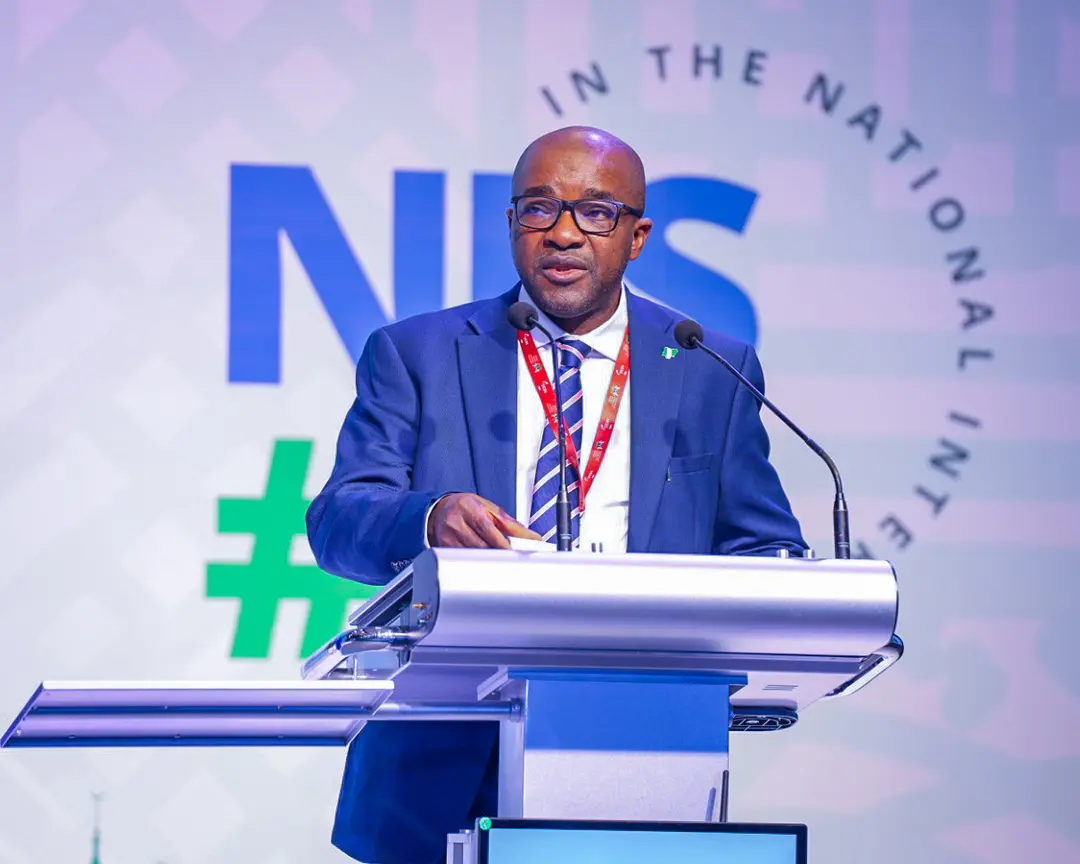
Chairman, Nigerian Economic Summit Group (NESG), Olaniyi Yusuf has urged the Federal Government to translate economic reforms into tangible results, including job creation, increased productivity and improved living standards.
Yusuf made the call on Monday in Abuja at the 32nd Nigerian Economic Summit (NES32), themed “Growth That Works: Delivering Jobs, Productivity and Shared Prosperity”.
He said Nigeria’s economic reforms had created an opportunity to strengthen the foundations for socio-economic development, in spite of the pressures on households and businesses.
“Our responsibility now is to ensure that reforms translate into stronger enterprises, better jobs, more productive workers, rising incomes, improved living standards and shared prosperity,” Yusuf said.
He said recent measures, including petroleum subsidy removal, foreign exchange reforms, fiscal restructuring and banking sector reforms, were necessary to address economic distortions.
However, he said macroeconomic stabilisation alone would not automatically translate into broad-based economic growth or improved citizens’ welfare.
Yusuf said households needed decent jobs, stronger purchasing power, and improved security and reduced poverty, while businesses required lower production costs, reliable electricity and affordable financing.
According to him, Nigeria must sustain economic stabilisation while prioritising practical measures to improve productivity and expand economic opportunities.
He said the summit’s theme reflected the need to measure economic success by the quality of jobs created, business competitiveness and the extent to which prosperity reached Nigerians.
Yusuf identified productivity, human capital development and resilience as key priorities for achieving sustainable and inclusive economic growth.
He said investments in education, healthcare, nutrition and relevant skills would improve workers’ productivity and prepare young Nigerians for employment.
The NESG chairman also called for improved infrastructure, predictable regulations, fair competition and an efficient legal system to encourage private investment and business expansion.
Yusuf said Nigeria’s economic performance presented a mixed picture, with improvements in some macroeconomic indicators alongside persistent challenges affecting businesses and households.
He noted that real Gross Domestic Product (GDP) grew by 4.43 per cent year-on-year in the second quarter of 2026, compared with 3.89 per cent in the first quarter.
Yusuf, however, expressed concern over persistent food inflation, high production costs, unreliable electricity, expensive financing and inadequate infrastructure.
According to him, a slowdown in inflation does not necessarily mean that goods have become affordable, as households continue to grapple with elevated prices.
Yusuf urged policymakers to prioritise productive investments, effective public expenditure and measures to address poverty, food insecurity and gaps in access to essential services.
He also called for stronger links between education and employment through technical and vocational training, digital skills and industry relevant learning.
The NESG chairman identified agriculture, agro-processing, manufacturing, construction, tourism and digital services as sectors with opportunities to expand productive employment.
He said the private sector remained central to Nigeria’s economic transformation but required an enabling environment to invest, produce and create jobs.
Yusuf urged businesses to invest in technology, workforce skills, local supply chains and export competitiveness, while calling on the government to improve infrastructure and ensure regulatory predictability.
He emphasised the need to assess the actual impact of reforms rather than merely documenting policies introduced or activities undertaken.
Yusuf said commitments arising from the summit should include clear institutional responsibilities, realistic timelines, measurable indicators and periodic reviews to ensure accountability.
He called on the government, businesses, development partners and other stakeholders to work together to translate economic stability into investment, productivity, employment and shared prosperity.
Yusuf said the ultimate test of the summit would be whether its deliberations produced tangible improvements in the lives of farmers, manufacturers, entrepreneurs and young people seeking decent jobs.
He urged participants to develop practical solutions and measurable commitments that would continue to deliver results beyond the summit.
By Tony Obiechina, Abuja
The Development Bank of Nigeria Plc (DBN) has launched DAWN: DBN Action for Women in Nigeria, unveiled its Impact Report and presented MSME Data Assets at the seventh edition of Annual Lecture held in Abuja.
DBN, in a statement on Thursday, said while delivering a welcome address, its Managing Director and Chief Executive Officer, Dr Tony Okpanachi, said the central challenge was no longer reforms themselves but ensuring benefits reach businesses at end of the chain.
He asked how to make sure benefits reach traders in Onitsha, fabricator in Aba, farmer in Kebbi and young founder in Yaba, noting that MSMEs accounted for about half of Nigeria’s GDP and more than eight in every ten jobs, adding that when reform works for MSMEs it works for most Nigerians.
He explained that reform becomes prosperity only when entrepreneurs can act on it whether through long tenor loans to buy equipment, banks willing to take risk or skills and records needed to grow.
He said working through Participating Financial Institutions DBN provides longer term funding, partial credit guarantees through subsidiary Impact Credit Guarantee Limited and capacity building including Entrepreneurship Training Programme.
He disclosed that as at December 2025 DBN had disbursed a cumulative N1.4 trillion to MSMEs through 84 Participating Financial Institutions creating about 1.6 million jobs nationwide.
Under the new five year strategy, the Bank aims to reach more than two million MSMEs with deliberate targets for women led businesses, youth led businesses and underserved states.
On DAWN, Okpanachi said finance alone had not enabled enough women-led businesses to scale.
He said initiative brings together financing, guarantees and credit support, technical assistance, outcome linked grants and market linkages delivered through banks, microfinance institutions, fintechs, aggregators, cooperatives and direct channels.
Its priority sectors are agriculture and exports, healthcare, arts and creatives, technology and green business.
He said DAWN is about moving gender focused lending beyond intention and turning access into opportunity.
On the sidelines of the lecture DBN and African Development Bank held a signing ceremony of AfDB DBN 61 million United States dollars Gender Line of Credit development that reinforces Bank commitment to women led enterprises.
Okpanachi urged Participating Financial Institutions to extend lending into sectors and states where access to finance has been limited, policymakers and regulators to measure reform by what changes for business at end of chain and MSMEs to formalise, keep good records and use support now available.
The Vice President as Special Guest of Honour was represented by Dr Fred Iklaga Senior Technical Adviser in the Office of Special Adviser to the President on Economy.
Keynote speakers were Chief Executive Officer of MTN Nigeria, Dr Karl Toriola, and Chairman of Nigeria Sovereign Investment Authority, Dr Segun Ogunsanya.
Fireside chat featured Chief Executive Officer of Sterling Bank Abubakar Suleiman, manufacturing and trade entrepreneur Mrs Omoyemi Chukwurah and by video Kola Masha of Babban Gona.
The Secretary to the Government of Federation, represented by Augusta Warren Bekaredebo, said 2026 tax reforms would bring relief to many small businesses expressing optimism that a lot of businesses will be smiling by next year because they will be exempted from tax.

By Ubong Ukpong, Abuja
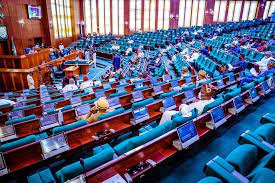
The House of Representatives on Wednesday, summoned telecommunication operators in the country to appear before it over the present poor network services.
The Ad Hoc Committee investigating the persistent poor quality of telecommunication services in Nigeria gave the chief executive officers (CEOs) of major telecom operators seven days to appear before it and explain the deteriorating quality of network services across the country.
The committee issued the ultimatum at a public hearing in Abuja on Wednesday, directing the CEOs of MTN Nigeria, Airtel Nigeria, Globacom (Glo), Mafab Communications Ltd.
and other telecommunications service providers to appear before it on October 28, 2026.The resolution followed the adoption of two motions sponsored by Rep. Sunday Umeha and Rep Afam Ogene after the committee expressed displeasure over the failure of the invited telecom operators, including MTN and Mafab Communications, to honour previous invitations and appear before the lawmakers.
The committee directed the Nigerian Communications Commission (NCC) to ensure that all the affected operators comply with the invitation and appear before it at 2 p.m. on October 28 in Hearing Room 447 of the New Building of the National Assembly Complex, Abuja.
It also directed the operators to submit all relevant documents to the committee on or before the scheduled date and account for the persistent decline in service quality, which has continued to affect millions of subscribers and businesses across the country.
The lawmakers warned that any chief executive who failed to honour the invitation would face a possible summons for arrest to compel their appearance before the committee.
Speaking at the hearing, the committee’s Chairman, Rep. Olumide Osoba (APC-Ogun), said telecommunications services had become indispensable to Nigeria’s economy, extending beyond voice calls and internet access to critical commercial activities, including Point of Sale (POS) transactions.
Osoba noted that businesses, financial transactions and other essential services depended heavily on reliable telecommunications networks, making the persistent decline in service quality a matter of serious national concern.
He said the House constituted the ad hoc committee to investigate the recurring complaints by subscribers and determine the factors responsible for the poor quality of services provided by telecommunications operators.
The chairman, however, expressed concern that the invited chief executives had continued to evade direct engagement with the committee by offering various excuses or sending lower-ranking officials to represent them.
He said the practice undermined the purpose of the parliamentary investigation, stressing that the committee expected the chief executives, who were in a position to explain their companies’ operational challenges and commitments, to appear in person.
Also speaking, Rep. Ibe Osonwa expressed displeasure over what he described as the operators’ disregard for the House, despite the substantial revenue they generated from their operations in Nigeria.
Osonwa said it was unacceptable for companies benefiting from the Nigerian market to ignore invitations from the legislature, particularly when the purpose was to obtain explanations on issues directly affecting their customers and the wider economy.
He stressed that telecommunications operators had a responsibility to account for the quality of services delivered to Nigerians, adding that the House would not overlook any attempt to frustrate its investigation.
In his ruling, Osoba urged the NCC to ensure full compliance with the committee’s resolution, reiterating that the affected telecommunications operators must appear before the lawmakers on October 28 and provide the necessary explanations and documents.




WPRF Delegates Leaving Nigeria with Positive Impressions, Says Customs CG
ShareBy Tambaya Julius, Abuja The Comptroller-General of the Nigeria Customs Service (NCS), Adewale Adeniyi, has said delegates attending the World...
Customs Suspends Training at Two Colleges over Recruitment Concerns
ShareBy Tambaya Julius, Abuja The Nigeria Customs Service (NCS) has temporarily suspended training activities at its two training colleges to...

INEC Shelves Comprehensive Voters’ Register Clean-Up
ShareBy Orjime Moses, Abuja The Independent National Electoral Commission (INEC) has said it will no longer conduct a comprehensive clean-up...
Protect The President, But Do Not Punish the People
ShareNo one disputes it: the security of the President of the Federal Republic of Nigeria cannot be compromised. Not for...

Shettima to Moniepoint: Provide Affordable Loans for Businesses
ShareBy Tony Obiechina, Abuja Vice-President Kashim Shettima has tasked Moniepoint Microfinance Bank to expand access to affordable loans for farmers,...

NDC Expresses Deep Sorrow over Bayelsa Boat Mishap
ShareFrom Mike Tayese, Yenagoa The Bayelsa State Chapter of the Nigeria Democratic Congress (NDC) has expressed deep sorrow over the...

INEC Releases 86,931 New PVCs for Collection in Kogi
ShareFrom Joseph Amedu, Lokoja A total of 86,931 PVCs for eligible registrants during the second phase registration exercise by the...
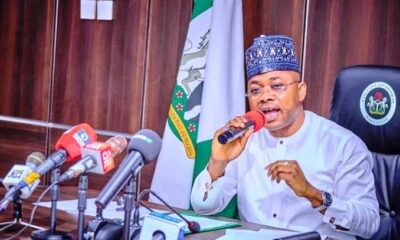

Ododo Approves Extension of Retirement Age for Health Professionals
ShareFrom Joseph Amedu, Lokoja Kogi state Governor, Ahmed Ododo has approved extension of the retirement age for eligible skilled clinical...
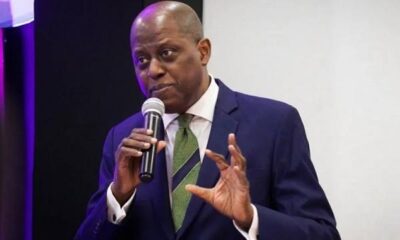

CBN Seeks Fair Representation in ECOWAS Monetary Union
ShareBy Tony Obiechina, Abuja The Governor of the Central Bank of Nigeria (CBN), Olayemi Cardoso, has called for equity, fairness...
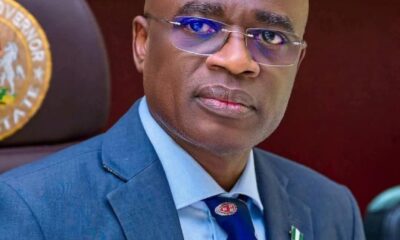

DAILY ASSET 10TH Annual Awards: Alia, Baze Varsity, Iornem Others Confirm Attendance
ShareBy Donald Andoor, Abuja Governor of Benue State, Rev Fr Hyacinth Iormem Alia, has confirmed attendance and participation at DAILY...