
Education
NBTE Moves to Close Down Illegal Private Technical Schools


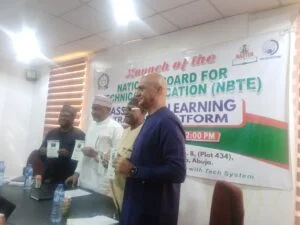
The National Board for Technical Education (NBTE), has requested security and anti-graft agencies to close down private Technical Vocational Education and Training (TVET) institutions operating without license.
Its Executive Secretary, Prof. Idris Bugaje, said this in a statement in Kaduna on Wednesday.
He said the move had become necessary to address proliferation of illegal private TVET schools across the country.
Bugaje said private institutions in Nigeria must be established in line with the provisions of National Minimum Standards and Establishment of Institutions) Amendment Act CAP E3 LFN 2004.
He said that there had been proliferation of private Polytechnics, Colleges or Schools of Health Technology and similar TVET institutions all over the country as institutions of higher education.
Bugaje said they were awarding certificates, diplomas and some even degree qualifications without Federal Government’s approval and operational licenses.
“This has become worrisome to the Board considering the poor quality of training offered by these unaccredited institutions which have not been evaluated against the national minimum standards or benchmarks.
“In most cases, these institutions do not have adequate physical facilities, staffing, teaching and instructional aids, and conducive environment that befits the status of tertiary institutions.
“Therefore, the board has mandated security and anti-graft agencies to close down any private polytechnic, college or School of Health Technology and similar TVET institutions operating without the Federal Ministry of Education’s approval and license,” he said.
Bugaje said the illegal institutions usually claimed to be affiliated to local or foreign tertiary institutions to offer a wide range of programmes without commensurate resources on ground.
He advised the public to desist from seeking admissions into unapproved TVET institutions, additing that they should verify accredited TVET institutions at the NBTE website: www.nbte.gov.ng.
He said that the list was being updated regularly to ensure that all Nigerians are adequately informed and have access to only approved and accredited TVET Institutions.
Bugaje urged health professional regulatory or registration bodies under the Federal Ministries of Health and Environment, to note that only accredited private institutions were permitted to offer health professional training programmes. (NAN)







The Federal Government has introduced a National Textbook Ranking System for Primary, Junior and Senior Secondary Schools nationwide as part of efforts to strengthen quality assurance and standardisation in the education sector.
Minister of Education, Dr.
Tunji Alausa, disclosed this in a statement by Folasade Boriowo, Director, Press and Public Relations, Federal Ministry of Education, on Monday in Abuja.Alausa said that the initiative would address the proliferation of textbooks in schools and ensure that only high-quality, curriculum-compliant learning materials were approved for classroom use.
The minister explained that under the new system, the Nigerian Educational Research and Development Council (NERDC) would retain its statutory responsibility for approving textbooks for Nigerian schools.
Beyond the approval, Alausa said textbooks would now undergo a structured national evaluation process with NERDC ranking to determine the most suitable and highest-quality options for each subject and level of education.
He added that NERDC would establish Standing Subject Committees made up of experts in relevant disciplines to conduct rigorous reviews of textbooks submitted by publishers.
He noted that the committees would assess the materials based on clearly defined academic and pedagogical standards before ranking and approving a limited number of textbooks for classroom use.
According to him, the reform is expected to reduce the excessive number of textbooks currently in circulation, which has often created confusion for teachers, students and parents.
“The ranking system will introduce transparency, order and quality assurance into the textbook approval process while aligning Nigeria’s education system with international best practices in instructional material standardisation,” he said.
Alausa added that any textbook not ranked under the new system would no longer be permitted for use in Nigerian schools, regardless of prior licensing status.
He said that the federal government would engage teachers and other stakeholders to ensure adequate awareness and compliance with the new policy framework.
He said the implementation of the new ranking system would start from the September academic session following the establishment of the Standing Subject Committees and completion of the evaluation framework.
The Federal Government has commenced a comprehensive review of agricultural curricula in polytechnics and colleges of education to address widening skills gaps and revive youth interest in agriculture.
The Chairman of the Agriculture Curriculum Review Implementation Committee, Prof.
Idris Bugaje, disclosed this at a two-day national workshop on agricultural curriculum review on Monday in Abuja.Bugaje, who is also the Executive Secretary of the National Board for Technical Education (NBTE), said many agricultural programmes had remained unchanged for more than 15 years.
He said the outdated curricula had become unattractive to young Nigerians and misaligned with industry needs.
According to him, the review will cover all 33 National Diploma (ND) and Higher National Diploma (HND) agricultural curricula, alongside more than 32 National Occupational Standards.
Bugaje said past funding for curriculum review was grossly inadequate.
He noted that about N50 million was previously allocated annually to review over 320 curricula and more than 100 occupational standards nationwide.
“The work before this committee is critical because agriculture remains the mainstay of Nigeria’s economy.
“It employs a large number of Nigerians and contributes significantly to the Gross Domestic Product (GDP).
“Unfortunately, admissions into agricultural programmes have been declining because the curricula are no longer attractive or responsive to current realities,” he said.
Bugaje added that the review would prioritise practical, industry-driven training rather than purely academic content.
He said private sector participation would be strengthened to ensure graduates acquire relevant skills aligned with modern agriculture and global best practices.
The NBTE boss said four thematic groups covering crops and agronomy, livestock, fisheries, and forestry would develop implementation timelines.
He added that the groups would also recommend industry resource persons for the exercise.
Bugaje noted that undergraduate agricultural programmes under the National Universities Commission (NUC) would not be reviewed immediately.
He said this was in line with the commission’s five-year curriculum review cycle.
He added that the exercise would instead focus on programmes supervised by NBTE and the National Commission for Colleges of Education (NCCE).
Bugaje commended the Ministers of Education, the Minister of State for Agriculture, and the Minister of Livestock Development for their collaboration.
He said their efforts facilitated the establishment of the committee.
The Executive Secretary of NCCE, Dr. Angela Ajala, said Nigeria must urgently shift agricultural education from theory to hands-on practice.
Ajala said this was necessary to address manpower shortages in extension services and specialised farm operations.
She said the decline in trained agricultural extension officers and technical experts underscored the need for a forward-looking curriculum.
“If Nigeria must secure its agricultural future, training must move from classroom theory to practical competence,” she said.
Also speaking, the Executive Secretary of the Agricultural Research Council of Nigeria (ARCN), Dr. Abubakar Dabban, said the council was committed to producing industry-ready graduates.
Dabban, represented by Dr. Oluwafemi Salako, Director of the Plant Resources Department, said the council would provide technical support for the exercise.
He said ARCN supervised 19 national agricultural research institutes and 17 federal colleges of agriculture.
He added that the council would strengthen research, training, and extension linkages.
An international expert representing the Sector Skills Council for Agriculture, Pascal Durand-Carrier, said ongoing skills-gap surveys would support the review.
Durand-Carrier said the surveys were being conducted in collaboration with international partners.
He said the effort would help align training with labour market demands and strengthen collaboration between academia and industry.
Participants at the workshop expressed optimism that the review would produce modern, market-driven curricula.
They said the outcome would attract young Nigerians to agriculture and enhance national food security.

The Joint Admissions and Matriculation Board has announced a slight adjustment to the arrival time for candidates sitting the 2026 Unified Tertiary Matriculation Examination, particularly those scheduled for the first session.
In a notice issued via its official X handle on Monday, the board stated that candidates for the first session are now expected to arrive at their examination centres by 7:00 a.
m. , instead of the earlier scheduled 6:30 a.m.JAMB added that the examination will commence at 8:30 a.m. and end at 10:30 a.m.
“Attention 2026 UTME Candidates: This is to notify you of a slight adjustment to the arrival scheduled time, particularly for the first session, which is now 7:00am as against the earlier published 6:30am, while the scheduled start time for the session is now 8:30 am and end time 10:30 am,” the notice read.
The board also clarified that candidates are not required to reprint their examination slips following the adjustment.
The full daily timetable, as shared by JAMB, includes four sessions running from Monday to Friday, with adjusted timings across all batches to ensure smoother operations at Computer-Based Test (CBT) centres nationwide.
This adjustment comes in response to long-standing feedback from candidates and parents regarding the challenges of very early morning travel, including safety concerns on roads before dawn and logistical difficulties for those coming from distant locations.
The UTME is scheduled to be held from Thursday, April 16, to Saturday, April 25, 2026.


Bago Orders Immediate Repairs of Wind-Damaged Buildings at NYSC Camp
Share From Dan Amasingha, Minna Niger State Governor, Mohammed Umaru Bago, has directed the immediate rehabilitation of buildings damaged by a windstorm at the National Youth Service Corps...
2028 Olympic Games Qualifier: Super Falcons to Discover Opponents Today
ShareNigeria’s Super Falcons will find out their opponents for the 2028 Los Angeles Olympic Games women’s football qualifiers this week. The Confederation of African Football (CAF) announced on Tuesday that the draw for the African qualifying...

Ghana Military Convoy Attack Kills Three Civilians, Seven Assailants
ShareFor Somalia’s malnourished children, already suffering the twin catastrophes of looming famine and radical cuts in foreign aid, the U.S.-Israeli...


Imo Deputy Governor Resigns
ShareFrom Marcel Duru Owerri The Commissioner for Information and Strategy Chief Declan Emelumba has said that Imo State Deputy Governor, Ekemaru has resigned. Speaking...


NAF Airstrikes Destroy Terrorists’ Structures in Mandara Mountains
ShareThe Nigerian Air Force (NAF) has sustained its counter-terrorism offensive with precision airstrikes that destroyed terrorists’ structures and logistic hubs in the Mandara Mountains area of Borno....
NDPC Awards Heirs Insurance Brokers 2025 Compliance Trust Mark
ShareHeirs Insurance Brokers Ltd. (HIB) has been awarded the Nigeria Data Protection Commission (NDPC) Audit Compliance Trust Mark for 2025....


Senate Raises the Alarm as States Mobilise Against Fresh Covid-19 Threat
ShareFrom Attah Ede, Makurdi Nigeria’s public health system has come under renewed scrutiny as the Senate called for urgent funding...


Tinubu Kicks- Off 2027 Re-Election Bid, Picks APC Nomination Forms
ShareBy Mike Odiakose, Abuja President Bola Tinubu has formally set in motion his bid for a second term in office,...
APC Adopts Charter of Equity in Imo
ShareFrom Marcel Duru, Owerri The former Commissioner in Imo state on Environmental Transformation and General Supervisor and coordinator of All...
Ex-Zamfara Kaura, Declares Intention for Second Turn
ShareFrom Ifeanyichukwu Nwannah, Gusau A former Zamfara Senator, Tijjani Yahaya Kaura has declared his intention to contest for Zamfara North...