
Education
NBTE to Reps: We’re Poorly Funded, Under-staffed

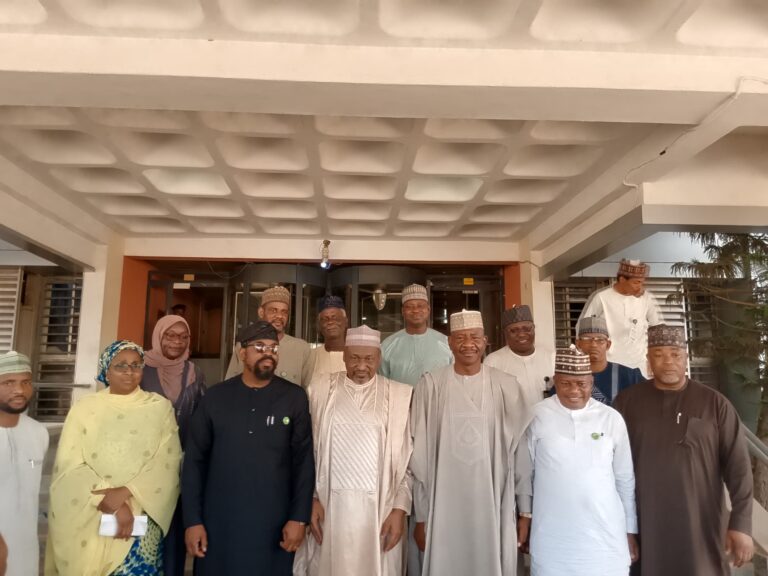
Prof. Idris Bugaje, Executive Secretary, National Board for Technical Education (NBTE), says it is poorly funded and under-staffed.Bugaje spoke on Wednesday in Kaduna when the members of the House of Representatives Committee on Federal Polytechnics and Higher Technical Education paid an oversight visit to the board’s headquarters.
He said that improved funding of the board would ensure up-skilling of Nigerian youths for local and global opportunities. Bugaje lamented that NBTE was unable to review the ND/HND curricula within the five years’ time frame due to poor funding.He decried that 2024 was the board’s worst budget, with curve-outs at the National Assembly.Bugaje equally lamented the lack of modern tools, equipment and the use of obsolete equipment in Technical and Vocational Education and Training institutions (TVET).He also mentioned some of the board’s challenges to include grabbing of its lands by some high-connected and profiled individuals in Abuja, with some of the lands recovered,The NBTE boss disclosed that the struggle to upgrade it to a National Polytechnic Commission has started, while seeking the committee’s support in realising the dream.He urged the committee to take the Zonal Offices of the NBTE as its baby, by ensuring that they were built and staffed to take the board to the grassroots.Responding, the Chairman of the committee, Fuad Laguda, stated that there was no dichotomy between the NBTE and the Nigerian Universities Commission (NUC).He said, ”It is about the NBTE and committee correcting some things that should not be the way they are.”Laguda, therefore, said it was why the committee came to the NBTE to make a case and correct the wrongs by making things right to ensure equity and justice among all the higher learning institutions.He equally said the committee would work collaboratively with all the Federal Polytechnics and the board.Speaking on under-funding, the chairman advised the board on what to do to improve its budget for maximum performance.Laguda stated the committee’s commitment to aligning with the overall objectives of a robust and enhanced technical education.(NAN)
The Joint Admissions and Matriculation Board (JAMB) has extended the sale of application forms for the 2026 Direct Entry (DE) admission exercise to May 8.
The board announced the extension in a statement issued by its spokesperson, Fabian Benjamin, on Wednesday in Abuja.
Benjamin said the decision was aimed at ensuring that no eligible candidate was denied access to tertiary education.
He said the extension replaces the earlier deadline for the exercise.
He also disclosed that five additional registration centres had been approved to ease pressure in high-demand locations.
The approved centres are the Centre for Open and Distance Learning (CODL), Mini Campus, University of Ilorin, Kwara; Bells University of Technology, and Olabisi Onabanjo University Centre 1, Ago-Iwoye, Ogun.
Others are the Prof. Usman E-Learning Centre, Federal College of Education (Special), Oyo State; and Human Development Initiatives (Grace House), No. 2 Iwaya, Sabo, opposite Onike Girls Junior High School, Onike, Lagos.
Benjamin urged prospective candidates to take advantage of the extension, noting that JAMB offices nationwide, including Professional Registration Centres (PRCs) and Professional Testing Centres (PTCs), remained open for registration.

The Federal Government has introduced a National Textbook Ranking System for Primary, Junior and Senior Secondary Schools nationwide as part of efforts to strengthen quality assurance and standardisation in the education sector.
Minister of Education, Dr.
Tunji Alausa, disclosed this in a statement by Folasade Boriowo, Director, Press and Public Relations, Federal Ministry of Education, on Monday in Abuja.Alausa said that the initiative would address the proliferation of textbooks in schools and ensure that only high-quality, curriculum-compliant learning materials were approved for classroom use.
The minister explained that under the new system, the Nigerian Educational Research and Development Council (NERDC) would retain its statutory responsibility for approving textbooks for Nigerian schools.
Beyond the approval, Alausa said textbooks would now undergo a structured national evaluation process with NERDC ranking to determine the most suitable and highest-quality options for each subject and level of education.
He added that NERDC would establish Standing Subject Committees made up of experts in relevant disciplines to conduct rigorous reviews of textbooks submitted by publishers.
He noted that the committees would assess the materials based on clearly defined academic and pedagogical standards before ranking and approving a limited number of textbooks for classroom use.
According to him, the reform is expected to reduce the excessive number of textbooks currently in circulation, which has often created confusion for teachers, students and parents.
“The ranking system will introduce transparency, order and quality assurance into the textbook approval process while aligning Nigeria’s education system with international best practices in instructional material standardisation,” he said.
Alausa added that any textbook not ranked under the new system would no longer be permitted for use in Nigerian schools, regardless of prior licensing status.
He said that the federal government would engage teachers and other stakeholders to ensure adequate awareness and compliance with the new policy framework.
He said the implementation of the new ranking system would start from the September academic session following the establishment of the Standing Subject Committees and completion of the evaluation framework.
The Federal Government has commenced a comprehensive review of agricultural curricula in polytechnics and colleges of education to address widening skills gaps and revive youth interest in agriculture.
The Chairman of the Agriculture Curriculum Review Implementation Committee, Prof.
Idris Bugaje, disclosed this at a two-day national workshop on agricultural curriculum review on Monday in Abuja.Bugaje, who is also the Executive Secretary of the National Board for Technical Education (NBTE), said many agricultural programmes had remained unchanged for more than 15 years.
He said the outdated curricula had become unattractive to young Nigerians and misaligned with industry needs.
According to him, the review will cover all 33 National Diploma (ND) and Higher National Diploma (HND) agricultural curricula, alongside more than 32 National Occupational Standards.
Bugaje said past funding for curriculum review was grossly inadequate.
He noted that about N50 million was previously allocated annually to review over 320 curricula and more than 100 occupational standards nationwide.
“The work before this committee is critical because agriculture remains the mainstay of Nigeria’s economy.
“It employs a large number of Nigerians and contributes significantly to the Gross Domestic Product (GDP).
“Unfortunately, admissions into agricultural programmes have been declining because the curricula are no longer attractive or responsive to current realities,” he said.
Bugaje added that the review would prioritise practical, industry-driven training rather than purely academic content.
He said private sector participation would be strengthened to ensure graduates acquire relevant skills aligned with modern agriculture and global best practices.
The NBTE boss said four thematic groups covering crops and agronomy, livestock, fisheries, and forestry would develop implementation timelines.
He added that the groups would also recommend industry resource persons for the exercise.
Bugaje noted that undergraduate agricultural programmes under the National Universities Commission (NUC) would not be reviewed immediately.
He said this was in line with the commission’s five-year curriculum review cycle.
He added that the exercise would instead focus on programmes supervised by NBTE and the National Commission for Colleges of Education (NCCE).
Bugaje commended the Ministers of Education, the Minister of State for Agriculture, and the Minister of Livestock Development for their collaboration.
He said their efforts facilitated the establishment of the committee.
The Executive Secretary of NCCE, Dr. Angela Ajala, said Nigeria must urgently shift agricultural education from theory to hands-on practice.
Ajala said this was necessary to address manpower shortages in extension services and specialised farm operations.
She said the decline in trained agricultural extension officers and technical experts underscored the need for a forward-looking curriculum.
“If Nigeria must secure its agricultural future, training must move from classroom theory to practical competence,” she said.
Also speaking, the Executive Secretary of the Agricultural Research Council of Nigeria (ARCN), Dr. Abubakar Dabban, said the council was committed to producing industry-ready graduates.
Dabban, represented by Dr. Oluwafemi Salako, Director of the Plant Resources Department, said the council would provide technical support for the exercise.
He said ARCN supervised 19 national agricultural research institutes and 17 federal colleges of agriculture.
He added that the council would strengthen research, training, and extension linkages.
An international expert representing the Sector Skills Council for Agriculture, Pascal Durand-Carrier, said ongoing skills-gap surveys would support the review.
Durand-Carrier said the surveys were being conducted in collaboration with international partners.
He said the effort would help align training with labour market demands and strengthen collaboration between academia and industry.
Participants at the workshop expressed optimism that the review would produce modern, market-driven curricula.
They said the outcome would attract young Nigerians to agriculture and enhance national food security.



Auto360 Nigeria Graduates New Generation of Skilled Mechanics, Sends Trainees to Industry Internships
ShareBy David Torough, Abuja Auto360 Nigeria Limited has celebrated the graduation of its latest cohort of automobile trainees, marking the...


Aminatu Dahiru Chiroma: Driving Innovation in Aviation and Empowering Communities Across Nigeria
ShareBy Raphael Atuu In an era where visionary leadership is shaping the future of Africa’s economic landscape, Aminatu Dahiru Chiroma...


Gideon Dooyum Inyom, Declares for Buruku Federal Constituency Seat
ShareThe political theatre of Benue State has taken a decisive turn with the declaration of Inyom Dooyum Gideon to contest...


Workers Day: CIPPON Salutes Print Stakeholders, Task FG On Import Duties
ShareAs Nigerians mark workers Day, the President Chartered Institute of Professional Printers of Nigeria (CIPPON), Koko T. Clement has lauded...


Security Guards Allegedly Kill Final Year Student in Kogi
ShareFrom Joseph Amedu, Lokoja Security guards at Nana College of Health, Ibana Okpo in Olamaboro Local Government Area of Kogi state were alleged to have...


Cote D’ivoire Announces 25 Per Cent Reduction in Airport Charges on ECOWAS Flights
ShareThe Ivorian government announced a 25 per cent reduction in passenger and security charges for flights within the Economic Community of West African States (ECOWAS). Three...
Prosperity Cup 2026: Quarter Finalists Emerges
ShareFrom Mike Tayese, Yenagoa Quarter finalists have emerged in Nigeria’s biggest grassroots football fiesta, the Bayelsa Governor’s Football Tournament, tagged the Prosperity Cup,...


SSANU, NASU Begin Indefinite Strike
ShareMembers of the Non-Academic Staff Union of Educational (NASU) and Associated Institutions and the Senior Staff Association of Nigerian Universities...
Expert Advocates Ear Screening before Employment
ShareAn Ear, Nose and Throat (ENT) surgeon has urged Ministries, Departments and Agencies (MDAs) to conduct ear screening and thorough medical examination on...


Tinubu Nominates Olasunkanmi Tegbe as Power Minister
Share President Bola Tinubu has nominated Joseph Olasunkanmi Tegbe as Minister of Power, subject to confirmation by the Senate. This...