
Agriculture
Nigeria Has Over 10,000 Species of Traditional Medicinal Plants — Mamora


Minister of State, Health, Sen. Adeleke Mamora, says Nigeria is endowed with over 10,000 species of medicinal plants.
He also said the country had good arable land and climatic conditions for harnessing the potentials of the plants, for health, social, economic and other benefits.
Mamora said this in Abuja at the opening of a conference on Traditional, Complementary and Alternative Medicine (TCAM).
The conference was organised by TCAM, in collaboration with the Federal Ministry of Health.
The News Agency of Nigeria (NAN) reports that the World Health Organization identified medicinal plant as the whole or part of a plant that contains bioactive substances that can be used for therapeutic purposes or serve as precursors for the synthesis of drugs.
Nigeria has a full-fledged TCAM Department in its ministry of health responsible for the formulation, review and implementation of policies and guidelines for research, development and regulation of herbal medicines.
The country launched the Traditional Medicine Policy in 2007, which has as its key objective, harnessing the potentials and economic benefits of TCAM.
The country also has a compendium of medicinal plants, the Nigerian Herbal Pharmacopeia (NHP), first published in 2008 and currently under review.
The compendium contained medicinal plants used for the safe treatment and management of various diseases.
Mamora said the conference should promote the cultivation and utilization of medicinal plants as raw materials for the pharmaceutical, food and cosmetic industries.
He said this was to create short, medium and long-term value chain and attract agricultural and manufacturing loans.
The minister said this was important, as Nigeria and other African countries currently benefitted minimally from the global herbal medicine market projected at seven trillion dollars by 2050.
He said the market had been dominated by China, India, US, Germany and Thailand.
“Significantly, the cultivation of medicinal plants and commercialisation of herbal medicines will attract huge economic benefits to Nigeria.
“Especially in the following areas: increase foreign exchange earnings and wealth creation, alleviate poverty through the creation of job opportunities in areas of cultivation and conservation of medicinal plants in Nigeria,” he added.
He assured that the ministry remained committed to developing and promoting traditional, complementary and alternative medicine in Nigeria.
He said stakelders had initiated sensitisation programmes and activities to promote the cultivation, commercialisation and use of indigenous medicinal plants in the country.
It “facilitated the passage of the TCAM Council Bill into Law, to effectively coordinate and regulate TCAM practice in the country.
The stakeholders also “inaugurated an Expert Committee that is currently working out modalities for the take-off of TCAM Institute for the training of TCAM practitioners in Nigeria”.
Prof. MacDonald Idu, a professor of Phytomedicine from the University of Benin, in a keynote address, said if properly harnessed, the value of traditional medicinal plants in Nigeria would hit N1 trillion by 2025.
He put the current market value of traditional medicinal plants conservatively at about N200 billion, regretting that not much attention has been paid to harness the sector.
“We talked about $200 billion. It is conservative. I’m serious. Other forms of literature that I have also read, we are going to hit about N1 trillion by 2025. I know what that means. That’s a lot of money” he said.
Idu said Nigeria must show commitment towards diversifying the economy.
“Nigeria I’m sorry, we don’t walk the talk. We talk a lot, but we don’t walk the talk. So my point of interest is to drag the hearts of our people to realise that we should diversify our economy.
“We don’t have any reason to be poor. That’s the real truth. We don’t have any reason to import everything that we need to survive. It’s already here. Why do you have them here?
“So, I believe that if we’re able to set up that platform again, and then we’re able to organize ourselves and organize the traditional medicine practitioners and producers, we should be able to raise enough money for this country to move forward,” Idu added.
Earlier, the First Lady, Mrs Aisha Buhari, expressed regret over the low level of utilisation of the over 10,000 species of medicinal plants in the country, in spite of its huge need for the production of drugs, cosmetics and other essential products.
Buhari expressed the present administration’s commitment to boosting the commercial cultivation of such plants for the health, economic and social benefits of the people.
She said it would also open new areas for wealth and job creation for the teeming youths of the country.
The Conference is expected to bring together experts and other stakeholders in various fields of TCAM to brainstorm on the importance of indigenous medicinal plants to healthcare delivery in Nigeria. (NAN)
From Attah Ede, Makurdi
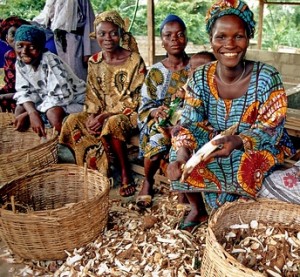
Olam Agri, in partnership with Sustainable Collective Advocacy for Africa Development (SCAAD) Initiative, is to launch the Community Resilience Opportunities for Women and Youth (CROWY) in Benue and Nasarawa States.
A press release by Elizabeth Nnoko Communication Manager, Olam Agri, said the CROWY Project is aimed at creating lasting positive change for women and youth across Nigeria’s North-Central region.
The Project ground-breaking initiative is designed to empower grassroots women and youth farmers, aligning with national development and gender equality objectives.
The project also, aims to strengthen livelihoods during off-farming seasons by equipping beneficiaries with strategic leadership skills, entrepreneurship training, and increased awareness on inclusion, gender equality, and early warning signs and systems related to Gender-Based Violence (GBV).
Delivered in collaboration with Rich-Oak Life Initiative, Sahel International Support Foundation, and Elikizi Foundation for Women and Youth Advancement, the CROWY Project seeks to close critical economic gaps by providing inclusive livelihood opportunities, access to cooperative financing, and leadership support for emerging women and youth-led enterprises.
“We aim to create 10 Village Savings and Loan Associations and support 100 of women and youth entrepreneurs within the first year in the fields of tailoring, baking amongst others.
“This intervention will expand economic opportunities, promote self-employment, and build sustainable and resilient livelihoods across the targeted communities.
“Across Nigeria, women, youth, and persons with disabilities continue to face systemic barriers to education, livelihoods, and leadership pathways. Recent statistics highlight the urgency of this challenge.
“In 2023, women’s labour force participation stood at just over 52%, down from nearly 57% in 2010 (Statista, 2023). Youth unemployment remains critically high, with 53% of Nigerians aged 15–24 unemployed or underemployed (World Bank, 2024).
“According to Nigeria’s Minister of Women Affairs, as of October 2025, approximately 70% of Nigerian women live in extreme poverty, unable to meet basic needs or sustain livelihoods
“These figures paint a stark picture of structural inequalities that continue to undermine national development and social stability”, the statement said.
On the part of SCAAD initiative, a Statement by Frances Okeke, Executive Director, stated that “Every day, we meet women and young people with immense creativity and resilience, yet without the support they need to thrive truly. Nigeria’s overlapping crises have made survival even harder for them, especially in farming communities where off-season periods often deepen economic vulnerability.
Okeke maintained the through the support of Olam Agri, the CROWY Project is stepping into this gap, offering practical skills, livelihood opportunities, and hope to grassroots women and youth.
Said he, “Together, we are equipping individuals not only to earn a living during non-farming seasons but also to lead, innovate, and uplift their communities. When women and young people are given the tools to succeed, entire communities become more resilient and rise with them.”
While Anil Nair, Country Head Olam Agri Nigeria added, “Our partnership with SCAAD Initiative on the CROWY Project reinforces our shared vision of resilient, empowered, and economically active communities. Women and youth are central to the future of agriculture in Nigeria and supporting them through targeted skills development and inclusive financing is essential for long-term national growth.
“Olam Agri will continue to champion initiatives that uplift vulnerable groups and strengthen the fabric of our communities.”
“Olam Agri and SCAAD Initiative invite government agencies, community leaders, NGOs, and development partners to join in supporting inclusive livelihood strategies. Collaboration is vital to building resilient, equitable communities.
“The partnership is committed catalyze efforts to enhance economic opportunities, promote self-employment, and build sustainable livelihoods for women and youth in conflict-affected communities”.

The Federal Government said African countries must shift from reactive, event-driven responses to predictive, risk-based and analytics-driven surveillance to meet the global target of Peste des Petits Ruminants (PPR) disease eradication by 2030.
PPR is a viral disease caused by morbillivirus closely related to rinderpest virus which affects goats, sheep and wild relatives of domesticated small ruminants and camels.
Permanent Secretary, Federal Ministry of Livestock Development, Dr.
Chinyere Akujobi said this in Abuja on Wednesday at the Regional Training on Strengthening Animal Disease Surveillance, Building Capacities for PPR Eradication and Trans-boundary Animal Diseases.The training was under the Framework of Implementation of the Pan-African PPR Eradication and other Sheep and Goat Disease Control Programme in West African Member Countries.
It was organised by the Food and Agriculture Organisation of the United Nations (FAO) in collaboration with the African Union-Interafrican Bureau for Animal Resources (AU-IBAR) with financial support from the European Union.
Akujobi urged every country to build surveillance systems that were smarter, faster and more collaborative.
She further urged strengthening coordination, adoption of modern tools and ensuring information-driven action.
“We must build stronger technical skills in participatory and risk-based surveillance; harmonise epidemiological procedures so that data generated across countries can be compared and acted upon.
“We must adopt modern tools for defining epi-systems, map high-risk zones and integrate these results into continental and global platforms and strengthen regional coordination structures and the Regional Veterinary Committee.
“These priorities speak directly to the core challenges of our region, uneven reporting, weak linkages between laboratories and field surveillance, fragmented information systems and gaps in cross-border coordination,” she said.
She said the presence of participants at the workshop demonstrated the collective commitment of the region in tackling diseases that continued to undermine livestock productivity, livelihoods and regional integration.
Akujobi urged the participants to approach the sessions with an evidence-driven mindset that reflected the complexity of today’s trans-boundary animal disease landscape.
“Our surveillance systems must be guided by real-time information and must incorporate digital tools that enable us to detect risks early and intervene quickly.
“At the same time, our countries must work in harmony, because a disease like PPR does not recognise administrative boundaries.
“It is essential that our systems speak to one another and that information flows seamlessly from community animal health workers to national databases and onward to regional and global systems.
“This gathering is more than a routine training session; it represents a strategic turning point for West Africa,” she said.
According to her, many African countries remain heavily affected by PPR, Foot and Mouth Disease, African Swine Fever, Anthrax, Highly Pathogenic Avien Influenza (HPAI) among other trans-boundary and zoonotic diseases that threaten food security.
“The small ruminant sector, in particular, supports millions of families, including women and youth whose livelihoods depend on healthy animals.
“Every outbreak that sweeps through our communities deepens vulnerability and disrupts social and economic stability,” she said.
She assured that Nigeria remained fully committed to regional solidarity and to the Pan-African PPR Eradication Programme.
Akujobi said the country was focused on strengthening the National Animal Disease Information System to improve reporting from across the federation, enhanced laboratory–field collaboration under the One Health approach.
According to her, Nigeria works closely with ECOWAS, AU-IBAR, FAO and World Organisation for Animal Health to align national actions with continental strategies.
The training targeted veterinarians, laboratory scientists, epidemiologists, wildlife experts, border authorities and pastoralist communities across West Africa.
Its goal was to strengthen national and regional systems to enable them to be better equipped to eradicate PPR.

The Federal Government, through the Kano State Special Agro-Processing Zone (SAPZ) Programme in partnership with IFAD, has empowered 9,870 rice farmers in Kano with climate-resilient inputs and modern rice production technologies.
This was contained in a statement issued by the SAPZ Knowledge Management and Communication Officer, Rabi Mustapha.
The State Project Coordinator, Aminu Iliyasu, disclosed this on Sunday during the Farmers Field Day at Chiromawa Garin Babba Cluster in Garun Malam Local Government Area.
He said the exercise was organised to expose the farmers to Science-based and practical solutions capable of enhancing yields, improving food security, and boosting rural livelihoods.
Iliyasu described the field day as a celebration of knowledge, innovation and the resilience of smallholder farmers.
He explained that the SAPZ initiative in Kano aimed to expand access to improved technologies, strengthen extension services, reduce post-harvest losses and create market opportunities for rural farmers.
“These innovations are not theoretical. They are practical solutions that farmers can adopt immediately to raise productivity and increase income,” he said, while commending the support of local authorities.
Mustapha said the inputs distributed to 9,870 farmers included FARO 44 improved seeds, Urea and NPK fertilizers, and insecticides, targeting beneficiaries in Garun Malam, Gezawa, Bichi and Bagwai LGAs during the 2025 wet season.
She added that experts trained farmers on soil selection, seed dressing, nursery establishment, land preparation, and timely transplanting at proper spacing.
“They also covered fertilizer management, weed control, Integrated Pest Management and water regulation to boost rice yields.
“The training emphasised harvesting at optimal maturity, drying paddy to safe moisture levels, and fumigation using phostoxin to prevent storage losses,” she stated.
A beneficiary, Salamatu Ali, said the intervention had positioned Kano farmers to boost yields, withstand climate pressures and increase household incomes.
Another farmer, Huwaila Ibrahim, said the programme transformed her approach to rice production.
“Before, we planted without checking whether the land was suitable.
“Now, we first assess the soil to ensure it matches the seed variety. This season, we cultivated FARO 44,” she said.
Ibrahim added that her output increased from 20–25 bags per acre to about 40 bags after adopting the improved technologies.



Insecurity: CAN Tasks Government to Collaborate with Religious Organizations
ShareBy Laide Akinboade, Abuja The Christian Association of Nigeria (CAN) on Wednesday tasked the three tiers of Government in Nigeria...


SEC Asks Investment Tribunal to Freeze CBEX Bank Accounts
ShareBy Tony Obiechina, Abuja The Securities and Exchange Commission (SEC) Nigeria has filed a suit before the Investment and Securities...


Corruption: 80 Per Cent Nigerians Risk Jail Terms says ICPC
ShareBy David Torough, Abuja The Independent Corrupt Practices and Other Related Offences Commission (ICPC) has warned that Nigeria’s corruption crisis...

Olam Agri Partners with SCAAD to Empower Women in Benue, Nasarawa
ShareFrom Attah Ede, Makurdi Olam Agri, in partnership with Sustainable Collective Advocacy for Africa Development (SCAAD) Initiative, is to launch...


Security Operatives Arrest 32-yr-old Man for Allegedly Negotiating Ammunition for Bandits in Zamfara
ShareFrom Ifeanyichukwu Nwannah, Gusau A 32-year-old man, Ahmed Abubakar suspected to be armed weapons dealer has been arrested in Abuba,...
Zamfara Charges Corps Members to Live Harmoniously with Host Communities
ShareFrom Ifeanyichukwu Nwannah, Gusau Zamfara State Government has charged Corps members deployed to the State to demonstrate commitment and live...


Ademola Adeleke: Between Dancing Steps and Political Cul-de-sac
Share By Wale Sadeeq Gov. Ademola Adeleke of Osun is known for dancing hysterically at virtually every public occasion, to the...

FG, Partners Champion Women’s Empowerment in Livestock Sector
ShareBy Raphael Atuu, Abuja The Minister of Livestock Development, Idi Mukhtar Maiha, has reaffirmed the Federal Government’s commitment to placing...


Mutfwang Declares ASUP National Delegates Conference Open in Jos
ShareFrom Jude Dangwam, Jos Plateau State Governor, Caleb Mutfwang has declared open the 18th National Delegates Conference of the Academic...


Nigeria’s Gemade Builds Fleet For Saudi’s New National Carrier
ShareBy Mike Odiakose, Abuja When Saudi Arabia’s Crown Prince Mohammed bin Salman personally unveiled the Kingdom’s new National Carrier on...