
Foreign News
Niger Coup: On Russian Mercenaries, NATO Forces And Looming Proxy Wars in ECOWAS


By Yushau A. Shuaib
The hurriedly declared resolution of the Economic Community of West African States (ECOWAS) to deploy troops to restore democracy and reinstate the ousted President Mohamed Bazoum of Niger Republic, after the military takeover of power on the 26th of July, might have been influenced by the need to avoid foreign interventions that could lead to the kinds of destruction and agony evident in Syria, Yemen, Libya, Sudan, and elsewhere.
In its keen and swift desire for a resolution to the crisis, President Bola Tinubu, on behalf of ECOWAS, raised special envoys, comprising former Nigerian leader, General Abdulsalam Abubakar; the Sultan of Sokoto, Muhammad Abubakar III and the president of the ECOWAS Commission, Alieu Touray, to mediate in the unfolding crisis in Niger.
Unfortunately, the Nigerien Coup leader, Abdourahmane Tchiani, snubbed the ECOWAS delegation by refusing to receive them, even though he later received the former Emir of Kano, Sanusi Lamido Sanusi. It was quite disheartening that the official delegation was not even given access to leave the airport in Niamey in the endeavour to meet with Tchiani and Bazoum.It is gratifying that Tinubu subsequently constituted another powerful delegation, comprising top Islamic clerics, to open talks with the junta in Niger, which has now agreed to dialogue with the ECOWAS on the way forward in the country.
The latest action by ECOWAS is possibly to checkmate what appears to be an evolving annual ritual, evident in the past three years, in which military personnel in Francophone countries in the subregion are overthrowing democratically elected leaders. The coup plotters removed Presidents Ibrahim Boubacar Keita of Mali in 2020, Alpha Condé of Guinea in 2021, Roch Marc Christian Kaboré of Burkina Faso in 2022 and now President Mohamad Bazoum of Niger in 2023.
The military juntas, led by Colonel Assimi Goïta in Mali, Colonel Mamady Doumbouya in Guinea, and Captain Ibrahim Traoré in Burkina Faso, were mostly trained by the U.S. In fact, Goita and Doumbouya attended a 2019 US military training exercise in Burkina Faso. Surprisingly after taking over, they also drove away French troops and allegedly invited Russian mercenary forces in as their replacement.
While increasing complaints about poor governance, escalating poverty and insecurity are often cited for the coups, a deeper factor is the geopolitics of resource access and control. This involves foreign interests’ desires to explore and control the abundant mineral resources of West African nations. Hence, the ascendant tension in Niger and the wider subregion are impelled by the imperialist and economic rivalry between the East and the West.
As it is now, if appropriate steps are not taken to defuse the budding conflict in Niger Republic, the ongoing proxy war between Russia and NATO/USA over Ukraine, can easily creep into West Africa, where diverse groups of mercenaries and Western Special Forces are already stationed across different locations, and with the military bases just waiting for instructions from their commanders for armed actions to break out.
In many instances, military actions and interventions are not only carried out on battlegrounds but they are first activated in the minds of the public through crude propaganda. The conflict in Ukraine, for instance, exposes how the Western media – essentially – display their extreme biases in reportage, as they engage in psychological warfare, propagating one-sided and selective facts, while censoring counterclaims and obvious facts. Rather than striving for fair, conflict-sensitive, and objective reports towards the promotion of peace, they are advancing a highly inflammatory and pernicious form of war journalism and thereby escalating the crises in the process. This appears to be working to certain ends.
A similar instance of this that we should never forget in a hurry is the conspiracy involving the Western media over the so-called accumulation of weapons of mass destruction in Iraq, and the democratisation campaign in Libya, which led to the elimination of the leaders of the two mentioned countries, Saddam Hussein and Muammar Ghadafi, and to the death of scores of innocent citizens through the aggression of the allied forces and NATO.
In considering the unfortunate case of poor Ukraine, which has become the battleground for the flexing of muscles between Russian mercenaries and Western (US/NATO) Special Forces – with attendant devastation that would take several years, if not decades, to recover from – care should be seriously taken so that West Africa does not become next theatre of a proxy war between foreign powers driven by agenda that is far from the liberation of the subregion and larger continent from their debilitating challenges.
Although the Russian government does not have military bases in Africa like US and France that represents NATO do, its presence is strongly felt through the activities of the Wagner Group of armed mercenaries, which executes the government’s military cooperation agreements, especially in a number of West African states.
While Wagner’s fighters are hired by African leaders for regime protection and to consolidate their holds on power, the Group, founded by Yevgeny Prigozhin as a private military company, operates with the permission of Russian President Vladimir Putin.
The mercenaries are hired to suppress dissent, guard natural resources, engage in direct combat with adversaries, bolster weak official military forces, and explore newer areas of strategic vulnerability towards rooting out the West’s declining influence in many sensitive spots around the world. Of its numerous engagements, the Wagner Group is more keenly involved in providing security cover for well-laden but remote mineral sites that are often under the constant threat of non-state actors.
Meanwhile, as mercenaries are having their ways in the African region, NATO through the US continues to carry out joint military exercises with other allies and partners in contiguous territorial spaces within the region. For instance, the US Africa Command (USAFRICOM), headquartered in Stuttgart, Germany (another NATO member), is one of the US Department of Defense combatant commands, with a geographic or functional mission that provides for the command and control of military forces for peace and war. It has military bases in select African countries.
In the West African rim of the Sahel, for instance, the United States under President Joe Biden has two military bases in Niger – Air Base 101 in Niamey, and Air Base 201 in Agadez, which was constructed at the cost of $110 million. The American interventions in Niger have included the deployment of special operations forces, unmanned aerial vehicles and drones by its Air Force, while the CIA has engaged in counter-terrorism operations.
After its ejection from the other francophone countries in West Africa, France (NATO member), with the support of America, has reinforced its presence in Niger and despatched hundreds of its operatives to the southwest of the country, towards the Malian border. Niger previously served mainly as a transit base for France’s operations in Mali.
And just recently, precisely in May 2023, in a new strategic partnership, Niger accepted 1,500 French soldiers on its soil to bolster its armed forces, at a time of a great security threat. Before then the European Union (EU) had accepted the call from Niger’s parliament to station special operations forces (SOF) in the country in order to counter its problems of insecurity. Note that the security of EU and NATO are inter-connected having respectively 27 and 31 member states, of which 22 states are members of both.
It is also worth noting that the US and French Special Forces have jointly and discreetly undertaken major military operations within the ECOWAS region. It could be recalled that at some point the US special forces secretly came into Nigeria and killed several kidnappers while rescuing a 27-year-old American citizen, Philip Walton, who was abducted in Niger in 2020.
Similarly, during the Tongo Tongo ambush in 2017, when armed terrorists attacked US and Nigerien soldiers in an ambush, French aircraft swiftly responded to this and brought the fire-fight to an end. Although some Americans and Nigeriens were killed during the military intervention, many soldiers actually survived that operation.
While ECOWAS is struggling to ensure that the Niger crisis is resolved amicably, some Nigerians are unmindful of their provocative behaviours and statements. It is quite shameful that those who never experienced a civil war or a military coup, are the ones clamouring for a military intervention in the world’s most populous black nation on the basis of myopic sentiments. Any attempt to disrupt the current democratic administration, under the leadership of President Ahmed Bola Tinubu, will not only lead to the dissolution of the country but would unleash on each region monumental security challenges that it barely has the capacity to contend with. Imagine an ‘explosion’ of terrorism in the North-East, banditry in the North-West, kidnappings in the North-Central, volatile militancy in the South-South, violent secessionist agitation in the South-East, and cultism in the South-West. No single region will be willing to stick its neck out in furtherance of any campaign for a united country thereafter.
In a nutshell, I agree with the recent position of the Arewa Economic Forum (AEC) supporting the deepening of democratic principles in the subregion and urging ECOWAS to allow the socio-economic reality of Nigeriens to govern their choices. While suggesting that sanctions should be targeted at the military junta and its cronies, the Forum yet admonished that ways have to be found to protect innocent citizens, especially vulnerable people, including traders, women and children, from these penalties.
Being one of the poorest nations on earth, any further deterioration of the precarious living conditions of Nigeriens would activate hordes of new migrations into Nigeria for succour, which will invariably burden our current economic situation and put further pressure on our scarce national resources.
All said, Nigeria must avoid going into a new war when the country is yet to contain ISWAP-Boko Haram terrorism and the pervasive acts of banditry, especially along the Northern corridor. Dialogue and diplomacy should be sustained towards resolving not only the Nigerien but also the ECOWAS crises.
Yushau A. Shuaib, author of “An Encounter with the Spymaster” and “Award Winning Crisis Communication Strategies” blog www.YAShuaib.com yashuaib@yahoo.com
By Ubong Ukpong, Abuja
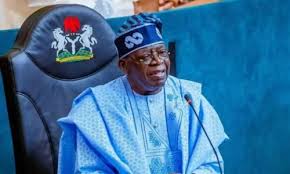
President Bola Tinubu has expressed commitment to the development of children in the country.
He said this at the launching and public presentation of a new book titled The Power of a Teenager: 50 Ways to Inspire Change, written by Chairman of the Public Accounts Committee, House of Representatives, and Founder of the Children of Africa Leadership and Values Development Initiative (CALDEV), Rep.
Bamidele Salam on Thursday.Tinubu, who was represented by the Senior Special Assistant to the National Assembly, House of Representatives Liaison, Dr. Ibrahim Olarewaju, commended Salam for his dedication to youth development.
“You may not fully understand the impact of what you are receiving now, but tomorrow you will see what.
Hon. Bamidele Salam has done in your lives,” he said.He urged all attendees to make a personal commitment to shaping the minds of young Nigerians, stressing that while Salam funded the initiative personally, the greater task lies in mentoring and guiding the nation’s youth.
The Vice President, Kashim Shettima, described the launch as a clear demonstration of the potential of Nigerian children.
Represented by Senior Special Assistant, Dr. Kingsley Uzoma, praised Salam for aligning his work with the administration’s vision for youth empowerment.
“This initiative speaks directly to the leaders of tomorrow,” he added, commending both the organisation and the children participating in the programme.
Chief of Staff to the President, Femi Gbajabiamila also lauded Salam’s efforts.
“Nigerian children are the future of this nation. Even though they are young, we are looking to them to take this country to where it should be,” he said.
Gbajabiamila commended Salam for consistently producing the book annually, calling it a testament to leadership and commitment.
“Leadership may be inborn or thrust upon you, but there must be someone to guide you. That is what this book is doing—it provides the guidance our young people need,” he said, urging children to read and internalise its lessons.
Speaking at the event, Rep. Bamidele Salam shared the story of how CALDEV was founded in 2015 to fill a gap in Nigeria’s educational system.
Unlike in other countries, he said, leadership training is rarely embedded in the curriculum. Through CALDEV and its flagship National Children’s Leadership Conference, children gain practical exposure to leadership, public speaking, and community service.
Many past participants have gone on to start NGOs, run radio programmes, and lead campaigns addressing early marriage, child labour, and other social issues.
“This year, about 400 children are participating, and the impact has been phenomenal,” Salam said. He urged state governments to replicate the initiative at the state level to provide young people across Nigeria with intensive leadership training. Highlighting the large participation from Borno State, Salam said that properly trained and nurtured children could become agents of change, promoting peace, tolerance, education, and societal development.
Minority Leader of the House of Representatives, Kingsley Chinda, lauded Rep. Bamidele Salam for his dedication to youth development through the newly launched book.
Chinda expressed pride that a member of the House is actively shaping the future of Nigerian children.
“As members of the House of Representatives, we hold our heads high today that one of us is doing this. We are very, very proud, and we pray that this inspiration should flow through every other member of the House,” he said.
Chinda noted that the legacy of leaders and thinkers is remembered not for wealth but for wisdom and the knowledge they left behind.
“When we see initiatives like this, these are the things worthy of celebration,” he said.
Member of the House from Borno State, Zainab Gimba, said,”We have come because we are celebrating not just a book today when they had an imagination behind it. I actually commend for shining the compassionate and bright lights of our teenagers.
“He has given our young people a voice that others will also step on the same foot, so that our teenagers will be empowered, not in this generation, but in future generations to come.”
Former South Korean president Yoon Suk Yeol, currently in jail after being impeached and removed from office, has been charged with additional offences, including supporting an enemy state.
The prosecutors said this on Monday.
Yoon, 64, is accused of attempting to provoke a military conflict between South and North Korea by covertly sending drones into the North, in an effort to legitimise a state of martial law he declared late last year.
Prosecutors argued that the drone deployment in October 2024 led to the leak of military secrets to the North as the vehicles crashed near Pyongyang.
The conservative politician has been in pre-trial detention for months and already faces charges over the declaration that include high treason, a crime punishable by life imprisonment.
Yoon’s dramatic action on December 3 plunged the country into a deep political crisis.
He justified the move by claiming that the left-wing opposition had been infiltrated by communist and anti-state forces, though he presented no evidence to support the allegations, and it was soon overturned.
Left-leaning Lee Jae Myung is now president; he won an early presidential election in June following Yoon’s removal from office in April.
The African Union (AU) has called for an urgent international response, including intelligence-sharing, to address worsening security conditions in Mali, where insurgents are imposing a fuel blockade and kidnapping foreigners.
An Al Qaeda-linked jihadist group active in West Africa’s Sahel region has blocked fuel imports since September, attacking convoys of tankers and creating a shortage that forced schools and businesses to shut.
The latest show of force by the group, Jama’at Nusrat al-Islam wal-Muslimin, has raised concern that it might eventually try to impose its rule over the landlocked country.
Western countries including the U.S., France, Britain, and Italy are urging their citizens to leave.
In a statement, Mahmoud Ali Youssouf, chairperson of the African Union Commission, expressed “deep concern over the rapidly deteriorating security situation in Mali, where terrorist groups have imposed blockades, disrupted access to essential supplies, and severely worsened humanitarian conditions for civilian populations”.
He said there should be “enhanced cooperation, intelligence-sharing and sustained support” for countries in the Sahel affected by violent extremism.
He also called for the immediate release of three Egyptian nationals he said were recently kidnapped.
JNIM has targeted foreign nationals for kidnapping to finance its operations in West Africa.
Reuters reported in October that a deal was reached to free two citizens of the United Arab Emirates in exchange for a ransom payment of roughly 50 million dollars.

Appeal Court Upholds Judgment Stopping VIOs from Impounding Vehicles, Imposing Fines
ShareThe Court of Appeal in Abuja, on Thursday, affirmed a judgment barring the Directorate of Road Traffic Services and Vehicle...


Club De Pals Abuja celebrates 30th Anniversary with recognitions and Awards for excellence
ShareTOM CHIAHEMEN All is now set for the grand celebration of the 30th Anniversary of Club De Pals Abuja, the...
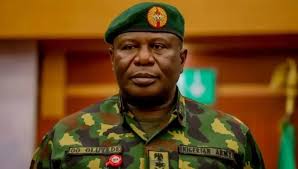

Military Neutralises Scores, Rescues 318 Victims as Armed Forces Intensify Nationwide Operations
ShareBy David Torough, Abuja The Armed Forces of Nigeria (AFN) says its troops recorded major breakthroughs across all theatres of...
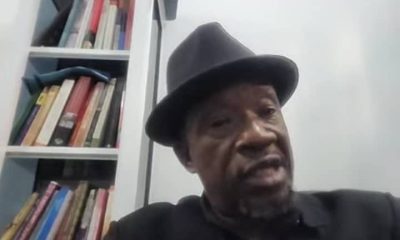

Security Expert, Jackson Ojo, Calls for Resignation of Matawalle
Share…Says He Can’t Work as Team Member with Chris Musa By Mike Odiakose, Abuja Following the resignation of Minister of...

SON, MSN Partner to Ensure Mycotoxin-free Agriculture
ShareThe Mycotoxicology Society of Nigeria (MSN) in collaboration with the Standards Organization of Nigeria (SON) has moved for the detection...


ShareABUMET Brings Joy to JKS Orphanage Through Annual CSR Outreach By Mike Odiakose, Abuja In line with its long-standing commitment...


Senate Seeks Death Penalty for Terrorism Convicts, Informants, Financiers
ShareBy Eze Okechukwu, Abuja In a major legislative push to curb the worsening state of insecurity, the Senate unanimously approved...

FG Empowers 9,870 Farmers with Inputs, Modern Rice Technologies in Kano
ShareThe Federal Government, through the Kano State Special Agro-Processing Zone (SAPZ) Programme in partnership with IFAD, has empowered 9,870 rice...
FG Unveils National Agricultural Sample Survey, 2023 Report for Food Security
ShareThe Federal Government has launched the National Agricultural Sample Survey (NASS) 2023 report, towards developing data-driven policies to achieve food...
Senate Proposes 2-Year Pupillage for Lawyers Newly Called to Bar
ShareBy Eze Okechukwu, Abuja The Senate has passed a bill to amend the Legal Practitioner Act, 2004 into second reading,...