
Foreign News
Niger Coup: On Russian Mercenaries, NATO Forces And Looming Proxy Wars in ECOWAS


By Yushau A. Shuaib
The hurriedly declared resolution of the Economic Community of West African States (ECOWAS) to deploy troops to restore democracy and reinstate the ousted President Mohamed Bazoum of Niger Republic, after the military takeover of power on the 26th of July, might have been influenced by the need to avoid foreign interventions that could lead to the kinds of destruction and agony evident in Syria, Yemen, Libya, Sudan, and elsewhere.
In its keen and swift desire for a resolution to the crisis, President Bola Tinubu, on behalf of ECOWAS, raised special envoys, comprising former Nigerian leader, General Abdulsalam Abubakar; the Sultan of Sokoto, Muhammad Abubakar III and the president of the ECOWAS Commission, Alieu Touray, to mediate in the unfolding crisis in Niger.
Unfortunately, the Nigerien Coup leader, Abdourahmane Tchiani, snubbed the ECOWAS delegation by refusing to receive them, even though he later received the former Emir of Kano, Sanusi Lamido Sanusi. It was quite disheartening that the official delegation was not even given access to leave the airport in Niamey in the endeavour to meet with Tchiani and Bazoum.It is gratifying that Tinubu subsequently constituted another powerful delegation, comprising top Islamic clerics, to open talks with the junta in Niger, which has now agreed to dialogue with the ECOWAS on the way forward in the country.
The latest action by ECOWAS is possibly to checkmate what appears to be an evolving annual ritual, evident in the past three years, in which military personnel in Francophone countries in the subregion are overthrowing democratically elected leaders. The coup plotters removed Presidents Ibrahim Boubacar Keita of Mali in 2020, Alpha Condé of Guinea in 2021, Roch Marc Christian Kaboré of Burkina Faso in 2022 and now President Mohamad Bazoum of Niger in 2023.
The military juntas, led by Colonel Assimi Goïta in Mali, Colonel Mamady Doumbouya in Guinea, and Captain Ibrahim Traoré in Burkina Faso, were mostly trained by the U.S. In fact, Goita and Doumbouya attended a 2019 US military training exercise in Burkina Faso. Surprisingly after taking over, they also drove away French troops and allegedly invited Russian mercenary forces in as their replacement.
While increasing complaints about poor governance, escalating poverty and insecurity are often cited for the coups, a deeper factor is the geopolitics of resource access and control. This involves foreign interests’ desires to explore and control the abundant mineral resources of West African nations. Hence, the ascendant tension in Niger and the wider subregion are impelled by the imperialist and economic rivalry between the East and the West.
As it is now, if appropriate steps are not taken to defuse the budding conflict in Niger Republic, the ongoing proxy war between Russia and NATO/USA over Ukraine, can easily creep into West Africa, where diverse groups of mercenaries and Western Special Forces are already stationed across different locations, and with the military bases just waiting for instructions from their commanders for armed actions to break out.
In many instances, military actions and interventions are not only carried out on battlegrounds but they are first activated in the minds of the public through crude propaganda. The conflict in Ukraine, for instance, exposes how the Western media – essentially – display their extreme biases in reportage, as they engage in psychological warfare, propagating one-sided and selective facts, while censoring counterclaims and obvious facts. Rather than striving for fair, conflict-sensitive, and objective reports towards the promotion of peace, they are advancing a highly inflammatory and pernicious form of war journalism and thereby escalating the crises in the process. This appears to be working to certain ends.
A similar instance of this that we should never forget in a hurry is the conspiracy involving the Western media over the so-called accumulation of weapons of mass destruction in Iraq, and the democratisation campaign in Libya, which led to the elimination of the leaders of the two mentioned countries, Saddam Hussein and Muammar Ghadafi, and to the death of scores of innocent citizens through the aggression of the allied forces and NATO.
In considering the unfortunate case of poor Ukraine, which has become the battleground for the flexing of muscles between Russian mercenaries and Western (US/NATO) Special Forces – with attendant devastation that would take several years, if not decades, to recover from – care should be seriously taken so that West Africa does not become next theatre of a proxy war between foreign powers driven by agenda that is far from the liberation of the subregion and larger continent from their debilitating challenges.
Although the Russian government does not have military bases in Africa like US and France that represents NATO do, its presence is strongly felt through the activities of the Wagner Group of armed mercenaries, which executes the government’s military cooperation agreements, especially in a number of West African states.
While Wagner’s fighters are hired by African leaders for regime protection and to consolidate their holds on power, the Group, founded by Yevgeny Prigozhin as a private military company, operates with the permission of Russian President Vladimir Putin.
The mercenaries are hired to suppress dissent, guard natural resources, engage in direct combat with adversaries, bolster weak official military forces, and explore newer areas of strategic vulnerability towards rooting out the West’s declining influence in many sensitive spots around the world. Of its numerous engagements, the Wagner Group is more keenly involved in providing security cover for well-laden but remote mineral sites that are often under the constant threat of non-state actors.
Meanwhile, as mercenaries are having their ways in the African region, NATO through the US continues to carry out joint military exercises with other allies and partners in contiguous territorial spaces within the region. For instance, the US Africa Command (USAFRICOM), headquartered in Stuttgart, Germany (another NATO member), is one of the US Department of Defense combatant commands, with a geographic or functional mission that provides for the command and control of military forces for peace and war. It has military bases in select African countries.
In the West African rim of the Sahel, for instance, the United States under President Joe Biden has two military bases in Niger – Air Base 101 in Niamey, and Air Base 201 in Agadez, which was constructed at the cost of $110 million. The American interventions in Niger have included the deployment of special operations forces, unmanned aerial vehicles and drones by its Air Force, while the CIA has engaged in counter-terrorism operations.
After its ejection from the other francophone countries in West Africa, France (NATO member), with the support of America, has reinforced its presence in Niger and despatched hundreds of its operatives to the southwest of the country, towards the Malian border. Niger previously served mainly as a transit base for France’s operations in Mali.
And just recently, precisely in May 2023, in a new strategic partnership, Niger accepted 1,500 French soldiers on its soil to bolster its armed forces, at a time of a great security threat. Before then the European Union (EU) had accepted the call from Niger’s parliament to station special operations forces (SOF) in the country in order to counter its problems of insecurity. Note that the security of EU and NATO are inter-connected having respectively 27 and 31 member states, of which 22 states are members of both.
It is also worth noting that the US and French Special Forces have jointly and discreetly undertaken major military operations within the ECOWAS region. It could be recalled that at some point the US special forces secretly came into Nigeria and killed several kidnappers while rescuing a 27-year-old American citizen, Philip Walton, who was abducted in Niger in 2020.
Similarly, during the Tongo Tongo ambush in 2017, when armed terrorists attacked US and Nigerien soldiers in an ambush, French aircraft swiftly responded to this and brought the fire-fight to an end. Although some Americans and Nigeriens were killed during the military intervention, many soldiers actually survived that operation.
While ECOWAS is struggling to ensure that the Niger crisis is resolved amicably, some Nigerians are unmindful of their provocative behaviours and statements. It is quite shameful that those who never experienced a civil war or a military coup, are the ones clamouring for a military intervention in the world’s most populous black nation on the basis of myopic sentiments. Any attempt to disrupt the current democratic administration, under the leadership of President Ahmed Bola Tinubu, will not only lead to the dissolution of the country but would unleash on each region monumental security challenges that it barely has the capacity to contend with. Imagine an ‘explosion’ of terrorism in the North-East, banditry in the North-West, kidnappings in the North-Central, volatile militancy in the South-South, violent secessionist agitation in the South-East, and cultism in the South-West. No single region will be willing to stick its neck out in furtherance of any campaign for a united country thereafter.
In a nutshell, I agree with the recent position of the Arewa Economic Forum (AEC) supporting the deepening of democratic principles in the subregion and urging ECOWAS to allow the socio-economic reality of Nigeriens to govern their choices. While suggesting that sanctions should be targeted at the military junta and its cronies, the Forum yet admonished that ways have to be found to protect innocent citizens, especially vulnerable people, including traders, women and children, from these penalties.
Being one of the poorest nations on earth, any further deterioration of the precarious living conditions of Nigeriens would activate hordes of new migrations into Nigeria for succour, which will invariably burden our current economic situation and put further pressure on our scarce national resources.
All said, Nigeria must avoid going into a new war when the country is yet to contain ISWAP-Boko Haram terrorism and the pervasive acts of banditry, especially along the Northern corridor. Dialogue and diplomacy should be sustained towards resolving not only the Nigerien but also the ECOWAS crises.
Yushau A. Shuaib, author of “An Encounter with the Spymaster” and “Award Winning Crisis Communication Strategies” blog www.YAShuaib.com yashuaib@yahoo.com
At least 72 civilians who had been prospecting for gold in a border region of Sudan have been killed in air strikes, a regional rights group said.
Emergency Lawyers, based in the Sudanese capital, Khartoum, said jets targeted the so-called artisanal miners at a popular gold mining site on Saturday.
Neither the Egyptian government nor the de facto Sudanese authorities have so far commented.
Cairo has previously faced accusations of deadly strikes on gold prospectors as part of a crackdown on illicit activity along its southern border.
Emergency Lawyers noted the previous alleged attacks and said they represented not only a violation of Sudan’s sovereign territory but demonstrated the government’s lack of control over the region.
“The deliberate targeting of unarmed civilians violates international humanitarian law and the right to life,” it said in a statement on Sunday. “These acts may constitute war crimes.”
It noted that its death toll was provisional and could rise.
The Paris-based Sudan Tribune reported that the death toll could far exceed the number reported by Emergency Lawyers, citing a survivor of Saturday’s attack who said many more people had been injured.
Eyewitnesses said the attack began around 06:00 local time (04:00 GMT), with the aircraft firing more than five missiles directly at the miners’ camps, destroying them and excavation pits with people still inside, the newspaper wrote.
The Sudan Tribune reported claims in June that Egyptian forces had used drones and artillery to target artisanal mining sites in the same region, killing several, after sporadic incidents of Egyptian border guards of burning equipment, torching temporary shelters, and firing live ammunition to disperse mine workers.
Days later, Egypt’s border agency announced that it and the military had begun a sweeping security campaign along the border to foil illegal migration, drug smuggling and illegal mining.
At the same time, Sudan’s de facto leader announced an investigation into the alleged strikes, which were said to have killed dozens.
Gold lies at the core of the border tensions.
Sudan’s ongoing civil war has led to a surge in artisanal mining – and often risky practice conducted by civilians with rudimentary tools and without official permission – particularly in remote areas near its borders.
Gold-rich areas lie along porous borders in terrain historically associated with cross-border smuggling routes, with artisanally mined gold potentially feeding into those channels.
Egypt’s border force said in June that it had seized 86 tonnes of gold ore along with amateur prospecting equipment.
Artisanal mining has also reportedly continued in Sudan’s conflict zones and smuggled gold may be a source of income for armed insurgent groups.
This has raised concerns of illicit Sudanese gold undermining the legitimate Egyptian gold market.
Several German fighter jets will take part in the Northern Atlantic Treaty Organisation (NATO) annual nuclear defence exercise this week as troops from 17 countries take part in the Steadfast Noon drill.
The German Air Force said three Tornado jets will take part in the exercise hosted by Italy, which starts Tuesday and runs for about a week and a half.
The jets are normally stationed in Büchel in the German state of Rhineland-Palatinate.
NATO has not revealed the exercise scenario but said its scale would be comparable to last year’s drill, which involved around 2,000 personnel and more than 70 aircraft.
Last week, NATO’s head of nuclear policy, Nassima Barrows, said the exercise was designed to demonstrate the alliance’s readiness and ability to defend its territory.
No real nuclear weapons will be used, she added.
NATO said the exercise was not linked to current events or directed at any specific country.
Military experts say the drills, held regularly in October, include practising the safe transport of weapons from underground storage facilities to aircraft and mounting them on fighter jets.
Only practice bombs without real nuclear warheads are used during the drills.
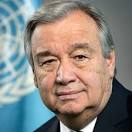
UN Secretary General Antonio Guterres has called on governments, the private sector, civil society, and community leaders to scale up investment in proven solutions, and ensure they reach every girl, everywhere.
Guterres made the call in his message to mark the 2026 International Day of the Girl Child under the theme “End child marriage and invest in girls’ rights!”
International Day of the Girl, celebrated annually on October 11, is a global moment to celebrate girls everywhere, amplifying their voices, actions and leadership.
The UN chief, however, used the 2026 celebration to call for end to child marriage.
“Together, let us defend the right of all girls to a childhood, and ensure every daughter, every sister, grows up free to shape her own future,’’ he said.
According to him, every three seconds, child marriage cuts a girl’s childhood short and one in five girls worldwide is married before the age of 18.
“Child marriage compromises the education, health, and safety of millions of girls across the globe. Fundamentally, it is rooted in poverty.
“The risk goes up in times of conflict, climate shocks, and displacement, leaving families with fewer options for their daughters.”
Guterres said educating girls and providing economic opportunities for their families would halt the harmful practice.
“But we know how to halt this harmful practice. Keeping girls in school, improving economic opportunities for families, enhancing social and legal protections, and challenging discriminatory gender norms all help girls reclaim their agency.
“Over the past 25 years, such solutions have prevented an estimated 68 million child marriages.
“Yet recent funding cuts threaten progress. At the rate we’re going, it will take centuries to eliminate child marriage,’’ he said.


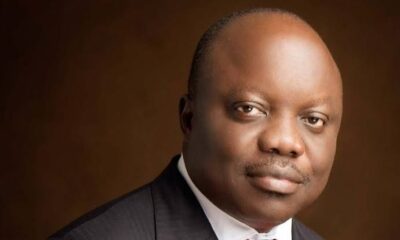

Former Delta Governor Uduaghan Dies at 70
ShareFrom Francis Sadhere, Delta Former Governor of Delta State, Dr. Emmanuel Eweta Uduaghan, has died. Uduaghan, who governed the state...


Customs Opens Review for Disqualified Recruits, Flags 397 Applicants
ShareBy Tambaya Julius, Abuja The Nigeria Customs Service (NCS) has opened a review process for applicants disqualified during its recent...


World Bank Tasks FG, States on Sustainable Cash Transfers
ShareBy Tambaya Julius, Abuja The World Bank has urged the Federal Government and state governments to establish a sustainable social...


NDLEA Nabs 85-year-old Woman, Seizes 407kg Cannabis
ShareThe National Drug Law Enforcement Agency (NDLEA) has arrested an 85-year-old grandmother and five other suspected drug traffickers during coordinated...
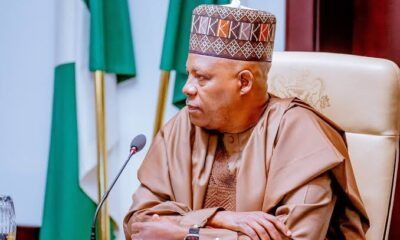

Economy would’ve Collapsed without Tinubu’s Reforms, Says Shettima
ShareVice President Kashim Shettima has said Nigeria’s economy would have collapsed had President Bola Tinubu not taken what he called...


House of Reps Seeks 90-Day Fuel Reserve for Nigeria by 2027
ShareFrom Rabiu Sanusi, Kano The House of Representatives has backed plans to increase Nigeria’s strategic petroleum reserve from 20 days...

56,000 Candidates Register for 2026 Private WASSCE
ShareThe West African Examinations Council (WAEC) said no fewer than 56,000 candidates registered for the 2026 West African Senior School...


JAMB Warns Varsities Against Issuing Admission Letters
ShareThe Joint Admissions and Matriculation Board (JAMB) has warned universities against issuing admission letters to candidates, insisting that only admissions...
Beyond Survival: Building A Healthier Nigeria For A Longer Life
ShareBy Yussuf Mubaraq Damilare What does it mean to live a long life if access to basic medical care remains...


Jigawa to Increase Corps Members Allowance – Namadi
ShareThe Jigawa government has announced plans to increase monthly allowance for the National Youth Service Scheme (NYSC) members posted to...