
Agriculture
Livestock Transformation Plan Will End Farmers/Herders Crisis


By Mathew Dadiya, Abuja
President Muhammadu Buhari has said that the National Livestock Transformation Plan will prevent open grazing of cattle and – consequently – the destruction of crops, which has often led to clashes between herdsman and farmers.
President Buhari expressed hope that “enclosed ranching” is a core component of the programme.
Buhari made the declaration on Thursday while commending the recent report to the British Foreign and Commonwealth Office – specifically the British Government’s new focus on herder-farmer clashes, in a statement by presidential spokesman, Garba Shehu.
“For farmers, this guarantees their yield and livelihoods. For herders, all livestock produce more meat and milk in a ranch rather than being always on the move.
“These plans do not come at one or another’s expense. Instead, they shall make both farmers and herders richer. We must learn to live together because there isn’t another way.
“Our diversity should never be a cause for conflict, but a source of strength from which the nation can draw.”
He also stated that the final remnants of the Boko Haram terrorist group causing havoc in the north eastern part of the country would be exterminated before the end of his second term.
The president who noted that the insurgents still pose a threat in the region said that in those fringe areas and spaces where they still pose a threat, they are being chased, their bases smashed.
Buhari noted that the report also highlighted the threat from Boko Haram in their mission to establish an “Islamic state” in place of the secular state.
Where the group once administered territory, they now hold on to none, Buhari said.
He assured that, “In this second term, we shall focus on extinguishing the final remnants of the group;” adding that engagement with various stakeholders is key to breeding the dialogue and most importantly trust to resolve this age-old conflict.
On the issue of herders/farmers clashes, the President said that as the report sets out, there were many causes to this conflict, from competition over land to climate change.








Some residents in Lagos State have expressed concern over the recent surge in the price of tomatoes, forcing many households to adopt alternatives.
The residents made their views known in separate interviews on Wednesday in Lagos.
A market survey showed that a 50kg basket of tomatoes now sells between N115,000 and N125,000, compared to between N35,000 and N40,000 recorded last month.
Olachi Igwe, a resident of Ago Palace, said the scarcity and high cost of tomatoes had disrupted her household’s meal plans.
“I contacted my usual vendor, but she said tomatoes were scarce and difficult to source.
“A small bowl we used to buy for between N3,500 and N4,000 now sells for as high as N6,000 to N7,000, when available.
“For now, my family will resort to palm nut stew (ofe akwu) until prices stabilise,” she said.
Another resident, Mercy Okeleye of FESTAC, said although her family prefers fresh tomatoes, rising prices have forced her to consider cheaper options.
“I cannot do without fresh tomatoes because of the taste, but I may have to buy broken ones, popularly called ‘esha’, which are relatively cheaper.
“I do not consider tomato paste a suitable substitute because it is not purely made from tomatoes,” she said.
Also speaking, Tope Babalola from Dopemu, said she might adjust her cooking methods if prices remain high.
“I have not bought tomatoes in over a month, but if the price is still high, I will use more onions and peppers.
“I will not resort to artificial additives; I prefer natural ingredients for my meals,” she said.
Joan Ogugua, another resident, said she had already switched to tomato paste to cope with the situation.
“I asked my son to buy tomato paste for our meals. I cannot justify spending excessively on fresh tomatoes when other basic needs must be met,” she said.
Also, Oge Ugwu, a civil servant at Lekki, said she would resort to cucumber stew with the recent price hike.
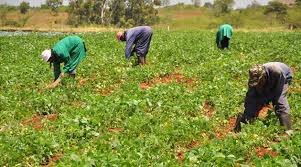
The Tomatoes Growers and Processors Association of Nigeria (TOPAN) has predicted a steady increase in the price of the produce between May and June 2026.
The Kaduna State Chairman TOPAN, Rabiu Zuntu, disclosed this in an interview recently in Lagos.
Zuntu noted that although there is no particular time for tomatoes planting season up north, seasonal weather variations can affect the production of the produce.
“Although we can plant tomatoes all-year-round, we cannot assure quality harvest all-year-round.
“Some farmers are harvesting now, while others are transplanting, and others are harvesting.
“Tomatoes are still available for sale but the price of the produce is gradually on the increase.
“Come May/June, the prices of tomatoes will be very expensive, so now is a good time to stock up the produce. There’s always a scarcity within that period.
“This is because of the nature of the weather in the north around that period, the weather is usually very hot and tomatoes cannot resist such hot temperature,” he said.
Zuntu said the price of tomatoes have started rising up in the north.
“A 50kg rafia basket of tomatoes sells from N20,000 as against N7,000 to N10,000 that was sold earlier in the year.
“While a crate of tomatoes up north is sold between N10,000 and N15,000 as against N5,000 to N6,500 sold earlier in the year.
“In most part of Kano State, where there is bumper harvest, they are rounding off their harvest. So, tomato is not that available there and most buyers have turned to where they can find it now, mostly within Kaduna State and some parts of Plateau State.
“So, that’s why the supply has decreased and the tomato supply and cost is determined by the law of demand and supply,” he said.
A 50kg basket of tomatoes in Lagos, at the moment, sells between N40,000 and N60,000 depending on the size and quality.
The Smallholder Women Farmers Organisation in Nigeria (SWOFON), Oyo State chapter, has said that the lack of irrigation facilities had become a major obstacle to dry season farming in the state.
The Chairperson of SWOFON in Oyo State, Atinuke Akinbade, said this in an interview in Ibadan on Monday.
Akinbade, who shared the experiences of women farmers in the state during the 2025 dry season, said that inadequate access to water for irrigation significantly affected the performance of many farmers during the period.
“It hindered many older farmers from participating in dry season farming and also prevented younger farmers from doing as much as they could in cultivating large acres of land,” she said.
Akinbade explained that farmers who managed to plant during the season struggled to access sufficient water to irrigate their farms, a situation worsened by the effects of climate change.
“Many farmers who depended on streams and wells to water their crops suffered major setbacks because those sources could not provide enough water for irrigation.
“Some farmers had to resort to buying water from commercial water tankers, which increased the cost of production, while at times it was even difficult to get water from the tankers,” she said.
The SWOFON chairperson warned that failure to address the problem could worsen food insecurity in the coming months.
“Even now, rainy season farming has not fully commenced because of the irregular rainfall pattern.
“This is a double burden, and if nothing is done, it may lead to serious hunger later,” she said.
Akinbade, however, acknowledged that the government had organised training for members of the association on home gardening.
She, however, said that little support was provided to address the challenges of dry season farming.
The chairman said that the home garden support package given to members consisted mainly of seedlings and one sprayer.
“They gave us two packs each of maize and pepper seeds, with six seeds in each pack, as well as one sprayer, so that we can grow food for household consumption,” she said.
Earlier, Oluwatoyin Oyedeji, SWOFON Coordinator in Oyo East, explained the severe hardship members of the organisation experienced in sourcing water for irrigation.
“Many farmers are already counting their losses because water was not available to irrigate their farms.
“Those who depended on streams and brooks were badly affected because many of them dried up, while the few that still had water had so little that farmers had to dig deeper into the ground in search of more,” Oyedeji said.
In the same vein, the Women Leader for farmers in Saki East, Musiliu Ashiru, said the absence of irrigation facilities also hampered dry season farming in her area.
According to her, many farmers still engaged in dry season farming have had to pay for water to keep their crops alive.
“Many of them buy water from the dam here to irrigate their crops. It has not been easy for them this year,” Ashiru said.




2026 International Democracy Day: Group Tasks NASS on Special Seat Bill
ShareBy Laide Akinboade, Abuja League of Women Votersof Nigeria (NILOWV) on Tuesday, tasks the National Assembly on the quick passage...


Abia Targets UNESCO Recognition of Heritage Sites
ShareThe Abia Government has elevated selected cultural and natural sites to state heritage and monuments as part of efforts to...


TCN Announces Annual Maintenance at Ajaokuta Transmission Substation
ShareThe Transmission Company of Nigeria (TCN) has announced an annual preventive maintenance of its 330/132 Kilo Volt (kV) at Ajaokuta...
When Government has Too Many Voices: The Benue lesson in Power, PR and Public Trust
ShareBy Tom Chiahemen Sometimes, a controversy that appears to be about one thing is really about something else. Former Anambra...


2027: My Support Only for Tinubu Re-election, not APC – Wike
ShareBy Laide Akinboade, Abuja The Federal Capital Territory (FCT) Minister, Nyesom Wike, has reiterated that his support for the reelection...


INEC, African Union Strengthen Electoral Partnership Ahead of 2027 General Elections
ShareBy David Torough, Abuja The Independent National Electoral Commission (INEC) has strengthened its engagement with the African Union (AU) ahead...


NEMA Begins Flood Simulation Exercise for Multi-Stakeholder Preparedness in Benue
ShareFrom Attah Ede, Makurdi In a bid to mitigate the impact of flooding, the National Emergency Management Agency (NEMA) in...


Release My Academic Records, Obi Tells UNN, Other Institutions
SharePresidential candidate of Nigeria Democratic Congress (NDC), Peter Obi, has authorised University of Nigeria, Nsukka (UNN) and other academic institutions...


Dangote IPO: A Caution for Short Term Investors amid the Hype
ShareBy Kenechukwu Aguolu With the Dangote Refinery Initial Public Offering (IPO) opening on Monday, September 14, the excitement among Nigerian...

Nigeria’s Inflation Rate Slides to 15.39 Per Cent in August – NBS
ShareBy Tony Obiechina, Abuja The National Bureau of Statistics (NBS) on Tuesday disclosed that headline inflation has eased to 15.39...