
BUSINESS
Buhari Orders Termination of e-Passport Printing by Foreign Companies

By Mathew Dadiya, Abuja
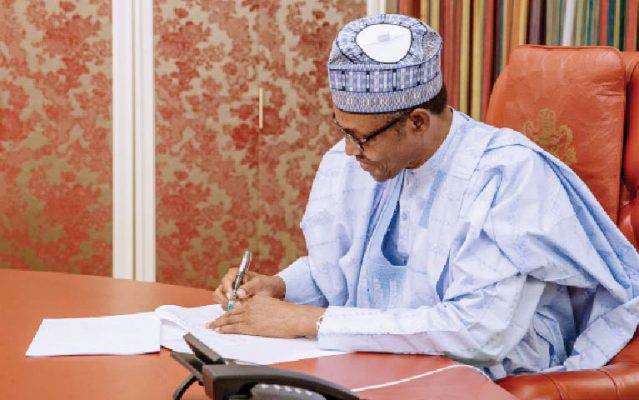
President Muhammadu Buhari has ordered a stop to printing of Nigerian international passports outside the country and directed that the production and personalisation of all Nigerian e-passports and related documentation shall be the sole responsibility of the Nigerian Security Printing & Minting Company (NSPMC).
Popularly known as The Mint, the company was established in 1963 with the objective of producing the nation’s currency notes and coins for the Central Bank of Nigeria as well as security documents for Ministries, Departments and Agencies of government, banks and other blue chip companies.
Special Adviser to the President on Media and Publicity, Femi Adesina conveyed the president’s directive via a statement.
He stated that with the new directive from the President, all existing memoranda of understanding and contracts on printing by other institutions or companies will not be renewed.
The Mint is the largest banknote and security documents specialist printing company in West Africa.
However, its performance was rapidly dwindling in terms of both currency production and security documents prior to 2014.
Under the chairmanship of the Central Bank Governor, Mr Godwin Emefiele, new targets were set, and Managing Director/Chief Executive Officer of The Mint, Mr Abbas Umar Masanawa recounts some of the achievements to include: zero importation of currency from 2014 to date, with attendant benefits of conservation of foreign reserve, revenue and employment generation, as well as safeguarding the nation’s sovereignty.
Mr Masanawa counts the blessings further: “The Mint has returned to profitability. From a moribund organization with heavy losses, the company grew from a loss position of N14. 6 million in 2014 to a profit of N14. 3 billion in 2018. Turnover also grew from N17.8 billion in 2014 to N61. 4 billion in 2018.
“Other achievements include enhanced production capacity, revenue diversification, reduced cost of production, institutionalization of corporate governance, improved staff welfare and industrial harmony, among others.”
The Managing Direction pledged that The Mint would justify the renewed confidence reposed in it by the President, “as we are moving to the Next Level, and poised to boost national security and integrity, we will conserve scarce foreign exchange, improve revenue generation, create job opportunities, and boost acquisition/transfer of technology.”


Some motorists in the Federal Capital Territory (FCT) have raised concerns over the continuous increase in the price of Premium Motor Spirit (PMS), popularly known as petrol.
The motorists said yesterday that petrol prices had continued to rise in spite of the Federal Government’s assurance to cushion the impact on consumers.
The Federal Government recently announced a 30-day discount on petrol sold by the Nigerian National Petroleum Company Limited, with public transport operators to receive priority under the arrangement.
Taiwo Oyedele, the Minister of Finance and Coordinating Minister of the Economy, said the arrangement, however, was not a return to petrol subsidy.
The minister said the government was also negotiating a ceiling of N1,350 per litre on the ex-gantry or landing cost of petrol in an effort to reduce sharp fluctuations in pump prices.
It was reported that Dangote Petroleum Refinery cut its gantry petrol price by N25 per litre to from N1,350 to N1,325.
Crude Oil Futures Price (WTI) traded at $90.41 to $90.50 per barrel for West Texas Intermediate (WTI), while international benchmark Brent crude traded near $103.33 per barrel
It showed that A.Y Shafa retail outlet increased the price from N1,370 per litre to N1,410 per litre, while MRS retail outlet increased from N1,370 per litre to N1,405 per litre.
Similarly, A.A Rano increased its pump prices from N1,380 per litre to N1,409 per litre.
A motorist, Tony Ajayi, said motorists were already grappling with rising food, transportation, household expenses, and the latest increase represented another unwelcome strain.
Ajayi said the persistent increase in fuel prices was putting growing financial pressure on families and making it increasingly difficult for many Nigerians to meet their basic needs.
Auwal Tanko, a motorist, said he bought petrol at N1,410 per litre, adding that the effect of the increase went far beyond the cost of filling his vehicle.
Tanko urged the federal government to urgently intervene by stabilising fuel prices.
Chinedu Ukadike, the National Publicity Secretary of the Independent Petroleum Marketers Association of Nigeria (IPMAN), said the Federal Government should expand access to its recently announced petroleum pricing policy.
Ukadike said the wider participation was necessary to ensure Nigerians felt the impact of an expected reduction in pump prices.
According to him, the policy’s impact will not be immediate, because the distribution of petroleum products to filling stations across the country will take time.
“Circulation of petroleum products and the quoted petroleum products is also a gradual process before it will be able to have an effect on commuters.
“The chains of distribution will be ignited by loading those products and trucks moving to their different destinations.
“The effect will not be immediately seen until within 20 days to 30 days when these products land at their destinations and in the pumps for dispensing,” he said.
He said the process involved loading the products, transporting them to various destinations and making them available for dispensing at filling stations. (NAN)

The Central Bank of Nigeria has ruled out an extension of the 1 January 2027, deadline for financial institutions to store and manage payment transaction data generated in Nigeria locally, putting pressure on banks, fintechs and payment service providers to complete their migration plans.
The disclosure was made at the CloudReady Nigeria Financial Services Roundtable, hosted in Lagos by Africa Hyperscalers Company in partnership with 100 Women in Digital Infra, Open Access Data Centres, Layer3, Nobus Cloud Services and the National Information Technology Development Agency.
Director of the CBN’s Payments System Supervision Department, Dr.
Rakiya Yusuf, reiterated the position in remarks delivered on her behalf by Assistant Director Babatunde Ajiboye at the CloudReady Nigeria Financial Services Roundtable organised by Africa Hyperscalers in Lagos. Yusuf was represented by Ajiboye, Payments Systems Supervision Division, CBN.The requirement was set out in a circular issued on 15 June 2026, directing payment service providers and other covered institutions to store and manage payment transaction data generated within Nigeria in the country. The deadline leaves affected institutions with limited time to assess their systems, review contracts with technology providers, and complete the migration of relevant data.
Yusuf said institutions must examine more than the physical location of their databases. Their compliance work should cover transaction logs, audit trails, metadata and the systems supporting payment operations.
She also warned that institutions must preserve service continuity and data integrity throughout the transition. A migration that meets the location requirement but disrupts payment services or compromises records would not adequately address the operational risks involved.
For cross-border transactions, financial institutions must ensure that records covered by the Nigerian requirement remain compliant while accounting for the needs of foreign counterparties. Institutions experiencing difficulties are expected to demonstrate the progress they have made, identify outstanding gaps and present credible plans for addressing them.
The CBN also urged financial institutions to review their agreements with cloud and technology providers to establish where data is stored, how it is processed and backed up, and whether existing arrangements can meet the new requirements.
The deadline formed part of a wider discussion about Nigeria’s push to strengthen digital sovereignty and develop local infrastructure capable of supporting sensitive financial workloads.
That would require clearer guidance on data and workload classification, resilient infrastructure, trusted service providers and coordination among regulators and industry participants, Osunrinde said.
The roundtable was intended to bring regulators, financial institutions and infrastructure providers together to discuss the practical requirements of compliance, including data residency, cybersecurity, cross-border transfers, business continuity and disaster recovery.
The discussions also highlighted the potential economic implications of the policy. More demand for locally hosted workloads could create opportunities for Nigerian cloud providers, data centre operators, cybersecurity companies and technology professionals. However, that opportunity depends on providers being able to demonstrate the security, reliability and capacity required by financial institutions.
The Chief Operating Officer of Nobus Cloud, Stephen Okoye, declared that locally developed cloud technology could support financial institutions seeking to move workloads into Nigeria while retaining the technical controls required for regulated operations.
He highlighted the role of Nigerian engineers in developing local cloud services and discussed the provider’s infrastructure, including its two availability zones. Okoye also cited the company’s compliance and assurance credentials, including ISO standards, Payment Card Industry Data Security Standard requirements, and the Nigeria Data Protection Act.
He said Nobus Cloud offered support to organisations migrating their systems, a process that can involve more than transferring information from one server to another. Institutions may need to review application dependencies, security configurations, connectivity and recovery arrangements before moving critical workloads.
Okoye also pointed to the company’s claimed 100 per cent uptime as an indication of its service reliability. For financial institutions, however, providers’ assurances must be assessed alongside their technical evidence, resilience arrangements and ability to maintain services during an outage or other disruption.
The transition is likely to require institutions to weigh local hosting options against their existing technology arrangements, particularly where applications rely on services and tools provided by international cloud platforms.
The Chief Executive Officer of Open Access Data Centres, Dr. Ayotunde Coker, said readiness for the transition would depend on the complexity and requirements of each financial institution’s workloads.
He urged institutions to assess their needs and risks before deciding what to migrate, rather than treating localisation as a straightforward relocation exercise. Financial operators need to understand the demands of their applications, the infrastructure available to support them, and the regulatory requirements that apply to their data.
Coker also highlighted the importance of local data centres, connectivity and reliable power in building a stronger digital infrastructure ecosystem. Investment in these areas will be important as demand for cloud computing and more advanced digital services, including artificial intelligence, grows.
The discussion underscored that the availability of local data centre space is only one part of readiness. Financial institutions must also consider connectivity between systems, redundancy, disaster recovery and the capacity to keep critical services running if infrastructure fails.
For institutions with applications designed around overseas cloud platforms, migration may require architectural changes and testing to ensure that systems continue to perform as expected. The process can also affect costs, depending on the complexity of the workload and the changes required.
The Nigerian Data Protection Commission also emphasised the need to protect personal data and manage the risks associated with cloud service providers.
National Commissioner and Chief Executive Officer of the commission, Dr. Vincent Olatunji, was represented at the event by Ibukunoluwa Owa. The commission’s contribution focused on the responsibilities of organisations that determine how personal data is processed and those that process it on their behalf.
Owa highlighted the need for data protection impact assessments, third-party risk assessments and appropriate data processing agreements. Institutions must understand the responsibilities of their service providers and ensure that their arrangements comply with applicable data protection requirements.
The commission’s guidance also covered breach reporting, transparent privacy policies and the need for organisations to explain how they will protect customers’ information.
Owa stressed the importance of preparing for operational disruption, including setting out appropriate remedies for possible downtime and maintaining disaster recovery plans.
The Federal Government spent N7.7tn on interest payments in the first half of 2026, representing 124.2 per cent of its total revenue of N6.2tn during the period, according to the World Bank.
The figures indicate that interest payments alone exceeded the government’s revenue by N1.
5tn between January and June 2026, raising concerns about Nigeria’s debt burden despite improved revenue collections.The findings were contained in the World Bank’s October 2026 Nigeria Development Update, titled Beyond the Federal Purse: How Higher Revenues Shaped State Priorities.
The report showed that interest payments increased by N2.
1tn, or 37.5 per cent, from N5.6tn recorded in the corresponding period of 2025, largely due to elevated domestic borrowing costs.The World Bank stated, “Interest payments increased to 3.1 per cent of GDP (N7.7tn) from 2.5 per cent (N5.6tn) amid high domestic borrowing costs.”
An analysis of the figures showed that the interest-to-revenue ratio declined from approximately 155.6 per cent in the first half of 2025 to 124.2 per cent in the corresponding period of 2026, representing an improvement of 31.4 percentage points.
Despite the improvement, interest obligations continued to exceed the government’s total revenue, leaving limited resources for infrastructure, public services and other expenditure commitments.
According to the report, Federal Government revenue increased by N2.6tn, or 72.2 per cent, from N3.6tn in the first half of 2025 to N6.2tn in the corresponding period of 2026.
The World Bank stated, “Federal revenues rose to about 2.5 per cent of GDP (N6.2tn), from 1.6 per cent of GDP (N3.6tn) a year earlier, supported by a recovery in oil receipts, stronger corporate tax collections, and higher independent revenues, while customs revenues held stable and VAT collections stayed comparatively flat.”
However, the increase in revenue was accompanied by rising expenditure obligations, with total federal spending climbing from N14.6tn in the first half of 2025 to N16.1tn in the corresponding period of 2026, representing an increase of N1.5tn, or 10.3 per cent.
Personnel expenditure also rose from N3.7tn to N4.2tn following wage adjustments, while reported capital expenditure declined sharply. Capital spending fell from one per cent of GDP in the first half of 2025 to 0.3 per cent, equivalent to N700bn, in the corresponding period of 2026.
This means the Federal Government spent 11 times more on interest payments than on reported capital projects during the six-month period.
Combined interest and personnel expenditure amounted to N11.9tn, representing approximately 73.9 per cent of total federal expenditure and nearly twice the government’s revenue.
Despite the rising expenditure pressures, the World Bank reported an improvement in the Federal Government’s fiscal balance, with the deficit narrowing from N11tn, or five per cent of GDP, in the first half of 2025 to N9.9tn, or four per cent of GDP, in the corresponding period of 2026.
However, the institution cautioned that the improvement was partly driven by subdued capital expenditure rather than a significant reduction in recurrent obligations.
“The improved early-year fiscal outturn should be interpreted cautiously given the low reported federal capital spending,” the report stated.
It added, “Personnel and interest costs continue to absorb a large share of fiscal space, and a pickup in capital execution later in the year, alongside recurrent and pre-election spending, is expected to add to pressures.”
The World Bank also identified overlapping budget cycles, weak expenditure planning and poor alignment between approved allocations and implementation capacity as persistent challenges affecting fiscal management.
On the broader public debt position, the report estimated Nigeria’s debt stock at approximately N177tn in 2025, equivalent to 40 per cent of GDP, compared with N67tn, or 27.6 per cent of GDP, in 2021.
It explained that exchange-rate valuation effects and the recognition of previously accumulated liabilities, including securitised Ways and Means advances, contributed significantly to the increase.
The report noted that domestic debt accounted for 57.9 per cent of the country’s debt stock but generated 72.6 per cent of interest payments in 2025, reflecting the relatively high cost of domestic borrowing.
It recommended limiting expensive borrowing, prioritising concessional financing and extending debt maturities to reduce refinancing risks.
The World Bank further projected that Nigeria’s consolidated fiscal deficit would widen from 3.1 per cent of GDP in 2025 to 3.5 per cent in 2026, driven partly by rising federal interest, personnel and pre-election spending.
It urged the government to strengthen revenue mobilisation, improve budget credibility and maintain fiscal discipline to prevent debt obligations from further constraining development spending.




Sanwo-Olu Celebrates Prince Olusi at 90
ShareLagos State Govornor Babajide Sanwo-Olu of has described Prince Tajudeen Olusi, Chairman of the Governance Advisory Council of the Lagos...


Akwanga Set to Host Dignitaries for Spotlight Magazine Launch
ShareBy Tambaya Julius, Abuja Akwanga, Nasarawa State, is set to host prominent personalities from within and outside the state as...


Mbah Tasks SEDC on Gas Pipeline, Support for Industrial Revolution
ShareFrom Sylvia Udegbunam, Enugu Enugu State Governor, Dr. Peter Mbah, has urged the South East Development Commission (SEDC) to prioritise...


PVCs of 2026 Registrants Not Available Yet — INEC
ShareThe Independent National Electoral Commission (INEC) said Permanent Voter Cards (PVCs) for persons who registered between Jan. 5 and July...


Rainbow Coalition: Wike Assures APC Governors Have Nothing to Fear
ShareBy Laide Akinboade Abuja Minister of the Federal Capital Territory (FCT), Nyesom Wike, has defended the emerging political coalition supporting...


Group Welcomes Appointment of Adeleke as Tinubu’s Campaign Coordinator
ShareFrom Ayinde Akintade, Osogbo The Imole Campaign Council (TICC) has welcomed the appointment of Governor Ademola Adeleke as the Osun...


FG Raises Pensions from N12.15bn to N14.83bn for 241, 000 Retirees
ShareBy Tony Obiechina, Abuja The Director-General of the National Pension Commission (PenCom), Omolola Oloworaran, on Tuesday disclosed that more than...


Wike Accuses NLC of Politicizing FCT Teachers’ Strike
Share By Tambaya Julius, Abuja The Minister of the Federal Capital Territory (FCT), Nyesom Wike, has accused the Nigeria Labour Congress...


APC Unveils Revised 2027 Presidential Campaign Council, Retains Yari, DG
ShareBy Tambaya Julius, Abuja The All Progressives Congress (APC) has unveiled its revised Presidential Campaign Council for the 2027 general...


Tinubu’s Re-election: Don’t Allow Repeat of 2023, Tompolo Tells Lagos
ShareLeader of the PBAT Door-to-Door Movement, Government Ekpemupolo, has advised the people of Lagos State not to allow a repeat...