
BUSINESS
World Needs More Policy Ambition, Private Funds, Innovation to Meet Climate Goals


By Simon Black, Florence Jaumotte, and Prasad Ananthakrishnan
With each passing year, the stark reality of a hotter planet becomes clearer and the ensuing risks to the global economy intensify. But as the world is waking up to the scale of the climate crisis, geopolitical tensions and fragmentation risks are undermining our ability to coordinate global actions to solve this planetary problem.
Eight years on from the Paris Agreement, policies remain insufficient to stabilize temperatures and avoid the worst effects of climate change.
Collectively, we are not cutting emissions fast enough and are falling short on the needed investment, financing, and technology. The window is closing, but we still have time—just—to change our trajectory and leave a healthy, vibrant, and livable planet to the next generation.Limiting global warming to 1.5 degrees to 2 degrees Celsius and reaching net zero by 2050 requires cutting carbon dioxide and other greenhouse gases by 25 percent to 50 percent by 2030 compared with 2019. But, as our new analysis shows, the current global commitments reflected in nationally determined contributions would reduce emissions by just 11 percent by the end of this decade.
To make matters worse, current policies are not consistent with commitments, which means that the world is set to fall short of even that meager goal. Business-as-usual policies would see annual global emissions increase by 4 percent by 2030 and reach a cumulative level sufficient to breach the 1.5-degree target by 2035.
More ambition, stronger policies
To get back on track with the global climate goals, we need more ambition now. A fair approach is for countries to target cuts in emissions in line with per capita incomes.
For example, to keep within 2 degrees of warming, high, upper-middle, lower-middle, and low-income countries will need emissions reductions of 39 percent, 30 percent, 8 percent and 8 percent, respectively, by 2030. To stay below 1.5 degrees of warming would entail more drastic emissions cuts of 60 percent and 51 percent for high- and upper-middle income countries.
Ambition alone is not enough. We also need major policy changes to achieve these more ambitious targets. These would ideally be centered on a robust carbon price—rising to a global average of at least $85 per ton by 2030—to provide broad incentives to reduce carbon-intensive energy, shift to cleaner sources, and invest in green technologies.
A carbon price also generates more than enough budget revenues to support vulnerable groups. Around 20 percent of carbon pricing revenues can more than compensate the poorest 30 percent of households. This is in direct contrast to damaging fossil fuel subsidies, which have risen to a record $1.3 trillion annually in explicit fiscal costs alone. Countries must act to phase out such subsidies.
At a global level, cooperation is needed to help assuage fears that carbon pricing would hurt national economic competitiveness. Here, an agreement among large emitters could spur other countries to follow—such as a progressive deal between China, the European Union, India, and the United States. This would cover over 60 percent of global greenhouse gas emissions and send a strong signal to the rest of the world.
Boosting climate finance
The path to net zero by 2050 requires low-carbon investments to rise from $900 billion in 2020 to $5 trillion annually by 2030. Of this figure, emerging and developing countries (EMDEs) need $2 trillion annually, a fivefold increase from 2020. Even if advanced economies meet or somewhat exceed their promise to provide $100 billion a year, the bulk of the financing for these low-carbon investments will need to come from the private sector.
Our analysis shows that private sector share of climate finance must rise from 40 percent to 90 percent of the total in EMDEs by 2030. That means a broad mix of policies to overcome barriers such as foreign exchange and policy risks, underdeveloped capital markets, and too few investable projects.
For example, targeted economic policies and governance reforms can lower capital costs. Meanwhile, blended finance that combines private capital with public and donor funding—including from multilateral development banks—can bring down the risk profile of green projects. Think of first-loss capital, credit enhancements, or guarantees.
At the same time, global policies to increase transparency and comparability of projects, standardize taxonomies and strengthen climate-related disclosure requirements are vital in helping investors make low-carbon choices. Again, this highlights the importance of international cooperation.
Scaling up innovation
Of the 50 percent cut to emissions needed by 2030 to stay on track for the 1.5-degree target, more than 80 percent can be achieved from technologies available today. Getting to net-zero by 2050 will, however, require technologies that are still under development or yet to be invented.
Unfortunately, patent filings for low-carbon technology peaked at 10 percent of total filings in 2010 and have since declined. Worse, key technologies aren’t spreading fast enough to emerging and developing countries.
How can this trend be reversed? Recent IMF analysis shows climate policies—such as feed-in tariffs and emissions trading schemes—boost green innovation and investment flows, and help spread low carbon technology across borders. Moreover, in some countries, lowering trade barriers can accelerate imports of low carbon technologies by 20 percent to 30 percent. Yet again this points to the importance of cooperation: to avoid protectionist measures that would impede the broader spread of low-carbon technologies.
Helping countries meet goals
Wherever climate policy intersects with macroeconomic policy, the IMF is here to help. Our new Resilience and Sustainability Trust provides long-term financing on affordable terms to help vulnerable middle- and low-income countries cope with threats such as climate change. The $40 billion trust has already supported programs for 11 countries, with twice that number in the pipeline.
For our wider membership, we add a climate lens to our economic analysis, policy advice, capacity development and data provision. Why? Because macroeconomic and financial sector policies are critical to harnessing the opportunities of the green transition: for low-carbon, resilient growth, and jobs.
But no country can tackle climate change on its own. International cooperation is more important than ever. Only with concerted action, now, will we bequeath a healthy planet to our children and grandchildren.
From Mike Tayese, Yenagoa
The Nigerian Air Force Officers’ Wives Association (NAFOWA), Mobility Command, Yenagoa, has empowered 18 widows of deceased Air Force personnel in Bayelsa.
The beneficiaries received livelihood support materials and equipment under the association’s 2026 Military-Civilian Relationship outreach programme.
The event, held on Wednesday at the Nigerian Air Force Sports Complex, Air Force Base, Opolo, Yenagoa, featured the distribution of sewing machines, wheelbarrows, poultry farming equipment and animal feeds.
Chairperson of NAFOWA, Mobility Command, Yenagoa, Jennifer Onyebuchi, represented the association’s National President, Mrs Ngozi Aneke, at the programme.
Speaking on the rationale for the intervention, Onyebuchi said it was inspired by the association’s commitment to service to humanity and the need to alleviate the suffering of widows.
“In keeping with NAFOWA’s motto, which is service to humanity, that is why we came up with this programme.
“Our National President, Mrs Ngozi Aneke, has led by example. She has done something like this nationally, and we are supposed to follow in her footsteps,” she said.
Onyebuchi said the association recognised the challenges faced by widows who suddenly assumed responsibility as breadwinners and heads of their families.
“We might not really know what they are going through, but I know they are going through a lot.
“It is not easy to suddenly become the breadwinner of the family. We have to do things from time to time to help them and alleviate their suffering,” she said.
She said the intervention was also intended to reassure the beneficiaries that they had not been forgotten despite the loss of their husbands.
“We want to give them hope that they are not forgotten,” she said.
In a related development, the outgoing Air Officer Commanding (AOC), Mobility Command, Air Vice Marshal Michael Onyebuchi, donated three tricycles to NAFOWA, Mobility Command, Yenagoa.
The donation was aimed at improving transportation within the barracks for women, children, junior officers and corps members without convenient means of mobility.
Onyebuchi said the gesture was also in appreciation of the cooperation, understanding and support he received from the association during his tenure as AOC.
He expressed the hope that the tricycles would ease the association’s operations and provide an avenue for generating income to support its activities.
The outgoing AOC handed over the tricycles to the association’s Secretary, Grace Onwuchekwa, with a charge to ensure their prudent and productive utilisation.
Onwuchekwa thanked the AOC on behalf of the association and its incoming chairperson, describing the donation as a welcome support to the organisation.
She pledged the association’s commitment to making effective use of the facilities.

By Tambaya Julius, Abuja
The Comptroller-General of the Nigeria Customs Service (NCS), Bashir Adewale Adeniyi, has called on officers and men of the Customs Police Unit (CPU) to uphold discipline, professionalism and integrity, stressing that accountability must begin within the Service.
Adeniyi made the call while delivering the keynote address at the inaugural Customs Police Summit 2026, held at the NAF Conference Centre and Suites, Abuja.
The summit, with the theme, “Reimagining Customs Policing: Learning From the Past, Responding to the Present, and Preparing for the Future,” brought together customs personnel and representatives of security and law enforcement agencies to discuss ways of strengthening the unit and preparing it for emerging enforcement challenges.
The Customs boss, who is also the Chairperson of the World Customs Organization (WCO) Council, said the Service must first demonstrate the discipline and integrity it expects from traders and members of the public.
He described the Customs Police Unit as a critical part of the Service’s internal control system, noting that its responsibility goes beyond investigating misconduct to ensuring that officers exercise their powers within the confines of the law.
According to him, the unit, formally inaugurated in July 2019, was established to investigate erring personnel, prevent crime and promote compliance, guided by the principle that no officer is above the law.
He said the experience of the Service over the years had reinforced three important lessons: integrity must begin at home, enforcement powers must be exercised responsibly, and effective policing requires cooperation among relevant institutions.
The Comptroller-General expressed concern over the growing sophistication of criminal networks, which he said were increasingly exploiting legitimate trade routes and digital platforms to move illicit goods, including firearm components, narcotics, counterfeit medicines, protected wildlife and proceeds of illegal activities.
He maintained that tackling these threats required more than aggressive enforcement, calling instead for smarter, intelligence-driven operations supported by technology and international best practices.
Adeniyi pointed to several World Customs Organization instruments, including the SAFE Framework, Authorised Economic Operator (AEO) Programme, advance rulings, Time Release Study and Revised Kyoto Convention, as important tools for promoting compliance, facilitating legitimate trade and reducing opportunities for corruption.
He also highlighted the role of technology and data management in strengthening customs operations, citing the B’Odogwu platform, which integrates declarations, valuation, risk management and AEO processes.
He added that the INTERPOL Data Centre at Customs Headquarters had provided the Service with access to global criminal databases, while the Nigeria Customs Service Act 2023 had strengthened the legal foundation for intelligence-led operations, joint border activities and mutual administrative assistance.
The CGC identified Consolidation, Collaboration and Innovation as the three pillars that must shape the future of customs policing.
He explained that consolidation would require stronger operational procedures, improved investigations, properly documented cases for prosecution and continuous professional development of personnel.
He called for closer working relationships with the Nigeria Police Force, Armed Forces, National Drug Law Enforcement Agency (NDLEA), National Agency for Food and Drug Administration and Control (NAFDAC), Department of State Services (DSS), Independent Corrupt Practices and Other Related Offences Commission (ICPC), Nigeria Agricultural Quarantine Service (NAQS), neighbouring countries and border communities.
He also encouraged the Service to take advantage of emerging technologies, including artificial intelligence, advanced scanners, geospatial tools and electronic cargo tracking, to improve investigations and strengthen enforcement operations.
Adeniyi urged participants to use the summit to develop practical recommendations, including a Customs Police doctrine based on the NCS Act 2023 and Revised Arusha Declaration, improved protocols for joint operations and evidence management, guidelines for the responsible use of artificial intelligence in investigations, and better training and welfare for CPU personnel.
Addressing officers of the unit, he reminded them that their red berets represented the confidence Nigerians placed in the Service and must therefore be worn with discipline, restraint and pride.
He stressed that integrity remained the greatest badge of honour for every customs officer.
The Acting Provost Marshal of the NCS, Deputy Comptroller TS Sanusi, described the summit as an important step towards strengthening the institutional capacity and repositioning the Customs Police Unit.
Sanusi said the unit was established to provide a dedicated structure for maintaining discipline, investigating misconduct and ensuring compliance with professional standards among personnel and stakeholders.
He observed that the Service could not effectively enforce laws and regulate international trade without having strong mechanisms to promote discipline and accountability within its own ranks.
He added that the increasing challenges of transnational organised crime, illicit financial flows, corruption and emerging security threats had made the work of the Customs Police Unit more important.
The Acting Provost Marshal expressed appreciation to the Comptroller-General for his leadership, support and approval of funds for the inaugural summit, noting that the gesture reflected management’s commitment to strengthening the unit.
He also recognised the contributions of former Provost Marshals and personnel who helped establish the unit’s operational structures and professional standards.
Sanusi urged serving personnel to lead by example, insisting that discipline must begin with them if they were to earn the respect and confidence required to enforce it among others.
In his remarks, Assistant Comptroller-General of Customs at Headquarters, MS Shuaibu, called for a renewed approach to customs policing, with greater emphasis on professionalism, intelligence gathering and institutional accountability.
Shuaibu said the summit provided an opportunity to reflect on the unit’s achievements, address existing challenges and develop strategies to respond to changing global trade patterns and security threats.
He acknowledged the unit’s contributions to internal discipline, investigation of infractions and the protection of the Service’s interests, but stressed the need to continually improve its operational capacity.
He identified intelligence gathering, surveillance, risk analysis, inter-agency cooperation and modern investigative techniques as key areas requiring attention.
The ACG further emphasised that the exercise of police powers must be guided by respect for human rights and due process, warning that enforcement must never become an excuse for unjust treatment.
He urged officers to remain firm but lawful, courageous but responsible, and impartial in carrying out their responsibilities.

The Federal Government has called for a stronger agricultural value chains, increased agro-industrialisation and improved market access to boost food security in Nigeria.
The Permanent Secretary, Federal Ministry of Agriculture and Food Security, Dr.
Marcus Ogunbiyi, made the call on Monday in Enugu during the Technical Session of the National Council on Agriculture and Food Security.The theme of the event is “Enhancing Agricultural Value Chains, Agro-Industrialization and Market Access for Economic Growth.”
Ogunbiyi, who doubled as the Chairman of the Technical Session, said that the country must move beyond subsistence farming and embrace a commercially driven agricultural system capable of supporting industries, improving farmers’ incomes and expanding export opportunities.
“Our task goes beyond increasing the volume of food produced.
“We must build an agricultural economy that creates wealth, supports industries, generates decent employment, expands exports, improves rural livelihoods and contributes meaningfully to national economic growth,” he said.
The Permanent Secretary identified inadequate storage and processing facilities, limited access to finance, poor logistics and weak links between farmers and processors as major challenges affecting the competitiveness of agricultural products.
He called for increased investment in agro-processing facilities, rural roads, irrigation, electricity, cold-chain infrastructure and modern technologies to reduce post-harvest losses and promote local value addition.
“Agro-industrialisation is central to the transformation we seek to achieve. It provides the bridge between agriculture and industry.
“It also enables agricultural production to serve as a reliable source of raw materials for manufacturing and other productive sectors of the economy.
“The value of this Council will ultimately be determined by the quality of its resolutions and the extent to which those resolutions are implemented,” Ogunbiyi stated.
He also urged state governments to identify priority commodities, establish clear production and processing targets, attract private-sector investment and strengthen partnerships with research institutions and development partners.
In his remarks, the Enugu State Commissioner for Agriculture and Agro-industrialisation, Patrick Uburu, said that the state government was committed to agro-industrialisation to boost farmers’ income, create jobs and generate wealth.
Uburu, who described the technical sessions as a platform for translating policies into practical solutions, urged delegates to prioritise farmers and agribusiness operators in their deliberations.
He emphasised the need for stronger collaboration among state governments, federal agencies and development partners to address food security challenges, noting that recommendations from the meeting should be measurable and implementable.
The commissioner called for practical policies and investments that would improve farmers’ productivity and expand market access for agricultural produce.
Technical Lead Policy Advisory, GIZ ECOWAS & Nigeria, Dr Abiodun Ihebuzor, advocated for stronger partnerships and increased investment in agricultural value chains to reduce post-harvest losses and improve food security in Nigeria.
Ihebuzor noted that previous engagements at the 46th Council in Calabar and the 47th Council in Kaduna had provided opportunities to advance agricultural development.
He expressed optimism that the current meeting would strengthen collaboration among government institutions, development partners and private-sector operators.
According to him, healthy soils, efficient markets and improved storage systems were essential to sustainable food security.
On her part, Geraldine Onu, Deputy Director, Administration and Supply, Enugu State Ministry of Agriculture and Agro-Industrialisation, disclosed that the State Government had intensified efforts to transform agriculture from subsistence farming to commercial and mechanical farming as part of its economic development agenda.
She noted that investments in irrigation, storage, processing and agricultural infrastructure were aimed at increasing production, attracting private investment, reducing post-harvest losses and improving farmers’ livelihoods.
“In Enugu State, under the visionary leadership of Gov. Peter Mbah, agriculture occupies a strategic position in the state’s economic transformation agenda.
“The initiatives include the 300,000-hectare agricultural land bank, the development of Smart Farm Estates across the 17 Local Government Areas, the 260 Farm Estate Programme and the establishment of a tractor assembly plant,” Onu added.(NAN)




Pope Says Inca Heartland ‘Suffering’ as Villages Empty
SharePope Leo XIV warned Saturday that the heartland of the ancient Inca Empire was “suffering,” as the remote, poverty-stricken communities...
Kaduna Civil Service Union, Backs Tinubu, Uba Sani for 2027
ShareFrom Shabanyan Kantiok, Kaduna The Nigeria Civil Service Union (NCSU), Kaduna State Council, has passed a vote of confidence in...


FG Says 16 Nigerian Die in Ethiopia over High Altitude
ShareBy Laide Akinboade Abuja The Federal Government at the weekend cautioned Nigerians, particularly those with pre-existing medical conditions, to exercise...


2027: Tinubu Pledges to Rebuild Displace Plateau Communities
ShareFrom Jude Dangwam, Jos President Bola Tinubu has assured Nigerians of peaceful elections in 2027, promising to strengthen security operations,...


Lagos Thugs, London Protesters and the Chaos before the Ballot
ShareBy Adeola Akinremi On Thursday, 12 November, two incidents with red flags for the 2027 elections emerged. In London, the...
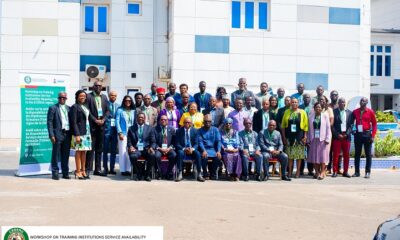

Stakeholders Excited as WAHO Finalises Training Institutions Service Availability Mapping in ECOWAS Region
ShareBy David Torough A three-day regional workshop devoted to finalising the Training Institutions Service Availability Mapping (TISAM) initiative in West...


66 Years of Nigeria’s Journey: The Benue Story—From Creation to the Alia Era and Beyond
ShareBy Solomon Iorpev By the time you stand on the hills that cradle Benue’s valleys, or watch the Benue River...


Let Benue People Judge Alia on Performance, Not Political Rhetoric – Akwaya
ShareIn this edition of Viewpoint, we engage Dr. Cletus Akwaya, former Benue State Commissioner for Information and former Special Adviser...


TAJBank Wins Best Non-Interest Bank Award
ShareBy Tony Obiechina, Abuja TAJBank Limited, Nigeria’s largest non-interest bank, has, for the fifth consecutive time, won the Non-Interest Bank...
Katsina Beats 35 States, Tops Nigeria in Climate Governance
ShareBy David Torough, Abuja Katsina State has emerged Nigeria’s number one state in climate governance and implementation for 2026, marking...