
BUSINESS
Old Naira Notes: CBN Affirms Supreme Court’s Ruling

By Tony Obiechina, Abuja
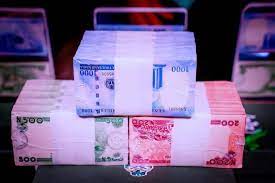
The Central Bank of Nigeria (CBN) has affirmed the Supreme Court’s ruling on Wednesday that the Old Naira notes will remain legal tender of the country till further notice.
The apex bank in a statement signed by the new Acting Director of Corporate Communications, Mrs Hakama Sidi Ali on Wednesday also directed banks to comply with the Apex Court’s ruling to issue and accept old notes alongside the redesigned
The Supreme Court had ruled on Wednesday the old naira notes will remain legal tender till further notice.
It also ruled that the old currencies will continue to “co-exist” with the new naira notes as legal tender.
The ruling followed an application entered by the Attorney-General of the federation and Minister of Justice, Lateef Fagbemi SAN.
The CBN statement reads: “Following the order of the Supreme Court on Wednesday, November 29, 2023, granting the prayer of the Minister of Justice and Attorney-General of the Federation to extend the use of old Naira banknotes ad infinitum, the Central Bank of Nigeria (CBN) has directed all its branches to continue to issue and accept all denominations of Nigerian banknotes, old and re-designed, to and from deposit money banks (DMBS).
“For the avoidance of doubt, the Supreme Court ordered that the old versions of N200, N500, and N1, 000 banknotes shall continue to be legal tender, alongside the re-designed versions. Accordingly, in line with Section 20(5) of the CBN Act 2007, all banknotes issued by the Central Bank of Nigeria (CBN), will continue to remain legal tender, indefinitely.
“Members of the public are enjoined to continue to accept all Naira banknotes (old or re-designed) for their day-to-day transactions and handle these banknotes with the utmost care, to safeguard and protect the lifecycle of the banknotes.”
The bank also urged Nigerians to use alternative modes of payment, e-channels, in order to reduce pressure on the use of physical cash.”

By Tony Obiechina, Abuja
The Development Bank of Nigeria Plc (DBN) has launched DAWN: DBN Action for Women in Nigeria, unveiled its Impact Report and presented MSME Data Assets at the seventh edition of Annual Lecture held in Abuja.
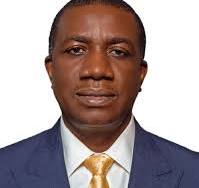
DBN, in a statement on Thursday, said while delivering a welcome address, its Managing Director and Chief Executive Officer, Dr Tony Okpanachi, said the central challenge was no longer reforms themselves but ensuring benefits reach businesses at end of the chain.
He asked how to make sure benefits reach traders in Onitsha, fabricator in Aba, farmer in Kebbi and young founder in Yaba, noting that MSMEs accounted for about half of Nigeria’s GDP and more than eight in every ten jobs, adding that when reform works for MSMEs it works for most Nigerians.
He explained that reform becomes prosperity only when entrepreneurs can act on it whether through long tenor loans to buy equipment, banks willing to take risk or skills and records needed to grow.
He said working through Participating Financial Institutions DBN provides longer term funding, partial credit guarantees through subsidiary Impact Credit Guarantee Limited and capacity building including Entrepreneurship Training Programme.
He disclosed that as at December 2025 DBN had disbursed a cumulative N1.4 trillion to MSMEs through 84 Participating Financial Institutions creating about 1.6 million jobs nationwide.
Under the new five year strategy, the Bank aims to reach more than two million MSMEs with deliberate targets for women led businesses, youth led businesses and underserved states.
On DAWN, Okpanachi said finance alone had not enabled enough women-led businesses to scale.
He said initiative brings together financing, guarantees and credit support, technical assistance, outcome linked grants and market linkages delivered through banks, microfinance institutions, fintechs, aggregators, cooperatives and direct channels.
Its priority sectors are agriculture and exports, healthcare, arts and creatives, technology and green business.
He said DAWN is about moving gender focused lending beyond intention and turning access into opportunity.
On the sidelines of the lecture DBN and African Development Bank held a signing ceremony of AfDB DBN 61 million United States dollars Gender Line of Credit development that reinforces Bank commitment to women led enterprises.
Okpanachi urged Participating Financial Institutions to extend lending into sectors and states where access to finance has been limited, policymakers and regulators to measure reform by what changes for business at end of chain and MSMEs to formalise, keep good records and use support now available.
The Vice President as Special Guest of Honour was represented by Dr Fred Iklaga Senior Technical Adviser in the Office of Special Adviser to the President on Economy.
Keynote speakers were Chief Executive Officer of MTN Nigeria, Dr Karl Toriola, and Chairman of Nigeria Sovereign Investment Authority, Dr Segun Ogunsanya.
Fireside chat featured Chief Executive Officer of Sterling Bank Abubakar Suleiman, manufacturing and trade entrepreneur Mrs Omoyemi Chukwurah and by video Kola Masha of Babban Gona.
The Secretary to the Government of Federation, represented by Augusta Warren Bekaredebo, said 2026 tax reforms would bring relief to many small businesses expressing optimism that a lot of businesses will be smiling by next year because they will be exempted from tax.
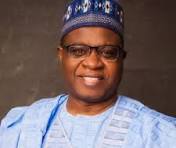
Alh. (Dr) Umaru Kwairanga, Group Chairman, Nigerian Exchange Group (NGX Group), has been named as the Top10 Magazine’s Man of the Year 2026. He emerged from among many other distinguished personalities in a multi-stage rigorous selection and screening process.
He succeeds Alh. Nasiru Haladu Danu, OFR, Chairman of Casiva Ltd, who was the magazine’s Man of the Year for 2025. He joins a club of distinguished Nigerians who have won the crown since the inception of the award over 10 years ago, with Dr. Herbert Wigwe, the late Group Managing Director of Access Bank, as the pioneer winner of the award in 2016. Also on the magazine’s roll of honour are Umar Abdullahi, Chairman, Cosgrove Group (2020); Chief Samuel Onyishi, Chairman of Peace Mass Transit (PMT) and Founder of Maduka University (2022); Muhammad Nami, former Chairman, Federal Inland Revenue Service, FIRS (2023), Senator George Akume (2024), among others.In a letter conveying Alhaji Kwairanga’s selection as the Man of the Year 2026, the Board of Editors of the Magazine said it was in recognition of his towering leadership as custodian of Nigeria’s capital market, his role in driving national economic development, his championship of corporate governance, transparency, integrity and influence that defined Nigeria’s economic narrative in 2026. These, the givers of the award said, clearly stand him out as a man of excellence worthy of celebration, “hence the decision of our management to accord you this special recognition as the Top10 Magazine’s Man of the Year 2026,” the letter said.
In a year marked by economic reforms, market volatility and renewed investor search for trust and transparency, Dr. Kwairanga stood tall as a symbol of stability, integrity and visionary leadership. Under his watch, the Nigerian Exchange has emerged as one of Africa’s best performing markets, restoring investor confidence, attracting foreign inflows and providing capital for enterprise growth that creates jobs for millions of Nigerians.
As overseer of NGX Regulation, he has championed board accountability, shareholder protection, ESG compliance and global best practices, elevating Nigerian corporate governance to world standard. His influence goes beyond the trading floor of Marina. He is a trusted counsel to regulators, a respected voice in the Presidency’s economic circle, a bridge between the private sector and government, and a mentor to a generation of investors and entrepreneurs who see in him the embodiment of ethical capitalism.
A man of unblemished integrity, quiet philanthropy and profound intellect, Dr. Kwairanga represents the best of Northern and Nigerian leadership – humble yet powerful, principled yet pragmatic, traditional yet globally minded. In a nation in search of role models who prove that one can be successful without cutting corners, powerful without being oppressive and wealthy without losing humanity, Alhaji Kwairanga stands as a beacon.
“For his towering leadership as custodian of Nigeria’s capital market, his role in driving national economic development, his championship of corporate governance and transparency, his integrity and influence that defined Nigeria’s economic narrative in 2026, the Board and Management of the Top10 Magazine unanimously select Alh. (Dr.) Umaru Kwairanga as Man of the year 2026”, stated publishers of the Top10 Magazine.
The Top10 Magazine is a monthly publication established over ten years ago as a platform to celebrate excellence and people of excellence from all human endeavours.
The Top10 Man of the Year Award was also instituted the same year as an annual award by the magazine as the highest honour reserved annually for one distinguished Nigerian whose leadership, integrity, influence and national impact have defined the year.
This year’s recipient, Alhaji Umaru, a man of untainted character and impeccable reputation, is renowned for his unwavering commitment to success. Dr. Kwairanga has 25 years’ cognate experience in the banking, pensions, investment, manufacturing and commercial sectors. He has served previously as a Council member of the Nigerian Stock Exchange and is currently a Council member of the Institute of Directors of Nigeria; and an active director on the boards of many quoted/listed and unquoted companies including Ashaka Cement Plc where he served for over ten years, first as a director and later as chairman of the Board. He is currently the GMD/CEO of Finmal Finance Services Limited.
He is a Fellow of Chartered Institute of Stockbrokers, Fellow of Certified Pension Institute Nigeria (2005) and Fellow of Institute of Directors of Nigeria. He is Chairman – Commerce, Trade and Investment subcommittee of Gombe State transition committee.
Dr. Kwairanga has a B.Sc (Hons) Business Administration (1991) and MBA (1995) both from University of Maiduguri and M.Sc. Finance & Governance from Liverpool John Moores University (2007).
Mr. Tony Iji, Publisher/Editor-In-Chief of the Top10 Magazine, said the award will be presented to Alhaji Umaru at the Top10 Magazine’s Annual Excellence Awards night slated for November 22, 2026 which will be graced by crème de la crème of the society.
To mark this high-profile event, the magazine is putting together a special award edition to celebrate him and other awardees. The edition which will comprehensively chronicle his achievements, leadership journey, and contribution to Nigeria’s capital market and the economy in general.

By Ubong Ukpong, Abuja
The House of Representatives on Wednesday, summoned telecommunication operators in the country to appear before it over the present poor network services.
The Ad Hoc Committee investigating the persistent poor quality of telecommunication services in Nigeria gave the chief executive officers (CEOs) of major telecom operators seven days to appear before it and explain the deteriorating quality of network services across the country.
The committee issued the ultimatum at a public hearing in Abuja on Wednesday, directing the CEOs of MTN Nigeria, Airtel Nigeria, Globacom (Glo), Mafab Communications Ltd.
and other telecommunications service providers to appear before it on October 28, 2026.The resolution followed the adoption of two motions sponsored by Rep. Sunday Umeha and Rep Afam Ogene after the committee expressed displeasure over the failure of the invited telecom operators, including MTN and Mafab Communications, to honour previous invitations and appear before the lawmakers.
The committee directed the Nigerian Communications Commission (NCC) to ensure that all the affected operators comply with the invitation and appear before it at 2 p.m. on October 28 in Hearing Room 447 of the New Building of the National Assembly Complex, Abuja.
It also directed the operators to submit all relevant documents to the committee on or before the scheduled date and account for the persistent decline in service quality, which has continued to affect millions of subscribers and businesses across the country.
The lawmakers warned that any chief executive who failed to honour the invitation would face a possible summons for arrest to compel their appearance before the committee.
Speaking at the hearing, the committee’s Chairman, Rep. Olumide Osoba (APC-Ogun), said telecommunications services had become indispensable to Nigeria’s economy, extending beyond voice calls and internet access to critical commercial activities, including Point of Sale (POS) transactions.
Osoba noted that businesses, financial transactions and other essential services depended heavily on reliable telecommunications networks, making the persistent decline in service quality a matter of serious national concern.
He said the House constituted the ad hoc committee to investigate the recurring complaints by subscribers and determine the factors responsible for the poor quality of services provided by telecommunications operators.
The chairman, however, expressed concern that the invited chief executives had continued to evade direct engagement with the committee by offering various excuses or sending lower-ranking officials to represent them.
He said the practice undermined the purpose of the parliamentary investigation, stressing that the committee expected the chief executives, who were in a position to explain their companies’ operational challenges and commitments, to appear in person.
Also speaking, Rep. Ibe Osonwa expressed displeasure over what he described as the operators’ disregard for the House, despite the substantial revenue they generated from their operations in Nigeria.
Osonwa said it was unacceptable for companies benefiting from the Nigerian market to ignore invitations from the legislature, particularly when the purpose was to obtain explanations on issues directly affecting their customers and the wider economy.
He stressed that telecommunications operators had a responsibility to account for the quality of services delivered to Nigerians, adding that the House would not overlook any attempt to frustrate its investigation.
In his ruling, Osoba urged the NCC to ensure full compliance with the committee’s resolution, reiterating that the affected telecommunications operators must appear before the lawmakers on October 28 and provide the necessary explanations and documents.



2027: Benue People Are Not ‘Shenanigans’, Alia Owes You No Apology, Ex-Ambassador Tells Ortom
ShareFrom Attah Ede, Makurdi A former Nigerian Ambassador to Namibia, Terhemen Tarzoor, has criticized former Benue State Governor Samuel Ortom...

JPMorgan’s Entry into Nigeria: Turning Global Finance into a National Development Opportunity
ShareBy Uche Joe Uwaleke The proposed establishment of JPMorgan Merchant Bank Nigeria Limited presents Nigeria with an important opportunity to...


WAHO Steps Up Regional Health Surveillance After Ebola Case Confirmed in Abuja
ShareBy David Torough, Abuja The West African Health Organisation (WAHO) has intensified regional health surveillance following the confirmation of an...

2027: Don’t Call Benue People Shenanigans, Alia not answerable to you- Ex- Amb, Tarzoor Tells Ortom, Wike.
ShareFrom Attah Ede, Makurdi Ex -Nigeria’s Ambassador to Namibia, Terhemen Tarzoor, has warned the immediate past Governor of Benue State...

DBN Signs $61m Credit Deal With AfDB, Unveils Support Initiative Report
ShareBy Tony Obiechina, Abuja The Development Bank of Nigeria Plc (DBN) has launched DAWN: DBN Action for Women in Nigeria,...

NLC Threatens Nationwide Action as Talks With FG Collapse
ShareBy Tambaya Julius, Abuja The Nigeria Labour Congress (NLC) has threatened possible nationwide industrial action following the failure of talks...

Top10 Magazine Names Umaru Kwairanga as Man of the Year 2026
ShareAlh. (Dr) Umaru Kwairanga, Group Chairman, Nigerian Exchange Group (NGX Group), has been named as the Top10 Magazine’s Man of...


UK, Nigeria to Deepen Defence, Security Cooperation
ShareThe United Kingdom has reaffirmed its commitment to deepening defence and security cooperation with Nigeria, with emphasis on military training,...


2027: INEC Steps Up Preparations, Completes Nine Activities
ShareBy Tambaya Julius, Abuja The Independent National Electoral Commission (INEC) has completed nine of the 14 activities on its timetable...

2027: Tinubu Accords Benue Security Top Priority, Tompolo Tells Supporters
ShareLeader of the PBAT Door-to-Door Movement, Government Tompolo, has called on the people of Benue state to come out enmasse...