
Metro
Constitutional Roles or not, Traditional Rulers are Stabilising Factors – Bako


As the clamour for constitutional roles for traditional rulers heightens, Dr Danladi Bako, former Director-General of the National Broadcasting Commission, says the traditional rulers are stabilising factors “with or without constitutional roles”.
Bako, currently the “Kogunana Sokoto”, said this on Sunday in Abuja that the traditional rulers would always be relevant in the society.
“The way the country is structured politically, politicians will not want to give an inch of power to another set of people.
“Politicians love to always be in charge; the constitution says all traditional rulers should report to their local government chairmen.
“And you know that a state governor may have his favourite local government chairman., If you bring the traditional ruler to a level where he is richer or more constitutionally empowered, the governors may begin to worry.
“Such worry may be that the format or process of becoming a traditional ruler is not as democratic as contesting an election. In their own case, 11 or five king makers will make the selection.
“And sometimes, it is not the best brains that become the traditional ruler. There is no sort of competition. They don’t have tenure, so giving them constitutional roles may be a challenge.
“When they stay there for 20 years and see four different governors come and go and you give them constitutional power, some of the governors may find a way to undermine them or both of them may want to undermine each other.
“With or without constitutional roles, the advantages of traditional rulers are many; they are stabilising factors in the society. They also serve as leaders in social engineering. They settle issues that have to do with tradition, land, culture, marriages, divorce, etc,” Bako said.
The Kogunan Sokoto said that politicians don’t feel comfortable with people who do not have tenure, adding that the moment you introduce roles, people will begin to fight fiercely for that position.
According to hum, it is going to be a major challenge if you allow traditional rulers to begin to contest politically, because people are going to destroy the system.
“Where they are now, they earn respect and people reverre them. If given constitutional roles, it may help in terms of validation of what they do in terms of security, local terrain, etc.
“When you are a traditional ruler, you are brought up in royalty, justice, fairness, equity and humility. Once you are trained in them, the honour is there,” Bako stressed. (NAN)

The Federal Government has called for a stronger agricultural value chains, increased agro-industrialisation and improved market access to boost food security in Nigeria.
The Permanent Secretary, Federal Ministry of Agriculture and Food Security, Dr.
Marcus Ogunbiyi, made the call on Monday in Enugu during the Technical Session of the National Council on Agriculture and Food Security.The theme of the event is “Enhancing Agricultural Value Chains, Agro-Industrialization and Market Access for Economic Growth.”
Ogunbiyi, who doubled as the Chairman of the Technical Session, said that the country must move beyond subsistence farming and embrace a commercially driven agricultural system capable of supporting industries, improving farmers’ incomes and expanding export opportunities.
“Our task goes beyond increasing the volume of food produced.
“We must build an agricultural economy that creates wealth, supports industries, generates decent employment, expands exports, improves rural livelihoods and contributes meaningfully to national economic growth,” he said.
The Permanent Secretary identified inadequate storage and processing facilities, limited access to finance, poor logistics and weak links between farmers and processors as major challenges affecting the competitiveness of agricultural products.
He called for increased investment in agro-processing facilities, rural roads, irrigation, electricity, cold-chain infrastructure and modern technologies to reduce post-harvest losses and promote local value addition.
“Agro-industrialisation is central to the transformation we seek to achieve. It provides the bridge between agriculture and industry.
“It also enables agricultural production to serve as a reliable source of raw materials for manufacturing and other productive sectors of the economy.
“The value of this Council will ultimately be determined by the quality of its resolutions and the extent to which those resolutions are implemented,” Ogunbiyi stated.
He also urged state governments to identify priority commodities, establish clear production and processing targets, attract private-sector investment and strengthen partnerships with research institutions and development partners.
In his remarks, the Enugu State Commissioner for Agriculture and Agro-industrialisation, Patrick Uburu, said that the state government was committed to agro-industrialisation to boost farmers’ income, create jobs and generate wealth.
Uburu, who described the technical sessions as a platform for translating policies into practical solutions, urged delegates to prioritise farmers and agribusiness operators in their deliberations.
He emphasised the need for stronger collaboration among state governments, federal agencies and development partners to address food security challenges, noting that recommendations from the meeting should be measurable and implementable.
The commissioner called for practical policies and investments that would improve farmers’ productivity and expand market access for agricultural produce.
Technical Lead Policy Advisory, GIZ ECOWAS & Nigeria, Dr Abiodun Ihebuzor, advocated for stronger partnerships and increased investment in agricultural value chains to reduce post-harvest losses and improve food security in Nigeria.
Ihebuzor noted that previous engagements at the 46th Council in Calabar and the 47th Council in Kaduna had provided opportunities to advance agricultural development.
He expressed optimism that the current meeting would strengthen collaboration among government institutions, development partners and private-sector operators.
According to him, healthy soils, efficient markets and improved storage systems were essential to sustainable food security.
On her part, Geraldine Onu, Deputy Director, Administration and Supply, Enugu State Ministry of Agriculture and Agro-Industrialisation, disclosed that the State Government had intensified efforts to transform agriculture from subsistence farming to commercial and mechanical farming as part of its economic development agenda.
She noted that investments in irrigation, storage, processing and agricultural infrastructure were aimed at increasing production, attracting private investment, reducing post-harvest losses and improving farmers’ livelihoods.
“In Enugu State, under the visionary leadership of Gov. Peter Mbah, agriculture occupies a strategic position in the state’s economic transformation agenda.
“The initiatives include the 300,000-hectare agricultural land bank, the development of Smart Farm Estates across the 17 Local Government Areas, the 260 Farm Estate Programme and the establishment of a tractor assembly plant,” Onu added.(NAN)

The Federal Civil Service Commission (FCSC) and Soft Alliance and Resource Ltd. are exploring ways to integrate the commission’s statutory functions with relevant modules of the Integrated Personnel and Payroll Information System (IPPIS).
The Chairman of the commission, Prof.
Tunji Olaopa, disclosed this on Wednesday in Abuja when he received a delegation from Soft Alliance and Resource Ltd. , led by its Director and IPPIS Consultant, Tunde Ojumu, in his office.Olaopa said the proposed integration was to improve digital service delivery, recruitment processes and personnel management across the Federal Civil Service.
He added that it was designed to strengthen recruitment procedures, enhance human resource management and ensure the timely synchronisation of personnel records across government institutions.
He stressed the need for seamless coordination between recruitment approvals and the onboarding of successful candidates on IPPIS, noting that delays in uploading newly recruited personnel onto the system remained a major concern.
The chairman emphasised the importance of efficient, transparent and interconnected digital processes in improving personnel administration and ensuring that government recruitment activities were properly reflected in the central personnel and payroll management system.
He explained that the commission currently operates an independent online recruitment portal, which has enhanced transparency in its recruitment exercises and improved the management of recruitment-related activities.
According to him, two possible integration options are being considered to achieve the desired objectives without compromising the commission’s statutory responsibilities.
Olaopa said the first option would involve retaining the existing recruitment portal and linking it to IPPIS through an application programming interface (API), which would enable both platforms to exchange relevant information seamlessly.
He added that the second option would involve full integration with the central government platform, subject to appropriate technical and operational arrangements that would ensure effective coordination between the commission and the IPPIS management team.
The chairman, however, stressed that any integration framework must safeguard data sovereignty, process integrity and institutional control, given the commission’s statutory responsibilities for recruitment, promotion and other personnel-related functions.
He further underscored the need for a reliable, data-driven framework to support personnel management, disciplinary procedures and other human resource functions across the Federal Civil Service.
In his remarks, Ojumu outlined the evolution of IPPIS and the improvements introduced to enhance its functionality, flexibility and responsiveness to the operational requirements of government institutions.
He explained that the system had evolved into a configurable, locally developed solution built on Oracle technology to accommodate the peculiarities and administrative requirements of the Nigerian public service.
Ojumu expressed Soft Alliance and Resource Limited’s readiness to collaborate with the Commission’s technical team to assess existing platforms, identify operational gaps and determine the most suitable integration options.
According to him, IPPIS has configurable features capable of accommodating institution-specific requirements, strengthening inter-agency workflows and facilitating the timely synchronisation of personnel records, including promotion and retirement information.
The engagement also highlighted the importance of accurate and synchronised personnel records in preventing administrative errors, improving payroll management and ensuring the proper application of retirement provisions across the Federal Civil Service. (NAN)

By Tambaya Julius, Abuja
Akwanga, Nasarawa State, is set to host prominent personalities from within and outside the state as The Spotlight Magazine prepares to launch its maiden edition on Sunday, November 1, 2026.
The event is scheduled to take place at Gaji Luxury Hotel, Akwanga, by 2:00 p.
m.According to the organisers, the occasion will bring together eminent personalities, traditional rulers, political leaders, captains of industry, media practitioners, youth groups and other stakeholders to celebrate the introduction of the magazine.
The Publisher of the Spotlight Magazine, M. J. Yusuf, said the publication was established to spotlight excellence, promote development journalism, celebrate unsung heroes and showcase the rich cultural and economic potential of Akwanga, Nasarawa State and Nigeria at large.
Yusuf explained that the maiden edition features exclusive interviews, investigative reports and inspiring success stories reflecting the experiences, achievements and aspirations of the people.
He added that the magazine aims to provide a platform for promoting development, recognising outstanding contributions to society and highlighting issues of public interest.
The guest speaker and a veteran media professional, Muktar Wakeel, is to deliver the guest lecture at the event.
Dignitaries expected at the launch include the Executive Governor of Nasarawa State, members of the National and State Assemblies, the Chairman of Akwanga Local Government Area, and traditional rulers led by the Chun Mada, alongside other royal fathers, business leaders and media practitioners.
The organising committee said adequate arrangements had been made to ensure a colourful, secure and memorable event.
It also invited members of the public and other interested stakeholders to attend the launch and support the magazine’s vision of promoting truth, development and positive change.
The launch is expected to mark the beginning of The Spotlight Magazine’s contribution to development journalism, public discourse and the promotion of the cultural and economic potential of Nasarawa State and the World at large.


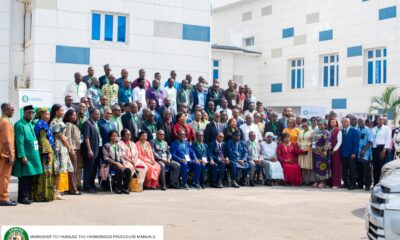

WAHO Advances Regional Health Integration Through Standardised Procedure Manuals
ShareBy David Torough, Abuja The West African Health Organization (WAHO) has commenced a regional workshop in Abuja to finalize procedural...


2027 Elections: CAN Disowns Man Claiming its General Secretary
ShareBy Laide Akinboade, Abuja The Christian Association of Nigeria (CAN) on Wednesday, disassociate itself from Archbishop Chivir Chianson and the...


INEC Seeks UN Partnership in Tackling Disinformation on 2027 General Elections
ShareThe Independent National Electoral Commission (INEC) has called for the partnership of the United Nations in combating disinformation in the...


2025: NDLEA Arrests 1,200, Seizes 30 Tonnes of Drugs in Edo – Marwa
ShareThe National Drug Law Enforcement Agency (NDLEA), arrested 1,200 suspects and seized more than 30 tonnes of illicit substances in...


JAIZ Bank Denies Involvement in N104m Investment Fraud in Jos Branch
ShareBy Tony Obiechina, Abuja Jaiz bank has denied involvement of alleged N104m fraud in its Jos branch. In a statement...


Trump-backed Republican Senate candidates pay the price
SharePresident Donald Trump asked voters to pretend he was on the ballot in the midterm elections and handpicked Republican candidates...


Court to Deliver Judgment in El-Rufai’s N10bn Rights Suit
ShareThe Federal High Court in Abuja has fixed Dec. 8 for judgment in a N10 billion rights suit filed by...
Women and Land: Why Nigeria’s Land Administration Cannot Afford to Leave Half the Nation Behind
ShareThe ongoing conversations on land reform in Nigeria tend to focus on speed, cost and documentation. Seemingly disregarded is the...


Caverton Revenue Rises to N20.74bn
ShareBy Tony Obiechina, Abuja Caverton Offshore Support Group Plc recorded a 1.4 per cent increase in revenue to N20.74bn for...

Tinubu Slashes External Loan Request to $7.7bn, Seeks Senate Nod
ShareBy David Torough, Abuja President Bola Tinubu has revised the Federal Government’s 2026 external borrowing proposal, seeking Senate approval to...