
NEWS
Benue Govt. Orders Warring Communities to Keep off Disputed River


The Benue State Government has ordered two communities in Guma Local Government Area (LGA) of the State to steer clear of the disputed River Antse.
Reports says that Unyande and Kwenev communities have been at war over ownership of the river, a conflict that has claimed many lives for the past 30 years.
The Special Adviser to Gov.
Hyacinth Alia on Security (Internal Affairs), Chief Joseph Har, gave the order in Makurdi, shortly after a meeting with stakeholders from the LGA on Sunday.Har said that the State Government had ordered the two communities to keep off the disputed river, following intelligence report of possible escalation of tensions in the area.
He said the report indicated that the conflict had the potential of escalating into a into full blown communal crisis, adding that the decision was to prevent such occurrence.
He explained that the Iyharev speaking people of Unyande, and the Ngongov tribe of Kwenev, are are fighting over ownership of River Antse.
He said the conflict has claimed many lives in the past three decades.
Har said the meeting which had in attendance, traditional rulers in the area, the council’s chairman and the state assembly Member from the area would be reconvened next Sunday.
“Government has ordered that nobody from Unyande and Kwenev should go close to River Antse until they hear from Government. We will reconvene on Sunday.
“This administration has zero tolerance for communal clashes. So we want to stop it before it begins. If anyone goes ahead to do anything that may lead to the breakdown of law and order, we will go after the person.” Har warned.
Also, His Royal Highness Ter Guma, Chief Dennis Shemberga, the traditional ruler of Guma, commended the Government for its prompt intervention over the lingering crisis, to forestall a full blown communal clash between Iyharev and Ngongov.
Shemberga also explained that the communities were fighting over ownership of the river because of the large quantity of fishes in it, the fertile land around its banks, which is usually used for dry season farming, among other issues.
He disclosed that the two communities had taken the matter to court, but the traditional rulers had withdrawn the cases for out-of-court settlement as brothers who would forever share boundary with each other.
He said the dispute started more than 30 years ago, and had claimed many lives.
Also the Caretaker Chairman, Guma LGA, Mr Simon Unongo, said in spite of the lingering crisis between the two communities over the river, the area was enjoying relative peace.
Unongo said many IDPs from Udei, Tse Torkula, Yongbo, amongst others, had since returned to their farms following the intervention by the state government.
Mr Terwase Uche, Member representing Guma 1 State Constituency, said that the assembly was not considering enacting any legislation over such issues because each community had its peculiarity.
Uche said it was better for the communities to find ways of resolving issues themselves without necessarily exacting laws on them, as they would continue to live together after the crisis.(NAN)
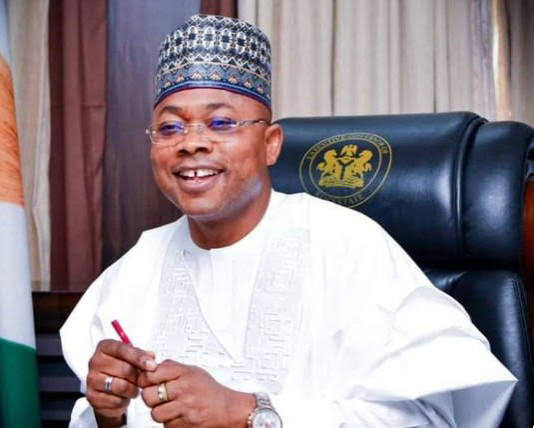
From Joseph Amedu, Lokoja
Kogi State Governor, Ahmed Ododo has donated N35 million for the completion of the ongoing community Town Hall project in Takete-Ide Amuro, Mopamuro Local Government Area.
The governor also promised and reaffirmed his administration’s commitment to fix the Orokere-Ayede-Takete Ide road where the Owowo Bridge is located.
Ododo made the pledge over the weekend, at the 2026 Takete-Ide Amuro Centenary Celebration and Development Fundraising, where he was represented by the Speaker, Kogi House of Assembly, Rt.
Hon. Aliyu Umar Yusuf.The governor described the centenary as a celebration of 100 years of history, heritage and the remarkable journey of Takete-Ide Amuro since its settlement in its present location in 1926.
The governor commended the community’s spirit of self-help, noting that its first primary school, secondary school and health centre were built through communal efforts before government intervention.
He said the ongoing Town Hall and Palace projects were important initiatives that will strengthen community administration and preserve traditional heritage, pledging government’s support within available resources.
“On a personal note, I have released funds of N35 million towards the completion of the Town Hall project as my personal contribution to the development of this community,” Ododo said.
On infrastructure, the governor said he was aware of the deplorable condition of the Orokere-Ayede-Takete Ide road, particularly the Owowo Bridge, which had been brought to his attention by his cabinet member from the area.
“Our engineers are assessing the situation and I want to assure you that we will attend to the road in due course. When we make a promise, we are committed to ensuring that it is fulfilled,” he assured.
Ododo urged youths to sustain the legacy of communal development, embrace education and entrepreneurship, and called on sons and daughters in the diaspora to invest in the community.
He also urged residents to cooperate with security agencies and provide credible intelligence to safeguard lives and property.
The Chief Host and Chairman, Central Planning Committee, Hon. Kingsley Fanwo, who is also Commissioner for Information and Communication, said the centenary marked 100 years since the community moved to its present location in 1926.
He called for unity, noting that the community achieved its early schools and health centre through communal efforts.
The Alamuro of Amuro Kingdom, HRM Oba Alfred Modupe Aiyedogbon, said the celebration provided an opportunity to showcase the culture of the people and draw government attention to challenges, especially the bad road and bridge.
He urged communities to embrace self-help, noting that the government cannot do everything, and called for peace, saying Amuro remains one of the most peaceful communities in Kogi.
The Baale of Amuro Kingdom, Chief Eric Fiki, said the week-long event was to honour past heroes, celebrate the living and raise funds to complete the town hall and palace projects.
Fiki said the community believes in self-help but still deserves government presence, adding that the community is fully in support of Gov. Ododo and President Bola Tinubu.
The National President, Takete-Ide Progressive Union (TIPU), Prince Richard Fiki, said the centenary was about heritage, peace, love and unity, aimed at promoting culture and attracting investment and government intervention in agriculture and other areas.
Highlight of the occasion was conferment of honorary chieftaincy titles on personalities for contributions to community development, cultural displays and presentation of gifts to the Special Guest of Honour.
One of the recipients, Chief Adekunle Abogun, the Gbobaniyi of Takete-Ide, said giving back to the community should not wait until one has billions, stressing that the government cannot do everything and individuals must support health, education and infrastructure.
The celebration brought together government functionaries, traditional rulers, lawmakers and sons and daughters of Takete-Ide Amuro at home and in diaspora.

A graduate of the University of Maiduguri, Shianya Ebwaseh, said the Nigerian Education Loan Fund (NELFUND) helped improve her Grade Point Average (GPA) to 3.50 through financial support that enabled her to concentrate on her studies.
Ebwaseh, who graduated from the Department of Zoology, Faculty of Life Sciences, said this in an interview on Monday in Maiduguri.
She said financial difficulties had previously affected her academic performance, as she struggled to meet her daily needs while pursuing her degree.
The graduate said she resorted to selling fried chips and groundnuts on campus to support herself, sometimes missing lectures because of the time and energy required to run the business.
According to her, the introduction of NELFUND’s student loan scheme relieved her financial burden through tuition support and a monthly N20,000 upkeep allowance.
“Before NELFUND, I struggled with my GPA because of financial challenges. I sometimes missed lectures after spending hours frying and packaging chips for sale.
“But when NELFUND came, I stopped the business and concentrated on my studies. My GPA improved to 3.50, which is Second Class Upper,” she said.
Ebwaseh said the financial support also enabled her to attend lectures regularly, purchase learning materials and prepare adequately for tests and examinations without constant worries about money.
She added that her examination scores improved significantly after she began receiving the support, attributing the change to increased concentration and financial stability.
The graduate, who said she accessed the scheme in her third year, described the application process as simple and encouraged other eligible students to apply.
She also said the programme had helped financially disadvantaged students remain in school, particularly those whose parents could not afford tuition fees and upkeep.
Ebwaseh appealed to the Federal Government to sustain the initiative, emphasising that withdrawing the support could expose many students to financial difficulties and possible dropout.
She said the scheme had given beneficiaries an opportunity to pursue their academic ambitions with fewer financial distractions.(NAN)
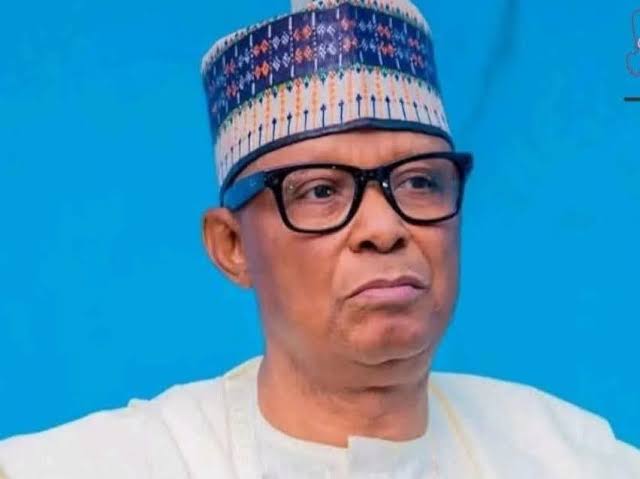
The Minister of Housing and Urban Development, Dr Muttaqha Darma, has called for synergy among government agencies in the housing sector to improve coordination and accelerate housing delivery.
Darma made the call in Abuja on Monday at the stakeholders’ conference on the proposed National Real Estate Regulatory Authority (NRERA).
The conference, themed “One vision, One Ecosystem, One National Housing and Real Estate Plan”, was organised by the Office of the Speaker, House of Representatives, and the House Committee on Housing and Habitat.
The minister said the lack of coordination among government agencies had affected the effective delivery of houses to Nigerians, noting that institutions in the sector operated independently.
“The players within the industry, all of us, operate in silos.
“Federal Housing Authority (FHA) does not even know what the Federal Mortgage Bank of Nigeria (FMBN) is doing. FMBN does not know what the Ministry of Finance Incorporated (MOFI) is doing,” he said.
According to him, the various institutions must work together towards a common goal rather than operate independently.
“Our target is to build houses for Nigerians. We are wasting our time because if we fail, it is us who fail, not the President,” he said.
The minister expressed support for the establishment of NRERA, saying the proposed authority would address the regulatory gaps in the real estate sector.
He said the ministry had reviewed the proposed legislation and recognised its potential to improve the sector.
Darma also disclosed that abandoned housing projects funded by the Federal Mortgage Bank of Nigeria (FMBN) across the country were worth about N38 billion.
He said a survey conducted by the ministry revealed abandoned FMBN-funded housing developments in every state of the federation, including the Federal Capital Territory.
“We realised about N38 billion of contributors’ money, your own money, all the Nigerian workers’ money. N38 billion is wasted,” he said.
He said that the poor management of workers’ contributions could discourage Nigerians from contributing to the National Housing Fund.
The minister urged the committee handling the proposed legislation to ensure that state governments were included in the regulatory framework.
He also called for safeguards to protect homebuyers, tenants, developers and mortgage lenders, including mandatory escrow accounts for buyers and standardised tenancy agreements.
The Managing Director and Chief Executive Officer of the Ministry of Finance Incorporated (MOFI), Dr Armstrong Takang, said effective regulation was necessary to restore investor confidence in Nigeria’s real estate sector.
Takang said the sector contributed 12.71 per cent to Nigeria’s Gross Domestic Product (GDP) as of June 2026, but remained largely unregulated.
He said the absence of a national licensing system had allowed unqualified individuals to operate as estate agents and developers without adequate accountability.
“Anyone can sell land, anyone can collect off-plan payments, run into tens of billions and get away with it. There are very few countries in the world where these are allowed,” he said.
He called for mandatory licensing of real estate operators and the protection of buyers’ funds through designated project accounts.
“An operator must be licensed with the authorities. No one should be operating in the real estate sector without a licence, no matter which part of the value chain they are involved in,” he said.
He added that buyers’ funds should be kept in protected project accounts and released to developers based on evidence of progress on construction.
Takang said effective regulation would attract domestic and foreign investment, protect citizens and support the Federal Government’s one-trillion-dollar economy target.
He urged the National Assembly to ensure the passage of the proposed legislation, describing it as critical to bringing order and transparency to the real estate sector.




NOA, Speaker Mobilise Northwest against Drug Abuse, Domestic Violence
ShareThe National Orientation Agency (NOA) and the Speaker of the House of Representatives, Tajudeen Abbas, have launched a campaign against...


FG Calls for Stronger Agricultural Value Chains to Boost Food Security
ShareThe Federal Government has called for a stronger agricultural value chains, increased agro-industrialisation and improved market access to boost food...

Ododo Donates N35m for Takete-Ide Town Hall Project
ShareFrom Joseph Amedu, Lokoja Kogi State Governor, Ahmed Ododo has donated N35 million for the completion of the ongoing community...

NELFUND Loan Improves Graduate’s GPA to 3.50
ShareA graduate of the University of Maiduguri, Shianya Ebwaseh, said the Nigerian Education Loan Fund (NELFUND) helped improve her Grade...

FG Seeks Synergy Among Housing Agencies to Boost Housing Delivery
ShareThe Minister of Housing and Urban Development, Dr Muttaqha Darma, has called for synergy among government agencies in the housing...


Ondo SUBEB Charges 637 Newly Absorbed Teachers on Professionalism
ShareThe Ondo State Government has congratulated the 637 newly absorbed teachers and other personnel into the state public teaching service,...

NDDC Officials, Journalists Inspect 600-Metre Otuogori Bridge Project in Bayelsa
ShareFrom Mike Tayese, Yenagoa Officials of the Niger Delta Development Commission (NDDC), and journalists on Monday inspected the ongoing construction...


WAHO Seeks Uniform Standards for Health Professionals’ Education in ECOWAS
ShareBy David Torough, Abuja The West African Health Organisation (WAHO) has reaffirmed its commitment to harmonising the training, accreditation and...


2027: INEC Engages Adamawa PWDs on Electoral Process
ShareThe Independent National Electoral Commission (INEC) in Adamawa has sensitised Persons Living with Disabilities (PWDs) on the electoral process ahead...


GAIYD Reaches 49,585 People, Targets 100 Per Cent Growth in Youth Devt Impact
ShareBy David Torough, Abuja The Great Achievers Initiative for Youth and Community Development (GAIYD) says it reached more than 49,585...