
Entertainment/Arts/Culture
A Tale of Two Giants

By Kirsten C. Okenwa
The first sixteen years of my life was in Kano, Nigeria. Needless to say I appreciate all things Hausa and Arabic. I like to read magazines and non-fiction books in the Arabic script style, from right to left.
I will often turn to the epilogue of books or back pages of magazines to start my reading. It was with relish that I dug into Professor Emeka Aniagolu’s book, A Tale of Two Giants: Chinua Achebe & Wole Soyinka.Reading the epilogue first, as I usually do, I was immediately reassured that the work is typical Aniagolu: forthright, refined, sagacious, authoritative, authentic, precise, bold, unapologetic and witty.
I titled this review: Sublime Lives, borrowing the phrase from the famous poem, A Psalm of Life, by the American Poet, Henry Wadsworth Longfellow:
Lives of great men all remind us
We can make our lives sublime,
And, departing, leave behind us
Footprints on the sands of time.
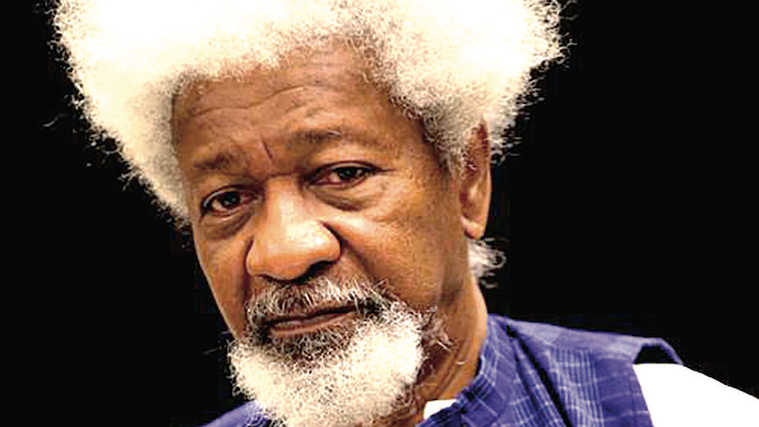
A Tale of Two Giants by Professor Emeka Aniagolu is a thorough, stimulating and fascinating comparative study, grounded in historico-socio-political contextual analysis of the careers, creative, autobiographical as well as scholarly and polemical works of Africa’s two literary giants: Chinua Achebe and Wole Soyinka. Much has been written on those two literary giants, but some lines from the introduction of Aniagolu’s work, explain the primary objective of the comparative study: “. . . critical analyses that go beyond nominal renditions of content analyses to engage dynamic, socio-political, economic and cultural context analysis . . .” Context analysis being the major work the author engaged in this treatise, rather than relying solely on content analysis of the works of the two literary giants. The work boldly interrogates, analyses and confronts the historical and political contexts of motivation, intentionality and expression, that surround and animate Achebe and Soyinka’s works, their personalities and their personal experiences.
A Tale of Two Giants is a voluminous work, with 552 pages, divided into thirteen chapters, though each chapter is not numbered but takes on titles. Like episodes in a television series, each chapter title guides the reader, page by brilliant page, into knowledge of the subject. The work is luxuriant in language and content, an opulent literary feast served by Professor Emeka Aniagolu with finesse and excellence. The details and analysis in this book will satisfy even the most fastidious literary critic. At the same time, it makes for very enjoyable reading to non-literary fellows. Aniagolu’s style is enthralling, highly inspirational and witty. An instance is when in the chapter titled, Literature & Praxis, thatdelves into the literary works of Achebe and Soyinka, Professor Aniagolu wittily writes that the neat divide in creative talent between Chinua Achebe and Wole Soyinka – between novels and dramas respectively – “. . . remains a curious one to him, for there is nothing readily apparent in the two genres that makes their creative manifestations mutually exclusive. Except perhaps, it is the spell of the gods that kept the two literary giants confined to the vineyards of their special talents, so as to spare us all malevolent artistic comparisons!”
Professor Emeka Aniagolu taught history and politics at Ohio Wesleyan University, Delaware, Ohio and at Ohio State University, Columbus, Ohio, for over 36 years. He is the author of eighteen books and several journal articles; and is also a recipient of numerous scholarly and community awards. This much acclaimed comparative study on Chinua Achebe and Wole Soyinka, A Tale of Two Giants, is written with a professor’s sensitivity to his readers. Aniagolu does an impressive job of presenting a broad context of information in each chapter. Using history, personal notes, case studies, tables, graphs, newspaper articles and very detailed appendices; the author excels in conveying knowledge and inducing thought on myriad subjects in all the chapters, with titles such as: “Political Activism, Protest Literature & the Nobel Prize;” “Literary Style, Knowledge & African Literature;” “Sentinels & Salesmen;” “The Two Literary Giants & the Nigerian Civil War,” etc.
A few literary pundits might question Professor Emeka Aniagolu’s qualification in writing this book or of other polemicists who trespass fields to act as literary critics. Asserting his literary bona fides, in the introduction to the work, Aniagolu puts forward strong reasons why he qualifies as a literary critic/creator. He argues that he is not deterred or disqualified to engage in literary creativity or criticism by virtue of the fact that his disciplinary training was not strictly in English, and its branches. He is a political scientist and a historian who has written a number of literary works – novels, short stories, poetry and plays. Trained in excellent universities in the state of Ohio in the USA, with a background in social sciences and humanities for his undergraduate and graduate degrees, and a long teaching career in African and African American Studies, he more than qualifies to undertake this massive comparative study.
Professor Aniagolu’s argument in the book’s introduction on critical thinking not being a function of only narrow disciplinary training and specialisation, but the brainchild or upshot of other disciplines, reads like the bible chapter in Galatians 1: 11-24. In which the Apostle Paul extensively defends his ministry against criticisms. The ‘main apostles’ and their followers probably hoped to weaken Paul’s influence, questioning his authority as a preacher of the gospel. Like Apostle Paul, Aniagolu makes his own defence to critics.
Copious works have been written on Chinua Achebe, who is often called the “Father of Modern African literature,” and whose last work before his passing was: There Was a Country. Wole Soyinka, who in 1986 became the first African to be awarded the Nobel Prize in Literature, isn’t behind in the number of books that have been written about him. Like Achebe, Soyinka also authored his memoir, You Must Set Forth at Dawn. Professor Emeka Aniagolu has broken new grounds with this comparative study, A Tale of Two Giants. Heprovides a broader historical, political and personal information on these two great literary icons: Achebe and Soyinka. His enthusiasm, admiration and sometimes biting criticism, shows through and helps engage the reader. Throughout the book, forgotten history comes alive, readers are also reminded of other important works not only by Achebe and Soyinka, but by other great African writers.
A Tale of Two Giants took me by surprise. Though I like its glossy, attractive cover, I was expecting a didactic, academic tome. But, what I got was a thoroughly engaging work. It is more than a study on the amazing and rich lives of Chinua Achebe and Wole Soyinka; it transcends its subject and reads like an encyclopaedia of knowledge, abounding in information on myriad topics; from natural science, to African folklore, to international politics. In writing on Achebe and Soyinka, the Professor also opens up a treasure trove of golden information on world literature, Africa’s development, Western colonisation of Africa, Nigeria’s nationhood, etc. Using sublime, yet clear language, he takes the reader through incredibly unexpected avenues teeming with information and knowledge.
The author’s discourse in the fourth chapter titled, “The Nobel Prize & The Two Literary Giants” is highly illuminating and audacious. The chapter sets off as a historical and political critical analysis of the Nobel Prize – for peace and in literature – as well as a speculative analysis as to why the Nobel Committee chose Wole Soyinka to bestow the first Nobel Prize in literature on an African, rather than on Chinua Achebe whom many thought was most deserving of the prize.
Aniagolu boldly speculates that Chinua Achebe’s “long. running counterfactual narrative and polemical critique of Western colonial history and racist nostrums; crowned by the mother of them all: his excoriating critique of one of the patron saints of Western literature: Joseph Conrad,” may have been considered “. . . so blasphemous as to warrant the literary equivalent of a fatwa issued against him by the high priests of ‘Temple Nobel’?”
Professor Aniagolu writes that if the Nobel Committee “makes use of objective and transparent criteria for their selections, they would be on solid ground with respect to their choices – at least procedurally if not substantively.”
Aniagolu keeps Chinua Achebe alive to the reader. His account on Achebe’s career as a literary icon, leader and pioneer, is remarkable. Achebe brought African sensibility into English literature and his books, life, politics, passions, shine throughout this book. I think one of Aniagolu’s best arguments were those he used in the third chapter that discusses The “Father of African Literature Controversy . . .”
Aniagolu strongly defends Chinua Achebe’s description as the “Father of Modern African Literature.” With brilliant instances, he juxtaposes the works of Achebe and that of other famous African writers and it is clear the title goes to the matchless Chinua Achebe.
Aniagolu clearly admires and respects Wole Soyinka. He writes that, ” my interest in his literary works has been powerfully spurred by his political activism.” But, Aniagolu’s praise isn’t as effusive for Soyinka as it is for Achebe. I read of Soyinka’s intellectual superiority in all his splendour, but in the chapter titled, “The Father of African Literature” Aniagolu is critical, for example, of Soyinka’s online newspaper interview with Sahara Reporters on May 18, 2013; a few days before Chinua Achebe’s funeral. In that interview, Soyinka levelled some slights at his longtime friend and colleague, Chinua Achebe by calling him a “storyteller.”
Soyinka was asked his view on Achebe’s enduring influence and impact in African literature/canon of world literature. Soyinka responded: “Chinua’s place in the canon of world literature? Wherever the art of the story-teller is celebrated [his place is] definitely assured.” Aniagolu goes on to deconstruct Soyinka’s words with much detail and analysis on Achebe great gift as a “storymaker” not just a “storyteller.” Still, the author praises Soyinka, calling him a “richly gifted constructionist.”
Professor Aniagolu’s writing, with his command of language, makes this meticulously researched work astounding. I knew this book was amazing when in the chapter, “Achebe & Soyinka: Africa’s Twin Gift”, I had tears running down my cheeks. Tears of gratitude to God, who gives excellent gifts to men, and men who in turn, make their lives sublime.
In concluding my review of this epic work by Professor Emeka Aniagolu, I will paraphrase the lines he used in describing Achebe’s critique of the writer Joseph Conrad and his novel: Heart of Darkness; “this book remains, the most cerebral, analytically rigorous and trenchant scholarly deconstruction” – of the works of Chinua Achebe and Wole Soyinka. Aniagolu in this comparative study, displays an incredible intellectual prowess and his hard-earned wisdom sets this work apart. His book is gifted and as he is my elder Igbo brother, I dare say that our universal deity Chi was behind the profundity of this work.
I’m awed by the hard work and diligence it took to prepare and write this exceptional book. It is indeed an immense contribution to literature. “In the final analysis,”Aniagolu writes, “the question is not whether there are important differences between the two literary giants; Chinua Achebe and Wole Soyinka. There are. The question is what those differences are and what difference(s) they make in our understanding and appreciation of the two literary giants? And equally important, where they belong in the canon of modern African literature in the light of those differences?”
Overall, the work is brilliant. Paraphrasing another few lines from Professor Emeka Aniagolu’s 2014 novel, God’s Children Too, I will conclude that – this book is good writing which has turned on and kept on for the duration of the work, an enthralling and captivating motion-picture in my imagination and that of many readers, on the lives, passions and politics of our African literary giants; Chinua Achebe and Wole Soyinka.
I expect everyone with a love for literature, African literature or a desire for knowledge: students, book club aficionados, politicians, historians, culture enthusiasts, academics, non-academics, businessmen and women, as well as all book lovers; to buy and enjoy this perfectly crafted masterpiece.
Kirsten C. Okenwa is a freelance editor/writer/graphics designer for magazines, websites and institutions. She often works as an educator/youth advocate in remote parts of the ECOWAS through the NGO, Amber Africa Dev. Foundation. During elections in Nigeria, she works with the European Union Election Observation Mission (EUEOM) in election observations and monitoring.
Mostly, she is a successful trader in books, African fashion and crafts.

Legendary Nollywood actor, Pete Edochie, has paid glowing tribute to late colleague, Olu Jacobs, describing him as a peaceful and humorous personality.
Edochie, in an emotional video tribute to the late legend, also commiserated with his wife, Joke Silva, over the challenges she endured during his prolonged illness.
“Olu, my brother, you fought like a man.
You fought like the soldier I have always known you to be. Rest in peace, my brother.“Joke, I commiserate with you for what you had to endure over a period of six years,” he said.
Edochie described Jacobs as a very humorous and peaceful colleague, recalling his distinctive personality and the impact he had on those around him.
He said although Jacobs’ death was painful, his life should also be celebrated.
“While we must mourn that Olu has gone, we should also be glad and celebrate Olu’s life.
“Of all our seniour colleagues who have gone, Olu was the only person who got up to 80 and beyond.
“The Good Book allows us three scores and 10, that is 70. Olu earned 14 years on top of that,” he said.
Edochie, however, acknowledged that the final six years of Jacobs’ life had not been what they had expected.
“Unfortunately, the past six years were not what we had projected or expected in any way.
“Like I said a thousand times, if God says it is time, then it is time,” he said.
The veteran actor expressed hope that one of Jacobs’ children would take up acting, saying this would help preserve the memory and legacy of the late actor.
“My one prayer is that one of Olu’s children takes to acting, so that whenever we look at him, we remember what Olu meant to all of us,” Edochie said.
He described Jacobs as the most seniour among their colleagues, and adding that the late actor treated everyone he interacted with accordingly.
Edochie also recalled words Jacobs had shared with his wife, urging Silva to hold on to them as she navigated life after his death.
“Joke, I want you to remember Olu’s words. Your problems are firmly behind you,” he said.
He ended the tribute with a reflection on the possibility of meeting Jacobs again after death.
“Joke, take care. Olu, well, if it is true that people recognise one another after they have gone, then there is a possibility that we will meet again,” Edochie said.
Jacobs died on Sept.16 at the age of 84, with his passing prompting tributes from colleagues, political leaders and other Nigerians who acknowledged his contributions to theatre, television and the Nigerian film industry.
Among other feats, he was a recipient of several awards, including the national honour of Member of the Order of the Federal Republic (MFR).(NAN)
Entertainment/Arts/Culture
Wizkid Originally Owned ‘Alive’ Before Jorja Smith Took it over, Singer Reveals
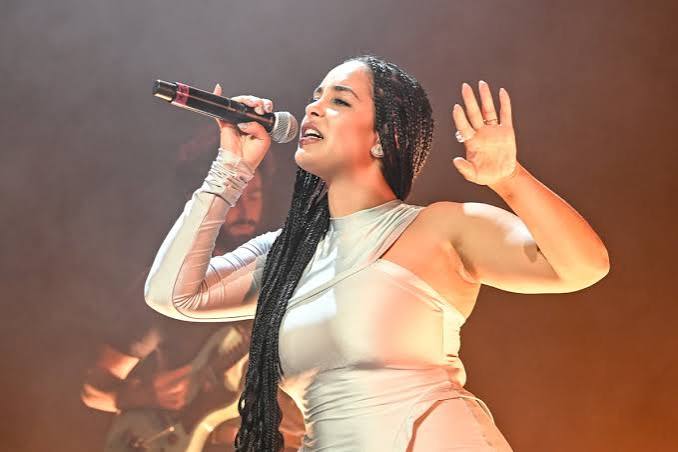
British singer Jorja Smith has revealed that her collaboration with Nigerian star Wizkid on the track “Alive” originally belonged to the Afrobeats artiste before she took it on.
In a recent interview shared by AlbumTalksHQ on X on Wednesday, Smith explained the origins of the song, which appears on her new album.
“That’s actually the oldest song on the album because we did, that’s one of the first songs we started and Wiz had his verse and then going off the back of what he was saying it just, it was just reminding me of like driving down to meet someone.
”“Like yeah and I don’t know there’s like a driving force in the song, a pull and yeah it was making me think of like the initial meeting, first chatting to someone’s stages, that vibe,” she said.
Smith described the track as being about finding new fresh love, noting that the music video was shot in Paris.
“I really like this song, it’s amazing. It’s about kind of finding new fresh love. Also the music video was in Paris, so it’s like love in the air,” she added.
Asked why Wizkid was the right feature for the song, the singer pointed to producer P2J’s earlier work.
“So P2J had that song with Wiz already and then I’d heard it and then I was, yeah,” she stated.
The British artiste further reflected on how the existing verse from Wizkid guided the direction of the record, turning what began as an early studio idea into a finished piece that captures the excitement and pull of a new connection.
She noted that the song’s driving energy and sense of movement stemmed directly from the Nigerian star’s contribution, making it a natural fit for the themes of fresh love running through the project.
The track “Alive” stands as a seamless blend of Smith’s soulful delivery and Wizkid’s signature Afrobeats flair, with the pair capturing the rush of new romance in a collaboration that began as the Nigerian star’s own idea before evolving into one of the standout moments on her latest album.
Entertainment/Arts/Culture
NCC, Publishers, REPRONIG Join Forces to Combat Piracy in South-East, South-South
The Nigerian Copyright Commission (NCC), Nigerian Publishers Association (NPA) and Reproduction Rights Society of Nigeria (REPRONIG) have joined forces to combat piracy and other copyright infringement in the South-East and South-South zones.
The organisations stated this during an Awareness Workshop on Reproduction Rights Management and Copyright Advocacy organised for members of the NPA on Wednesday in Enugu.
The programme which began with a road walk at Independence Layout was aimed at sensitising members of the public to the dangers of piracy and the need to respect the rights of authors, publishers and other creative professionals.
Commandant, NCC Enugu Command, Macfoy Akachukwu, said the initiative was designed to create awareness about the rights of writers and publishers and discourage copyright infringement.
Akachukwu warned individuals and organisations involved in piracy to desist, stressing that the commission would arrest and prosecute offenders.
“The law is very clear. We have been creating awareness on these issues, and stakeholders in the copyright industry already know that it is wrong to infringe on anybody’s copyright.
“Over the years, arrests have been made. In the last 15 years, we have taken infringing items worth over N10 billion out of the system,” he said.
He urged members of the public to desist from activities that involved piracy or infringement of other people’s intellectual works.
Also speaking, Dr Uchenna Anioke, a member of the Board of REPRONIG, described the collaboration among the three organisations as an important step toward strengthening copyright protection in Nigeria.
Anioke explained that REPRONIG manages the rights of writers and publishers and welcomed the partnership aimed at improving copyright awareness and rights management.
Congratulating the organisations for the initiative, Anioke described the workshop as a demonstration of synergy and partnership within the Nigerian copyright ecosystem.
“So on behalf of the Chairman, REPRONIG, Mr Gbadega Adedapo and board members, I welcome you all to this collaborative initiative,” he said.
He said the awareness campaign was important because many people were unaware that unauthorised reproduction and downloading of copyrighted materials constituted infringement.
Anioke, who is also a member of Executive Committee International Publishers Association, said the workshop would also produce a roadmap and action plan for addressing copyright infringement across the South-East and South-South.
According to him, piracy is widespread, including in some small-scale printing establishments where publishers’ works are allegedly reproduced without authorisation.
On his part, the National Deputy President, NPA East, Dr Jesse Odu, said the workshop was organised to draw national attention to the dangers piracy posed to the publishing industry.
Odu alleged that pirates had taken over about 70 per cent of the publishing business, describing publishing as an “endangered species” in Nigeria.
He called on the Federal Government to provide more support, particularly logistics, to the NCC to enable its operatives to effectively tackle copyright infringement.
Odu also appealed to parents and schools, including public and private institutions, to stop patronising pirated books and other intellectual works.
The national deputy vice president said piracy was not only destroying intellectual property, but also affecting the economy and contributing to job losses in the publishing industry.
He urged Nigerians to support the fight against piracy, stressing that protecting intellectual property would encourage writers and publishers to continue producing quality works.
Odu said copyright operatives in the South-East were willing to work but needed the support of government and other stakeholders to effectively discharge their responsibilities.(NAN)




Stop wasting money on Medical Tourism. Prof. Advice Bayelsans
ShareFrom Mike Tayese, Yenagoa Bayelsa State Government has asked Bayelsans to stop wasting money on Medical Tourism when the state...

Pete Edochie Pays Tribute to Olu Jacobs, Celebrates His Life, Legacy
ShareLegendary Nollywood actor, Pete Edochie, has paid glowing tribute to late colleague, Olu Jacobs, describing him as a peaceful and...


NIPCO Plans $3bn Floating LNG Project
ShareNIPCO Group plans to develop a more than $3 billion Floating Liquefied Natural Gas (FLNG) project to boost gas monetisation...

Tinubu, Shettima and the United Nations Assembly
ShareBy Reuben Abati The high-level meetings and debates of the UN General Assembly (UNGA) open today at the UN Headquarters...

2027: INEC Raises the Alarm over Smear Campaigns among Political Parties
ShareThe Independent National Electoral Commission (INEC) has raised an alarm over smear campaigns among political parties and threatened to sanction...


NOA Urges Nigerians to Promote Respect for National Symbols
ShareThe National Orientation Agency (NOA) has called on Nigerians to take the lead in promoting love, respect and positive disposition...

Late Former Kogi Gov, Ibrahim Idris for Burial Today in Abuja
ShareFrom Joseph Amedu, Lokoja Abdullahi Ibrahim Idris, son of the Late Ex- Kogi Governor Ibrahim Idris has announced that the...

States, FCT Generate N5.15trn IGR in 2025 – NBS
ShareThe National Bureau of Statistics (NBS) has reported that the 36 states and the Federal Capital Territory (FCT) collectively generated...

NECO Releases 2026 SSCE Results as Core-Subject Pass Rate Falls
ShareFrom Dan Amasingha, Minna The National Examinations Council (NECO) has released the results of the 2026 Senior School Certificate Examination...


Nigeria at 66: FG Shifts Focus from Reforms to Growth
ShareBy David Torough, Abuja The Federal Government has declared that Nigeria is moving from a period of difficult economic reforms...
1 Comment