
NEWS
Abbas, Kalu Express Grief over Deputy Chief Whip, Onanuga’s Death

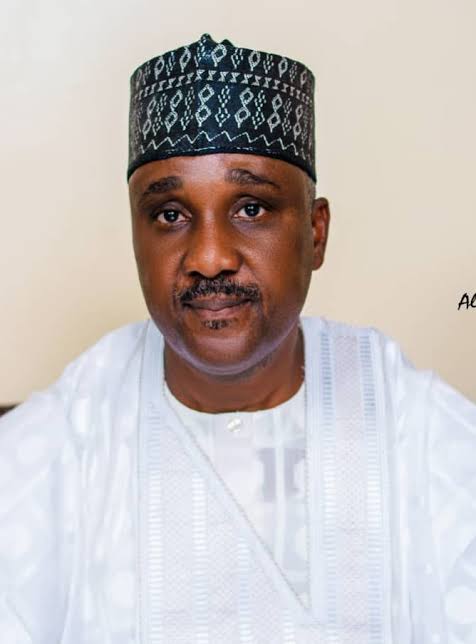
Speaker of House of Representatives, Tajudeen Abbas, has expressed deep grief over the demise of the Deputy Chief Whip of the house, Rep. Adewunmi Onanuga.
In a statement on Thursday, Abbas described the late lawmaker as a strong pillar who would be sorely missed in the house.
Report says that Onanuga, who died on Wednesday, represented Ikenne/Sagamu/Remo North Federal Constituency and was serving her second term in the house.
Abbas said that he had led members of the house in support and prayers for Onanuga during her health challenge and was hopeful of her recovery, saying that her eventual death was painful.
He recalled Onanuga’s campaigns for gender equality, women empowerment and inclusion in politics and governance, as Chairman, House Committee on Women Affairs and Social Welfare in the Ninth House and as a principal officer in the 10th House.
Abbas also recalled how the late lawmaker, as the only female member in the leadership of the house, inspired and rallied female legislators for the greater good of the chamber and the country in general.
“Onanuga was a brilliant woman, experienced politician, resourceful lawmaker and a dependable ally in the legislative business,” he said.
Abbas commiserated with the Onanuga family and her constituents, the people and the government of Ogun as well as the All Progressives Congress (APC) on the demise of the legislator.
Also, the Deputy Speaker, House of Representatives, Rep. Benjamin Kalu, expressed sadness over Onanuga’s death.
Kalu described the deceased as a shining example of dedication, compassion and selfless lawmaker whose service to her constituents and the nation was outstanding.
He acknowledged her support for the Peace In South East Project (PISE-P), which demonstrated her passion for defeating insecurity in Nigeria.
“Onanuga was a dedicated and committed lawmaker, renowned for her unwavering commitment to peace.
“Her passion for promoting harmony and understanding was truly commendable. Beyond her legislative accomplishments, Onanuga’s compassion, humility and simplicity inspired countless individuals.
“Her warm and infectious smile, coupled with her empathetic nature, endeared her to everyone she met, making her a beloved figure in the lives of many,” he said.
Kalu said that Onanuga would be remembered for her commitment to the cause of women’s empowerment and political inclusion as well as her relentless efforts toward ensuring that the gender bills were passed.
The deputy speaker extended his heartfelt condolences to the Onanuga family, her colleagues and constituents, saying that she would be greatly missed.
He prayed for the peaceful repose of the soul of the late lawmaker and the fortitude to bear the loss. (NAN)
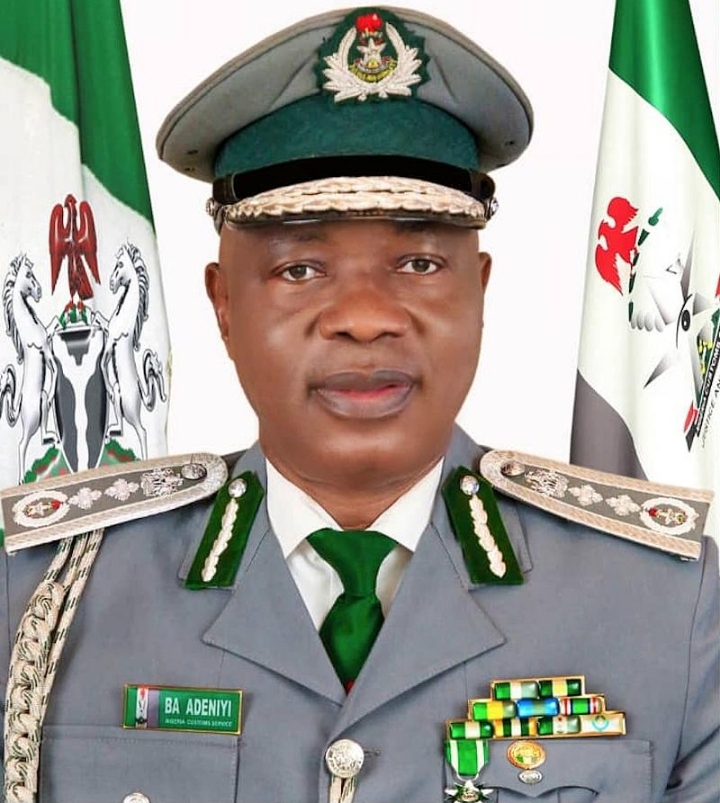
By Tambaya Julius, Abuja
The Comptroller-General of the Nigeria Customs Service (NCS), Bashir Adewale Adeniyi, has called on officers and men of the Customs Police Unit (CPU) to uphold discipline, professionalism and integrity, stressing that accountability must begin within the Service.
Adeniyi made the call while delivering the keynote address at the inaugural Customs Police Summit 2026, held at the NAF Conference Centre and Suites, Abuja.
The summit, with the theme, “Reimagining Customs Policing: Learning From the Past, Responding to the Present, and Preparing for the Future,” brought together customs personnel and representatives of security and law enforcement agencies to discuss ways of strengthening the unit and preparing it for emerging enforcement challenges.
The Customs boss, who is also the Chairperson of the World Customs Organization (WCO) Council, said the Service must first demonstrate the discipline and integrity it expects from traders and members of the public.
He described the Customs Police Unit as a critical part of the Service’s internal control system, noting that its responsibility goes beyond investigating misconduct to ensuring that officers exercise their powers within the confines of the law.
According to him, the unit, formally inaugurated in July 2019, was established to investigate erring personnel, prevent crime and promote compliance, guided by the principle that no officer is above the law.
He said the experience of the Service over the years had reinforced three important lessons: integrity must begin at home, enforcement powers must be exercised responsibly, and effective policing requires cooperation among relevant institutions.
The Comptroller-General expressed concern over the growing sophistication of criminal networks, which he said were increasingly exploiting legitimate trade routes and digital platforms to move illicit goods, including firearm components, narcotics, counterfeit medicines, protected wildlife and proceeds of illegal activities.
He maintained that tackling these threats required more than aggressive enforcement, calling instead for smarter, intelligence-driven operations supported by technology and international best practices.
Adeniyi pointed to several World Customs Organization instruments, including the SAFE Framework, Authorised Economic Operator (AEO) Programme, advance rulings, Time Release Study and Revised Kyoto Convention, as important tools for promoting compliance, facilitating legitimate trade and reducing opportunities for corruption.
He also highlighted the role of technology and data management in strengthening customs operations, citing the B’Odogwu platform, which integrates declarations, valuation, risk management and AEO processes.
He added that the INTERPOL Data Centre at Customs Headquarters had provided the Service with access to global criminal databases, while the Nigeria Customs Service Act 2023 had strengthened the legal foundation for intelligence-led operations, joint border activities and mutual administrative assistance.
The CGC identified Consolidation, Collaboration and Innovation as the three pillars that must shape the future of customs policing.
He explained that consolidation would require stronger operational procedures, improved investigations, properly documented cases for prosecution and continuous professional development of personnel.
He called for closer working relationships with the Nigeria Police Force, Armed Forces, National Drug Law Enforcement Agency (NDLEA), National Agency for Food and Drug Administration and Control (NAFDAC), Department of State Services (DSS), Independent Corrupt Practices and Other Related Offences Commission (ICPC), Nigeria Agricultural Quarantine Service (NAQS), neighbouring countries and border communities.
He also encouraged the Service to take advantage of emerging technologies, including artificial intelligence, advanced scanners, geospatial tools and electronic cargo tracking, to improve investigations and strengthen enforcement operations.
Adeniyi urged participants to use the summit to develop practical recommendations, including a Customs Police doctrine based on the NCS Act 2023 and Revised Arusha Declaration, improved protocols for joint operations and evidence management, guidelines for the responsible use of artificial intelligence in investigations, and better training and welfare for CPU personnel.
Addressing officers of the unit, he reminded them that their red berets represented the confidence Nigerians placed in the Service and must therefore be worn with discipline, restraint and pride.
He stressed that integrity remained the greatest badge of honour for every customs officer.
The Acting Provost Marshal of the NCS, Deputy Comptroller TS Sanusi, described the summit as an important step towards strengthening the institutional capacity and repositioning the Customs Police Unit.
Sanusi said the unit was established to provide a dedicated structure for maintaining discipline, investigating misconduct and ensuring compliance with professional standards among personnel and stakeholders.
He observed that the Service could not effectively enforce laws and regulate international trade without having strong mechanisms to promote discipline and accountability within its own ranks.
He added that the increasing challenges of transnational organised crime, illicit financial flows, corruption and emerging security threats had made the work of the Customs Police Unit more important.
The Acting Provost Marshal expressed appreciation to the Comptroller-General for his leadership, support and approval of funds for the inaugural summit, noting that the gesture reflected management’s commitment to strengthening the unit.
He also recognised the contributions of former Provost Marshals and personnel who helped establish the unit’s operational structures and professional standards.
Sanusi urged serving personnel to lead by example, insisting that discipline must begin with them if they were to earn the respect and confidence required to enforce it among others.
In his remarks, Assistant Comptroller-General of Customs at Headquarters, MS Shuaibu, called for a renewed approach to customs policing, with greater emphasis on professionalism, intelligence gathering and institutional accountability.
Shuaibu said the summit provided an opportunity to reflect on the unit’s achievements, address existing challenges and develop strategies to respond to changing global trade patterns and security threats.
He acknowledged the unit’s contributions to internal discipline, investigation of infractions and the protection of the Service’s interests, but stressed the need to continually improve its operational capacity.
He identified intelligence gathering, surveillance, risk analysis, inter-agency cooperation and modern investigative techniques as key areas requiring attention.
The ACG further emphasised that the exercise of police powers must be guided by respect for human rights and due process, warning that enforcement must never become an excuse for unjust treatment.
He urged officers to remain firm but lawful, courageous but responsible, and impartial in carrying out their responsibilities.
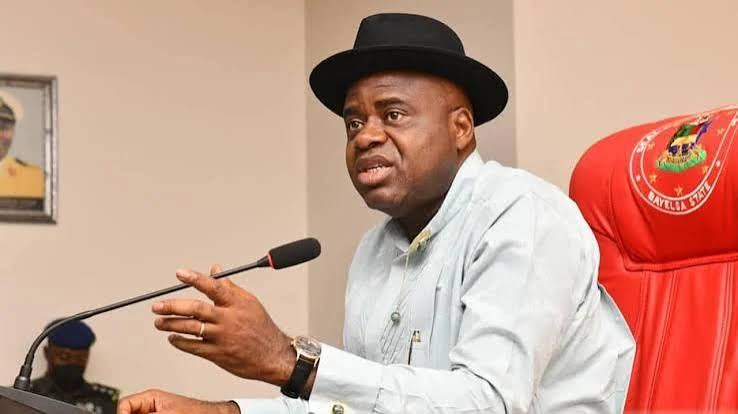
From Mike Tayese, Yenagoa
The Deputy Governor of Bayelsa State, Dr. Peter Akpe, has urged Nigerians to make selfless service their watchword, asserting that true reward comes only from God who elevates people into higher positions of leadership and responsibility.
Dr Akpe made the call at the grand finale of the Legacy, Impact and Future Award Dinner organised by the Special Evangelistic Association and Leadership Society (SEALS) in conjunction with the Zadok Foundation, held at the Best Western Plus Hotel, Yenagoa, on Tuesday.
Speaking as Special Guest of Honour and recipient of the Defender of the Christian Faith Award at the event, the Deputy Governor said no appreciable progress would be made in any organisation or society where more emphasis is placed on reward at the expense of good work.
Highlighting the relationship between effective service delivery, productivity and prosperity, the Deputy Governor said he had always put service first in all the positions he had held in life, stressing that through service, God promotes men by opening doors for reward and higher service.
Dr. Akpe, while making a biblical allusion to the inspiring story of Rebekah in Genesis chapter 24, where she provided water and fodder for the camels of Abraham’s servant, said she never knew that her act of kindness to a complete stranger was tied to her destiny.
He therefore reminded the political class and Christians holding various positions of responsibility in the house of God to avoid showmanship, adding that God is the One who truly rewards every man according to his service.
In his exhortation, Apostle David Zilly-Aggrey provided a scriptural insight and justification for the awards, citing the case of the Roman centurion, for whom the Jewish leaders approached the Lord Jesus and testified about his worthy contributions to the service of God, including building a synagogue.
Apostle Zilly-Aggrey, who is the Grand Patron of SEALS in Bayelsa State, said the awards were given to individuals and some Christian organisations in recognition of their distinguished services to the body of Christ.
According to the Founder of the Zadok Foundation and the Royal House of Grace International Church, the awards were in four major categories, including the Defenders of the Christian Faith Award, the Longest Serving Male and Female Ministers Awards, among others.
The Chairman of SEALS, Revd Vincent Dowell, said the Legacy, Impact and Future Awards Dinner was the crowning moment of a journey marked by vision, excellence and sacrifice.
Revd Dowell, who appreciated the Zadok Foundation for supporting the activities of SEALS over the years, noted that the goal of the ceremony was to inspire a culture of service in the body of Christ, as well as build a society where excellence and effective service are encouraged and rewarded.
The highpoint of the event was the presentation of the various awards by Apostle Zilly-Aggrey, including the Distinguished Defender of Christian Faith Award to Dr. Peter Akpe as the first Pastor to emerge as Deputy Governor in Bayelsa State.
Other recipients of the Defender of Christian Faith Award included Senator Konbowei Benson, the late Justice Kate Abiri, Pastor Julius Obegha Oworibo, Prof. Ongoebi Etebu, Engr Gesi Asamowei, Chief Robert Ayalla Enogha and Dr. Rowland Akpolo.
The Longest Serving Gospel Minister Award went to 103-year-old Revd Samuel Arabina and Dr Irene Buseri, while a special award was given to Evangelist Bannerman Embiowei and Evang. Abraham Ikiouks, for their contributions to the promotion of Ijaw gospel music over the years.
The Christian Leaders Award went to all past CAN State Chairmen, Rev. Jacob Akpiri, Bishop Israel Ege, Reverend Father Joseph Opelema and the incumbent, Rev. Abili Samuel Abili.
Churches recognised for special awards include the Deeper Christian Life Ministry, Assemblies of God, the Living Faith Church, also known as Winners Chapel, and the Greater Evangelism World Crusade.
By David Torough, Abuja
The Chartered Institute of Professional Printers of Nigeria (CIPPON) has renewed its call on the Federal Government to introduce targeted incentives for the printing industry, enforce local content policies and establish the Office of the Printer General of the Federation (PGF), following an assessment visit to the state-of-the-art facilities of Marvelous Mike Press Limited in Abuja.
The call followed an inspection tour by the Industrial Development and Export Concessions (IDEC) Committee of CIPPON, led by the Institute’s President, Koko T.
Clement, alongside the Ex-Officio, Dr. Samson Omoniyi Adesoye, and members of the Industry, Trade and Investment Committee, headed by Suleiman Usman Olowoniyi.The visit formed part of CIPPON’s nationwide assessment of printing facilities to determine the industry’s investment capacity and identify operators eligible for available industrial development and export concessions.
At Marvelous Mike Press Limited, the delegation was received by the company’s Managing Director, Printer Michael Akinola, who conducted the team around the facility and showcased its extensive production infrastructure and advanced printing technologies.
The delegation expressed amazement at the scale of investment and technological sophistication deployed by a single Nigerian-owned printing company without significant government incentives.
The facilities inspected demonstrated the industry’s capacity to handle large-scale printing, packaging and security document production to international standards.
Speaking after the inspection, CIPPON President, Koko Clement, described the investment as a strong indication that Nigeria possesses the resources, technology and professional expertise required to meet its domestic printing needs and compete effectively in the international market.
He said the experience had strengthened the Institute’s resolve to intensify its engagement with the Federal Government, particularly on the need to ensure that educational books and other government-related printing jobs are undertaken within Nigeria.
“What we have witnessed at Marvelous Mike Press is beyond imagination. The scale of investment by a single Nigerian entrepreneur, without government incentives, demonstrates the enormous capacity and readiness of our printing industry. If government recognises and supports this capacity, there will be no justification for taking our educational book printing jobs outside the country,” Koko stated.
He expressed concern that despite its enormous economic potential, employment opportunities and contribution to national development, the printing industry has continued to receive inadequate attention in government incentive programmes, concessions and industrial interventions.
According to him, the facilities visited possess modern technologies capable of producing millions of copies of books, packaging materials and security documents while meeting internationally recognised quality standards.
Koko further disclosed that Nigerian printing companies are already undertaking substantial printing and packaging contracts for other African countries, demonstrating their competitiveness and readiness to serve wider regional markets.
“This is not just about printing. We have facilities in Nigeria handling high-volume printing and packaging assignments for other African countries with precision and quality comparable to the best in the world. Nigerian printers are not asking the government to create capacity for them.
“We already have the technology, expertise, manpower and investment. What we need is the right policy framework and political will to unlock this potential,” he said.
The CIPPON President explained that retaining printing contracts within Nigeria would generate far-reaching economic benefits beyond the printing companies themselves. Such a policy, he noted, would stimulate demand for locally produced paper, printing inks, finishing materials and packaging products, thereby strengthening several interconnected industries.
He maintained that the initiative would advance the local content objectives of President Bola Ahmed Tinubu’s Renewed Hope Agenda while reducing capital flight, conserving foreign exchange and expanding employment opportunities for Nigerian youths.
In a major policy recommendation, CIPPON urged President Bola Ahmed Tinubu to consider establishing the Office of the Printer General of the Federation (PGF) or the Printers Commission of Nigeria (PCN) to provide institutional leadership, coordination and effective regulation of the country’s printing industry.
The Institute believes that such an institution would provide a dedicated government framework for developing printing policies, promoting local production, protecting domestic printing jobs, coordinating industry stakeholders and strengthening the entire printing value chain.
“The establishment of the Printer General of the Federation will give the Federal Government a focused institutional structure for coordinating printing policies, enforcing local printing requirements, protecting employment and ensuring that printing contracts generated in Nigeria are retained for Nigerian printers. This is the missing link in building a productive and globally competitive printing economy,” Koko added.
CIPPON also called on the Federal Ministry of Education, the Universal Basic Education Commission (UBEC), Tertiary Education Trust Fund (TETFund) and all state governments to immediately strengthen the implementation of local content policies by ensuring that educational books at primary, secondary and tertiary levels are printed in Nigeria.
The Institute stressed that the country stands to save billions of naira in foreign exchange, create hundreds of thousands of employment opportunities, expand the operations of local paper mills, stimulate ink and packaging manufacturing, and accelerate economic growth if printing activities are domiciled within the country.
Koko therefore appealed to the Federal Government to recognise the printing industry as a strategic pillar of national industrialisation and give Nigerian printers the necessary policy support to maximise its potential.
“Printing in Nigeria is a huge economic opportunity. It can save billions of naira in foreign exchange, create jobs for our youths, revive our paper mills, strengthen manufacturing and grow the national economy. It is time for the government to believe in Nigerian printers and give them the opportunity to handle the country’s printing needs. Nigerian printing jobs must remain in Nigeria for Nigerians,” he declared.
Meanwhile, CIPPON disclosed that the IDEC assessment exercise would continue across other printing facilities nationwide as part of efforts to identify investments and operators that can benefit from the scheme.
The Institute consequently appealed to printing companies and individual practitioners who have invested in modern printing equipment and machinery to contact the CIPPON President to initiate the necessary IDEC assessment processes and procedures.
The Institute reaffirmed its commitment to promoting investment, strengthening professional standards, expanding local printing capacity and positioning Nigeria as a major printing and packaging hub in Africa.




Customs CG Tasks Officers on Discipline, Integrity
ShareBy Tambaya Julius, Abuja The Comptroller-General of the Nigeria Customs Service (NCS), Bashir Adewale Adeniyi, has called on officers and...

Bayelsa Deputy Gov Tasks Nigerians on Effective Service
ShareFrom Mike Tayese, Yenagoa The Deputy Governor of Bayelsa State, Dr. Peter Akpe, has urged Nigerians to make selfless service...
CIPPON Urges FG to Protect Nigerian Printing Industry
ShareBy David Torough, Abuja The Chartered Institute of Professional Printers of Nigeria (CIPPON) has renewed its call on the Federal...

Mbah Declares Emergency on Nsukka-Adani Road
ShareFrom Sylvia Udegbunam Enugu Enugu State Governor, Peter Mbah has declared an emergency on the Nsukka-Adani Road, describing it as...


Oborevwori Mobilises Support for Tinubu, APC 2027 Victory
ShareFrom Francis Sadhere, Delta Delta State Governor, Rt. Hon. Sheriff Oborevwori, has called for massive support for President Bola Ahmed...
Growing Threat to Opposition Politics and Democracy
ShareBy Pius Mordi Democracy thrives on competition, tolerance, freedom of expression and the willingness of those in power to accommodate...

NCDMB, NLNG Commit $9m to Endowment of Professorial Research Chairs in Six Varsities
ShareFrom Mike Tayese, Yenagoa The Nigerian Content Development and Monitoring Board (NCDMB) and the Nigeria LNG Limited (NLNG) have launched...


2027: Obi Visits Benue, Vow to Unite Nigeria if Elected
ShareFrom Attah Ede, Makurdi The presidential candidate of the Nigeria Democratic Congress (NDC), Peter Obi, has vowed to unite Nigeria,...

Wike Targets Tourist Destination Status for Apo-Karshi Road
ShareBy Laide Akinboade, Abuja The Minister of the Federal Capital Territory (FCT), Nyesom Wike, has announced plans to transform the...


Alt Bank Appoints Gul Khan as Managing Director
ShareThe Alternative Bank Ltd (Alt Bank) has appointed Gul Khan as its new Managing Director, following approval by the Central...