
POLITICS
Absence of proper Documentation Mars APC Primary in Badagry


The absence of proper documentation of voters marred All Progressives Congress (APC) primary election in some voting centres in Badagry. Reports said that officials for the Lagos State primary election arrived at different voting centres in Badagry around 12 noon.
NAN also reports that at Ward J Topo Idale ward of Badagry, the presiding officer did not bring any documents to identify the voters who had been on the queue since 8 a. m. Also, at Methodist Junior School opposite General Hospital, the voters’ register brought by the officials were not for the centre. NAN reports that the same was the situation at Ajiso centres and Gbenapon Primary School centres. Voters were seen around 3 p.m. at most of the voting centres waiting for officials to bring the proper documentation for the election. Some of the APC chieftains and aspirants expressed their displeasure over the lateness and poor performance of the voting officials. Mr Emmanuel Kappo, one of the aspirants, said that it was unfortunate that his people in Topo Idale in ward J had not voted.“ When they came and discovered that they did not bring the register, the returning officer promised to go and pick it.“ For the past three hours, my people have been waiting here but nothing is happening.“ This is just aimed to frustrate my people who are here waiting to exercise their civic duty.“ All over the 10 wards in Badagry, there were disruption, harassment but we believe that justice will be done by the party executive,” he said. He appealed to the executive of the APC to conduct rerun election, adding that there was no election in the town. Mr Kamorudeen Ajape, the Secretary, Badagry Local Government, said that there was voting at their centres because voters that lined up to vote for the incumbent chairman were many. Ajape said that though the officials of the election brought another voters register, many of the voters queued at the back of Mr Olusegun Onilude, the incumbent chairman who is going for a second term. However, Rep Babatunde Hunpe, representing Badagry Federal Constituency in the House of Representatives, said the arrangements for the primary was not perfect.“ From the beginning, the arrangements were alright until some people started disturbing the process in some centres because the process was not in their favour.“With the situation of things in Badagry Local Government, it is now left for the executive of the party to decide on the next step,” he said. NAN reports that voting did not take place in most of the voting centres in Badagry as voters went home disappointed after waiting endlessly for the process which did not happen. (NAN)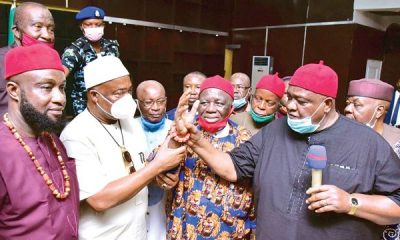



From Mike Tayese, Yenagoa
Former President of Nigeria, His Excellency, Dr. Goodluck Ebele Jonathan, has commended the quality, experience and capacity of the All Progressives Congress (APC) candidates contesting the 2027 elections in the Bayelsa East Senatorial District.
Jonathan made the remarks at his residence in Yenagoa when he received a high-powered delegation led by the former Deputy Governor of Bayelsa State, Rear Admiral Gboribiogha John Jonah (Rtd.
), the Managing Director/Chief Executive Officer of the Niger Delta Development Commission (NDDC), Chief Samuel Ogbuku and the Bayelsa State APC Chairman, Rt. Hon. Warman Weri Ogoriba, PhD.The delegation visited the former President to formally present the APC candidates to him as a mark of respect and honour, particularly as a former President of Nigeria and a prominent leader from the Bayelsa East Senatorial District.
Presenting the candidates, Rear Admiral Jonah appealed to Jonathan to extend his goodwill and support to them, describing the candidates as individuals with the requisite capacity, experience and character to provide effective representation if elected.
He expressed confidence that they would serve the interests of their constituents and contribute meaningfully to the development of the district and the state.
The candidates presented included HRH. Hon. Israel Sunny-Goli for the Bayelsa East Senatorial District, Hon. Jonathan Robinson Obuebite, PhD, for the Brass/Nembe Federal Constituency and Barr. Jude Amidator Rex-Ogbuku for the Ogbia Federal Constituency.
Also presented were the APC candidates for the Bayelsa State House of Assembly, including Hon. Oteigbanyo George Braah for Nembe Constituency 1, Hon. Edward Brigidi Irigha for Nembe Constituency 2, Hon. Alalibo West for Nembe Constituency 3, Hon. Daniel Charles for Brass Constituency 1, Hon. Timi Agala for Brass Constituency 2 and Rt. Hon. Abraham Ngobere for Brass Constituency 3.
Others were Hon. High Chief Ebiango Okoba Egain for Ogbia Constituency 1, Hon. Godknows Obein for Ogbia Constituency 2 and Hon. Chief Gabriel Michael Ogbara for Ogbia Constituency 3.
Responding to the presentation, Jonathan expressed his appreciation for the quality of the candidates, noting that virtually all of them were people who, in his assessment, could be trusted in terms of capacity, performance and experience.
He gave the candidates his blessings and encouraged them to remain committed to serving their people if elected to office.
The former President urged the candidates to see politics as a means of improving society and attracting positive development to their respective constituencies.
He also admonished them and other stakeholders to sustain peace, unity and oneness in Bayelsa State, which he said remained important to the state’s continued development.
The visit brought together APC leaders, candidates, traditional leaders, youth representatives, and other stakeholders from across the Brass, Nembe, and Ogbia Local Government Areas as part of ongoing consultations and engagements ahead of the 2027 general elections.

From Francis Sadhere, Delta
The Delta State chapter of the All Progressives Congress (APC) has inaugurated two political support groups in Okpe Local Government Area to mobilise grassroots support for President Bola Tinubu and Governor, Sheriff Oborevwori, ahead of the 2027 general elections.
The groups, Concern Otirhue Movement for Sheriff and Tinubu, and Otirhue Progressive Movement for Sheriff and Tinubu, were inaugurated at a ceremony held in Mereje, Okpe LGA.
The groups were founded by the Chairman of the Delta State Local Government Service Commission, Hon.
Joseph Otirhue.Speaking at the event, Otirhue said the initiative was aimed at strengthening the party’s grassroots structures and mobilising support for Tinubu, Oborevwori and other APC candidates in the 2027 elections.
He said the groups would mobilise voters for APC candidates contesting seats in the State and National Assemblies, with the ultimate objective of securing victory for the party at all levels.
Otirhue urged members to remain loyal and committed to the APC, while intensifying their engagement with residents and communities across Okpe.
Inaugurating the groups, the Delta APC Chairman, Chief Solomon Arenyeka, charged members to work diligently for the success of the party.
Arenyeka urged them to pursue the APC’s “five-over-five” objective by mobilising support for all the party’s candidates in the 2027 elections.
He also tasked the groups with taking the party’s message to the grassroots and maintaining active structures across the various communities in the local government area.
Other party leaders at the event called for unity and sustained grassroots mobilisation, stressing that continuous engagement with voters would be crucial to the APC’s performance in the 2027 elections.
The event also featured the empowerment of more than 250 beneficiaries by Otirhue, which he described as the fifth phase of his empowerment programme.
According to him, the programme was designed to provide support to party members and other beneficiaries, adding that those who were not included in the latest phase would be considered in subsequent editions.
Among dignitaries at the ceremony were former Minister of Culture and Information, Okakuro Prof. Sam Oyovbaire; Chief Robert Onome; member representing Okpe State Constituency in the Delta State House of Assembly, Okakuro James Augoye; and Chairman of Okpe Local Government Council, Okakuro Hon. Isaiah Esiovwa.
Others included former Commissioner for Higher Education, Prof. Hope Eghagha; Austin Ayemidejor; APC State Secretary, Okakuro Efe Uko; Chairman of the Delta State Civil Service Commission, Chief Rose Amioku; APC State Organising Secretary, Hon. Emmanuel Egbabor; as well as other party leaders and stakeholders.
The inauguration marked another step in the APC’s grassroots mobilisation efforts in Okpe, with members of the two groups pledging to strengthen their structures and mobilise support for Tinubu, Oborevwori and other APC candidates ahead of the 2027 elections.
From Ifeanyichukwu Nwannah, Gusau.
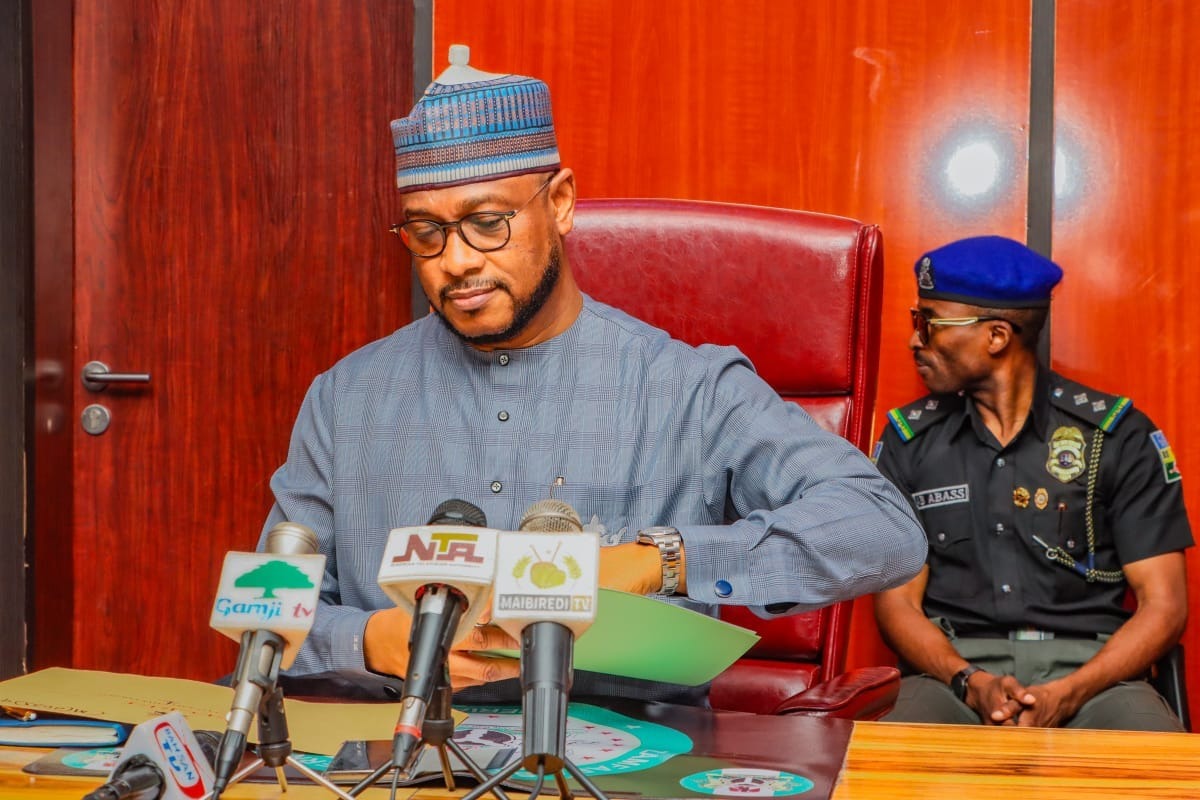
Governor Dauda Lawal of Zamfara State, Dauda Lawal has declared that his administration’s rescue mission is transforming the State across critical sectors.
He began a series of events and project commissioning to mark Zamfara State’s 30th Anniversary, noting that the commissionings were attended by the Pioneer Military Administrator of Zamfara State, Col.
Jibril Bala Yakubu (Rtd.), former governors Ahmed Sani Yarima, Mahmud Aliyu Shinkafi, and other dignitaries.The Governor said that Zamfara State has moved from despair to an era of clear execution, transparency, and sustainable development.
He said, “Since Zamfara State was created on October 1, 1996, “Alhamdulillah for Allah’s grace, mercy, and protection that have guided us through trials and triumphs, uniting us in a shared destiny”
“As we watched our gallant security forces, paramilitary agencies, vibrant students and youth march in unity on the parade ground, we were reminded of the resilience that defines the Nigerian spirit and, most specifically, the strength of character of our people”
“We must reflect intentionally on the profound sacrifices of our founding fathers, who fought tirelessly to break the chains of colonial rule and give birth to a free, sovereign nation. We owe them an eternal debt of gratitude for protecting this country’s unity, peace, and territorial integrity”
“As we look forward to the next decade, we must understand that true independence demands collective responsibility. Government alone can’t do this. I call on traditional rulers, religious scholars, civil servants, traders, and our resilient youth to unite. We must set aside divisions—ethnic, political, sectarian—and protect the peace we fought for.”
Governor Lawal commissioned phase III of the renovated and modernised J.B. Yakubu Secretariat in Gusau as part of his effort to rebuild government institutions and create a modern, efficient, technology-enabled, results-oriented Public Service for Zamfara State.
The J.B. Yakubu Secretariat houses critical Ministries, Departments, and Agencies whose responsibilities span virtually every aspect of governance and service delivery.
The Governor said modernising the Secretariat will deepen coordination among MDAs, strengthen communication, promote institutional synergy, and support faster, more effective implementation of government decisions.
“The occasion is significant as we welcome His Excellency, Col. Jibril Bala Yakubu (Rtd.), Zamfara’s pioneer Military Administrator, after whom this Secretariat is named. As Zamfara marks thirty years since its creation, it’s fitting that a leader from our foundation is here to witness this milestone”
The pioneer Military Administrator of Zamfara State, Col. Jibril Bala Yakubu (Rtd.), lauded Governor Lawal’s giant strides, particularly in infrastructure, education, and health.
On the same day, His Eminence, the Sultan of Sokoto, Alhaji Muhammadu Sa’ad Abubakar III, CFR, mni, commissioned the reconstructed and remodelled Jumu’at Mosque (Yardole) and its attached shopping complex.
The mosque, named after Malam Sambo Dan Ashafa, a renowned Islamic scholar and companion of the great (MUJADDADI) and leader of the 1st Sokoto Jihad, Sheikh Uthman Ibn Fodiyo, will also serve as an Islamic and research learning centre.




11-year-old Girl Found Dead in Suleja Well, Church Guard Arrested
ShareFrom Dan Amasingha, Minna The disappearance of 11-year-old Christabel Albert after she left home for a birthday celebration has ended...


Jonathan Receives Bayelsa East APC Candidates
ShareFrom Mike Tayese, Yenagoa Former President of Nigeria, His Excellency, Dr. Goodluck Ebele Jonathan, has commended the quality, experience and...


2027: Delta APC Inaugurates Support Groups for Tinubu, Oborevwori
ShareFrom Francis Sadhere, Delta The Delta State chapter of the All Progressives Congress (APC) has inaugurated two political support groups...

‘Transformative Agenda to Critical Sectors are My Rescue Mission’ – Dauda
ShareFrom Ifeanyichukwu Nwannah, Gusau. Governor Dauda Lawal of Zamfara State, Dauda Lawal has declared that his administration’s rescue mission is...

Yari Urges Northerners to Honour Power Rotation, Back Tinubu’s Eight-Years Presidency
ShareFrom Rabiu Sanusi Kano Former Zamfara State Governor and Director-General of the All Progressives Congress (APC) Presidential Campaign Council, Senator...


Otu Reinstates 3,000 Sacked LG Workers
ShareFrom Ene Asuquo, Calabar Cross River State Governor, Senator Prince Bassey Edet Otu, has approved the restoration of about 3,000...


First Lady Mobilises Women for Tinubu’s Re-election
ShareNigeria’s First Lady, Sen. Oluremi Tinubu, is set to host more than 20,000 women stakeholders in Abuja today as part...

NAFDAC Seeks International Support to Revive Vaccine Manufacturing in Nigeria
ShareThe National Agency for Food and Drug Administration and Control (NAFDAC) has solicited international partners’ support for establishing vaccine manufacturing...


IOM Empowers IDPs with Skills, Cash in Zamfara
ShareFrom Ifeanyichukwu Nwannah, Gusau Over one hundred residents, persons with disabilities, Internally Displaced Persons (IDPs), and other vulnerable groups in...
Diagnosis at 66: Nigeria’s Healthcare Landscape
ShareBy Racheal Abujah When Nigeria gained independence on Oct. 1, 1960, it held immense promise. Sixty-six years later, healthcare delivery...