
NEWS
Adamawa Approves N8.8bn for Education, Security, Other Projects

From Yagana Ali, Yola
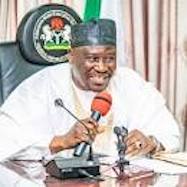
Adamawa State Governor, Umaru Fintiri, has given approval and assured full support to the Pharmaceutical Society of Nigeria (PSN) ahead of their annual Pharmaceutical National Conference bill for next year 2026 in Adamawa State.
The annual conference which is scheduled to be hosted in Adamawa State in 2026 has the full blessings and backing of the Governor who pledged to render every support necessary to make the conference a success. Fintiri, gave the assurances when he played host to the national leadership of PSN led by its national chairman Pharmacist Ayuba Tanko Ibrahim, at the Government House in Yola.While addressing the national leadership of the society who were in the Government House to pay him a courtesy visit, Fintiri acknowledged the impact of the PSN to the state and nation at large.”I have always taken them into consideration as one of the most important parts of our hospital delivery services”.He revealed that though Adamawa may not have a pharmaceutical training institute or any of the Pharmaceutical department in any of the institutions in the state however, his administration has done so much in areas of reforms that have attracted those that matter in the hospitals and in hospital services.He emphasized that his administration will continue on that trajectory in order to attract more professionals in the pharmaceutical field by making the profession more attractive in the stateHe revealed that his administration has made a remarkable impact on the services of doctors, nurses and other auxiliary staff in the health sector and expressed his readiness to extend similar gestures to members of the PSN in the state.The Governor used the event to equally ratify an order restraining the state Ministry of Environment to henceforth desist from intruding functions of the PSN in the state, and called on the Head of Service, to immediately pass the information to the ministry for necessary action to that effect.In his remarks, the PSN national chairman Pharmacist Ayuba Tanko Ibrahim, said that they were at the Government House pay courtesy visit and as well intimate the Governor on the PSN forthcoming National Conference which will be hosted by the Adamawa State branch of the PSN.He revealed that the PSN in Nigeria was established in 1927 noting that next year 2026, the society will celebrate its hundred years in existence. “And over the years we’ve been providing essential services in terms of good healthcare delivery”, the chairman said.The PSN chairman eulogies the Governor for his unwavering commitment and dedication to healthcare development in the state and for giving some members of the society in the state position of Head of Service, Permanent Secretaries, Special Advisers and offering employment in the health sector which members of the society also benefited.He stated that the Governor has established more pharmacy units in the state health facility, which improve the availability of quality medication into the supply chain system.He decried the absence of pharmaceutical colleges pointing out that there is no university in Adamawa that is offering pharmacy. He therefore advocated for the establishment of the college of pharmaceutical sciences.According to the PSN national chairman, through such initiatives the state will have enough pharmacists to go round health facilities in the state and ensure effective service delivery.He appealed to Governor Ahmadu Fintiri, to draw attention of the state ministry of Environment to desist from what he described as unlawful interference of the ministry in matter that is known to be an exclusive preserve of federal government agencies which undermines the functions of members of the society and other approved federal government agencies in the state.According to him the law doesn’t permit the Ministry of Environment to embark on inspection of pharmaceutical premises and even seize drugs. He stressed that the development has the ability to undermine and deny its members opportunity to carry out its functions as enshrined in Nigeria’s’ constitution.He solicited the support and cooperation of the Governor as the PSN granted the state hosting right of its annual conference coming up next year 2026.



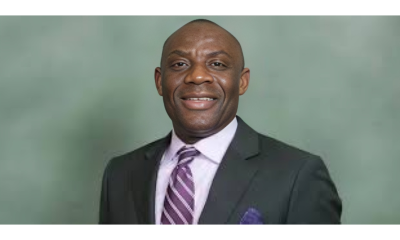


The Chief Executive Officer of the Nigerian Export Promotion Council (NEPC), Nonye Ayeni, has urged members of the ECOWAS Trade Promotion Organisation (TPO) to seek alternate funding for its activities.
Ayeni said this in a statement issued by the Head, Corporate Communications (NEPC), Aliu Sadiq on Thursday in Abuja.
She called on the members to establish a special committee that would work closely with the Technical Committee on Financial Affairs and Resource Mobilisation to identify sustainable funding sources for the Network’s operations.
The NEPC boss was addressing the 6th Annual General Assembly (AGM) of the Network in Dakar, Senegal, where she also serves as the head of secretariat.
She said that the annual subscription of members of the network alone would not be sufficient for the implementation of the network’s core activities.
Ayeni encouraged members of the organisation to continue to be more proactive and committed in delivering on the objectives and mandate of the organisation.
She commended the network for its great achievements so far, and encouraged every member of the network to continue to implement its activities with commitment and dedication.
She also said that the activities of the network had continued to show impact towards promoting trade and regional integration in West Africa.
According to her, the organisation was established to serve as a medium for promoting trade and regional integration.
“The 6th AGM was hosted by Senegal and converged all chief executive officers of TPOs from 11 ECOWAS member states, including Nigeria.
“The meeting was facilitated by the ECOWAS Commission and attended by a representative of the West African Economic and Monetary Union (UEMOA), Robert Akinde.
“The International Trade Centre (ITC) also participated virtually and highlighted the importance of leveraging artificial intelligence to improve the operational efficiency of the Network,” she said.
Ayeni said that the AGM concluded with the re-election of Dr Edward Sandy of Sierra Leone as the President of the network and Dr. Kojo Kwoateng of Ghana as Vice President for another one year.
From Ifeanyichukwu Nwannah, Gusau
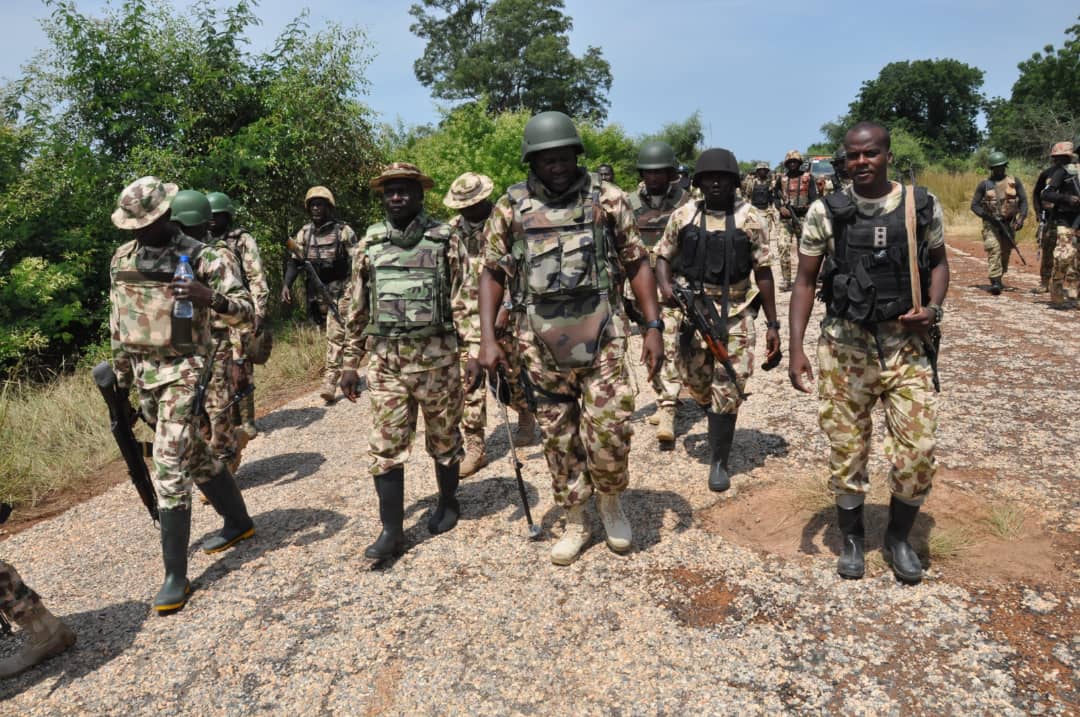
Troops of Joint Task Force, North West Operation Fansan Yamma (JTF NW OPFY) have rescued 13 kidnapped victims during separate intelligence-led operations in Anka and Kaura Namoda Local Government Areas of Zamfara State.
According to a statement issued by the Media Information Officer, Joint Task Force, North-west OPFY, Lt.
Colonel Aliyu Danja, in the first operation, troops of Sector 2 in Bagega responded swiftly to credible intelligence on armed terrorists moving on motorcycles towards Tungan Kudaduku in Anka Local Government Area.The statement noted that the troops were guided by real-time surveillance, the troops pursued and engaged the terrorists with overwhelming firepower, forcing them to abandon their mission and flee.
Danja explained that a follow-up search of the area led to the discovery of a makeshift terrorist camp, where five kidnapped civilians were rescued unharmed.
“In a separate operation at Ungwan Rogo, Kaura Namoda LGA, troops acted on credible intelligence of terrorist activity in the area. On contact, they engaged the terrorists in a fierce firefight, forcing them to retreat in disarray and abandon their captives”, he said.
“Eight kidnapped victims were rescued, and two vehicles recovered.
All rescued victims have been handed over to the appropriate authorities for further care and support”
“Troops continue to dominate the general area, denying terrorists’ freedom of action and sustaining pressure on criminal elements operating across the theatre”.
NEWS
Wole Soyinka at 92: Nigeria’s Literary Titan, Africa’s Conscience and Global Intellectual Powerhouse
By Ehi Braimah
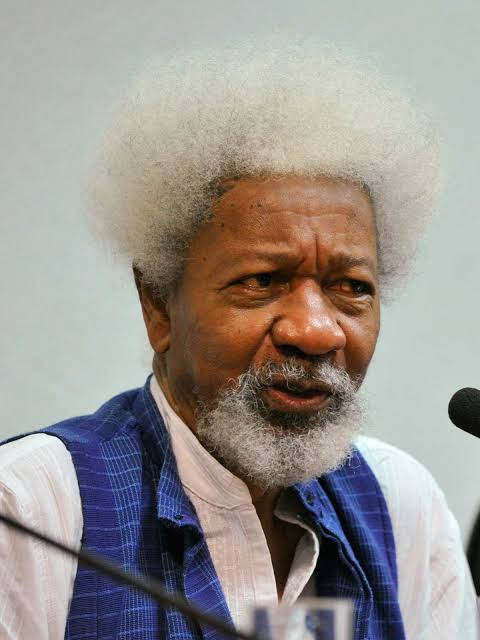
There are writers, there are intellectuals, and there are moral giants whose influence transcends literature to shape the conscience of nations. Professor Akinwande Oluwole Babatunde Soyinka belongs unmistakably to the latter category.
As he celebrates his 92nd birthday, the world salutes not merely Nigeria’s greatest literary icon, but one of humanity’s most enduring champions of justice, freedom, and the dignity of the human spirit.For over seven decades, Wole Soyinka (Kongi) has stood as an unyielding voice against oppression, tyranny and intolerance.
His life has been defined by extraordinary courage, immense scholarship and a solid commitment to truth, regardless of the consequences. He is not simply a Nobel laureate; he is an institution whose intellectual influence stretches from Africa to Europe, the Americas and Asia.I had the chance of a close encounter with Kongi in August 2023, when Jahman Anikulapo, my brother, friend and colleague (Anikulapo is Editorial Director of Naija Times) and Soyinka’s trusted mentee, invited me to a Public Exchange, titled “Isese, Samarkand and Other Markets of the Mind,” held at Kongi’s Harvest Art Gallery, Freedom Park, Lagos.
The Isese masterclass in public intellectual engagement was far more than a lecture on Yoruba traditional religion – it became an important conversation on religious freedom, cultural identity, intellectual inquiry and democratic values.
At the Isese forum, we had journalists, academics, writers, lawyers, artists, theatre practitioners, traditional religious adherents, diplomats, and cultural enthusiasts. The interdisciplinary gathering of minds reflects Soyinka’s remarkable ability to convene diverse audiences.
The event came against the backdrop of controversy surrounding the celebration of Isese Day, particularly in Kwara State, where traditional worshippers faced hostility. Soyinka argued that Isese is not antagonistic to Christianity or Islam, but represents a legitimate spiritual and philosophical tradition deserving equal respect under Nigeria’s Constitution. He maintained that those who sought to suppress other people’s beliefs demonstrated insecurity rather than religious strength.
That’s Kongi for you, a global intellectual giant and highly respected cultural influencer. By describing Isese as a “quest for illumination of the human condition,” Soyinka shifted the discussion beyond ritual and religion. He presented Isese as a repository of ethics, philosophy, history, aesthetics, and indigenous knowledge. In doing so, he challenged long-held prejudices that equate African traditional beliefs with superstition, inviting Nigerians to engage seriously with their own civilisational heritage.
What I found interesting was that Soyinka didn’t deliver a lecture, but engaged in an extended dialogue, fielding questions and encouraging debate. This reinforced his lifelong belief that knowledge flourishes through critical inquiry rather than dogma.
After the Isese event, Anikulapo was able to get Soyinka to be interviewed for a recorded goodwill message for the third anniversary of Naija Times which held in Abuja on 19 October, 2023. His message was that the media must be independent and influence purposeful leadership.
When Soyinka became the first African to receive the Nobel Prize in Literature in 1986, the award recognised far more than literary brilliance. It honoured a writer who had expanded the boundaries of world literature while remaining deeply rooted in African history, mythology and philosophy.
His Nobel Prize became a defining moment not only for Nigeria but for the entire African continent, affirming that African voices deserved equal recognition on the world’s highest literary stage.
Soyinka’s remarkable body of work remains one of the richest contributions to modern literature. His plays continue to challenge audiences with their depth, symbolism and political relevance. The Lion and the Jewel brilliantly explores the tensions between tradition and modernity.
The Strong Breed examines sacrifice and communal responsibility. Death and the King’s Horseman, widely regarded as one of the greatest plays ever written, masterfully interrogates colonialism, cultural misunderstanding and moral obligation.
A Dance of the Forests, commissioned during Nigeria’s independence celebrations, remains a timeless reminder that nation-building requires honest confrontation with history rather than romantic self-deception.
His novels equally occupy an honoured place in world literature. The Interpreters captured the complexities confronting Nigeria’s post-independence intellectual class, while Season of Anomy explored resistance against corruption and authoritarianism. His memoirs – including Ake: The Years of Childhood, You Must Set Forth at Dawn and The Man Died – offer profound insights into both personal experience and national history. His essays consistently display the razor-sharp intellect and fearless honesty that have become his trademarks.
Beyond literature, Soyinka’s poetry possesses remarkable emotional and philosophical depth. His verses weave together mythology, politics, spirituality and human suffering, demanding thoughtful engagement from readers while rewarding them with profound insight. His command of language remains extraordinary, effortlessly combining Yoruba cosmology with universal themes that resonate across cultures.
Yet it is impossible to celebrate Wole Soyinka without acknowledging his lifelong activism. Throughout his life, he has repeatedly placed principle above personal comfort. During Nigeria’s civil war, he courageously sought peaceful dialogue and paid dearly for it, enduring solitary confinement for nearly two years. Rather than silence him, imprisonment strengthened his resolve. His prison writings remain among the most compelling testimonies to the resilience of the human spirit.
Across successive military dictatorships and civilian administrations alike, Soyinka has consistently spoken truth to power. He has criticised injustice wherever he has found it, refusing to align himself permanently with any political establishment. His loyalty has always been to democratic values, human rights and the welfare of ordinary citizens rather than to transient governments or political personalities.
His moral courage has inspired generations of journalists, academics, students, lawyers, playwrights and civil society activists throughout Africa and beyond. Even those who disagree with his opinions readily acknowledge the integrity that underpins his convictions.
Professor Soyinka’s influence extends well beyond Nigeria’s borders. Few African intellectuals command such an extensive global network. He has taught at leading universities across the world, including institutions in Nigeria, the United Kingdom, the United States, and the United Arab Emirates, enriching generations of students with his vast knowledge of literature, theatre, history and political thought. As a visiting professor, lecturer and public intellectual, he has become one of Africa’s most respected ambassadors in global academia.
His friendships and professional relationships span Nobel laureates, presidents, diplomats, artists, philosophers, actors and fellow writers from every continent. He has shared platforms with world leaders while remaining equally comfortable engaging young students in classrooms and public forums. His influence cuts across disciplines, making him not merely a literary figure but a global statesman of ideas.
International organisations frequently seek his counsel on democracy, cultural identity, freedom of expression and conflict resolution. Universities continue to honour him with numerous honorary doctorates and distinguished fellowships. Literary festivals across the world celebrate his contributions, while scholars devote entire careers to studying his works and philosophy.
One of Soyinka’s greatest achievements has been his ability to bridge Africa and the wider world without sacrificing his cultural authenticity. He has never diluted his African identity to gain international acceptance. Instead, he has demonstrated that authentic African experiences possess universal relevance. His writings affirm that local histories, indigenous beliefs and African traditions deserve equal space within global intellectual discourse.
His passion for theatre has similarly transformed African performance traditions. Through the Orisun Theatre Company and countless productions, he elevated African drama onto the international stage while nurturing generations of playwrights, actors and directors. Many of Africa’s leading literary voices acknowledge Soyinka as mentor, inspiration or intellectual guide.
At 92, his curiosity remains undiminished. He continues to write, travel, lecture and participate in conversations about democracy, governance, security, education, cultural preservation and global affairs. His voice retains its unmistakable authority because it is anchored not in political expediency but in lifelong consistency.
Nigeria owes Professor Soyinka an immense debt of gratitude. In an era when integrity often appears negotiable, he has demonstrated that intellectual independence remains possible. He has shown that scholarship should illuminate society rather than merely decorate academic institutions. He has reminded writers that literature carries moral responsibility, and he has inspired countless young Africans to believe that ideas can indeed change nations.
His legacy cannot be measured solely by books published, awards received or speeches delivered. It resides in the generations of thinkers he has inspired, the freedoms he has defended and the courage he has exemplified. He has become one of the defining moral voices of the twentieth and twenty-first centuries.
As Professor Wole Soyinka marks his 92nd birthday, Nigerians, Africans and admirers across the globe celebrate a life magnificently lived in service to literature, justice and humanity. His pen has challenged dictators, comforted the oppressed, educated generations and elevated African literature to its rightful place in the world.
May the years ahead continue to bless this extraordinary son of Africa with good health, clarity of mind and enduring strength. His voice remains indispensable, his example timeless and his legacy immortal.
Happy 92nd birthday, Professor Wole Soyinka.
Ehi Braimah is a PR specialist, marketing strategist, and publisher/editor-in-chief of Naija Times and Lagos Post. He can be reached through: ehi.braimah@neomedia.com.ng



NEPC Seeks Funding for ECOWAS Trade Promotion Network
ShareThe Chief Executive Officer of the Nigerian Export Promotion Council (NEPC), Nonye Ayeni, has urged members of the ECOWAS Trade...
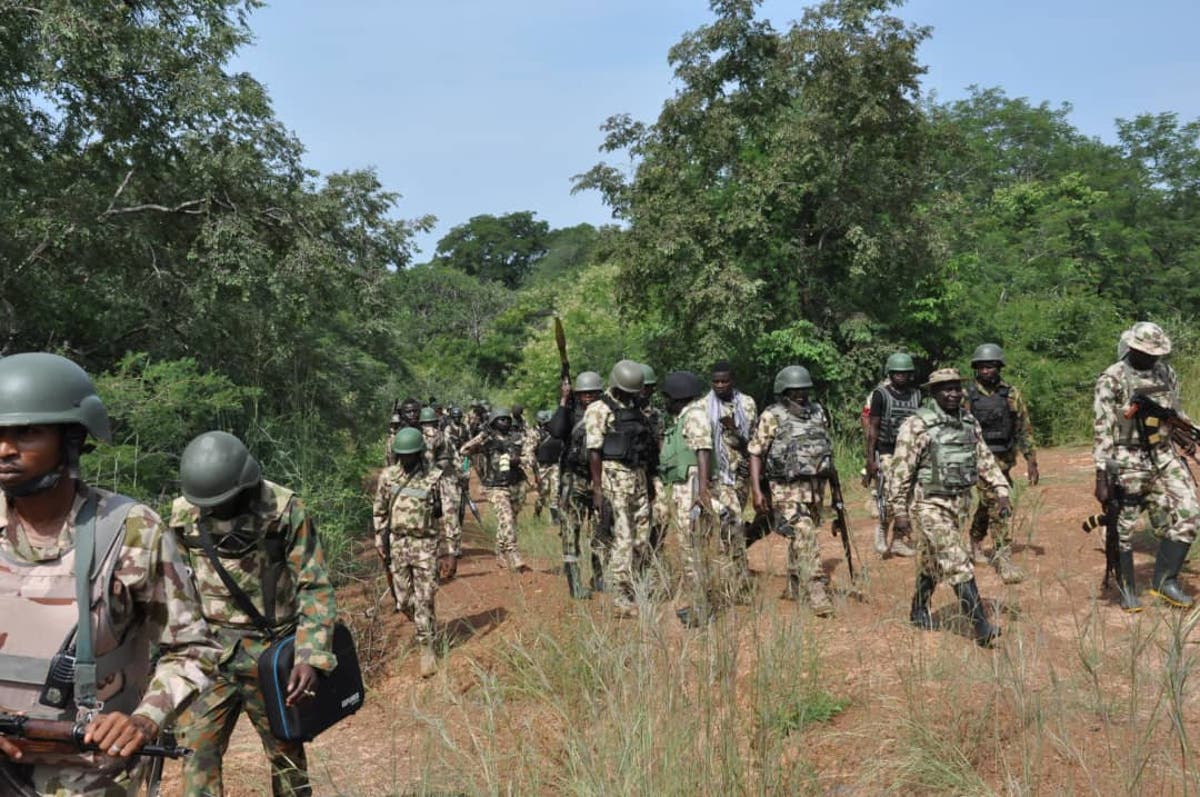
Troops Apprehend Terrorist Informants, Logistics Suppliers in Borno
ShareTroops of Operation HADIN KAI (OPHK) have apprehended suspected terrorist informants and logistics suppliers, received the surrender of an ISWAP...


Troops Rescue 13 Kidnapped Victims, Foil Terrorist Operations in Zamfara Communities
ShareFrom Ifeanyichukwu Nwannah, Gusau Troops of Joint Task Force, North West Operation Fansan Yamma (JTF NW OPFY) have rescued 13...


Wizkid Headline US Summer Festivals
ShareNigerian music superstar, Ayodeji Balogun, popularly known as Wizkid, is set to perform at the BlastFest and the Trillville summer...


Singer Asake Announces ‘In God We Trust’ World Tour
ShareAfrobeats sensation, Ahmed Ololade, aka Asake, is set to embark on a world tour ‘In God We Trust’, a global...


Food Insecurity: Governance, Incompetence and Compromise
ShareBy Akpoturu Best Of all the vulnerabilities that can compromise a sovereign state, the inability to feed its own populace...
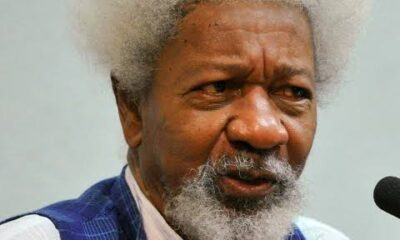

Wole Soyinka at 92: Nigeria’s Literary Titan, Africa’s Conscience and Global Intellectual Powerhouse
ShareBy Ehi Braimah There are writers, there are intellectuals, and there are moral giants whose influence transcends literature to shape...


BBNaija: Winner of Season 11 to Get Record N160m Grand Prize
ShareMultiChoice Nigeria has announced that season 11 of the Big Brother Naija (BBNaija) reality TV show will premiere on July...
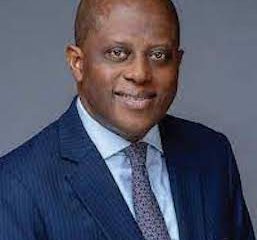

Diaspora Remittances Hit $1bn Monthly – CBN
Share By Tony Obiechina, Abuja Central Bank of Nigeria (CBN) Governor, Olayemi Cardoso, said diaspora remittances are projected to rise...


Tinubu Launches $3.05bn Social Investment Programmes
ShareBy Tony Obiechina, Abuja President Bola Tinubu yesterday, unveiled a $3.05 billion package of World Bank-supported programmes designed to accelerate...