
BUSINESS
Adamawa, NEPC Equip Farmers for Safer Farming, Bigger Export Opportunities

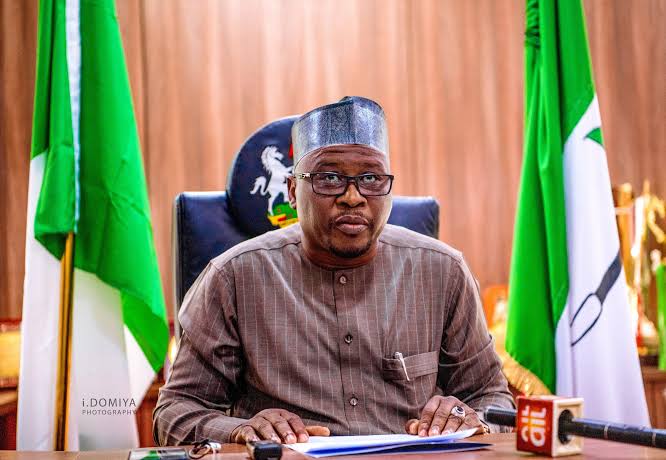
From Yagana Ali, Yola
The Adamawa State Government has renewed its commitment to improving the livelihoods of farmers by promoting safer, more sustainable agricultural practices and creating opportunities for local farmers to compete in both domestic and international markets.
The government made the commitment on Friday, September 4, 2026, during a capacity-building workshop on Good Agricultural Practices (GAP) and pesticide management organised by the Nigerian Export Promotion Council (NEPC), North-East Regional Office, Yola.
The training, held at the Government Lodge in Numan, Numan Local Government Area, brought together more than 60 smallholder farmers and other agricultural stakeholders from Numan and Demsa Local Government Areas.
Representing the State Commissioner for Commerce, Trade and Industry, Hon. Joab Haggai Sahma, at the event, the Assistant Director in the Department of Commerce, Aliyu Yahaya Shehu, said the state government recognised farmers as critical drivers of economic growth and food security.
Shehu said the government remained committed to supporting farmers through the provision of agricultural inputs and other interventions designed to improve productivity, strengthen livelihoods and make agricultural products more competitive.
He noted that the state government, in collaboration with NEPC, had also facilitated the free registration of potential exporters, describing the initiative as an important step towards opening the door for more farmers and entrepreneurs to participate in the international trade market.
He urged farmers to take advantage of the opportunities available through government agencies and adopt modern and responsible farming practices that would enable them to produce quality commodities that meet the standards required in both local and international markets.
“Farmers must see agricultural production not only as a means of feeding their families but also as a viable business capable of connecting them to larger markets,” he said.
Speaking on behalf of the Executive Director of NEPC, Mrs Nonye Ayeni, the Council’s North-East Regional Coordinator, Dr. Ben Anani Egon, said the workshop was designed to strengthen the capacity of smallholder farmers on the safe, responsible and effective use of pesticides.
According to him, the training focused on critical areas including the proper handling, storage and application of pesticides, personal safety, environmental protection and compliance with relevant agricultural standards and regulatory requirements.
Egon explained that Nigerian agricultural commodities destined for international markets had continued to face rejection at border control points because of contaminants, particularly pesticide residues such as dichlorvos, exceeding the maximum permissible residue limits.
He said such rejections could undermine farmers’ incomes, damage Nigeria’s reputation in international markets and discourage potential buyers from sourcing agricultural products from the country.
He stressed that improving farmers’ knowledge of pesticide management was therefore essential to ensuring that agricultural commodities produced in Nigeria were safe, healthy and acceptable to consumers around the world.
The NEPC coordinator said the workshop was part of the Council’s pesticide management project under its risk management initiative, which seeks to tackle the rejection of Nigerian agricultural exports arising from excessive pesticide residues.
He assured farmers of NEPC’s continued partnership and support, noting that the Council would continue to work with relevant stakeholders to improve the quality, safety and marketability of agricultural products from Adamawa State.
One of the resource persons, Hajara Adamu, who delivered a presentation on Good Agricultural Practices, took participants through practical approaches to pesticide application and other safe farming techniques.
Adamu encouraged farmers to embrace environmentally friendly and sustainable methods capable of protecting their health, preserving the environment and maintaining the long-term productivity of their farms.
She also challenged participants to become ambassadors of safe agricultural practices by sharing the knowledge acquired with other farmers in their communities.
For the participants, the training provided more than just technical knowledge; it offered a clearer understanding of how improved farming practices could translate into better-quality produce, stronger incomes and greater access to lucrative markets.
Two participants, Clara Heman and Ark Audu, described the workshop as timely and impactful, saying the lessons had improved their understanding of safe pesticide use and modern agricultural practices.
They pledged to share the knowledge with other farmers in their respective communities to ensure that the benefits of the training extended beyond the participants.
The workshop concluded with the distribution of agricultural inputs, including knapsack sprayers, protective boots and other farming tools, to support participants in applying the lessons learned and boost agricultural productivity.
The initiative is expected to contribute to safer farming practices in Adamawa while strengthening the state’s capacity to produce quality agricultural commodities capable of meeting the growing demands of both domestic and international markets.
From Francis Sadhere, Delta
The Delta State Government has commenced reforms aimed at liberalising the state’s power sector, attracting private investment and boosting electricity generation and distribution across the state.
The State Commissioner for Works (Rural Roads) and Public Information, Charles Aniagwu, disclosed this on Friday in Asaba while addressing journalists at a press conference.
He was accompanied by the Executive Assistant to the Governor on New Media, Felix Ofou.Aniagwu said the reforms were designed to deepen private-sector participation in the power sector through liberalisation and public-private partnerships (PPPs), stressing that the government could no longer shoulder the responsibility of running businesses alone.
He said the state was exploring its abundant gas resources as a major source of fuel for power generation, particularly at the Kwale Free Trade Zone, which is part of the state’s special economic zone.
According to him, potential investors were taken to the zone during the recent Delta State Economic and Investment Summit to enable them assess first-hand the availability of gas for electricity generation.
The commissioner explained that increased power generation within the state would reduce pressure on the national grid and free up electricity for other consumers.
Aniagwu cited the 8.5-megawatt Independent Power Plant located behind the state Secretariat in Asaba as an example of the government’s efforts, noting that the facility had enabled the Secretariat complex to operate independently of the national grid.
The commissioner also revealed that the state government had entered into a partnership with Supply Power for the generation of an additional 120 megawatts of electricity for the national grid.
He said the initiative was intended to strengthen electricity supply and provide a more reliable power base for small and medium-scale businesses, many of which depend on electricity for their operations.
Aniagwu said the state government had also intervened in areas traditionally regarded as the responsibility of electricity distribution companies, explaining that the administration was determined to prevent inadequate power supply from stifling economic development.
He identified the extension of the electricity grid from Abraka towards the Ndokwa axis as one of the interventions, saying the project was aimed at bringing more communities into the electricity network.
The commissioner, however, criticised the practice whereby communities are compelled to provide transformers and other electricity infrastructure, only for distribution companies to take over the facilities and subsequently collect electricity bills without adequately recognising the investments made by the communities.
He said the state would continue to support initiatives aimed at energising communities because reliable electricity would stimulate businesses, create jobs and provide opportunities for young people.
According to him, reducing unemployment and idleness could also contribute to addressing some security challenges across the state.
Aniagwu further disclosed that the government was working with the Ministry of Energy and a committee established to develop an appropriate regulatory framework for the state’s emerging power sector.
He said the proposed energy commission would be responsible for regulating new power producers, determining appropriate tariffs and overseeing electricity distribution networks.
The commissioner explained that effective electricity distribution required careful planning, including determining the most suitable infrastructure for each location, whether overhead, underground or other forms of power lines.
He stressed that proper regulation was essential to protect residents from electrocution and other dangers while ensuring fair pricing and safeguarding electricity infrastructure from vandalism and other abuses.
Aniagwu said the ultimate goal of the reforms was to establish a more efficient, sustainable and investment-friendly power sector that would provide reliable electricity to businesses, communities and households across Delta State.

The Minister of Solid Minerals Development, Dele Alake, has charged the authorities of Obafemi Awolowo University (OAU) to leverage its mineral and intellectual resources to develop a world-class centre of mining excellence.
Alake made the call while addressing a high-powered delegation of the University’s Governing Council, led by Prof.
Ralph Akinfeleye at the ministry’s headquarters in Abuja.This is according to a statement by his Special Assistant on Media, Lara-Owoeye-Wise on Sunday in Abuja.
The minister said the centre should bridge academic knowledge with exploration, extraction and processing, while strengthening the university’s role in the mining value chain.
“The gap between intellectualism and application must be closed. Universities should not only generate knowledge, they should translate that knowledge into solutions, enterprises and economic value for society,” he said.
He said the commercial value of the minerals available to the institution was sufficient to reduce the share of government subvention in its total budgetary allocation.
He urged the university to explore private-sector partnerships to unlock the commercial potential of its mineral assets, noting that its technical expertise was a significant advantage in attracting investors.
“You have the resource endowment underground and you have the intellectual capacity. You can bring in investors through a joint venture and they can provide the capital and machinery,” he said.
The minister also said that the Federal Government had restructured the development of Nigeria’s bitumen resources by opening designated bitumen blocks to competitive bidding by qualified investors.
According to him, ownership of land does not automatically confer ownership of the mineral resources beneath it.
“Ownership of mineral resources is vested in the Federal Government under the Constitution and relevant mining laws.
“The University owns the land, but where there are mineral resources, their exploration and exploitation must still be undertaken in accordance with the law.
“We must find a win-win situation that protects legitimate interests while upholding the Federal Government’s regulatory responsibility,” he said.
Alake commended OAU for its longstanding contribution to the training of geologists and other professionals in Nigeria’s mining industry, urging the institution to deepen its role in mineral exploration, research, innovation and commercialisation.
He reaffirmed the ministry’s commitment to a transparent, predictable and investment-friendly regulatory environment that promotes responsible mining, value addition and sustainable economic benefits for Nigerians.(NAN)
The Federal Competition and Consumer Protection Commission has begun examining Uber’s exit from Nigeria, particularly whether the ride-hailing company left behind unfulfilled services and obligations to customers.
Chief Executive Officer of the commission, Tunji Bello, disclosed this in a text message to Bloomberg, which reported on Sunday that the regulator was examining the manner of Uber’s departure from the Nigerian market.
FCCPC officials “are looking into the manner of their exit, particularly in respect of unfulfilled services to the customers,” Bello said.
The development comes four days after Uber announced that it would wind down its operations in Nigeria and Uganda, effective September 2, 2026.
The decision brought an end to Uber’s operations in Nigeria, where it launched in Lagos in 2014, and reportedly caught some riders and drivers off guard.
Uber did not give a specific reason for its exit from Nigeria in its notice to drivers, saying only that it had made the “tough decision” to wind down its operations.
“We have made the tough decision to wind down our operations in Nigeria, effective September 2, 2026.
“From this date, you will no longer be able to receive rider trip requests through the Uber app,” the company said.
Uber said its Help Centre would remain available to assist drivers with questions about the development until September 24, 2026.
The exit followed growing competition in Nigeria’s ride-hailing market, including from Bolt and InDrive, as well as economic pressures affecting consumers and the cost of operating mobility services.
The development also followed a recent disagreement between Uber and the Federal Airports Authority of Nigeria over the regulation of e-hailing operations at airports.
FAAN Managing Director, Olubunmi Kuku, said the authority had no role in Uber’s decision to leave Nigeria, adding that its interventions were driven by passenger safety, accountability and concerns over touting at airports.
Kuku said FAAN had been seeking liability provisions from e-hailing companies over the conduct and safety of drivers operating on their platforms.
One of the issues we were struggling with the e-hailing companies over was largely around liability clauses.
“But we also wanted them to take responsibility for the drivers. However, we were told that those drivers are not Uber’s drivers; rather, they are independent drivers.
“So, with regard to any safety concerns we raised, they wanted passengers to use the safety features available on their platforms. They did not want to take on that responsibility, and we had a major issue with that,” she said.


Enugu, Ebonyi Pursue Revival of Moribund Industries, Anambra Differs
ShareStakeholders in Enugu and Ebonyi States have hailed the deliberate efforts of the State Governments to revive some of the...

Adamawa, NEPC Equip Farmers for Safer Farming, Bigger Export Opportunities
ShareFrom Yagana Ali, Yola The Adamawa State Government has renewed its commitment to improving the livelihoods of farmers by promoting...
Delta Targets 120MW More Power as Govt Opens Sector to Investors
ShareFrom Francis Sadhere, Delta The Delta State Government has commenced reforms aimed at liberalising the state’s power sector, attracting private...
APC’s Kojo Sam Vows to Secure Bayelsa East for Tinubu in 2027
ShareFrom Mike Tayese, Yenagoa All Progressives Congress (APC) chieftain in Bayelsa State, Dr Kojo Sam, has vowed to deliver 100...
2027: Ebonyi APC Chairman Tasks Candidates to Intensify Grassroots Mobilization
ShareFrom Godwin Okah, Abakaliki The Chairman of the All Progressives Congress (APC) in Ebonyi State, Chief Stanley Emegha, has warned...
2027: Abba Moro Launches Campaign for Re-election Bid
ShareFrom Attah Ede, Makurdi The Senate Minority Leader and Senator representing Benue South senatorial district, Abba Moro, on Saturday launched...


Cassava Can Transform Nigeria’s Economy, Says Green Harvest CEO
ShareFrom Attah Ede, Makurdi The Managing Director and Chief Executive Officer of Green Harvest Food Stuffs, Prince Joshua Apeh, has...


2027: PRP calls for opposition unity
ShareThe Lagos State Chairman of the Peoples Redemption Party (PRP), James Adeshina, said opposition unity is critical to presenting Nigerians...
2027: SDP Presidential Candidate Pledges Bi-annual Free, Mandatory HEALTH screening for all Nigerians
ShareThe Social Democratic Party (SDP) presidential candidate, Prince Adewole Adebayo says he will introduce a bi-annual free mandatory medical screening...


Suspected Thugs Attack Journalists after APC Rally in Kano
ShareFrom Aliyu Askira, Kano Some Kano based journalists returning from an All Progressives Congress (APC) political gathering in Kano were...