
NEWS
ADC, Shettima In Hot Exchanges Over Atiku Economic Plan

By Tambaya Julius Abuja
The African Democratic Congress (ADC) Presidential Campaign Council has criticised Vice-President Kashim Shettima over his remarks on the educational background of the party’s presidential candidate, Atiku Abubakar, saying personal attacks would not ease the economic hardship facing Nigerians.
In a statement issued yesterday, the council’s Director of Strategic Communication, Phrank Shaibu, accused Shettima of focusing on Atiku’s educational qualifications instead of addressing the rising cost of living and the economic challenges confronting Nigerians.
Shaibu was reacting to Shettima’s remarks at the 32nd Nigerian Economic Summit in Abuja, where the vice-president questioned Atiku’s capacity to manage a modern economy, citing his training at the Kano School of Hygiene. Shettima also criticised Atiku’s proposal to restore petrol subsidy if elected president in 2027.
“While Shettima debates school records, families are skipping meals, workers cannot afford the journey to work, and his government calls their suffering reform,” Shaibu said.
The ADC spokesperson challenged the vice-president to address questions raised by the opposition over President Bola Tinubu’s academic records rather than ridicule Atiku over his educational background.
He cited claims concerning Tinubu’s attendance at Government College Lagos, which he said was established in 1974, and questioned an alleged reference to 1970 as the year of graduation in documents associated with the president’s education.
Shaibu also raised questions about the name on Tinubu’s National Youth Service Corps (NYSC) certificate submitted to the Independent National Electoral Commission (INEC), alleging that it bears the name “Tinubu Bola Adekunle”.
He noted that Atiku had challenged the alleged discrepancy in court.
The ADC chieftain further referred to legal proceedings in the United States concerning the release of records from Chicago State University and a historical forfeiture case in Chicago involving Tinubu.
Shaibu argued that the issues raised by the opposition campaign could not be dismissed through criticism of Atiku’s educational background.
He also faulted the Federal Government’s handling of the economy, citing poverty and food insecurity as evidence of the hardship facing households across the country.
Referring to World Bank poverty estimates and figures on acute food insecurity, he urged the government to prioritise policies that would reduce the cost of living and improve Nigerians’ access to basic necessities.
Defending Atiku’s proposed petrol subsidy intervention, Shaibu said the plan would be targeted, capped, budgeted and independently audited, with support tied to petrol refined in Nigeria.
“Atiku has proposed a targeted, capped and independently audited subsidy tied to petrol refined in Nigeria,” he said.
“If Shettima thinks it cannot be funded, he should show his figures and offer a better way to lower prices. Insulting Atiku will not fill a cooking pot, pay a bus fare or put fuel in a tank.”
Shaibu maintained that Nigerians would have the opportunity to assess the administration’s performance during the 2027 presidential election, adding that attacks on opposition figures would not resolve the economic difficulties confronting citizens.
Tinubu announced the removal of petrol subsidy in May 2023, a decision his administration has defended as necessary to reduce pressure on public finances.
By Tambaya Julius, Abuja
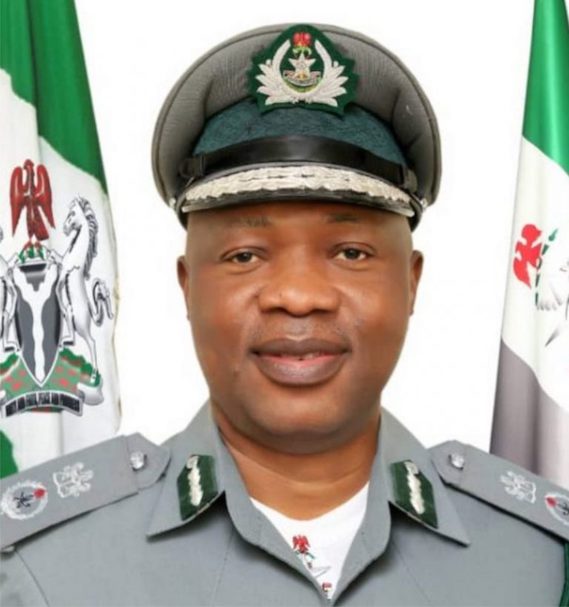
The Comptroller-General of the Nigeria Customs Service (NCS), Adewale Adeniyi, has said delegates attending the World Public Relations Forum (WPRF) in Abuja are leaving Nigeria with positive impressions, despite the fears and concerns some had before arriving in the country.
Adeniyi said the delegates’ personal experiences and interactions in Nigeria were helping to change their perceptions, particularly against the backdrop of negative reports about insecurity, kidnapping and banditry.
He spoke during an interview on the opening day of the conference recently, noting that several international delegates arrived with concerns about the security situation in the country.
According to him, such concerns had shaped the expectations of some participants and might have discouraged others from attending the conference.
He explained that some prospective delegates could have feared being kidnapped immediately after arriving at the airport, reflecting how much negative reports had influenced their perception of Nigeria.
“What they want is to see or know about a country. So most of the time, a good number of them are always much more reasoned in terms of the insecurities in Nigeria, kidnapping, and banditry,” he said.
However, Adeniyi said the feedback from delegates who had arrived was encouraging, noting that those he had spoken with shared positive experiences.
“All the delegates that I’ve spoken to, their experience has been very amazing,” he said.
To illustrate how firsthand experiences could change people’s perceptions, the Customs chief recalled a conversation with a delegate from Paris, who shared his experience after arriving in the French capital.
He said the delegate had checked for a protest route but was told it was not a major concern, even though the protest had lasted for five days.
Adeniyi observed that such incidents do not stop people from visiting Paris, which remains one of the world’s most visited destinations despite the challenges it faces.
He said Nigeria and other African countries should also be seen beyond their challenges, pointing out that no country is entirely free from security and other social concerns.
“So it’s also the same story with us in Nigeria, with us in Africa, that despite the challenges that we confront, everybody has this kind of challenge,” he said.
The Comptroller-General stressed that negative reports should not be the only basis for judging Nigeria, adding that international visitors should also have the opportunity to experience the country’s hospitality, opportunities and other positive attributes.
He said the positive feedback from WPRF delegates presented an opportunity to give the international community a broader picture of Nigeria, shaped by personal encounters rather than reports and perceptions from afar.
Adeniyi added that the delegates’ experiences at the forum could contribute to changing the country’s image internationally and encouraging a more balanced understanding of Nigeria.
No one disputes it: the security of the President of the Federal Republic of Nigeria cannot be compromised. Not for a second. Not for politics. Not for convenience.
But security is not the same thing as siege. And twice in one week, Abuja residents were made to feel like they were under siege in their own city.
The first instance was on Friday, November 13, when President Bola Tinubu attended Jumu’at prayers at the Shehu Shagari Central Mosque, Area 1, Garki.
According to eyewitness accounts reported in the press, roads leading to the mosque were blocked, worshippers were prevented from entering after the President arrived, and worse, they were prevented from leaving until he had departed.
Security operatives were even reported to have mounted the Mosque’s perimeter fences.The result was predictable: anger, frustration, and the booing of the President’s convoy as it left the Mosque. A place of worship became a place of confrontation. That should worry the presidency far more than any opposition criticism.
The second instance came six days later, when the President attended the public presentation of a six-volume publication by Chief Wole Olanipekun, SAN, at the Body of Benchers in Jabi.
Again, Abuja paid the price. Commuters on the Lugbe/Airport Road axis — one of the busiest corridors in the capital, serving workers, schoolchildren, business owners and air travelers — were forced to spend several hours in traffic following road closures by security operatives.
A commuter travelling from Lugbe to Jabi for work said a journey that ordinarily takes less than 30 minutes took over three hours. Another, travelling from Airport Junction to Jabi, said his 20-minute journey lasted nearly three hours, while his fare doubled from N1,500 to N3,000.
Another driver, captured the helplessness of it all: motorists were stranded for more than three hours without being told when the road would be reopened.
Let us be clear: This is not about a few minutes of delay. This is about hours of productive time lost, fuel wasted, vehicles overheating, medical appointments missed, flights missed, businesses disrupted, and ordinary citizens humiliated on roads built with their own taxes.
And for what? A book launch. A Friday prayer. Events that, with proper planning, should not have shut down a capital city.
The Presidency must understand a simple truth: Every time a presidential movement brings Abuja to a standstill, it does not project power. It projects distance. It tells the citizen that his time does not matter, his work does not matter, his health does not matter. Only the movement of one-man matters.
That is dangerous; politically, morally, and for national security itself. A President who is seen as the cause of daily suffering loses the goodwill he needs to govern. The booing at the Mosque was not just about a road closure. It was a symptom of accumulated frustration.
DAILY ASSET is not in any way against the President moving unprotected. We are demanding that his protection be professional, modern, and humane. Other countries do it every day. Nigeria can do the same too.
Consequently, Nigeria can adopt ‘Rolling Closures’ and not total blockades to achieve maximum security for the president. The road should not be closed for hours before and after the convoy passes. Close only the lane and the minutes needed for the convoy to pass, then reopen immediately. In London, Washington, and Paris, presidential movements use rolling closures. The city keeps moving.
The presidency and relevant authorities can give advance public notice. The FCT Administration, the Police and the FRSC should announce, at least 24 hours ahead, the routes to be affected, the expected time window, and the alternative routes. Citizens cannot plan if they are kept in the dark. Information is also security.
Authorities can publish and enforce alternative routes.
For every closure on Airport Road or in Garki, there must be a clearly signposted, manned alternative route. Traffic officers should be deployed to move traffic, not merely to stop it and completely lock down the road.
Additionally, authorities can create emergency lanes and exemptions. Ambulances, vehicles carrying pregnant women, the sick, and those heading to the airport must be allowed through. No security protocol should condemn a patient to die in traffic because a VIP is coming. Life must come before protocol.
It is important for the presidency to reduce the convoy for Non-State events.
A Friday prayer and a book launch are not state emergencies. The presidency should review the size of the convoy and the duration of closures for such social and private engagements. The fewer vehicles and the shorter the closure, the lower the disruption and the lower the cost and the risk.
They should also fix a maximum closure time. The presidency and security agencies should adopt a standing rule: No total closure of a major Abuja artery should exceed 30 minutes, except in a genuine security emergency. If operatives cannot execute a movement within that window, the planning has failed — not the citizens.
The security outfits should deploy technology, not just manpower. They should deploy social media updates, Google Map, and waze alerts to guide motorists in real time. A citizen stuck for three hours without information if a citizen is being punished for any good reason.
When citizens suffer as they did on those two occasions, the presidency should acknowledge it. An apology does not weaken the president. It humanises him. Silence only deepens resentment, especially at an electioneering period like this.
President Tinubu is the father of all Nigerians, not just of his convoy. His security is vital, but so is the dignity, time, and livelihood of the millions who must use Abuja’s roads every day.
Protect the President, yes. But do not subject the people to such a pernicious punishment.

From Joseph Amedu, Lokoja
A total of 86,931 PVCs for eligible registrants during the second phase registration exercise by the Independent National Electoral Commission (INEC) in Kogi state have been produced and delivered to the 21 Local Government Area offices, and now available for collection.
The Resident Electoral Commissioner for Kogi, Wahab Shehu, who announced this in a statement over the weekend, advised Registrants to visit the INEC office in the Local Government Area where they completed their registration to collect their PVCs.
“The Independent National Electoral Commission (INEC) Kogi State Office wishes to inform newly registered voters who participated in the second phase of the Continuous Voter Registration (CVR) exercise that their Permanent Voter Cards (PVCs) have now been received and are ready for collection.
The second phase of the CVR was conducted from 5th January to 17th April 2026“They are expected to come along with their registration slip or printout or a valid means of identification, where required. Kindly note that PVC’s for the 1st phase are also available for collection.
“Collection is available at INEC LGA offices from 09:00am to 03:00pm Monday to Friday. Registrants may also check their PVC status and locate their collection centre through the Commission’s CVR portal (cvr.inecnigeria.org).
“All voters who registered during the second phase of the CVR should endeavor to collect their PVCs without delay as the PVC is essential for participation in future elections, and timely collection will help ensure that no eligible voter is disenfranchised.
“The Commission appreciates the patience of registrants while the production, verification, and distribution processes were concluded. INEC remains committed to ensuring that all eligible voters obtain their PVC and exercise their democratic right” Wahab Shehu announced




WPRF Delegates Leaving Nigeria with Positive Impressions, Says Customs CG
ShareBy Tambaya Julius, Abuja The Comptroller-General of the Nigeria Customs Service (NCS), Adewale Adeniyi, has said delegates attending the World...

Customs Suspends Training at Two Colleges over Recruitment Concerns
ShareBy Tambaya Julius, Abuja The Nigeria Customs Service (NCS) has temporarily suspended training activities at its two training colleges to...


INEC Shelves Comprehensive Voters’ Register Clean-Up
ShareBy Orjime Moses, Abuja The Independent National Electoral Commission (INEC) has said it will no longer conduct a comprehensive clean-up...
Protect The President, But Do Not Punish the People
ShareNo one disputes it: the security of the President of the Federal Republic of Nigeria cannot be compromised. Not for...

Shettima to Moniepoint: Provide Affordable Loans for Businesses
ShareBy Tony Obiechina, Abuja Vice-President Kashim Shettima has tasked Moniepoint Microfinance Bank to expand access to affordable loans for farmers,...

NDC Expresses Deep Sorrow over Bayelsa Boat Mishap
ShareFrom Mike Tayese, Yenagoa The Bayelsa State Chapter of the Nigeria Democratic Congress (NDC) has expressed deep sorrow over the...


INEC Releases 86,931 New PVCs for Collection in Kogi
ShareFrom Joseph Amedu, Lokoja A total of 86,931 PVCs for eligible registrants during the second phase registration exercise by the...

Ododo Approves Extension of Retirement Age for Health Professionals
ShareFrom Joseph Amedu, Lokoja Kogi state Governor, Ahmed Ododo has approved extension of the retirement age for eligible skilled clinical...

CBN Seeks Fair Representation in ECOWAS Monetary Union
ShareBy Tony Obiechina, Abuja The Governor of the Central Bank of Nigeria (CBN), Olayemi Cardoso, has called for equity, fairness...

DAILY ASSET 10TH Annual Awards: Alia, Baze Varsity, Iornem Others Confirm Attendance
ShareBy Donald Andoor, Abuja Governor of Benue State, Rev Fr Hyacinth Iormem Alia, has confirmed attendance and participation at DAILY...