
NEWS
Addressing Housing Deficit in Nigeria Through Renewed Hope Agenda

Housing is one of the basic needs of man. It means more than just a shelter. It is provides man with a living environment, protection, privacy and facilitating social, economic and cultural achievements.
The performance of the housing sector is one of the measures by which the health of a nation is measured because of significance to the promotion of economic growth and development.
Nigeria’s housing challenge has been of concern in the last three decade with different government proffering different solution towards bridging the yawning gap for the citizens.
In 2010, the housing deficit was 14 million; it rose to 20 million in 2018 and in 2023 it rose to 28 million.
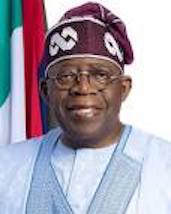
President Bola Tinubu in his quest to ensure that Nigeria’s housing deficit is bridged; said he is determined to face the housing challenge bedeviling Nigeria with the required attention.
To this end, he reeled out his vision for the housing sector under the Renewed Hope Cities and Estates programme. This will offer affordable housing to low-income earners and other Nigerians whose income is below the medium household earnings.
Tinubu took a bold step to make this vision a reality at the ground breaking ceremony of the pilot phase of the Renewed Hope Cities and Estates programme in Karasana, Abuja, for the construction of 50,000 houses across Nigeria under the first phase by the end of 2024.
“We aim to promote Public Private Partnership (PPP) collaborations that attract domestic, foreign, and diaspora investments.
“We are resolved to facing the housing challenge with the clarity of purpose and determination that is required to break all the barriers that stand in our way of success,’’ he said
In alignment with the President’s housing plan, the Ministry of Housing and Urban Development initiated a vision to create an efficient housing market. Central to the ministry’s overall strategic action plan is to increase the availability of affordable housing.
This is through the Renewed Hope Cities and Estate Programme, National Slum upgrade programme, National Housing Programme-Sale of Homes, Creation of a National Social Housing Fund and commencement of Housing sector reforms.
According to the Minister of Housing and Urban Development, Ahmed Dangiwa, the government approved N126.5bn from the 2023 supplementary and 2024 budget for the housing programme as well as the slum upgrade and urban renewal.
Dangiwa said, presently the Federal Government has estates in 12 states and three cities nationwide.
The estates, he said, are in Katsina, Yobe, Gombe, Abia, Nasarawa, Benue, Akwa Ibom, Delta, Sokoto, Oyo, and Osun States while the cities are in Abuja, Yobe, and Lagos.
He said that contractors have been mobilised and have commenced work to deliver a total of 3,500.
He added that a MoU with reputable developers was signed to construct 100,000 housing units nationwide and work has commenced for 3,112 housing units under the PPP bringing the total number of housing units currently under construction to 6,612.
“Under this concept, the housing units built in the Renewed Hope Cities will be sold at commercial rate while a substantial percentage will be sold at concessionary rates to low- and medium-income Nigerians who are members of the Nigeria Labour Congress and the Trade Union Congress.
“The construction of the planned 50,000 units under phase one will create 1.25 million direct and indirect construction jobs in addition to the value chain effects of purchase, supply of building materials, businesses around the construction sites.
“From the Ministry’s 2024 Approved Budget, another batch of Renewed Hope Estates comprising 250-housing units each in six additional states totaling 1,500 housing units would be rolled out.
“To guarantee access to these houses, the ministry unveiled a website https://renewedhopehomes.fmhud.gov.ng as the Renewed Hope Cities and Estates web portal, where Nigerians can apply, including those in Diaspora, to ease the process of acquiring homes that we are building under the Renewed Hope Cities and Estates Programme,’’ he said
He said the ministry has received about 8,925 expression of interest for the Renewed Hope Estates and Cities housing scheme that comprises of 1,294 for outright purchase, 2,408 for mortgage, 2,184 for rent-to-own and 3,039 for installment payment.
Dangiwa said an Executive Bill to amend the obsolete Land Use Act 1978 that has hindered the development of the housing sector is currently being drafted.
He added that other reforms include the establishment of the National Land Commission, the review of relevant laws and facilitation of necessary legislative amendments.
“These includes the following: The Land Use Act, 1978, National Housing Fund (NHF) Act,1992, Federal Mortgage Bank of Nigeria (FMBN),Establishment Act, 1993, Federal Housing Authority (FHA) Act,1973 and The PenCom Act,’’ he said
In the bid to make the Renewed Hope Housing programme a success, the Federal Housing Authority (FHA), is also collaborating with the Federal Mortgage Bank of Nigeria (FMBN) to deliver affordable housing to Nigerians.
The Managing Director and Chief Executive of FHA, Oyetunde Ojo, said the management of FHA went on a working visit to the six geo-political zones to have access to lands for the delivery of affordable housing to Nigerians.
“Once the state governments give FHA the off-takers (lands), part of the requirement was to have a mortgage bank to stand for the off takers. But that is yet to happen and that is why we are partnering with the FMBN to get funds for building the houses.
“I can assure you that lands are now available all over the country as we speak in 22 states, minimum of 50 hectares some 100, some 150 what is needed is finance for development.’’
Also the CEO of FMBN, Shehu Osidi, said that the organisation would continue to provide mortgages in order to actualise the vision of the president in the housing sector.
According to him, the mandate of FMBN is to provide homeownership, by way of mortgage financing to the lower and middle income earners in this country.
“This is for Nigerian workers in the public and private sectors, but even self-employed individuals are also at liberty to contribute to the National Housing Fund and take advantage of our various loan products.
He said that the FMBN was making an effort to complete all its outstanding housing estates located in different parts of the country and ensure they are taken.
“Going forward, we are introducing a lot of professionalism and diligence in the identification of locations for our new projects.
“The profiling and selection of potential off takers to ensure that only those with ability and capacity to repay their mortgage loans are offered mortgages is key.
“We are creating easy access to our various products and our processes will be seamless for people to get their mortgages approved and get houses and a collaboration with FHA is a step in the right direction.’’
Nevertheless, while experts and professional bodies like the Real Estate Developers Association (REDAN), Council of Registered Builders of Nigeria (CORBON) among others applauds the Renewed Hope Housing agenda of the president as a step towards addressing the housing deficit; they however, said amendment of major laws is also crucial.
Dr Samson Opaluwa, Chairman of CORBON, called for the review of the Builders Registration Act to ensure that only qualified professionals contribute to the nation’s growth to avoid building collapse.
“This aims to enhance our regulatory capabilities, curb quackery in the building industry, and ensure that only qualified and content professionals contribute to the growth of our nation in this sector.”
The Architects Registration Council of Nigeria (ARCON) also seeks an amendment to its acts as well as putting in place strategies to encourage private sector participation in housing supply and the use of alternative building materials and technologies to reduce construction costs.(NAN)
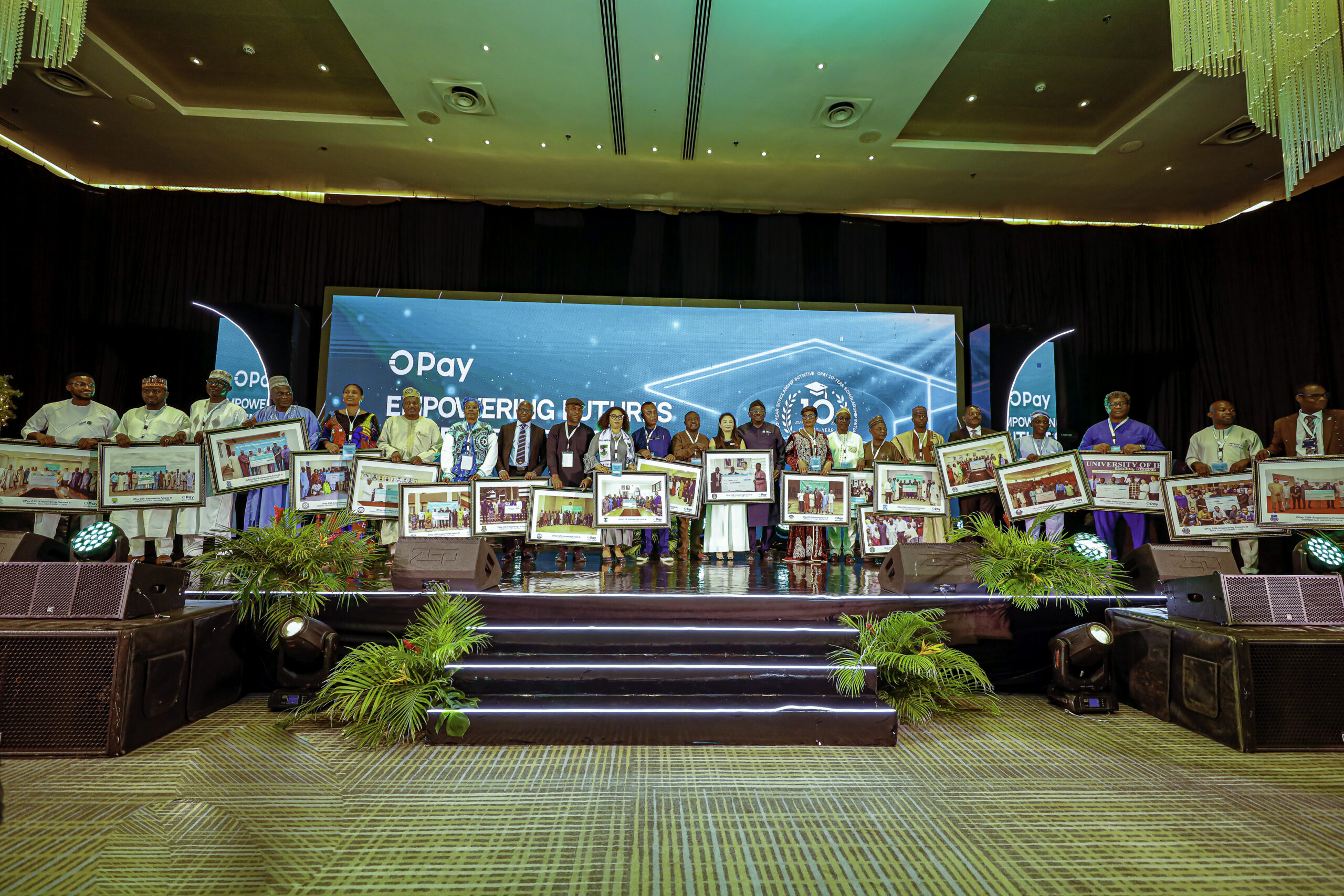
Getting into a tertiary institution is only half the journey. Staying in school, paying fees on time, and having the right support system can be the bigger challenge. Over the past year,
OPay has stepped into that gap, not just as a fintech company, but as a partner in the ambition and aspirations of thousands of students.
Through its long-term scholarship initiative, OPay has committed N1.
2 billion over 10 years to support outstanding and indigent students across more than 20 partner tertiary institutions nationwide. What began as tuition support has grown into something more profound, a structured investment in young people who have the capacity but need financial backing to stay focused on their studies.In campuses from Ife to Zaria and Calabar, OPay scholarship beneficiaries have shared stories of relief and renewed confidence. For many, the scholarship meant their parents no longer had to borrow money for school fees. For others, it meant more time in the library and less time worrying about part-time work. In a country where education remains one of the strongest ladders to upward mobility, this kind of support goes beyond money; it restores dignity and hope.
But OPay’s Corporate Social Responsibility (CSR) journey is not stopping at the scholarship initiative.
Building on the strong foundation already laid, OPay is launching OPay Scholars, a bold expansion that moves from financial support to full career development. The 2026 edition will introduce OPay Futures and a National Innovation Challenge, where students can propose practical solutions to real-world problems. It will also feature a focused webinar session and a bootcamp led by industry experts, providing scholars with direct access to knowledge in technology, entrepreneurship, and career growth.
Most notably, the 2026 edition will create a structured career development pathway, culminating in a grand finale of OPay’s second annual Empowering Futures Conference.
This platform will not only celebrate academic excellence but also spotlight creativity, leadership, and innovation among Nigerian students.
At a time when many young Nigerians are asking, “What next after school?”, OPay is helping to answer that question. By combining financial aid with mentorship, exposure and opportunities for innovation, the company is positioning education as both a safety net and a springboard.
OPay’s impact over the past year proves one thing clearly: when businesses invest consistently in people, communities grow stronger. And in 2026, OPay Scholars is set to support ambitions and actively shape the future, one student, one idea, and one opportunity at a time.

By Attah Ede, Makurdi
The Benue State government has debunked reports in some sections of the media including DAILY ASSET NEWSPAPER over alleged owing of Workers’ Salary.
Deputy Governor, Dr. Sam Odey who refuted the media claims on Sunday in Makurdi said the state government was only carrying out workers verification exercise, which according to him, they will be paid accordingly after the conclusion of the exercise.
Odey, who said the state government remains committed to the welfare of workers, urged media organizations to always verify the sources of their information before going public.
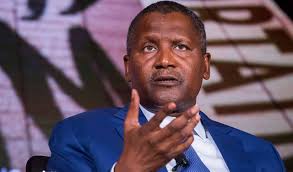
The President of Dangote Industries Limited, Aliko Dangote, received a hero’s welcome in Gode, Ethiopia, on a visit tied to his group’s fertiliser plant project in the country.
He was hosted by Prime Minister Abiy Ahmed, and both men visited the construction site of the proposed facility on Sunday.
Ethiopia signed a shareholders’ agreement with Dangote Group in August last year for the establishment of a urea plant with an annual production capacity of three million metric tonnes.
Construction was officially launched in October 2025. The joint venture is structured with Dangote holding 60 per cent and Ethiopian Investment Holdings, 40 per cent.
Dangote announced an increase in the project’s total investment from $2.
5 billion to over $4 billion.The Dangote Group statement read, “Dangote announced an increase in investment from $2.5 billion to over $4 billion, reflecting expanded scope, including a 110km pipeline, a 120MW power plant, a polypropylene packaging facility, and a two-million-tonne NPK blending plant.”
Abiy, who accompanied Dangote on the site visit, described the project as central to Ethiopia’s development agenda.
The prime minister said in a statement, “This initiative represents far more than infrastructure. It is a strategic investment in Ethiopia’s agricultural transformation, food security, industrial growth, and economic self-reliance.”
He said the plant would deliver broad national benefits upon completion.
“Once completed, the fertiliser plant will play a vital role in strengthening local production capacity, reducing dependence on imports, supporting millions of farmers, and creating new opportunities for jobs and investment,” he said.
Abiy said he was encouraged by what he observed on the ground.
“This morning, together with Aliko Dangote, I visited the project site in Gode to assess the progress achieved so far. I am encouraged by the steady momentum across the project area.
“Construction activities are advancing as planned across multiple sections of the site, reflecting the strong commitment and collaboration driving this important national project forward,” he stated.
The Dangote Group statement added, “The project reinforces Dangote Group’s commitment to industrial development across Africa.”



One Year into OPay’s N1.2 billion 10-year Scholarship Initiative, What’s Next?
ShareGetting into a tertiary institution is only half the journey. Staying in school, paying fees on time, and having the...

Benue Not Owing Workers’ Salary – Odey
ShareBy Attah Ede, Makurdi The Benue State government has debunked reports in some sections of the media including DAILY ASSET NEWSPAPER over...

2028 Olympic Games Qualifier: Super Falcons to Discover Opponents Today
ShareNigeria’s Super Falcons will find out their opponents for the 2028 Los Angeles Olympic Games women’s football qualifiers this week. The Confederation...
Nigeria Intensifies Surveillance as Ebola Outbreak Spreads in Central Africa
ShareThe Nigeria Centre for Disease Control and Prevention (NCDC) has stepped up surveillance and emergency response following an Ebola outbreak in the Democratic Republic of...
Kaduna Senatorial Aspirants Sign Peace Pact Ahead APC Primaries
ShareFrom Agbo Emmanuel, Kaduna Ahead of the forthcoming party primaries, senatorial aspirants across the three senatorial zones of Kaduna State on Saturday have signed a peace pact aimed at ensuring violence free...


Enugu Police Arrest Suspects for Allegedly Beheading Mother, Sister, Child
ShareFrom Sylvia Udegbunam, Enugu The Enugu State Police Command confirms two separate gruesome murder incidents that occurred on 15th May 2026 in different communities within...

Dangote Invests $4bn Fertilizer Plant in Ethiopia
ShareThe President of Dangote Industries Limited, Aliko Dangote, received a hero’s welcome in Gode, Ethiopia, on a visit tied to...


APC Primaries Shake Up Reps Races in Benue, Nasarawa
ShareFrom Attah Ede, Makurdi The All Progressives Congress (APC) House of Representatives primaries for the 2027 general elections produced major...


Senate Pushes State Police Bill after Borno, Oyo Schools Abduction
ShareFrom Ayinde Akintade, Osogbo Nigeria’s worsening insecurity came under renewed national focus yesterday after coordinated attacks on schools in Borno...

Nigeria’s Inflation Rate Jumps to 15.69 Per Cent in April – NBS
ShareBy Tony Obiechina, Abuja Latest reports from the National Bureau of Statistics(NBS) indicates that Nigeria’s inflation rate for April 2026...