
BUSINESS
Adelabu assumes office pledges stable, accessible power

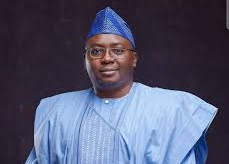
The Minister of Power, Mr Adebayo Adelabu has assured that the Federal Government will empower Nigerians through stable and accessible power.
The minister who gave the assurance when he assumed office on Monday in Abuja stressed that every home, industry, school, and business will benefits from the government efforts.
To achieve the feat, Adelabu said the ministry will leverage on the Nigerian Electricity Act, 2023 to boost power supply in the country.
The News Agency of Nigeria (NAN) reports that the Nigerian Electricity Act, 2023 provides a comprehensive legal and institutional framework for the operation of a fully privatised, cost and service reflective tariff, contract.
The Act also provides a rule-based competitive electricity market in Nigeria, and repeals the following Acts: Electric Power Sector Reform Act, 2005.
According to him, the ministry will diligently provide optimal solutions for Nigeria’s power needs across the nation.
He said that the task was not merely a requirement, but an expectation from both the President and the Nigerian populace who had endured years of power challenge.
“This responsibility weighs heavily upon us, and it is with conviction, divine guidance, and the support of President Tinubu, the National Assembly, government agencies and Nigerians that I pledge my commitment to achieve success in the power sector.
“ Key to success will be an unwavering dedication to efficiency and collaboration, ‘’ he said.
Adelabu said that the ministry would foster robust partnerships between the private and public sectors, working collectively to enhance the nation’s economic and social well-being.
“ Our focus will extend to aspects of life that truly matter: from households to small businesses, educational institutions to massive industrial productions, and beyond.
“A significant goal is the universal metering of households and addressing the challenges faced by our national power grid.
“We will equally pay critical attention to the options of renewable and alternative energies. The world is indeed going towards this direction and Nigeria must not be left behind, ‘’ he said.
The minister said that the ministry would also leverage on the power of technology and the bursting energies of talented youths to achieve its desired objectives.
He said that this would be pursued by ensuring robust handshake between the ministry’s ICT apparatus and the emerging technological ideas of young Nigerians to accelerate the envisaged transformation.
“Through this, we are convinced we will deliver services that would match the speed and values that the 21st century economy demands.
The minister expressed gratitude to President Bola Tinubu for affording him the exceptional opportunity to serve as the minister of power in his administration.
“Recognising that there are numerous deserving and qualified Nigerians for this role, I am truly humbled that the President has entrusted me with this vital task, as we collectively envision the growth and prosperity of our nation, ” he said






Chairman, Nigerian Exchange Group (NGX), Dr Umaru Kwairanga, said ongoing regulatory reforms are positioning țhe nation’s capital market to attract more investments and boost investor confidence.
Kwairanga was quoted in a statement on Sunday in Lagos to have said this during the ongoing 2025 Capital Market Correspondents Association of Nigeria (CAMCAN) Workshop.
The workshop had the heme, “Regulatory Reforms: ISA 2025 and Nigeria’s Investment Climate.
”The NGX Chairman noted that the Investment and Securities Act (ISA) 2025 marked a major step in improving market governance and investor protection.
According to him, the reforms represented structural changes aimed at modernising the market and attracting deeper investment flows.
“With the recent reforms encapsulated in the Investment and Securities Act (ISA) 2025, Nigeria has entered a pivotal phase in strengthening market governance, boosting investor protection, and enhancing overall market competitiveness.
“These reforms are not merely regulatory updates; they are foundational shifts designed to modernise our capital market architecture, attract deeper pools of capital, and position Nigeria as a top-tier investment destination within Africa and globally.
“As we navigate the complexities and opportunities presented by these reforms, your role as market media stakeholders becomes even more critical,” he said.
He said that the Exchange remained committed to supporting reforms that deepen transparency and broaden market participation.
He highlighted NGX Invest as a major innovation designed to simplify public offers and rights issues through digital channels.
Kwairanga said the platform had enabled millions of investors to participate directly in capital-raising activities.
He explained that NGX Invest had improved transparency, strengthened compliance and enhanced efficiency within the primary market.
Kwairanga said these efforts aligned with ISA 2025, which prioritises digital inclusion, operational efficiency and improved investor confidence.
“None of these efforts can thrive without credible and informed communication, and this is where the members of CAMCAN, remain indispensable.
“As journalists and correspondents covering the capital market, you act as a bridge between policy, market activity, and the investing public.
“Your work ensures that reforms are understood, market developments are accurately reported, and public trust is maintained. In a world increasingly challenged by misinformation, your role in delivering timely, factual, and contextual reporting is more vital than ever.
“I therefore charge you to continue upholding the highest standards of professionalism, accuracy and integrity.
“Your contributions help shape investor perception, support regulatory transparency, and ultimately strengthen the Nigerian capital market,” he said.

The African Export-Import Bank (Afreximbank) said digital transformation is critical to unlocking trade and investment potential under the African Continental Free Trade Area (AfCFTA).
Dr Yemi Kale, Group Chief Economist and Managing Director, Research, Afreximbank, stated this at an engagement event on “Unlocking Nigeria’s Trade and Investment Potential Through Digital Innovation and the Abuja Africa Trade Centre (AATC)” on Thursday in Abuja.
Kale said the AfCFTA had created the world’s largest new trading bloc, representing a unified market of over 1.
3 billion people and a combined GDP of more than 3.4 trillion dollars.“This integration goes beyond a symbolic milestone.
“It is a strategic platform capable of redefining how African economies produce, trade and compete in a rapidly changing global economy,” he said.
He noted that regional integration presented a once-in-a-generation opportunity to expand value chains, reduce dependence on primary commodities, accelerate industrialisation and strengthen Africa’s position in global markets.
Kale, however, expressed concern that intra-African trade still averages between 15 and 18 per cent, compared with 60 per cent in Europe and 40 per cent in Asia.
He identified market fragmentation, high logistics costs, gaps in trade data and cross-border payment challenges as factors limiting trade growth across the continent.
“If Africa must rise to its true economic stature, we must confront these obstacles with clarity, urgency and innovation.
“We must do so using one of the most powerful accelerators available to us and that is digital transformation.”
He explained that digital technologies such as end-to-end supply chain systems, automated customs services, e-commerce platforms, AI-driven market intelligence and digital payments were changing the structure of global trade.
Kale cited Rwanda’s digital single-window model and the growth of mobile money platforms as evidence of successful innovation
He noted that Afreximbank’s Pan-African Payment and Settlement System (PAPSS) was projected to save the continent billions in currency conversion costs.
According to him, digital innovation supports small and medium-sized businesses, including young entrepreneurs who can now access wider markets using online platforms.
He said that Nigeria’s large youth population gave the country a strategic advantage to lead Africa’s next phase of digitally-enabled trade.
“With 65 per cent of Nigeria’s population under 25, our young innovators are creating solutions, founding start-ups and shaping new industries.
“Strengthening skills, regulation, finance and collaboration will accelerate this impact,” he said.
He said Afreximbank was supporting this growth through the African Trade Gateway (ATG), trade intelligence services, and the AfCFTA Adjustment Fund among other initiatives.
“The ATG integrates trade information, due diligence, secure payments, and market insights, which are precisely the tools required for African businesses to compete effectively in an integrated continental market.
“It is, therefore, encouraging that Nigeria has taken a leadership role in advancing these priorities.”
Kale added that the Abuja Afreximbank Africa Trade Centre (AATC) represented the bank’s commitment to modernise trade by providing facilities that integrate information services, exhibition spaces, a business hotel and access to digital trade tools.
According to him, the centre is the first in a network of one-stop trade hubs being developed across Africa and the diaspora.
Kale said the AATC would help businesses access financing, partners, market intelligence, logistics support and technology services within a single space, reducing barriers and transaction costs.
“This building is more than a physical structure. It represents a catalytic platform for integration, innovation and investment,” he said.
He urged stakeholders to work together to drive digital transformation and build a continent where entrepreneurs can compete globally.
“This is not a distant dream. It is a future within our reach if we embrace innovation and collaboration,” he said.
Participants at the event were shown a live demonstration of Afreximbank’s Trade Intelligence Solutions- ATG and TRADAR and explored the role of AATCs in promoting trade and investment.
The event brought together financial institutions, trade organisations, investors and business owners.

The Federal Government, through the Kano State Special Agro-Processing Zone (SAPZ) Programme in partnership with IFAD, has empowered 9,870 rice farmers in Kano with climate-resilient inputs and modern rice production technologies.
This was contained in a statement issued by the SAPZ Knowledge Management and Communication Officer, Rabi Mustapha.
The State Project Coordinator, Aminu Iliyasu, disclosed this on Sunday during the Farmers Field Day at Chiromawa Garin Babba Cluster in Garun Malam Local Government Area.
He said the exercise was organised to expose the farmers to Science-based and practical solutions capable of enhancing yields, improving food security, and boosting rural livelihoods.
Iliyasu described the field day as a celebration of knowledge, innovation and the resilience of smallholder farmers.
He explained that the SAPZ initiative in Kano aimed to expand access to improved technologies, strengthen extension services, reduce post-harvest losses and create market opportunities for rural farmers.
“These innovations are not theoretical. They are practical solutions that farmers can adopt immediately to raise productivity and increase income,” he said, while commending the support of local authorities.
Mustapha said the inputs distributed to 9,870 farmers included FARO 44 improved seeds, Urea and NPK fertilizers, and insecticides, targeting beneficiaries in Garun Malam, Gezawa, Bichi and Bagwai LGAs during the 2025 wet season.
She added that experts trained farmers on soil selection, seed dressing, nursery establishment, land preparation, and timely transplanting at proper spacing.
“They also covered fertilizer management, weed control, Integrated Pest Management and water regulation to boost rice yields.
“The training emphasised harvesting at optimal maturity, drying paddy to safe moisture levels, and fumigation using phostoxin to prevent storage losses,” she stated.
A beneficiary, Salamatu Ali, said the intervention had positioned Kano farmers to boost yields, withstand climate pressures and increase household incomes.
Another farmer, Huwaila Ibrahim, said the programme transformed her approach to rice production.
“Before, we planted without checking whether the land was suitable.
“Now, we first assess the soil to ensure it matches the seed variety. This season, we cultivated FARO 44,” she said.
Ibrahim added that her output increased from 20–25 bags per acre to about 40 bags after adopting the improved technologies.



Group Backs Tinubu, Urges Sule to Run for Senate
ShareFrom Abel Zwanke, Lafia The Chief Executive Officer of the Community Initiative for Character Moulding and Entrepreneurship Development (CiCMED) and...

Ooni Installs Oluremi Tinubu as Yeye Asiwaju Ile Oodua
ShareFrom Ayinde Akintade, Osogbo The Permanent Chairman, Southern Nigeria Traditional Rulers Council (SNTRC), Arole Oodua Olofin Adimula and Ooni of...


NYSC Presidential Honor Award Winner Returns to Benue, Shows Appreciations
ShareFrom Attah Ede, Makurdi An ex- corps member and a recipient of Presidential Honour Award, Udokpo Abasi, at the weekend...


NGO Launches Climate Project Steering Committee in Benue
ShareFrom Attah Ede, Makurdi A global Non-Governmental Organisation (NGO), International Alert has inaugurated Climate Project Steering Committee in Benue State,...

A silent Emergency: Soaring Costs of Diabetes Care Spark Alarm
ShareBy Folasade Akpan For Mrs Schola Effiong, a 58-year-old confidential secretary in Calabar, managing diabetes in today’s economy feels like...


World Bank, Partners Record Progress Toward 1.5bn Healthcare Goal
ShareThe World Bank Group, global partners and countries on Saturday announced continued progress toward the goal of delivering affordable and...


UN Commits to Strengthening Nigeria’s Policy Framework, Enhancing Digital Safety
ShareThe UN Women has reaffirmed its commitment to strengthening policy frameworks, enhancing digital safety, and promoting accountability for online harms...

Nightclub Fire in India’s Goa Kills 25 People
ShareA fire at a popular nightclub in India’s coastal region of Goa has killed 25 people, local officials say. Police...

Hong Kong votes in Election as City Mourns Deadly Fire
ShareHongkongers are voting in an election seen as a test of public sentiment following a deadly fire that angered some...


PDP Crisis: Wike Camp Moves to Conduct Fresh Congresses, Convention
ShareBy Laide Akinboade, Abuja The factional Board of Trustees (BoT) of the Nyesom Wike tendency in the Peoples Democratic Party...