
BUSINESS
Afreximbank Seeks Digital Innovation to Unlock Nigeria’s Trade Potential


The African Export-Import Bank (Afreximbank) said digital transformation is critical to unlocking trade and investment potential under the African Continental Free Trade Area (AfCFTA).
Dr Yemi Kale, Group Chief Economist and Managing Director, Research, Afreximbank, stated this at an engagement event on “Unlocking Nigeria’s Trade and Investment Potential Through Digital Innovation and the Abuja Africa Trade Centre (AATC)” on Thursday in Abuja.
Kale said the AfCFTA had created the world’s largest new trading bloc, representing a unified market of over 1.3 billion people and a combined GDP of more than 3.
4 trillion dollars.“This integration goes beyond a symbolic milestone.
“It is a strategic platform capable of redefining how African economies produce, trade and compete in a rapidly changing global economy,” he said.
He noted that regional integration presented a once-in-a-generation opportunity to expand value chains, reduce dependence on primary commodities, accelerate industrialisation and strengthen Africa’s position in global markets.
Kale, however, expressed concern that intra-African trade still averages between 15 and 18 per cent, compared with 60 per cent in Europe and 40 per cent in Asia.
He identified market fragmentation, high logistics costs, gaps in trade data and cross-border payment challenges as factors limiting trade growth across the continent.
“If Africa must rise to its true economic stature, we must confront these obstacles with clarity, urgency and innovation.
“We must do so using one of the most powerful accelerators available to us and that is digital transformation.”
He explained that digital technologies such as end-to-end supply chain systems, automated customs services, e-commerce platforms, AI-driven market intelligence and digital payments were changing the structure of global trade.
Kale cited Rwanda’s digital single-window model and the growth of mobile money platforms as evidence of successful innovation
He noted that Afreximbank’s Pan-African Payment and Settlement System (PAPSS) was projected to save the continent billions in currency conversion costs.
According to him, digital innovation supports small and medium-sized businesses, including young entrepreneurs who can now access wider markets using online platforms.
He said that Nigeria’s large youth population gave the country a strategic advantage to lead Africa’s next phase of digitally-enabled trade.
“With 65 per cent of Nigeria’s population under 25, our young innovators are creating solutions, founding start-ups and shaping new industries.
“Strengthening skills, regulation, finance and collaboration will accelerate this impact,” he said.
He said Afreximbank was supporting this growth through the African Trade Gateway (ATG), trade intelligence services, and the AfCFTA Adjustment Fund among other initiatives.
“The ATG integrates trade information, due diligence, secure payments, and market insights, which are precisely the tools required for African businesses to compete effectively in an integrated continental market.
“It is, therefore, encouraging that Nigeria has taken a leadership role in advancing these priorities.”
Kale added that the Abuja Afreximbank Africa Trade Centre (AATC) represented the bank’s commitment to modernise trade by providing facilities that integrate information services, exhibition spaces, a business hotel and access to digital trade tools.
According to him, the centre is the first in a network of one-stop trade hubs being developed across Africa and the diaspora.
Kale said the AATC would help businesses access financing, partners, market intelligence, logistics support and technology services within a single space, reducing barriers and transaction costs.
“This building is more than a physical structure. It represents a catalytic platform for integration, innovation and investment,” he said.
He urged stakeholders to work together to drive digital transformation and build a continent where entrepreneurs can compete globally.
“This is not a distant dream. It is a future within our reach if we embrace innovation and collaboration,” he said.
Participants at the event were shown a live demonstration of Afreximbank’s Trade Intelligence Solutions- ATG and TRADAR and explored the role of AATCs in promoting trade and investment.
The event brought together financial institutions, trade organisations, investors and business owners.


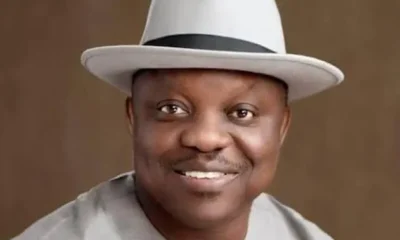





By Ubong Ukpong, Abuja
The House of Representatives on Wednesday, summoned telecommunication operators in the country to appear before it over the present poor network services.
The Ad Hoc Committee investigating the persistent poor quality of telecommunication services in Nigeria gave the chief executive officers (CEOs) of major telecom operators seven days to appear before it and explain the deteriorating quality of network services across the country.
The committee issued the ultimatum at a public hearing in Abuja on Wednesday, directing the CEOs of MTN Nigeria, Airtel Nigeria, Globacom (Glo), Mafab Communications Ltd.
and other telecommunications service providers to appear before it on October 28, 2026.The resolution followed the adoption of two motions sponsored by Rep. Sunday Umeha and Rep Afam Ogene after the committee expressed displeasure over the failure of the invited telecom operators, including MTN and Mafab Communications, to honour previous invitations and appear before the lawmakers.
The committee directed the Nigerian Communications Commission (NCC) to ensure that all the affected operators comply with the invitation and appear before it at 2 p.m. on October 28 in Hearing Room 447 of the New Building of the National Assembly Complex, Abuja.
It also directed the operators to submit all relevant documents to the committee on or before the scheduled date and account for the persistent decline in service quality, which has continued to affect millions of subscribers and businesses across the country.
The lawmakers warned that any chief executive who failed to honour the invitation would face a possible summons for arrest to compel their appearance before the committee.
Speaking at the hearing, the committee’s Chairman, Rep. Olumide Osoba (APC-Ogun), said telecommunications services had become indispensable to Nigeria’s economy, extending beyond voice calls and internet access to critical commercial activities, including Point of Sale (POS) transactions.
Osoba noted that businesses, financial transactions and other essential services depended heavily on reliable telecommunications networks, making the persistent decline in service quality a matter of serious national concern.
He said the House constituted the ad hoc committee to investigate the recurring complaints by subscribers and determine the factors responsible for the poor quality of services provided by telecommunications operators.
The chairman, however, expressed concern that the invited chief executives had continued to evade direct engagement with the committee by offering various excuses or sending lower-ranking officials to represent them.
He said the practice undermined the purpose of the parliamentary investigation, stressing that the committee expected the chief executives, who were in a position to explain their companies’ operational challenges and commitments, to appear in person.
Also speaking, Rep. Ibe Osonwa expressed displeasure over what he described as the operators’ disregard for the House, despite the substantial revenue they generated from their operations in Nigeria.
Osonwa said it was unacceptable for companies benefiting from the Nigerian market to ignore invitations from the legislature, particularly when the purpose was to obtain explanations on issues directly affecting their customers and the wider economy.
He stressed that telecommunications operators had a responsibility to account for the quality of services delivered to Nigerians, adding that the House would not overlook any attempt to frustrate its investigation.
In his ruling, Osoba urged the NCC to ensure full compliance with the committee’s resolution, reiterating that the affected telecommunications operators must appear before the lawmakers on October 28 and provide the necessary explanations and documents.
By Elijah Oguche, Abuja
The National Information Technology Development Agency (NITDA) has warned that artificial intelligence (AI)-powered misinformation, deepfake videos and sophisticated cyberattacks could be deployed to manipulate Nigerians ahead of the 2027 general elections.
The Director-General of NITDA, Kashifu Abdullahi, raised the alarm on Wednesday during a press briefing at the agency’s headquarters in Abuja on preparations for the International Cybersecurity Conference 2026.
He expressed concern over the growing use of AI to generate convincing but misleading political messages, warning that the trend could undermine public trust, distort information and threaten national cybersecurity.
Abdullahi said cybercriminals were increasingly exploiting human weaknesses through social engineering, rather than relying solely on attacks against computer systems.
“We are in an election period where people are using misinformation everywhere to manipulate. So that’s why we look at it. How can we defend our minds? Because today, as a hacker, it’s easier for me to hack humans than to hack systems,” he said.
According to him, advances in AI have made it easier to produce deceptive audio recordings, videos and online content capable of misleading the public and influencing political decisions.
He warned that Nigerians’ growing reliance on social media for news and information could expose them to coordinated disinformation campaigns, particularly during election periods.
“Imagine someone using AI-generated content, manipulating us, controlling what to see, what to believe, and so on,” he said.
The NITDA chief urged Nigerians to verify information before believing or sharing political messages online, stressing the need for caution in identifying AI-generated content designed to deceive the public.
“Many people today will generate content, will generate political messages using AI. And as we are in an election period, people need to be mindful of what they see, what they believe, and what they share online,” Abdullahi added.
Beyond election-related misinformation, he said AI was reshaping cybercrime by making attacks more sophisticated while also creating opportunities to improve digital security.
He explained that organisations were increasingly deploying AI agents to automate business operations, warning that such systems could become targets for cybercriminals if adequate safeguards were not in place.
“So imagine someone hijacking your AI agent. It’s like someone taking over control of your staff,” he said.
Abdullahi noted that although AI could improve the detection and prevention of cyber threats, criminals could also use the technology to develop more convincing scams and automate malicious activities.
He further stressed the need to address human error, which he identified as a major factor in cybersecurity breaches.
“More than 95 per cent of all cyber breaches are as a result of human error,” he said.
He called on individuals and organisations to strengthen digital literacy, review AI-generated materials before circulating them and ensure that human oversight remained part of their use of the technology.
On the forthcoming conference, Abdullahi disclosed that the event had been upgraded from the National Cybersecurity Conference to an international gathering following growing interest from participants across Africa and beyond.
He said the expansion reflected the cross-border nature of cyber threats and the need for stronger collaboration among governments, businesses and international security organisations.
The conference, themed “Cyber Resilience in the Age of AI: Defending Minds, Networks, and Nations,” will address emerging threats, including deepfakes, cognitive manipulation, cybercrime and attacks on critical infrastructure.
According to him, the event will feature 13 keynote addresses and 16 panel discussions, alongside a cybersecurity hackathon expected to attract about 1,946 participants from secondary schools, tertiary institutions, professional bodies and government agencies.
He identified the Office of the National Security Adviser and the Nigerian Communications Commission as principal partners in the conference.
Abdullahi said the gathering would promote collaboration, develop local cybersecurity expertise and strengthen Nigeria’s capacity to anticipate, detect and respond to emerging digital threats.
He also described cybersecurity as essential to the growth of Nigeria’s digital economy, warning that weak security systems could erode public confidence in electronic transactions.
According to him, fears of online fraud already discourage some Nigerians from embracing e-commerce, limiting the benefits of digital business and services.
He urged public and private organisations to invest in cybersecurity, improve their preparedness for security incidents and integrate protective measures into digital infrastructure from the outset.
The NITDA director-general further identified agriculture, financial services, education, healthcare and small businesses as sectors where responsible technology adoption could improve productivity and support economic growth.
He maintained that protecting digital systems and strengthening public trust would be crucial to ensuring that Nigeria benefits from AI-driven innovation without exposing citizens, businesses and critical infrastructure to avoidable risks.
From Sylvia Udegbunam Enugu
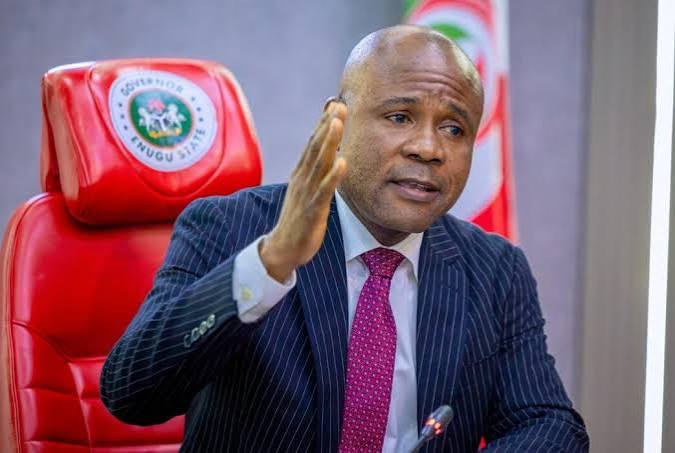
Governor of Enug State, Dr. Peter Mbah, has doubled down in his support for the removal of fuel subsidy by President Bola Tinubu’s administration, saying it was undebatable and inconceivable for anyone to imagine a return to the old order.
Mbah spoke at the “Meet the Candidates” town hall meeting organised by Afia TV in Enugu on Wednesday, where he also said that his administration had delivered good governance to the people of the state across all sectors.
He described it as a pathetic misconception of the country’s situation and the direction it was headed for anyone to talk about the reintroduction of fuel subsidy.
“If you reintroduce fuel subsidy today, we will lose ten times whatever we are currently trying to gain in terms of the removal of subsidy. The poverty rate that you are going to experience will be very high because the naira would be automatically devalued.
“We cannot go back to subsidy. And I do not think it is in the interest of the country for us to even debate that.
“Again, we should not even debate it because we do not want to send a signal to prospective investors that we are contemplating it. That would take us back. It is going to create panic in the system. It is going to get investors to pull back.
“Those that are coming in today to invest in that sector will become jittery. So, it is not even a subject to debate. It is something that we have moved on from, and we should be thinking about how to ensure that the natural benefits cascade to the households, create jobs and generate wealth for our people,” he said.
He said the nation should focus on how to further encourage private capital to flow, noting the growth the nation had experienced in the stock exchange space.
He added that Tinubu’s policies had stabilised the macro indicators, thus encouraging foreign direct investment.
“You can see quite a lot of funds coming into our country, not just portfolio investments, but also direct investments. It is also going to strengthen because the macro indicators are right,” he stated.
Mbah maintained that whereas fuel subsidy removal enables the government to target the less privileged, fuel subsidy as earlier practised benefited the rich more.
“By the way, I do not think the subsidy we practised before the President removed it was even the right one for the country because even the people we were looking at benefiting from it were only insignificantly benefiting from it. It was largely beneficial to our wealthy folks.
“But now, you can almost notice that the government is doing that in targeting the poor, using proceeds from subsidy removal. The government is aggressive on cash transfers. There is also the programme where the government is targeting 1,000 persons per ward across the entire country to be able to provide seed capital for them to become productive,” he added.
Meanwhile, on his stewardship so far, Mbah said his administration had kept faith with the people of Enugu State, delivering good governance across all sectors in line with his campaign manifesto.
He said the people of the state only needed to imagine where the state was before his inauguration as governor and where it is currently headed.
“Let us imagine the Enugu we knew four years ago. Let us just imagine an Enugu without Hotel Presidential. Let us imagine an Enugu without the International Conference Centre. Let us imagine an Enugu without Enugu Air. Let us imagine Enugu without the transport terminals, the 268 Smart Green Schools, 260 Type 2 Primary Healthcare Centres.
“You do not want them to imagine an Enugu without the International Hospital. You do not want them to imagine an Enugu without the CNG buses, the Nigergas. I think the list is endless.
“But I even think that we can stretch that imagination further because the work ahead will be more profound. Just imagine an Enugu where our children are receiving education that prepares them for the world because they have been imbued with evolving 21st-century skills. Imagine again an Enugu where you do not have any part of the city with an unpaved road.
“Also, imagine an Enugu in four years’ time that generates 660 megawatts of electricity; where we are able to provide 24-hour power supply; where you cannot come into your house and have the light off; and where people can run their businesses for a whole week without worrying about the cost of diesel. Just imagine an Enugu where you generate electricity and the people of Enugu are buying that at 120 naira because they own the coal that feeds the power plant.
“Imagine an Enugu where you now have to ride, not just on our CNG buses, but you have the monorail that can take you from point A to point B. Imagine an Enugu where you can fly from here to the United Kingdom, to the United States and other parts of the world,” he charged the electorate.
He urged the people to keep faith with the journey of greatness, growth and development, defending the gains of his first term and guaranteeing the promises of his second term by working for his re-election.
“If these imaginations capture our fancy, then we have a duty to fight for it. We do have a duty to continue to make sure that the bar does not come down and that the standard we have set in Enugu is sustained,” he concluded.




UK, Nigeria to Deepen Defence, Security Cooperation
ShareThe United Kingdom has reaffirmed its commitment to deepening defence and security cooperation with Nigeria, with emphasis on military training,...


2027: INEC Steps Up Preparations, Completes Nine Activities
ShareBy Tambaya Julius, Abuja The Independent National Electoral Commission (INEC) has completed nine of the 14 activities on its timetable...
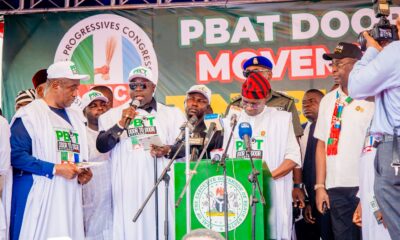

2027: Tinubu Accords Benue Security Top Priority, Tompolo Tells Supporters
ShareLeader of the PBAT Door-to-Door Movement, Government Tompolo, has called on the people of Benue state to come out enmasse...


Senate Demands Compulsory Screening of Foreign Arrivals
ShareBy Eze Okechukwu, Abuja The Senate yesterday ordered mandatory health screening for every international passenger arriving Nigeria airports, seaports, land...
Reps Summon Telecom Operators over Poor Network Services
ShareBy Ubong Ukpong, Abuja The House of Representatives on Wednesday, summoned telecommunication operators in the country to appear before it...


Bill to Design, Manufacture, Commercialize Drones Passes Second Reading in Reps
ShareBy Ubong Ukpong, Abuja A bill for an Act to move the nation to developing the capacity to design, manufacture...


Otu Presents N987.8bn Budget Estimate to Assembly
ShareFrom Ene Asuquo, Calabar Cross River State Governor, Sen. Bassey Edet Otu, has presented a proposed budget of ₦987, 808,...

Borno Police Arrest Six Suspects over Mobile Phone Theft, Recover N5.65m
ShareThe Police Command in Borno has arrested six suspects over alleged mobile phone theft and fraudulent withdrawal of ₦5.65 million...

Election Campaigns: FRSC Bars Officers from Politicians’ Escort
ShareThe Federal Road Safety Corps (FRSC) has barred its personnel from escorting politicians during campaigns for the 2027 general elections....

2027: NITDA Raises The Alarm Over AI-driven Election Manipulation
Share By Elijah Oguche, Abuja The National Information Technology Development Agency (NITDA) has warned that artificial intelligence (AI)-powered misinformation, deepfake...