
Business News
Afreximbank President Wins 2019 African Renaissance Development Award


By Mathew Dadiya, Abuja
The President of the African Export-Import Bank (Afreximbank), Prof. Benedict Oramah has received the 2019 African Renaissance and Diaspora Network Private Sector Development Award, Friday at the United Nations Headquarters in New York.
The award was presented to him by the African Renaissance and Diaspora Network (ARDN) during the “Africa: Open for Business Summit” on the sidelines of the United Nations General Assembly.
Afreximbank Director, Global Communications and Branding, Obi Emekekwue stated that the award celebrates leadership for and from the African continent in pursuit of the 2030 UN Agenda for Sustainable Development and the African Union’s Agenda 2063.
In a citation preceding the award, Constance Newman, Chairman of ARDN and a former United States Assistant Secretary of State for African Affairs, said that Prof. Oramah was selected as the 2019 recipient in recognition of his exemplary leadership in the fields of trade, trade finance and economics, and as a scholar and prolific writer.
“As the leader of Afreximbank, you have not only overseen the strengthening of trade activities throughout Africa, you have also played pivotal roles in the application of the Bank’s expertise to support humanitarian emergency relief programmes,” she said.
Ms. Newman also cited his achievement in the “development of the Bank’s Health and Medical Tourism Programme, working with international partners to foster the emergence of world class medical facilities and research centers across Africa designed to improve life expectancy as well as stem the outflow of billions in foreign exchange”.
In this way, Afreximbank dramatically echoes the ideals of the United Nations and its Strategic Development Goals, she concluded.
In an acceptance speech, Prof. Oramah said that he saw the award as a call to action to do more to support Africa’s effort to achieve economic growth, arguing that Africa needed economic independence as political independence was not enough.
He said that the Africa Continental Free Trade Area (AfCFTA) was an attempt to enable Africa to achieve economic independence, announcing that Afreximbank planned to disburse about $25 billion toward intra-African trade during its current strategic plan period.
Afreximbank had also set aside $1 billion as an adjustment facility to assist countries that might be impacted negatively by the takeoff of the AfCFTA to enable them adjust in an orderly manner, added the President.
Earlier, Tijjani Muhammad-Bande, President of the 74th United Nations General Assembly, said that Africa was central to the world and was always open for business. He invited people from around the world to come and trade with the continent.
Also receiving award at the ceremony was Epsy Campbell Barr, First Vice-President of Costa Rica.
ARDN is an international non-governmental organisation affiliated with the United Nations with the mission to accelerate the attainment of African renaissance by advocating for and supporting United Nations objectives and by mobilizing the passion of governments, educators, artists, intellectuals, the private sector, civil society and youth, using the power of art, sport and culture for creating a better world.
The Africa: Open for Business Summit was co-organized by ARDN and the African Union, the Permanent Mission of Nigeria to the United Nations, the United Nations Department of Public Information, the United Nations Entity for Gender Equality and the Empowerment of Women, the United Nations Population Fund, the United Nations Sustainable Development Solutions Network, UN-Habitat, UNDP and the Global Partnerships Forum.





From Sylvia Udegbunam Enugu
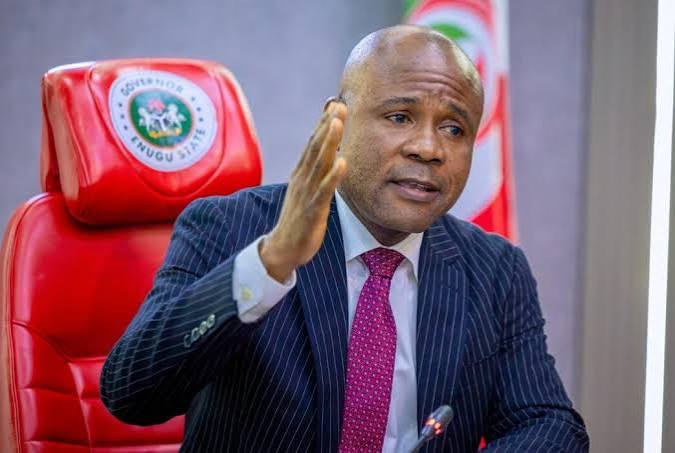
Governor of Enug State, Dr. Peter Mbah, has doubled down in his support for the removal of fuel subsidy by President Bola Tinubu’s administration, saying it was undebatable and inconceivable for anyone to imagine a return to the old order.
Mbah spoke at the “Meet the Candidates” town hall meeting organised by Afia TV in Enugu on Wednesday, where he also said that his administration had delivered good governance to the people of the state across all sectors.
He described it as a pathetic misconception of the country’s situation and the direction it was headed for anyone to talk about the reintroduction of fuel subsidy.
“If you reintroduce fuel subsidy today, we will lose ten times whatever we are currently trying to gain in terms of the removal of subsidy. The poverty rate that you are going to experience will be very high because the naira would be automatically devalued.
“We cannot go back to subsidy. And I do not think it is in the interest of the country for us to even debate that.
“Again, we should not even debate it because we do not want to send a signal to prospective investors that we are contemplating it. That would take us back. It is going to create panic in the system. It is going to get investors to pull back.
“Those that are coming in today to invest in that sector will become jittery. So, it is not even a subject to debate. It is something that we have moved on from, and we should be thinking about how to ensure that the natural benefits cascade to the households, create jobs and generate wealth for our people,” he said.
He said the nation should focus on how to further encourage private capital to flow, noting the growth the nation had experienced in the stock exchange space.
He added that Tinubu’s policies had stabilised the macro indicators, thus encouraging foreign direct investment.
“You can see quite a lot of funds coming into our country, not just portfolio investments, but also direct investments. It is also going to strengthen because the macro indicators are right,” he stated.
Mbah maintained that whereas fuel subsidy removal enables the government to target the less privileged, fuel subsidy as earlier practised benefited the rich more.
“By the way, I do not think the subsidy we practised before the President removed it was even the right one for the country because even the people we were looking at benefiting from it were only insignificantly benefiting from it. It was largely beneficial to our wealthy folks.
“But now, you can almost notice that the government is doing that in targeting the poor, using proceeds from subsidy removal. The government is aggressive on cash transfers. There is also the programme where the government is targeting 1,000 persons per ward across the entire country to be able to provide seed capital for them to become productive,” he added.
Meanwhile, on his stewardship so far, Mbah said his administration had kept faith with the people of Enugu State, delivering good governance across all sectors in line with his campaign manifesto.
He said the people of the state only needed to imagine where the state was before his inauguration as governor and where it is currently headed.
“Let us imagine the Enugu we knew four years ago. Let us just imagine an Enugu without Hotel Presidential. Let us imagine an Enugu without the International Conference Centre. Let us imagine an Enugu without Enugu Air. Let us imagine Enugu without the transport terminals, the 268 Smart Green Schools, 260 Type 2 Primary Healthcare Centres.
“You do not want them to imagine an Enugu without the International Hospital. You do not want them to imagine an Enugu without the CNG buses, the Nigergas. I think the list is endless.
“But I even think that we can stretch that imagination further because the work ahead will be more profound. Just imagine an Enugu where our children are receiving education that prepares them for the world because they have been imbued with evolving 21st-century skills. Imagine again an Enugu where you do not have any part of the city with an unpaved road.
“Also, imagine an Enugu in four years’ time that generates 660 megawatts of electricity; where we are able to provide 24-hour power supply; where you cannot come into your house and have the light off; and where people can run their businesses for a whole week without worrying about the cost of diesel. Just imagine an Enugu where you generate electricity and the people of Enugu are buying that at 120 naira because they own the coal that feeds the power plant.
“Imagine an Enugu where you now have to ride, not just on our CNG buses, but you have the monorail that can take you from point A to point B. Imagine an Enugu where you can fly from here to the United Kingdom, to the United States and other parts of the world,” he charged the electorate.
He urged the people to keep faith with the journey of greatness, growth and development, defending the gains of his first term and guaranteeing the promises of his second term by working for his re-election.
“If these imaginations capture our fancy, then we have a duty to fight for it. We do have a duty to continue to make sure that the bar does not come down and that the standard we have set in Enugu is sustained,” he concluded.
From Dan Amasingha, Minna
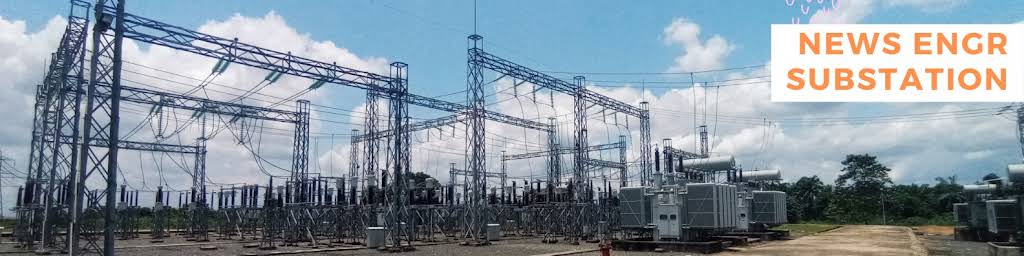
In a major bid to bolster renewable energy infrastructure in North-Central Nigeria, News Engineering Nigeria Limited, in partnership with India-based Mahashakti Energy, has formally declared interest in executing Niger State’s proposed 100-megawatt (MW) solar power project.
The multi-million-dollar clean energy initiative is slated to be funded by the Islamic Development Bank (IsDB).
The Managing Director and Chief Executive Officer of News Engineering, Lady Josephine Nwaeze, disclosed this during a strategic visit to Governor Mohammed Umaru Bago at the Niger State Liaison Office in Abuja.
Leading a joint delegation of both firms, Lady Nwaeze noted that the visit was designed to present the consortium’s technical capability, track record, and readiness to deliver the project in line with international best practices.
She praised the Bago-led administration for improving security and creating an enabling environment for private sector-driven development.
Presenting the consortium’s technical profile, Business Development Manager at News Engineering, Engr. Henry Akoji, highlighted the firm’s extensive footprint in Nigeria’s power sector. He revealed that News Engineering has successfully executed over 1,000 electrical installation projects nationwide, spanning high-voltage transmission lines, power distribution networks, and rural electrification infrastructure.
”Our renewable energy division has deployed over 100 solar mini-grid projects and distributed approximately 5,000 solar home systems across the country,” Akoji stated.
He emphasized the company’s end-to-end expertise in substation design, transmission line upgrades, project management, and technical capacity building.
Adding a global perspective, the Director of Mahashakti Energy, Ashok Kansal, highlighted his firm’s specialization in power loss reduction and sustainable grid management. Kansal pointed to successful interventions in India, where Mahashakti reduced aggregate technical and commercial (ATC) losses by 30 to 40 percent.
He assured the governor that the partnership would leverage cutting-edge technology in solar evacuation and distribution infrastructure to minimize energy losses and guarantee a stable power supply across Niger State.
Responding to the proposal, Governor Bago commended both entities for their presentation and demonstrated capacity. However, he emphasized that the state government would conduct rigorous due diligence and technical audits on their past projects before finalizing any contractual agreement.
The proposed 100MW solar initiative forms a cornerstone of Niger State’s broader strategy to bridge its energy deficit, drive industrialization, and expand electricity access.
The state government is expected to complete its technical evaluation before announcing a preferred partner for the Is isDB-backed project.
Business News
Wasted Years In The Printing Profession: Can Clement Koko’s Bold Leadership Usher In A New Dawn?
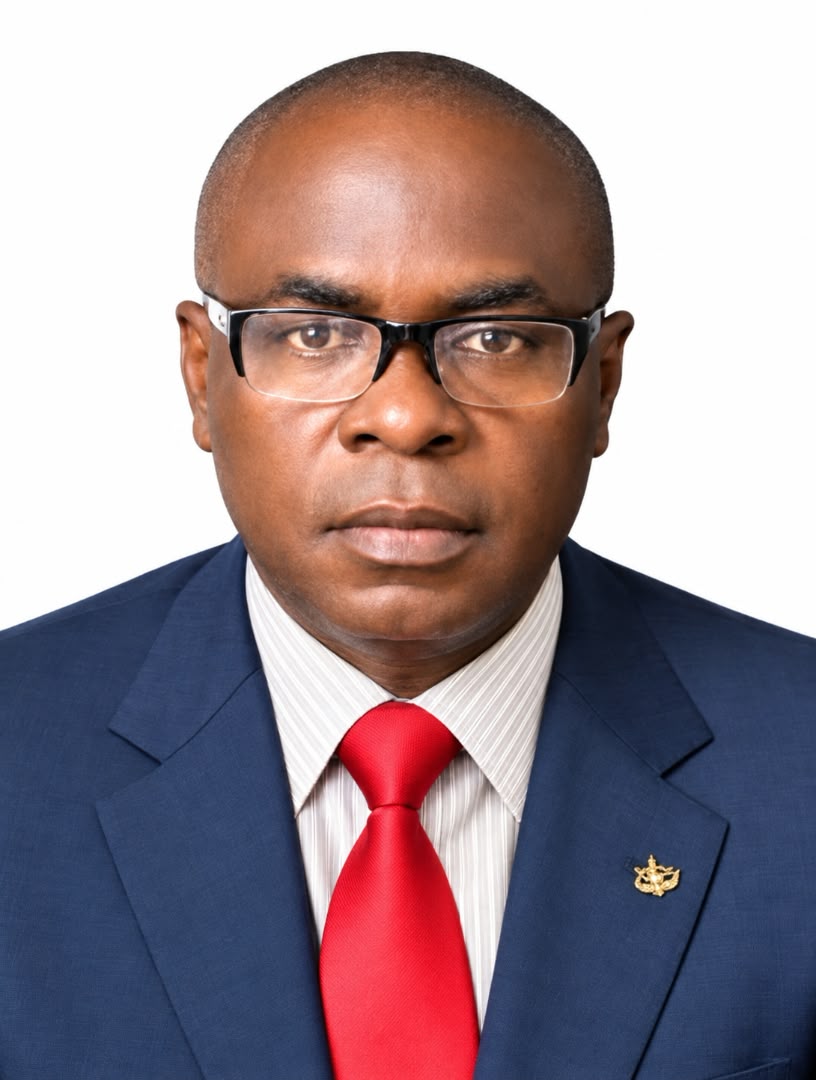
After Years of Leadership Crises and Missed Opportunities, the New CIPPON President, Clement koko Takes the Battle to Paper Manufacturers in Search of Solutions to the Industry’s Challenges
By Pius Ade Babaleye
There comes a time in the history of every profession when its members must pause, reflect, and ask themselves a fundamental question: How much progress have we made, and how many opportunities have we lost because of leadership failures, internal disagreements, and misplaced priorities?
*For Nigeria’s printing industry, that question has become increasingly important.
*For years, professional printers have battled the rising cost of paper and other printing materials, dwindling profit margins, difficult business conditions, and the struggle to sustain their businesses in an increasingly challenging economy. Yet, beyond these economic realities, the profession has also endured institutional disagreements, leadership crises, and divisions that have weakened its collective voice and distracted attention from the pressing needs of practitioners.
The painful question is whether the printing profession could have achieved much more if its leaders had devoted greater attention to the welfare of members, industrial development, and the pursuit of practical solutions rather than allowing personal interests and institutional rivalries to overshadow the collective mission.
*While the past cannot be rewritten, the future can still be rescued.*
Today, a new opportunity appears to be emerging following the bold initiative of the newly elected National President of the Chartered Institute of Professional Printers of Nigeria (CIPPON), Mr Clement Koko, who has demonstrated a willingness to move beyond rhetoric and confront one of the most pressing challenges facing printers: the high cost and accessibility of printing materials.
His recent engagement with paper manufacturers in Ogun State may well become a defining moment in the renewed quest to reposition Nigeria’s printing industry for growth, stability, and prosperity.
*THE YEARS WE LOST: WHEN LEADERSHIP CRISES OVERSHADOWED PROFESSIONAL PROGRESS*
No profession can achieve its full potential when the energy that should be devoted to development is continually consumed by internal struggles.
Nigeria’s printing industry has not been immune to this unfortunate reality. Over the years, disagreements surrounding leadership, institutional relationships, and the direction of the profession have contributed to an atmosphere in which collective advancement has too often struggled to receive the attention it deserves.
While professional disagreements are not unusual in any organised sector, the real concern arises when such disagreements become prolonged, distract from the welfare of practitioners, or prevent institutions from working together to address shared challenges.
The consequences are felt most severely by ordinary printers, particularly small and medium-sized business owners who must contend daily with the high cost of materials, overhead expenses, staff salaries, equipment maintenance, and customers who expect affordable services despite rising production costs.
For these practitioners, professional leadership must mean more than titles, positions, ceremonies, and public pronouncements.
It must translate into tangible benefits.
It must mean advocacy for better business conditions, stronger relationships with manufacturers, improved access to raw materials, professional development, and policies that support the survival and expansion of printing businesses.
The printing profession has lost valuable time to crises and disagreements. The priority now must be to recover that lost ground through purposeful leadership, genuine unity, and measurable achievements.
The challenge before the present leadership is therefore not merely to manage an institution but to rebuild confidence in the capacity of professional associations to deliver meaningful results.
CLEMENT KOKO: A PRESIDENT TAKING THE BATTLE TO THE MANUFACTURERS
In what deserves commendation as a practical and forward-looking initiative, the new National President of CIPPON, Mr Clement Koko, has taken a step towards confronting the high cost of printing materials through direct engagement with paper manufacturers.
Rather than allowing the concerns of printers to remain confined to meetings, complaints, and conversations within professional circles, the CIPPON president led a national delegation of printing stakeholders on a working visit to two paper-manufacturing companies in Ogun State.
The companies visited were Everest Paper Manufacturing Company in Ibefun and Nixin Paper Mills in Sagamu.
The mission was straightforward but significant: to open a channel of communication between professional printers and paper manufacturers, explore areas of mutual cooperation, and seek practical ways of improving access to essential printing materials.
At both facilities, the delegation was welcomed by the respective management teams and conducted around the production facilities to gain firsthand insight into their manufacturing operations.
The factory tours were followed by roundtable discussions with company executives, during which the participants explored opportunities for cooperation and ways of establishing a more productive relationship between manufacturers and professional printers.
This approach deserves recognition because it takes the conversation directly to the source of a critical industry challenge.
A leader who identifies a problem and mobilises stakeholders to seek solutions has already taken an important step towards delivering results.
Although the ultimate success of this initiative will depend on its practical outcomes, Mr Koko’s decision to pursue direct engagement represents a promising beginning.
It is a reminder that professional leadership must be measured not simply by what leaders say but also by the problems they are prepared to confront.
*WHY PRINTERS DESERVE THIS KIND OF LEADERSHIP*
The high cost of printing materials has become a serious concern for practitioners across Nigeria.
Paper remains one of the essential inputs in printing, publishing, packaging, advertising, education, branding, and numerous other commercial activities. When its price rises sharply, the impact spreads throughout the entire value chain.
Printers face the difficult task of adjusting their charges without losing customers. Publishers struggle to control production costs. Small printing businesses find it increasingly difficult to compete, while consumers ultimately bear some of the additional costs.
The situation calls for sustained engagement among manufacturers, distributors, professional associations, and other relevant stakeholders.
It is important, however, to recognise that paper prices can be influenced by several factors, including production costs, imported inputs, foreign exchange, transportation, energy, distribution expenses, and market conditions.
Consequently, no single factory visit can automatically resolve every pricing challenge confronting the industry.
Nevertheless, direct engagement creates an opportunity to understand these factors better, explore more efficient supply arrangements, and determine whether professional printers can benefit from more competitive purchasing options.
*That is precisely why the initiative deserves encouragement.*
If sustained through constructive negotiations and clear follow-up arrangements, the engagement could open the door to improved supply relationships, bulk-purchasing opportunities, greater price transparency, and more predictable access to paper.
These are the kinds of practical interventions that can make a meaningful difference in the daily lives of printing professionals.
*AN ENCOMIUM TO MR CLEMENT KOKO: LEADERSHIP MUST BE ABOUT SERVICE, NOT SELF-INTEREST*
Special commendation goes to Mr Clement Koko, the newly elected National President of CIPPON, for demonstrating an encouraging willingness to confront an issue that directly affects the economic survival of professional printers.
His initiative sends an important message to the printing community: the challenges of the profession cannot be overcome by sitting back and waiting for circumstances to improve.
They require engagement, consultation, courage, strategic thinking, and a determination to explore solutions, even when the problems are complicated.
The significance of his action lies not in the factory visit alone but in the leadership philosophy it represents.
It reflects an understanding that the office of a professional leader is a platform for service, responsibility, advocacy, and problem-solving.
At a time when many printers are anxious about the future of their businesses, initiatives that seek to address the cost of production deserve to be encouraged, strengthened, and sustained.
Mr Koko deserves commendation for taking this step early in his tenure and for bringing relevant stakeholders together around an issue of common concern.
His approach also presents an opportunity to rebuild confidence in professional leadership by demonstrating that the needs of practitioners can be placed at the centre of institutional priorities.
The printing industry does not need leaders who are satisfied with occupying positions; it needs leaders who are determined to make those positions count.
It needs leaders who can listen to the complaints of ordinary members, understand the realities of the marketplace, engage powerful stakeholders, and pursue outcomes that improve the working conditions of practitioners.
It needs leaders who appreciate that the strength of a professional institution is ultimately reflected in the progress of the people it represents.
*Mr Koko has taken a commendable first step in that direction.*
The expectation now is that this initiative will be followed by sustained negotiations, clear communication, and practical arrangements capable of producing measurable benefits.
If these engagements eventually translate into better purchasing opportunities and more competitive material costs, the entire printing community will have reason to celebrate.
For now, the industry has every reason to encourage this promising initiative while holding its leadership to the standards of accountability and performance that professional service demands.
*ASSPPON AND CIPPON: THE TIME FOR GENUINE COLLABORATION IS NOW*
Another encouraging aspect of this development is the participation of the Association of Professional Printers of Nigeria (ASPPON) alongside CIPPON.
The challenges confronting printers do not recognise institutional boundaries. Whether a practitioner belongs to one association or another, the impact of high material costs, difficult market conditions, and economic uncertainty remains largely the same.
This reality makes cooperation between professional institutions not only desirable but necessary.
ASPPON and CIPPON have important roles to play in advancing the interests of professional printers. Where their efforts complement one another, the profession stands to benefit.
The participation of Malam Abubakar Indagi, National Secretary-General of ASSPPON, alongside Pius Ade Babaleye PAB, Coordinator of ASSPPON Ikeja Division, and other members of the national delegation demonstrates the importance of collective engagement.
*The industry needs more of this spirit of cooperation.*
The time has come to move beyond unnecessary divisions and concentrate on the issues that matter most to practitioners.
How can printers obtain paper at more competitive prices?*
*How can small businesses survive the rising cost of production?*
*How can local manufacturers and professional printers develop mutually beneficial relationships?*
*How can professional institutions create more opportunities for their members?*
These are the questions that deserve the attention, energy, and intellectual resources of the profession’s leadership.
When professional associations unite around the economic welfare of their members, the entire industry becomes stronger.
The present engagement should therefore be seen as an opportunity to deepen cooperation between ASSPPON and CIPPON and establish a more consistent framework for addressing challenges affecting the profession.
*FROM FACTORY VISITS TO TANGIBLE BENEFITS: THE REAL TEST AHEAD*
While commendation is appropriate, the printing industry must also recognise that a promising initiative is only the beginning of a longer process.
The real measure of success will be what happens after the delegation returns from the factories.
*Will the discussions lead to concrete supply arrangements?*
*Can manufacturers and professional associations develop commercially sustainable purchasing options for printers?*
*Will members receive regular updates on the progress of negotiations?*
*Can the initiative be extended to benefit practitioners beyond the major commercial centres?*
*These questions should guide the next phase of the engagement.*
*To turn the initiative into a lasting achievement, the following steps deserve serious consideration:*
1. *Establish a sustained manufacturers’ engagement programme.*
ASSPPON and CIPPON should maintain regular dialogue with paper manufacturers and explore opportunities for long-term cooperation.
2. *Explore direct and bulk-purchasing arrangements.*
Where commercially feasible, professional associations could investigate collective purchasing models that may help members reduce procurement costs.
3. *Promote transparency throughout the supply chain.*
Constructive discussions with manufacturers and distributors could help practitioners better understand price variations and identify opportunities to improve purchasing efficiency.
4. *Develop a structured partnership framework.*
Future agreements should define the responsibilities of participating parties, the proposed benefits, and realistic performance targets.
5. *Keep members informed.*
Regular updates will help printers understand the progress made, the challenges encountered, and the opportunities that emerge from the engagement.
6. *Measure success through practical outcomes.*
The impact of the initiative should be assessed through improvements in supply access, purchasing conditions, business opportunities, and other measurable benefits to practitioners.
These measures would help ensure that the visit becomes more than a memorable event. They could transform it into the foundation of a sustainable industry-development programme.
*A NEW DAWN MUST NOT BE ANOTHER MISSED OPPORTUNITY*
The history of the printing profession should teach its leaders an important lesson: opportunities for progress must not be allowed to disappear beneath the weight of internal disagreements, personal ambitions, or institutional rivalries.
The industry has already spent valuable time confronting challenges that required unity, strategic thinking, and collective action.
*The future must be different.*
The new leadership of CIPPON has an opportunity to demonstrate that professional institutions can regain the confidence of their members by concentrating on practical problems and delivering measurable results.
*Mr Clement Koko’s engagement with paper manufacturers provides an encouraging starting point.*
It is now important for the leadership of both CIPPON and ASSPPON to build on this development, sustain the conversations, and pursue arrangements that can genuinely improve the operating conditions of professional printers.
The industry also needs a renewed commitment to professionalism, accountability, innovation, skills development, and the promotion of local production.
Printing remains an important part of Nigeria’s economic and social infrastructure. From books and educational materials to newspapers, packaging, commercial documents, advertising, and corporate branding, the industry continues to support activities that touch almost every aspect of national life.
Allowing the profession to remain weakened by avoidable divisions and persistent operational challenges would represent a missed opportunity for practitioners and the wider economy.
*This is why the present moment matters.*
It offers an opportunity to recover lost ground, restore confidence, and redirect professional leadership towards the welfare of members and the sustainable development of the industry.
*MY MESSAGE TO THE NEW CIPPON PRESIDENT*
As the Coordinator of ASSPPON Ikeja Division, I commend Mr Clement Koko for taking this bold initiative and encourage him to remain focused on the issues that directly affect the welfare of professional printers.
*The expectations are high, but so is the opportunity to make a meaningful difference.*
The printing community needs leadership that listens, consults, negotiates, and delivers. It needs institutions that work together despite their differences. Above all, it needs a professional environment in which the survival and growth of printing businesses receive the attention they deserve.
*Mr Koko has taken a step worthy of recognition.*
May he build on this foundation with consistency, transparency, and a determination to turn promising discussions into practical achievements.
May the collaboration between CIPPON and ASSPPON grow stronger, and may the printing industry finally begin to recover the valuable years lost to unnecessary crises and missed opportunities.
The ultimate victory will not be measured by the number of factory visits undertaken, meetings held, or statements issued. It will be measured by the positive difference professional leadership makes in the lives and businesses of ordinary printers.
The time has come to replace leadership crises with leadership achievements, self-interest with service, division with unity, and endless complaints with practical solutions.
*THE INDUSTRY MUST MOVE FORWARD*
The visit to Everest Paper Manufacturing Company in Ibefun and Nixin Paper Mills in Sagamu represents an encouraging development in the continuing search for solutions to the high cost of printing materials in Nigeria.
It reflects the value of engagement, the importance of collaboration, and the need for professional leaders to confront challenges directly.
*To Mr Clement Koko, the new National President of CIPPON, goes a well-deserved commendation for taking this initiative.*
To the national leadership of ASSPPON and every member of the delegation goes recognition for participating in an effort aimed at advancing the collective interests of the printing profession.
The years lost to institutional disagreements cannot be recovered in the literal sense, but the lessons they have taught must guide the decisions of today.
The future of the profession must be built on purposeful leadership, professional unity, sustainable partnerships, and results that practitioners can see and feel.
The printing industry has waited long enough for meaningful progress. The journey towards recovery must begin with bold ideas, continue with determined action, and culminate in tangible benefits for printers across Nigeria.
This is the opportunity before the new CIPPON leadership. This is the responsibility of ASSPPON and other industry stakeholders. And this is the moment for the printing profession to move forward together.
Kudos to Mr Clement Koko for taking the initiative!
Pius Ade Babaleye
ASSPPON Ikeja Division Coordinator




UK, Nigeria to Deepen Defence, Security Cooperation
ShareThe United Kingdom has reaffirmed its commitment to deepening defence and security cooperation with Nigeria, with emphasis on military training,...


2027: INEC Steps Up Preparations, Completes Nine Activities
ShareBy Tambaya Julius, Abuja The Independent National Electoral Commission (INEC) has completed nine of the 14 activities on its timetable...


2027: Tinubu Accords Benue Security Top Priority, Tompolo Tells Supporters
ShareLeader of the PBAT Door-to-Door Movement, Government Tompolo, has called on the people of Benue state to come out enmasse...


Senate Demands Compulsory Screening of Foreign Arrivals
ShareBy Eze Okechukwu, Abuja The Senate yesterday ordered mandatory health screening for every international passenger arriving Nigeria airports, seaports, land...

Reps Summon Telecom Operators over Poor Network Services
ShareBy Ubong Ukpong, Abuja The House of Representatives on Wednesday, summoned telecommunication operators in the country to appear before it...


Bill to Design, Manufacture, Commercialize Drones Passes Second Reading in Reps
ShareBy Ubong Ukpong, Abuja A bill for an Act to move the nation to developing the capacity to design, manufacture...


Otu Presents N987.8bn Budget Estimate to Assembly
ShareFrom Ene Asuquo, Calabar Cross River State Governor, Sen. Bassey Edet Otu, has presented a proposed budget of ₦987, 808,...

Borno Police Arrest Six Suspects over Mobile Phone Theft, Recover N5.65m
ShareThe Police Command in Borno has arrested six suspects over alleged mobile phone theft and fraudulent withdrawal of ₦5.65 million...


Election Campaigns: FRSC Bars Officers from Politicians’ Escort
ShareThe Federal Road Safety Corps (FRSC) has barred its personnel from escorting politicians during campaigns for the 2027 general elections....


2027: NITDA Raises The Alarm Over AI-driven Election Manipulation
Share By Elijah Oguche, Abuja The National Information Technology Development Agency (NITDA) has warned that artificial intelligence (AI)-powered misinformation, deepfake...