
NEWS
Adeleke Woos Investors to Osun for Industrial, Commercial Development


From Ayinde Akintade, Osogbo
Osun State Governor, Ademola Adeleke yesterday reiterated his readiness for business, industrial and commercial development as well as partnerships that will change lives.Adeleke made this known in his opening address delivered at the Osun State Industrial Investment Roundtable held at OASIS Event Centre in Osogbo the capital of Osun State.
He said his administration reaffirmed its commitment to transforming Osun from a predominantly civil service state into a robust industrial hub that can provide sustainable economic opportunities for the entire people of the State while government will not relent to grow Osun’s internally generated revenue through industry and commerce, reduce poverty, increase prosperity, and uplift the dignity of the people. According to the Governor, “The State Government over the last two years has delivered transformational infrastructure, industrial initiatives such as the revitalization of the Free Trade Zone which is planned to provide over 1,000,000 direct and indirect jobs for the people, Establishment of Markets with modern facilities, Establishment of Farm Produce Aggregation Centres with Cold and Dry Storage Facilities & Processing Units and Farm Settlements among others, well-articulated policies on Industrial Development, Digital Transformation and Youths and is building a vibrant and viable economy through public-private partnerships.”This roundtable is a vital platform to consolidate those gains, identify new pathways, and chart a clear course toward industrialisation.It is about charting a new course, one where Osun adds value, creates jobs, and attracts industries that endure.”We are here to connect vision with opportunity, policy with investment, and local talent with global capital while Osun is blessed, not only with resources, but with resilience, culture, and people who are eager to work”.In his address, the State Commissioner for Commerce and Industry, Rev’d (Dr) Bunmi Jenyo, lauded stakeholders for their faith in Osun’s developmental journey, while assuring them that “the Adeleke-led administration remains steadfast in its commitment to industrial growth, economic empowerment and sustainable prosperity for all.”The Commissioner described the roundtable as the result of the bold vision and leadership of the Executive Governor of Osun State, Sen. Dr. Ademola Adeleke whose commitment to repositioning Osun as a centre of commercial, industrial, and economic activities in Southwest Nigeria continues to inspire us all.”This roundtable is therefore a decisive step to ensure that Osun becomes not just a supplier of raw materials, but a hub for value addition, manufacturing, and global competitiveness.”Osun State Government is fully committed to an enabling environment for investment, while we are hopeful this roundtable will further open up the industrial and business landscape of Osun and many investments will spring up in the State with multiplier effects.”Osun State is Open Beyond Borders for Investments from Osun indigenes, Nigerians, Africans and all persons in the Diaspora”, the Commissioner concluded.The Association of Nigerian Electricity Distributors (ANED) has raised concerns over outstanding electricity debts owed by government Ministries, Departments and Agencies (MDAs).
The Managing Director, Chief Executive Officer of ANED, Sunday Oduntan, said this in an interview with the News Agency of Nigeria on Wednesday in Abuja.
Oduntan said delayed or non-payment by government institutions continued to worsen the financial strain on DisCos.
He urged the Federal Government to treat electricity obligations owed by MDAs as a direct first-line charge on approved budgets to ensure timely payment.
“DisCos need to be empowered to disconnect government agencies that fail to settle their electricity bills and pursue lawful recovery of outstanding debts.
“Access to affordable and long-term financing is critical to the survival, expansion and modernisation of Nigeria’s electricity distribution network,” he said.
Oduntan also called for improved customer service and greater transparency in electricity billing, as well as the expansion of mini-grid and off-grid electricity solutions, particularly in rural and underserved communities.
He recommended stronger accountability mechanisms that would enable electricity consumers and Civil Society Organisations (CSOs) to hold DisCos accountable for service delivery.
He said that a combination of improved metering, stronger revenue collection, affordable financing and greater accountability would be essential to strengthening the financial sustainability of the distribution sector.
He said it would also improve electricity supply across the country.(NAN)
By Tony Obiechina, Abuja
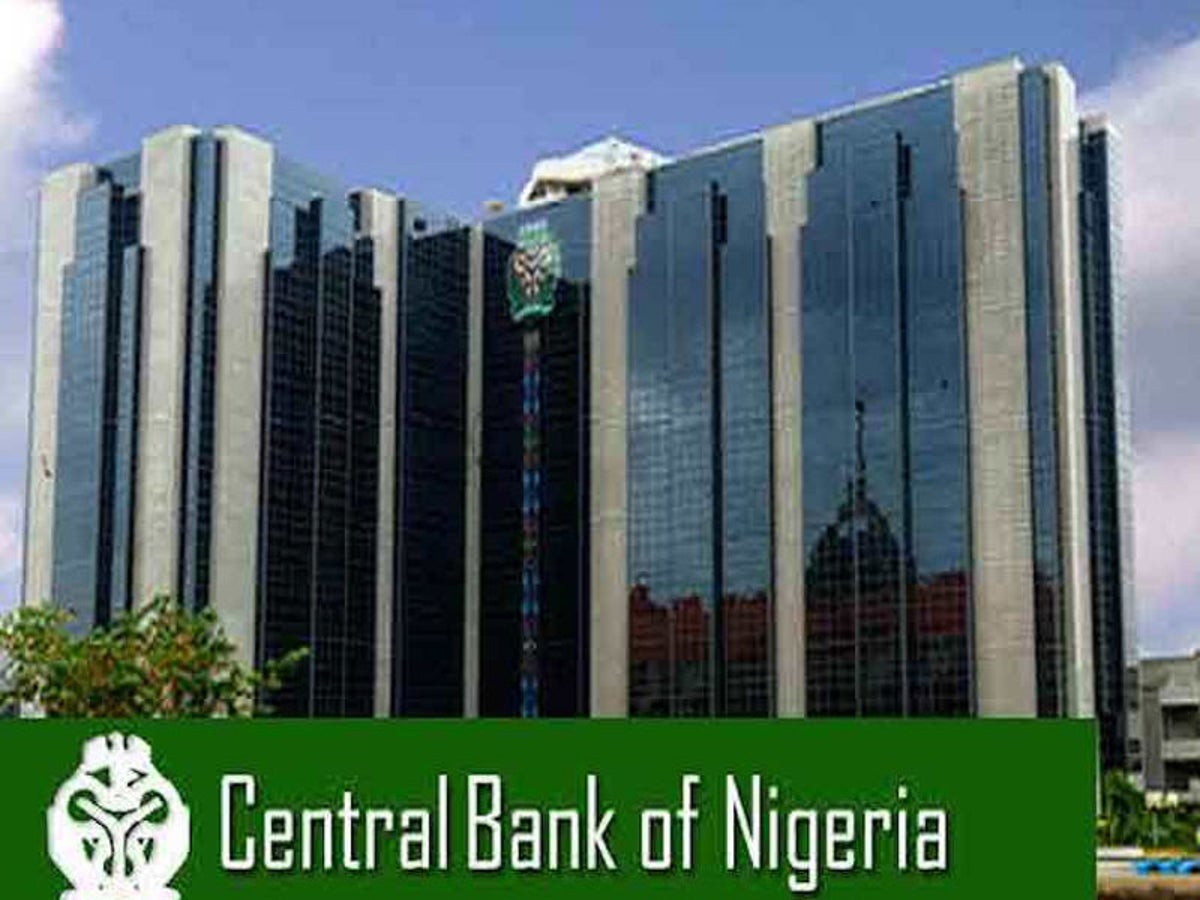
The Central Bank of Nigeria (CBN), on behalf of the Debt Management Office (DMO), has offered N700 billion across the 91-day, 182-day and 364-day Treasury Bills tenors in the second and final Treasury Bills (NTB) auction for August 2026.
The notice of an Invitation to Tender for Nigerian Treasury Bills (NTB) stated that All Money Market Dealers are required to submit bids through the CBN S4 Web Interface between 8:00 a.
m. and 11:00 a.m. on Wednesday, August 26, 2026.The offer is broken down as N100 billion for the 91-day bill, N100 billion for the 182-day bill, and N500 billion for the 364-day bill, and will be conducted through the Dutch auction, maintaining the CBN’s now-familiar preference for longer-dated paper that has defined its Treasury Bills strategy through much of Q3 2026.
Authorised Money Market Dealers are permitted to submit multiple bids for their own accounts, non-Money Market Dealers or interested members of the public.
Each bid must be in multiples of N1,000, subject to a minimum of N50,001,000, with dealers permitted to submit multiple bids on their own account or on behalf of non-Money Market Dealers and members of the public.
The auction result is expected to be announced on Wednesday, August 26, 2026, while allotment letters will be issued on Thursday, August 27, 2026.
Payment for successful bids is due to the CBN not later than 11:00 a.m. on the same day. The apex bank reserves the right to reject any bid or vary the amount on offer in line with prevailing market conditions.
This is the second scheduled Treasury Bills auction of August 2026, following a month that has already seen one cancellation and one unusually eventful sale.
The CBN had initially planned its first August auction for Thursday, August 6, offering N700 billion across the same three tenors, with bids due August 5.
However, that auction was abruptly withdrawn just days after the apex bank absorbed a combined N4.69 trillion from the banking system through back-to-back OMO auctions on August 3 and 4, prompting concerns that a fresh N700 billion Treasury Bills sale so soon after could over-tighten system liquidity.
The CBN returned to the primary market on August 12, offering N700 billion once again.
That auction drew N4.4 trillion in total subscriptions, well above the offer size, with the 364-day bill alone attracting N4.19 trillion in bids against its N500 billion offer, more than eight times oversubscribed.
Rather than ease the one-year stop rate as it had at the previous two auctions, the CBN raised it by 24 basis points to 17.59% from 17.35%, allotting N1.26 trillion on that tenor alone.
The 91-day and 182-day bills held steady at 16.30% and 16.50% respectively, with N148.57 billion and N47.48 billion allotted.
Combined, the August 12 auction saw the CBN allot approximately N1.456 trillion against its N700 billion offer, meaning that with the August 5/6 auction cancelled outright, August 12 stands as the only completed NTB auction of the month prior to today’s sale.
The August 12 rate hike marked a notable reversal from the trend seen through much of July, when the CBN eased the 364-day stop rate at both the July 15 and July 29 auctions despite similarly overwhelming demand, dropping it to as low as 17.35% by month-end.
From Dan Amasingha, Minna
Ten people have been killed and several others injured in a fatal road crash involving a trailer and a Sienna bus at Badeggi in Katcha Local Government Area of Niger State, further highlighting the growing road safety crisis on the state’s major highways.
The trailer, reportedly travelling from one of the northern states to Lagos, was said to be carrying both goods and passengers when it collided with the Sienna bus travelling in the opposite direction.
Two occupants of the Sienna bus died, while eight people in the trailer were killed.Although the Federal Road Safety Corps (FRSC) had yet to issue an official statement on the latest crash, eyewitnesses attributed the accident to the deplorable condition of the Badeggi-Bida section of the Lambata-Lapai-Bida highway, which they described as increasingly dangerous for motorists.
The incident occurred barely four days after another crash on the Bida-Mokwa section of the same highway claimed nine lives and left eight others critically injured. That accident involved a Mazda car and a commercial bus travelling in opposite directions.
The latest fatalities bring the death toll from the two crashes within days to at least 19, intensifying calls for urgent intervention on the increasingly hazardous highway.
In Bida, the Chairman of Bida Local Government Area, Alhaji Usman Mohammed Monko, organised a mass burial for victims of the latest accident following a funeral prayer at the Abdulrahman Bin Auf Juma’at Mosque. The prayer was led by the Chief Imam, Malam Hassan Taye.
Monko described the deaths as painful and prayed for Allah’s forgiveness for the deceased and strength for their families to bear the loss. He urged motorists, particularly trailer drivers, to exercise maximum caution while using the road.
He also appealed to the Federal Government to rehabilitate or completely reconstruct the affected section of the highway, warning that the road should otherwise be closed to prevent further loss of lives and property.
The crash comes against the backdrop of alarming road safety statistics released by the Niger State Command of the FRSC.
The Sector Commander, Aishat Sa’adu, disclosed that 110 people were killed in 234 road crashes across Niger State between January and July 2026, while 892 others sustained varying degrees of injuries. A total of 1,938 people were involved in the crashes.
Of the 234 crashes recorded during the seven-month period, 62 were fatal and involved 309 vehicles, while 169 were classified as serious and three as minor.
Sa’adu said the state had recorded a significant reduction in fatalities compared with 2025, when 233 crashes resulted in 229 deaths and 1,109 injuries. She attributed the improvement partly to sustained public awareness campaigns, sensitisation of road users and regular patrols by FRSC personnel.
Despite the decline, she said the number of casualties remained a major concern.
The FRSC commander identified wrongful overtaking, overloading, speeding and, particularly, the dangerous practice of loading passengers alongside goods in heavy-duty vehicles as some of the major causes of crashes.
She disclosed that the command had established mobile courts to prosecute heavy-truck drivers involved in mixed loading. According to her, 415 traffic offenders had been prosecuted in 14 mobile court sittings in 2026.
The latest Badeggi crash has therefore renewed concerns over the combined effect of unsafe driving practices, dangerous vehicle loading and deteriorating road infrastructure.
With 110 deaths already recorded in seven months and another 10 fatalities in the latest trailer crash, residents and road users are increasingly demanding stronger enforcement of traffic regulations alongside urgent repairs and reconstruction of critical sections of the state’s major highways.
For communities along the Lambata-Lapai-Bida and Bida-Mokwa corridors, the latest tragedy has once again turned calls for safer roads from a routine appeal into an urgent demand for action.


Electricity Distributors’ Association Decries Outstanding Debts by MDAs
ShareThe Association of Nigerian Electricity Distributors (ANED) has raised concerns over outstanding electricity debts owed by government Ministries, Departments and...
Afreximbank Records 30 Per Cent Rise Net Income for First Half 2026
ShareThe African Export-Import Bank (Afreximbank) and its subsidiaries (the Group) recorded a 30 per cent increase in net income to...


CBN Sells N700bn Treasury Bills in Second August Auction
ShareBy Tony Obiechina, Abuja The Central Bank of Nigeria (CBN), on behalf of the Debt Management Office (DMO), has offered...


Niger FRSC Records 234 Crashes, 110 Deaths in Seven Months
ShareFrom Dan Amasingha, Minna Ten people have been killed and several others injured in a fatal road crash involving a...

Fuel Subsidy War Deepens as Presidency, Atiku Clash Again over Policy
ShareBy David Torough, Abuja The political battle over Nigeria’s petrol subsidy regime has intensified, with the Presidency and former Vice-President...

The Man Behind ‘The Ultimate Commander’: A Birthday Tribute to Ambassador Osita Offor
ShareBy David Torough, Abuja Ambassador Osita Offor, popularly known as “The Ultimate Commander,” is being celebrated today for his vision,...
Peace on Paper, Peril in Practice: Why 2027’s Elections Remain at Risk
ShareBy Dakuku Peterside There is something reassuring about the ritual of political rivals gathering beneath the same roof and signing...


2027: Bawa Urges APC Leaders, Supporters on Unity
ShareBy Tambaya Julius, Abuja The Senior Special Assistant (SSA) to the Nasarawa State Governor on Greater Karu Development Control Agency...
NCS Lilypond Export Command Gets New Acting CAC
ShareThe Nigeria Customs Service (NCS), Lilypond Export Command, has appointed Deputy Comptroller Olusola Salako as its Acting Customs Area Controller...

Oyebanji Reappoints Retired Ekiti Accountant-General
ShareEkiti State Governor, Biodun Oyebanji, on Tuesday approved the appointment of Titilayo Olayinka as the new Accountant General of the...