
NEWS
Africa Maybe Impoverished Without Skills, Women’s Empowerment —Experts

By Tony Obiechina, Abuja
A panel of development experts has warned that Africa will remain trapped in poverty unless the continent urgently invests in marketable skills, strengthens governance systems, expands production capacity, and prioritises the empowerment of women.
The speakers — economist Paul Alaje, President of the Capital Market Academics of Nigeria (CMAN) Prof.
Uche Uwaleke, and gender advocate Alice Obasanjo — delivered the message at a colloquium themed “Breaking the Cycle: How Nigeria Can Lead Africa From Poverty to Prosperity.”Alaje, a leading economist and partner at SPM Professionals, led the discussion with a stark illustration of Africa’s development paradox.
He argued that while the continent is richly endowed with natural resources such as oil, gold, bitumen, solid minerals and vast arable land, it continues to rank among the poorest regions of the world because it has failed to convert these resources into wealth.
He narrated an allegorical story of a rich man who voluntarily lived poor because of knowledge and information, contrasting it with a poor man who chose temporary riches over long-term wealth.
According to him, “This is the story of Africa. We have traded our future for momentary gain.”
Alaje criticised Africa’s heavy dependence on imports, pointing out that even school uniforms worn by millions of children across the continent are mostly produced in China and India.
Every imported item, he said, weakens African currencies, kills local jobs and deepens poverty.
Using relatable analogies, he compared the price of luxury smartphones to barrels of crude oil, stressing how consumption-driven habits undermine the continent’s ability to build wealth.
“A $3,000 phone is equivalent to 30 barrels of oil. While our nations depend on oil barrels, one company abroad manufactures the phone we crave,” he said.
“A $3,000 phone is equivalent to 30 barrels of oil. While our nations depend on oil barrels, one company abroad manufactures the phone we crave,” he said.
He called for massive investments in vocational training, industrialisation, and the creation of factories that can process Africa’s raw materials, emphasising that no nation prospers with a weak productive base.
Prof. Uche Uwaleke, aligned with Alaje but expanded the argument by drawing attention to Nigeria’s and Africa’s weak institutions, inadequate energy capacity, and shallow financial markets.
He said Nigeria has the natural and human resources required to lead Africa out of poverty but is constrained by structural weaknesses.
Uwaleke particularly stressed the crippling effects of low electricity generation, noting that a country of over 200 million people produces less than 5,000 megawatts, compared to South Africa’s 40,000 megawatts for a population of 65 million.
He also highlighted the low market capitalisation of the Nigerian capital market compared to peer economies, arguing that stronger financial systems are needed to mobilise investment for development.
He commended ongoing government reforms in fuel subsidy removal, tax restructuring and exchange-rate unification but insisted that reforms must be matched with improved public spending in education, health and social welfare to achieve inclusive growth.
“It is not just about revenue; it is about the quality of spending. Growth means nothing if it does not trickle down,” he said.
Also speaking, gender advocate Alice Obasanjo declared that Africa cannot rise if women continue to be excluded from leadership, economic participation and policy-making.
She described women as the “anchor of families, drivers of informal economies and the backbone of communities,” insisting that no nation could achieve sustained prosperity while sidelining half its population.
She cited Rwanda’s example, where women occupy over 60 per cent of parliamentary seats, as proof that deliberate inclusion can transform societies. Obasanjo called for stronger gender-responsive laws, expanded access to education and finance for women, and the removal of cultural barriers that limit their participation.
“A bird cannot fly with one wing,” she said. “Any development that leaves women behind is not development at all.”
The colloquium concluded with a shared message: Africa’s pathway out of poverty lies not in its natural resources but in skills, strong institutions, inclusive policies and the empowerment of women.
They insisted that without these pillars, the continent risks remaining perpetually poor despite its abundant potential.





By Tambaya Julius, Abuja
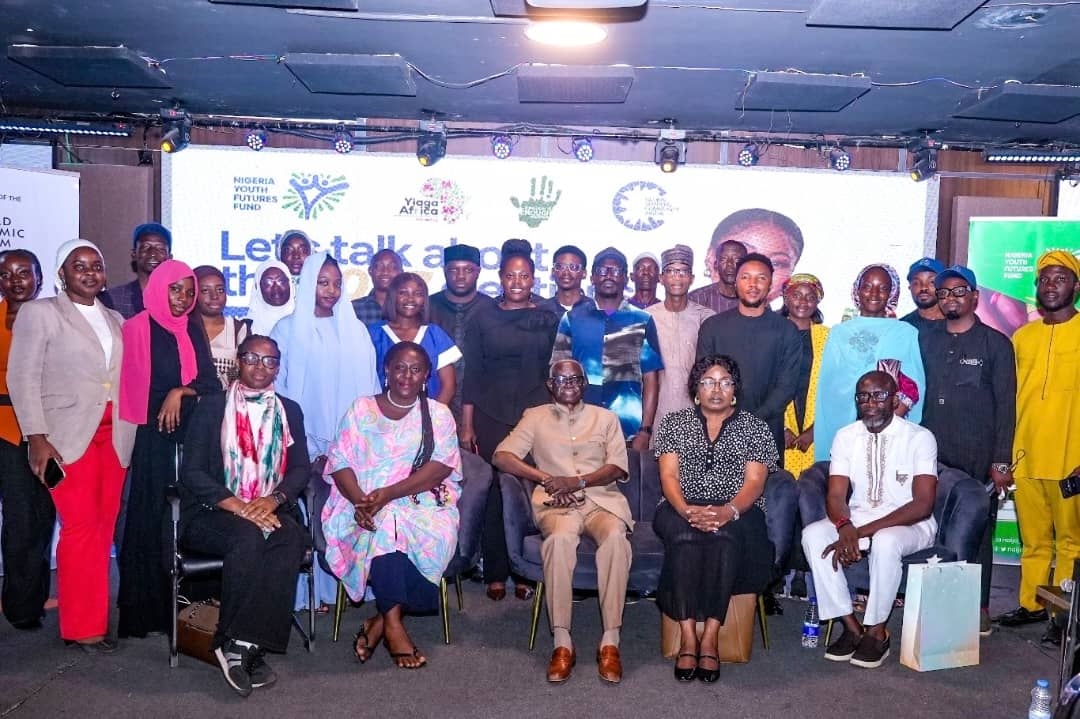
The Independent National Electoral Commission (INEC) has completed nine of the 14 activities on its timetable for the 2027 general elections, while addressing complaints from political parties over alleged omissions and discrepancies in candidates’ lists.
The development emerged at a youth engagement programme in Abuja, where electoral stakeholders also called for measures to protect young voters from violence and strengthen public confidence in the electoral process.
The INEC Chairman, Prof. Joash Amupitan, represented by the National Commissioner for Information and Voter Education, Dr.
Mohammed Haruna, said the commission was reviewing its preparations and working to resolve outstanding issues ahead of the polls.The event, titled “The Electorate: A Youth Dialogue with INEC,” was organised by Abuja Global Shapers Community (AGC) in partnership with Nigeria Youth Futures Fund, Yiaga Africa Abuja and Enough is Enough Nigeria, under the theme, “Let’s Talk About the 2027 Elections.”
Haruna said the commission had made progress on key activities, including the publication of candidates nominated by political parties for elective positions.
He acknowledged that the publication had generated complaints from some parties over alleged omissions and discrepancies, adding that INEC had invited the affected parties to submit petitions for consideration before finalising the list.
He described the voters’ register as central to the electoral process, noting that it would serve as the basis for identifying and accrediting eligible voters on election day.
Haruna also said INEC had increased the frequency of its meetings to review preparations, assess progress and take decisions necessary for the smooth conduct of the elections.
He explained that the commission comprises a chairman and 12 national commissioners responsible for policy decisions, alongside resident electoral commissioners across the 36 states and the Federal Capital Territory.
The Curator of Abuja Global Shapers Community, Solape Sonuga, urged participants to engage INEC on its readiness for the elections and the measures needed to ensure credible polls.
Sonuga described the 2027 elections as particularly important to young Nigerians, saying the engagement was designed to promote youth participation, strengthen voter education and encourage civic responsibility beyond election day.
The Programme Manager for Governance at Yiaga Africa, Yetunde Bakare, called for deliberate efforts to ensure that young Nigerians could participate safely and meaningfully in the elections.
Citing Yiaga Africa’s voting intention survey, Bakari said 84 per cent of Nigerians surveyed were likely or very likely to vote in 2027. She said 61 per cent feared electoral violence could prevent them from participating, while only 40 per cent of young respondents said they were very likely to vote.
She described the figures as a concern for electoral stakeholders, stressing that voter mobilisation alone would not be sufficient without a safe and accessible environment for participation.
Bakare commended INEC’s preparations, including online voter registration, printable Permanent Voter Cards, planned nationwide mock accreditation exercises and efforts to strengthen the governance of electoral technology and artificial intelligence.
She urged the commission to communicate promptly with voters when technical or operational challenges arise, ensure transparency in the use of electoral technologies and make adequate provisions for eligible voters in hard-to-reach communities.
She also encouraged young Nigerians to seek credible information, reject electoral violence and misinformation, and hold elected officials accountable beyond election day.
Bakari said transparency, effective communication and credible electoral processes were essential to building public trust and ensuring that the 2027 elections reflected the will of Nigerians.
By Eze Okechukwu, Abuja
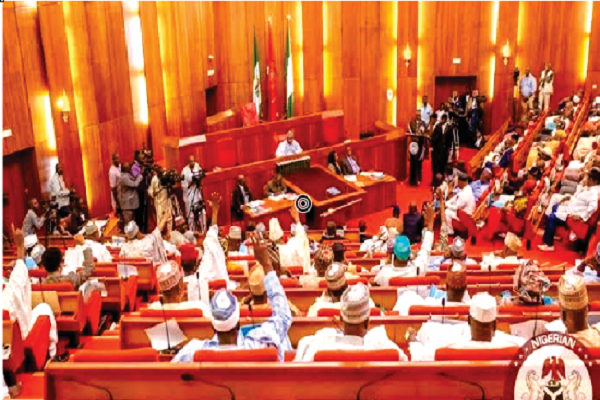
The Senate yesterday ordered mandatory health screening for every international passenger arriving Nigeria airports, seaports, land borders as Ebola resurfaces in the Democratic Republic of Congo with a scare case reported in the FCT.
The resolution followed an urgent motion by Senator Francis Fadahunsi, who warned that with Lassa fever already ravaging states, Nigeria cannot afford another outbreak.
“Protecting our entry points is far cheaper than managing Ebola,” Fadahunsi told the chamber.
Lawmakers insisted screening must be total and indiscriminate — no exemptions based on nationality or departure country because infected travellers can transit through safe-listed nations.
Senator Diket Plang raised the stakes further, demanding immediate funding for NCDC and Port Health Services, including release of withheld funds and emergency budget.
Senate President Godswill Akpabio said the Federal Government has started releasing Ebola response funds but ordered relevant committees to track every kobo.
“Ascertain whether the funds were released and judiciously utilised. Any outstanding debt must be released by the Finance Ministry without delay,” Akpabio directed.

By Ubong Ukpong, Abuja
The House of Representatives on Wednesday, summoned telecommunication operators in the country to appear before it over the present poor network services.
The Ad Hoc Committee investigating the persistent poor quality of telecommunication services in Nigeria gave the chief executive officers (CEOs) of major telecom operators seven days to appear before it and explain the deteriorating quality of network services across the country.
The committee issued the ultimatum at a public hearing in Abuja on Wednesday, directing the CEOs of MTN Nigeria, Airtel Nigeria, Globacom (Glo), Mafab Communications Ltd.
and other telecommunications service providers to appear before it on October 28, 2026.The resolution followed the adoption of two motions sponsored by Rep. Sunday Umeha and Rep Afam Ogene after the committee expressed displeasure over the failure of the invited telecom operators, including MTN and Mafab Communications, to honour previous invitations and appear before the lawmakers.
The committee directed the Nigerian Communications Commission (NCC) to ensure that all the affected operators comply with the invitation and appear before it at 2 p.m. on October 28 in Hearing Room 447 of the New Building of the National Assembly Complex, Abuja.
It also directed the operators to submit all relevant documents to the committee on or before the scheduled date and account for the persistent decline in service quality, which has continued to affect millions of subscribers and businesses across the country.
The lawmakers warned that any chief executive who failed to honour the invitation would face a possible summons for arrest to compel their appearance before the committee.
Speaking at the hearing, the committee’s Chairman, Rep. Olumide Osoba (APC-Ogun), said telecommunications services had become indispensable to Nigeria’s economy, extending beyond voice calls and internet access to critical commercial activities, including Point of Sale (POS) transactions.
Osoba noted that businesses, financial transactions and other essential services depended heavily on reliable telecommunications networks, making the persistent decline in service quality a matter of serious national concern.
He said the House constituted the ad hoc committee to investigate the recurring complaints by subscribers and determine the factors responsible for the poor quality of services provided by telecommunications operators.
The chairman, however, expressed concern that the invited chief executives had continued to evade direct engagement with the committee by offering various excuses or sending lower-ranking officials to represent them.
He said the practice undermined the purpose of the parliamentary investigation, stressing that the committee expected the chief executives, who were in a position to explain their companies’ operational challenges and commitments, to appear in person.
Also speaking, Rep. Ibe Osonwa expressed displeasure over what he described as the operators’ disregard for the House, despite the substantial revenue they generated from their operations in Nigeria.
Osonwa said it was unacceptable for companies benefiting from the Nigerian market to ignore invitations from the legislature, particularly when the purpose was to obtain explanations on issues directly affecting their customers and the wider economy.
He stressed that telecommunications operators had a responsibility to account for the quality of services delivered to Nigerians, adding that the House would not overlook any attempt to frustrate its investigation.
In his ruling, Osoba urged the NCC to ensure full compliance with the committee’s resolution, reiterating that the affected telecommunications operators must appear before the lawmakers on October 28 and provide the necessary explanations and documents.




UK, Nigeria to Deepen Defence, Security Cooperation
ShareThe United Kingdom has reaffirmed its commitment to deepening defence and security cooperation with Nigeria, with emphasis on military training,...


2027: INEC Steps Up Preparations, Completes Nine Activities
ShareBy Tambaya Julius, Abuja The Independent National Electoral Commission (INEC) has completed nine of the 14 activities on its timetable...


2027: Tinubu Accords Benue Security Top Priority, Tompolo Tells Supporters
ShareLeader of the PBAT Door-to-Door Movement, Government Tompolo, has called on the people of Benue state to come out enmasse...


Senate Demands Compulsory Screening of Foreign Arrivals
ShareBy Eze Okechukwu, Abuja The Senate yesterday ordered mandatory health screening for every international passenger arriving Nigeria airports, seaports, land...
Reps Summon Telecom Operators over Poor Network Services
ShareBy Ubong Ukpong, Abuja The House of Representatives on Wednesday, summoned telecommunication operators in the country to appear before it...


Bill to Design, Manufacture, Commercialize Drones Passes Second Reading in Reps
ShareBy Ubong Ukpong, Abuja A bill for an Act to move the nation to developing the capacity to design, manufacture...


Otu Presents N987.8bn Budget Estimate to Assembly
ShareFrom Ene Asuquo, Calabar Cross River State Governor, Sen. Bassey Edet Otu, has presented a proposed budget of ₦987, 808,...

Borno Police Arrest Six Suspects over Mobile Phone Theft, Recover N5.65m
ShareThe Police Command in Borno has arrested six suspects over alleged mobile phone theft and fraudulent withdrawal of ₦5.65 million...

Election Campaigns: FRSC Bars Officers from Politicians’ Escort
ShareThe Federal Road Safety Corps (FRSC) has barred its personnel from escorting politicians during campaigns for the 2027 general elections....

2027: NITDA Raises The Alarm Over AI-driven Election Manipulation
Share By Elijah Oguche, Abuja The National Information Technology Development Agency (NITDA) has warned that artificial intelligence (AI)-powered misinformation, deepfake...