
NEWS
Dressing, Addressing, and Redressing Nigeria’s Lawyers and Judges

By Chidi Anselm Odinkalu
On 20 June 2011, Willy Mutunga assumed office as the first Chief Justice of Kenya under the 2010 Constitution. A former president of the Law Society of Kenya, Mutunga possessed a doctorate degree in
Law and had worked as a Law teacher.
He had also lived in internal banishment, and was a former political detainee and exile. He came to the position from a role in philanthropy as the regional representative of the Ford Foundation in East Africa and was a principal facilitator of the new constitution.Chief Justice Mutunga’s unusual resume gave him a grounded view of law and its institutions in post-colonial society.
It also equipped him to try something both necessary and ambitious. Kenya’s institutions of the law had been discredited under the old system. They desperately needed to be re-fashioned. Chief Justice Mutunga’s arrival in this role seemed timely.One of his first tasks was to lead the transformation of the institutions of the law and the judiciary in Kenya. The process was consultative, involving magistrates, judges, judicial workers, the public, political leaders, the media, communities, citizens, and consumers.
Nearly one year into his tenure, on 31 May 2012, Chief Justice Mutunga launched a four-year long Judiciary Transformation Framework. It outlined a set of ideas designed to imbue the institutions of the law and judiciary in the country with the ethos of the new constitution.
The Transformation Framework presented a stark diagnosis of an antediluvian system, out of touch with its people and impervious to change. In a passage that could be adapted with ease to Nigeria’s institutions of law and the judiciary, Kenya’s Transformation Framework addressed itself to institutions with a “founding history of dominance, power, prestige and remoteness, as opposed to service and equality. Further, its architecture, rules, dress code and other rituals have uprooted it from social reality.” The result, the document said, was a legal system perceived by the public as both “alien and insensitive.”
One major aspect of this problem was the “dress and address” of the legal and judicial institutions. Many aspiring careers in post-colonial law are drawn to it by the attractions of the dressing of lawyers and judges, as well as the manner in which they are addressed.
The original rationales for these were revelatory. It turns out that among the most compelling of the rationales, there is “a theatrical aspect [that] seeks to impress on laymen”, gives members of the profession “a useful anonymity and conformity”, and seeks to disguise members of the profession “to protect them from revenge-seeking defendants.”
In the end, Kenya’s judges voted “to discard the wigs because in their words they are ‘torturous’, ‘colonial relics’, ‘cumbersome’, ‘lack uniformity’, ‘uncomfortable’, and ‘antique.’” They also voted to re-design the judicial robe and to dispense with “My Lord.” They are now addressed as “Your Honour.” In Kiswahili, that translates into “Mheshimiwa.”
Surprisingly, Kenya’s courts and legal vocation have not collapsed. Instead, they seem to have made progress.
Kenya is not the only country where this has occurred. In 2011, the Bar in Punjab and Haryana in India dispensed with addressing the bench as “My Lord” or “Your Lordship”, calling such appellations “relics of the colonial past”.
In June 2022, the Chief Justice of the High Court of Orissa in India, Srinivasan Muralidhar, issued a written notice requiring advocates and court users to “try and avoid addressing the judges of this bench as ‘My Lord’, ‘Your Lordship’, ‘Your Honour’ or with the prefix ‘Hon’ble. Any form of address consistent with the decorum of the court, including ‘Sir’, should suffice.”
The Chief Justice of Nigeria (CJN) triggered a muted debate on these matters of dress and address in the vocations of the law and the judiciary when she directed the Chief Registrar of the Supreme Court to issue a circular on 13 July 2026 under the title “Prohibition of the Use of the Title ‘Barrister’ as a Prefix to Names.”
In a country in which sundry crooners and Karaoke wannabes of diverse genres self-identify as “Barrister,” the heading of the Chief Registrar’s circular initially seemed ostentatious. It suggested a magical capacity to – in one swoop – end Nigeria’s fixation with grand prefixes and bland suffixes.
The circular made it clear that it was directed at “official correspondence, records, documents, identity materials, and any other official engagements.” This begs the question of what an official engagement could be. Does it extend to political rallies, cabinet meetings, or convocation grounds?
The reason given by the CJN is that the use of “Barrister” as prefix “is inappropriate and inconsistent with the standards of professionalism expected within the Supreme Court.” The safeguarding of standards in the legal profession is indeed an elevated goal but there are at least three substantial objections to the circular.
First, it suffers from a crisis of the wrong priorities. It is evidently piddling to fixate on paraphernalia and prefixes in a country whose legal and judicial vocations suffer terminal tarnish from many more serious ailments.
Second, the circular wore an appearance of regimental diktat. The CJN missed an opportunity to undertake an inclusive and consultative process aimed at transforming the pointless antiquarianisms that define Nigeria’s legal and judicial process.
Third, there was a touch of “physician heal thyself” about it. A judiciary in which even female judges bristle implacably at not being called “My Lord” could have been a suitable point of departure for the Chief Justice’s re-brand.
The prefix that vexes the CJN is itself part of the colonial baggage that she presides over. The legal profession in England, from where Nigeria borrowed its vocational strait-jackets, has been divided between barristers and solicitors for five centuries.
Christopher Sapara Williams first enrolled at the Inns of Court in England in 1879. In 1888, he became the first barrister and solicitor of the Supreme Court of Nigeria. That was 18 years after the foundation of the Law Society of England and Wales and six before the Bar Council.
In those days, lawyers were rare; transactions were few, and the role of the lawyer was defined by advocacy before the white man’s court. They became lawyers in Nigeria because they were members of the Bar in England. The appellation “Barrister” easily caught on and held.
In many parts of Nigeria, various neighbourhoods still have different appellations for their local professionals. From “Dokkie” for the medical doctor to “Deelaw” for the lawyer. Lawyer and elite footballer, Adokiye Amiesimaka, was famously designated “Chief Justice” by commentator, Ernest Okonkwo, and it stuck. The CJN cannot possibly presume to abolish those.
In reality, “Barrister” only partly describes what a lawyer is or can do. In that sense, it is somewhat of a mis-representation. As such, it is also not a fitting professional title or courtesy. But that is relatively minor beside the issues that ail Nigeria’s legal profession.
As Richard du Cann writes, “the word ‘advocate’ is applied to both barristers and solicitors in all courts and tribunals other than the Crown Court and the High Court.” In many parts of East and Southern Africa, lawyers are called “Advocate.” In South Africa, where the vocation of the law is divided as in England, “Advocate” only refers to those enrolled as barristers.
How we dress and address legal and judicial vocations in Nigeria is important. But even more important is whether we care to redress the lost mission and ethos of those institutions. Nigeria’s Chief Justice may have missed an opportunity with her piddling circular, but it is not too late for her to retrieve a sense of direction.
Chidi Anselm Odinkalu, a lawyer, teaches at the Fletcher School of Law and Diplomacy and can be reached through chidi.odinkalu@tufts.edu.
Inadvisability of Scapegoating Fellow Africans over South Africa’s Crime and Economic Crisis
By Isaac Asabor
South Africa is buckling under two intertwined pressures: a relentless wave of violent crime and a deepening economic malaise. Hijackings on suburban roads, gender-based violence behind closed doors, and a jobless rate that has hovered stubbornly above 30 percent for years have combined to produce a population that is frightened, frustrated, and financially squeezed. That anger is understandable. What is not justifiable is redirecting it at a convenient target, foreign nationals, particularly fellow Africans living and working in South Africa.
For years, a scapegoat narrative has circulated through political rallies, radio call-in shows, and social media timelines: that migrants are the principal engine of South Africa’s crime problem and the reason so many South Africans cannot find work. It is an emotionally satisfying story precisely because it offers a single villain for two frightening crises at once. But the evidence for either claim is thin, and treating migrants as the shared explanation for crime and economic hardship obscures the structural failures actually driving both.
Correctional Services data puts South Africa’s total prison population at roughly 167,000 inmates. Foreign nationals make up only about one in six of that population, the overwhelming majority of prisoners are South African citizens. If migration were truly the dominant driver of crime, foreign nationals would be vastly overrepresented behind bars. They are not. Even within that minority, most foreign inmates come from neighbouring Zimbabwe and Mozambique rather than further afield, undercutting the specific narratives often aimed at West African communities.
It also matters that a large share of the prison population, close to 60,000 people, are unsentenced detainees awaiting trial, not convicted criminals. Foreign nationals may be overrepresented among the unsentenced simply because they struggle to secure bail, given questions about documentation, fixed addresses, or flight risk, a procedural disadvantage, not proof of guilt.
Here is where the crime narrative and the economic narrative feed each other. South Africa’s economy has grown anemically for over a decade, unemployment remains among the highest of any major economy in the world, and youth joblessness is even worse. The rand has weakened, the cost of basic goods has climbed, and state-owned utilities have struggled to keep the lights on reliably enough for small businesses to function. In that climate, any visible economic competitor becomes a target for blame, and migrant traders, spaza-shop owners, and low-wage labourers are highly visible.
Politicians have found it far easier to tell an angry, underemployed electorate that jobs and safety are being stolen by outsiders than to explain the harder truth: that low growth, policy uncertainty, energy shortages, and skills mismatches are the real culprits behind stagnant job creation. Blaming migrants for unemployment requires no reckoning with decades of underinvestment in industry, no confrontation with corruption that has hollowed out state capacity, and no uncomfortable conversation about why domestic firms are not creating enough jobs even when growth does occur. Blaming a foreign shopkeeper is simpler, and it photographs better on the evening news than a slide of GDP figures.
Yet the data on economic contribution tells a more complicated story than “migrants take jobs.” Studies of the informal economy in South Africa have repeatedly found that foreign-owned spaza shops and small enterprises often create employment for South African citizens as staff, suppliers, and landlords, and that migrant entrepreneurs frequently move into sectors, informal retail, low-margin trading, that domestic capital has been reluctant to enter. That does not mean competition or friction never occurs at the local level; it does. But it is not evidence that mass migration is suppressing the national employment rate, which is shaped far more by macroeconomic policy, investment climate, and structural skills gaps than by the presence of foreign traders in townships.
The danger is that the crime narrative and the economic narrative reinforce each other in the public imagination. A frightened citizen who has lost a job, watched the price of bread rise, and then reads of a crime allegedly committed by a foreign national has every incentive to connect the dots into a single, coherent enemy. Politicians and commentators exploit that psychological shortcut. Instead of demanding accountability for stalled industrial policy or an underperforming police service, the public is invited to demand deportations. Instead of asking why so few young South Africans transition from school into stable employment, communities are encouraged to picket foreign-owned shops. This is politically convenient because it substitutes a visible, controllable target, the migrant, for the far harder task of institutional reform.
It also distracts from a genuinely uncomfortable statistic: nearly 27,000 people are currently incarcerated in South Africa for sexual offences alone. That crisis is not imported through border posts. It lives in homes, schools, and workplaces, and it demands a serious national conversation about policing, prosecution rates, and social attitudes, one that scapegoating foreigners does nothing to advance.
Media consumption patterns compound the problem. When a foreign national is arrested for a serious crime, nationality becomes headline material and spreads rapidly on social platforms, reinforcing suspicion. When a South African is arrested for the same offence, nationality is rarely mentioned. Similarly, a viral video of a foreign trader allegedly overcharging or flouting regulations spreads faster than any economic report showing the aggregate contribution of small migrant-run businesses to local retail ecosystems. Anecdote outruns statistic every time, and a handful of vivid incidents come to stand in for an entire population.
None of this means South Africa should tolerate lawlessness, whether in the form of violent crime or genuine labour-law violations by unscrupulous employers, foreign or domestic. A country has every right to control its borders, enforce immigration law, and ensure businesses, regardless of ownership, comply with tax, labour, and safety regulations. Individuals who commit crimes, evade taxes, or exploit workers should face consequences under the law, irrespective of nationality. But immigration status, economic competition, and criminality are three distinct issues, and collapsing them into one narrative does not produce better policy. It produces scapegoats.
Every hour spent organizing action against migrant traders or demanding blanket deportations is an hour not spent addressing the deeper causes of South Africa’s twin crises: chronic underinvestment in industry and skills training, energy insecurity that strangles small business growth, corruption that diverts public resources, an overburdened and under-resourced police service, and a criminal justice system where trial backlogs let both guilt and innocence linger unresolved for years.
South Africa can secure its borders without demonizing Africans. It can regulate its informal economy without torching migrant shops. It can pursue criminals without criminalizing nationalities, and it can rebuild its economy without pretending that removing foreign traders will fill the jobs gap left by low growth and weak industrial policy.
The correctional statistics, roughly 84 percent of prisoners South African, only 16 percent foreign, and nearly a third of all inmates still awaiting trial, do not prove foreign nationals are blameless. They prove something more useful: that foreignness is not an adequate explanation for either South Africa’s crime problem or its economic distress.
Until the country moves from emotionally convenient narratives to evidence-based crime and economic policy, it risks fighting the wrong battles on two fronts at once, while the structural failures behind both crises continue unaddressed and ordinary citizens, South African and migrant alike, remain exposed to violence and hardship.
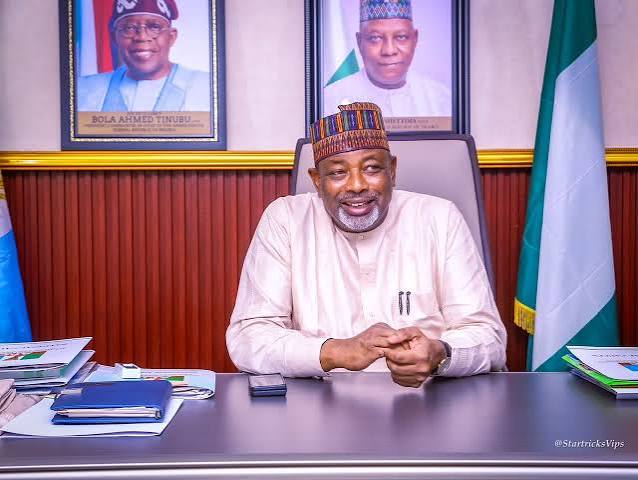
By Raphael Atuu, Abuja
The Minister of Agriculture and Food Security, Sen. Abubakar Kyari, said the Federal Government is repositioning the Bank of Agriculture to deliver more affordable finance to smallholder farmers, women, youth and agribusinesses in order to boost food production, create jobs and strengthen food security.
Speaking during a one-day retreat for the newly inaugurated Governing Board of the Bank of Agriculture in Abuja recently, Sen.
Kyari charged the Board to explore innovative financing mechanisms such as blended finance arrangements, guarantees and credit enhancement schemes to de-risk agricultural lending and expand access.According to him, “The Bank has a critical responsibility to provide appropriate, affordable and accessible financial services to those who are often underserved by conventional financial institutions.”
The Minister noted that the success of the Bank will contribute significantly to the Federal Government’s efforts to achieve food security, reduce poverty, promote agro-industrial development and strengthen the resilience of agricultural value chains under the Renewed Hope Agenda.
He added that financing must be timely and responsive to the seasonal nature of agriculture to ensure it reaches the rural farmer, women in processing, youth in agribusiness and cooperatives seeking to expand.
Kyari urged the board to build strategic partnerships with state governments, development partners, financial institutions, the private sector, and cooperatives to mobilize more resources and expand the bank’s reach. He stressed that the mandate was enormous and required broad collaboration.
He further tasked the Board to develop a practical, measurable, and time-bound Strategic Roadmap for Repositioning the Bank, aligned with the Federal Government’s priorities on agriculture and food security.
The Minister stressed that effective governance, transparency and accountability must remain at the heart of the Board’s stewardship, with zero tolerance for practices that undermine the Bank’s credibility.
“Nigeria has enormous agricultural potential. What is required is a financial institution that is sufficiently strong, innovative, accountable and responsive to unlock that potential at scale,” he emphasized.
While congratulating the Chairman and members of the Board on their inauguration on 3rd July, 2026, Sen. Kyari expressed confidence that working with the Management of the Bank, the Ministry, State Governments and other stakeholders, the Board can reposition BOA as a more impactful institution.
In his remarks, the Minister of State for Agriculture and Food Security, Sen. Dr. Aliyu Sabi Abdullahi, urged the Board to focus on repositioning agriculture from subsistence production to a commercially viable, technology-driven and investment-oriented sector.
He revealed that the success of the Bank will impact the ability of farmers to produce, businesses to invest, create jobs for youth, and improve the affordability and availability of food for Nigerians.
Sen Abdullahi charged the Board to be bold in thinking, disciplined in execution, and to serve with integrity and diligence, stressing that the central question before them is how the Bank of Agriculture can be repositioned to deliver greater and more sustainable impact to Nigerian farmers, agribusinesses and the Nigerian economy.
He further assured the Board of the Ministry’s continued guidance and stressed the need for leadership and professionalism to deliver measurable results in line with President Bola Tinubu, sustained commitment to the agricultural sector.
The Permanent Secretary, Federal Ministry of Agriculture and Food Security, Dr. Marcus Olaniyi. Ogunbiyi stated that ‘’ It is essential that the Bank continues to strengthen its corporate governance mechanisms and ensure strict compliance with all relevant laws, regulations, financial management requirements and established best practices’’
Dr. Ogunbiyi added that ‘’Robust internal controls, prudent financial management, effective risk management, transparency in procurement and lending processes, and appropriate accountability mechanisms are indispensable to the credibility, sustainability and effectiveness of the Bank’’.
He tasked the Board to ensure that the Bank’s resources are deployed efficiently and responsibly to achieve measurable development outcomes. Every intervention should be guided by clear objectives, proper due diligence, transparency and mechanisms for monitoring and evaluating impact.
During his remarks, the Chairman, BOA Board, Alhaji Mohammed Babangida said that the retreat comes at an important time as we prepare to assume the full responsibilities entrusted to us as members of the Board.
He revealed that their appointment provides an opportunity to deepen our understanding of the Bank, its mandate, operations, and strategic direction
Alhaji Babangida pledged that ‘’we must provide sound strategic oversight, ensure strong corporate governance, hold Management accountable for performance, and help position the Bank to deliver effectively on its mandate’’.
In attendance were BOA’s Board Members, Development partners and Ministry’s officials among others.
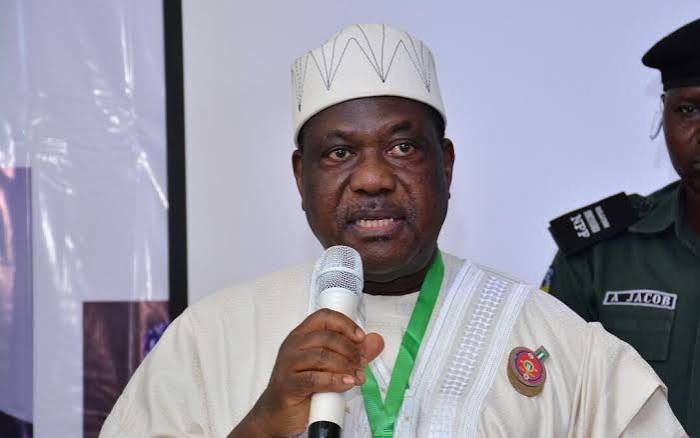
By David Torough, Abuja
The Secretary to the Government of the Federation (SGF), Senator George Akume, has commended President Bola Tinubu for what he described as significant achievements in infrastructure, education and security less than four years into his administration.
Akume made the remarks on Monday in Abuja while receiving a delegation from the Tinubu National Frontiers (TNF), led by its National Coordinator, Hajiya Yasmin Binta Sabeh, on a courtesy visit to his office.
The SGF highlighted the administration’s projects in road infrastructure, bridges and dams, citing the Lagos-Calabar Coastal Road and the Sokoto-Badagry Road as major projects with the potential to boost economic activities and tourism.
He also pointed to developments in the Federal Capital Territory, saying the transformation of Abuja since President Tinubu assumed office on May 29, 2023, was evidence of the administration’s performance.
“President Tinubu has made significant strides in revitalizing our infrastructure,” Akume said, adding that the scale of infrastructural development in Abuja would be evident to residents and visitors familiar with the city before the current administration took office.
On education, the SGF said the administration’s reforms had expanded access to higher education through the Nigerian Education Loan Fund (NELFUND), describing the initiative as a novel intervention.
According to him, the programme has attracted interest from more than six African countries seeking to study its implementation.
Akume further said the administration was placing greater emphasis on technical and scientific education, including plans to upgrade polytechnics across the six geopolitical zones to offer degree-equivalent qualifications, alongside increased attention to skills acquisition.
On security, the SGF cited the establishment of four additional divisions in the Nigerian Army, the ongoing recruitment of 50,000 police officers and efforts to improve the welfare of military personnel as part of the administration’s response to insecurity.
Earlier, the TNF National Coordinator, Hajiya Yasmin Binta Sabeh, praised President Tinubu’s leadership and expressed the group’s readiness to support his administration.
“Since the President assumed office, we have seen remarkable achievements. It is now easy for us to sleep with our two eyes closed,” Sabeh said.
She reaffirmed the group’s unity and pledged its cooperation with the Presidential Campaign Team towards President Tinubu’s re-election bid.
The Oyo State Coordinator of TNF, Braimoh Adebayo, also said the group contributed to the All Progressives Congress’ victory in the 2023 presidential election.
Describing Tinubu as a progressive leader, Adebayo pledged the group’s full commitment to his re-election as president.
The visit culminated in the decoration of Senator Akume as the National Patron of the Tinubu National Frontiers Support Group.
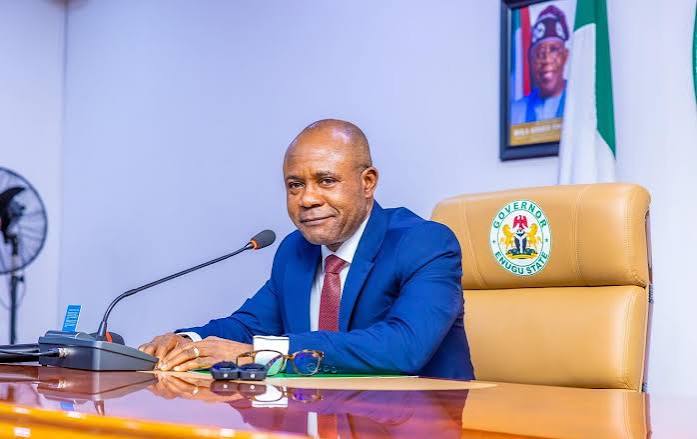
From Sylvia Udegbunam, Enugu
Enugu State Governor Peter Mbah has appointed the former Permanent Secretary, State Ministry of Information, Chris Mbah as the Chairman of the State Civil Service Commission.
Mbah who was serving as commissioner two in the Commission was appointed following the expiration of Robinson Odo’s tenure.
Receiving the handover documents from his predecessor Odo, the new chairman commended the governor for finding him worthy of the elevated position.
Appreciating his predecessor for diligent service, the former Ministry of Information Perm.
Secretary pledged to leave behind a technologically driven civil service system anchored on the tomorrow is the mantra of the governor.

Dressing, Addressing, and Redressing Nigeria’s Lawyers and Judges
ShareBy Chidi Anselm Odinkalu On 20 June 2011, Willy Mutunga assumed office as the first Chief Justice of Kenya under...


Kyari Charges BOA to Explore Blended Finance, Guarantees to Boost Agric Lending
ShareBy Raphael Atuu, Abuja The Minister of Agriculture and Food Security, Sen. Abubakar Kyari, said the Federal Government is repositioning...


Akume Hails Tinubu’s Infrastructure, Education, Security Achievements
ShareBy David Torough, Abuja The Secretary to the Government of the Federation (SGF), Senator George Akume, has commended President Bola...

Enugu Civil Service Commission Gets New Chairman
ShareFrom Sylvia Udegbunam, Enugu Enugu State Governor Peter Mbah has appointed the former Permanent Secretary, State Ministry of Information, Chris...
FACAN Petitions EFCC over Alleged N150m Fraud, Impersonation in Benue
ShareFrom Attah Ede, Makurdi The Federation of Agricultural Commodity Association (FACAN), Benue State chapter, has petitioned the Economic and Financial...

FG Inaugurates Advertising Offences Tribunal to Strengthen Industry Regulation
ShareBy David Torough, Abuja The Federal Government has inaugurated the newly constituted Advertising Offences Tribunal as part of efforts to...
Foundation Opens Application on Media Reporting Project on HIV-TB for Journalists in Benue, Others
ShareFrom Attah Ede, Makurdi AIDS Healthcare Foundation (AHF) Nigeria has formally launched applications for journalists in Benue State and six...
Man O’ War Nigeria Holds National Camping in Jos with 3000 Participants
ShareFrom Jude Dangwam, Jos The National Command of the Man O’ War Nigeria has kickstart its 4th National Camping Exercise...


Nigerian Navy, NIMASA Renew Five-Year Partnership to Strengthen Maritime Security
ShareBy David Torough, Abuja The Nigerian Navy and the Nigerian Maritime Administration and Safety Agency (NIMASA) have renewed their strategic...
CROSIEC Tasks New Officers on Neutrality, Professionalism
ShareThe Cross River Independent Electoral Commission (CROSIEC) has charged newly recruited officers to remain politically neutral and uphold professionalism in...