
NEWS
Africa must Priotise Road Safety for Sustainable Development – FRSC Corps Marshal


The Corps Marshal of the Federal Road Safety Corps (FRSC) Malam Shehu Mohammed has said that Africa must prioritised robust road safety measures to protect lives and property.
Mohammed said this at the 1st Congress of the African Union of Transport and Logistics Organisations on Tuesday in Tangier, Kingdom of Morocco.
Report says that In recognition of the critical roles played by FRSC in West African sub region in road safety management, the Corps Marshal was honored as the leader of Nigeria delegation with an award.
The award was presented by the President of the Africa Union of Transport and Logistics Organisation Mr. Mustapha Chaoune during the opening ceremony.
The FRSC boss emphasised the continent’s need for effective transportation infrastructure while urging African nations to make road safety top priority.
He said that the theme of the joint exhibition titled “Building Sustainable Logistics Chains for Africa’s Structural Transformation” was as timely as it was very relevant to the current global trend in urban transportation systems.
“We are all aware that for an effective transportation system, we need a workable transport infrastructure that is interconnected to provide a dynamic and sustainable safe mobility of persons and service.
“This is expected to unite and enhance collaboration between African countries and foster better regional integration, especially in the area of road transport safety.
“I must therefore commend the vision behind the 1st Congress of African Union of Transport and Logistics Organisation.
“Permit me to also mention that the choice of the theme for the 1st International Exhibition on Mobility, Transport and Logistics seeks to address the challenges of Africa’s infrastructural transformation through sustainable supply chains.
“Apparently, Africa has admitted that road transport sub-sector remains the major channel for the mobility of goods and services. However, one of the major logistic challenges of the road transportation system in Africa is road safety.
“This is because road crashes have been a recurring decimal on African roads with high human causalities and unquantifiable destruction of goods and services,”he said.
The corps marshal said that against the alarming percentage of fatalities and injuries resulting from road crashes in Africa, the UN General Assembly passed a regulation for African countries to develop a national road safety development plan.
Mohammed added that in line with that perspective, Nigeria developed the Nigeria Road Safety Strategy (NRSS) document.
“The NRSS is a national blue print expected to galvanise both Government road Private Sector as critical stakeholders to ensure that road crash related deaths and injuries are reduced by 5 per cent by the end of the year 2030.
“Furthermore, the FRSC initiated and developed measures to ensure the safety of persons, goods and services plying the highways.
“The road safety programmes were anchored on two policy thrusts; public awareness component of the road safety, and the enforcement of traffic laws and regulations.
“From the history of our road safety awareness campaign, it is clear that the enforcement of road traffic regulations is a major logistic component in road transportation.
“No doubt, enforcement of road traffic laws and penalizing traffic offenders remains a major deterring factor. This has improved safety in the road transportation system,”he added.
Speaking further, the FRSC Corps Marshal said that Nigeria also acceded to the United Nations Road Safety Convention in furtherance of the need to strengthen road safety as a key logistic component on the road transport sub-sector.
According to him, subsequently, FRSC domesticated the core road safety related legal instruments.
“Therefore, in our deliberations during this congress, we should consider the following legal instruments as key logistics components that must be regulated and enforced for a sustainable Africa’s structural transformation, especially, in road transportation
“This includes Traffic Rules, Road Signs, Vehicle Regulations, Transport of Dangerous Goods; and Professional Driver Fatigue among others
The corps marshal who was the head of the delegation said that Nigeria was also a member of the Advisory Board of the United Nations Road Safety Trust Fund.
He added that the UN Road Safety Trust Fund was conceived as a deliberate effort to bridge the gaps in road transportation by improving safety as a logistic component in road transport sub-sector.
“Furtherance to that objective, FRSC is also proposing a dedicated road safety fund (RSF).
“If this is achieved, it will foster the integration of road safety into project planning; including safety assessments, designs and implementation, thus, improving safety in the road transportation sub-sector,”he said.
Mohammed assured that in the course of the Congress, discussions would further revealed possibilities and opportunities for Africa to collaborate and develop a cost effective integrated transport logistics.
This, he also assured would promote economic growth and improve Africa’s socio-cultural integration.
“We must also consider road safety as a major logistics component of road transportation in order to secure the human lives and property on our roads,”he maintained.
Other representatives from the African countries pledged thier support road safety and assured priority would be placed on safety of lives and property.
Report says that 37 African Countries were present for the Congress which are Morocco, the host, South Africa, Tanzania, Angola, Benn, Zimbabwe, Kenya, Cote d’ivoire, Nigeria, Mauritius, Cameroon, Ethiopia, Burkina Faso,
Others are Mozambique, the Gambia, Niger, Zambia, Gabon, Central African Republic, Guinea, Malawi, Mali, Sierra Leone, Senegal, Togo, Libya, Tunisia, Egypt, Somalia, Burundi, Rwanda among others.(NAN)
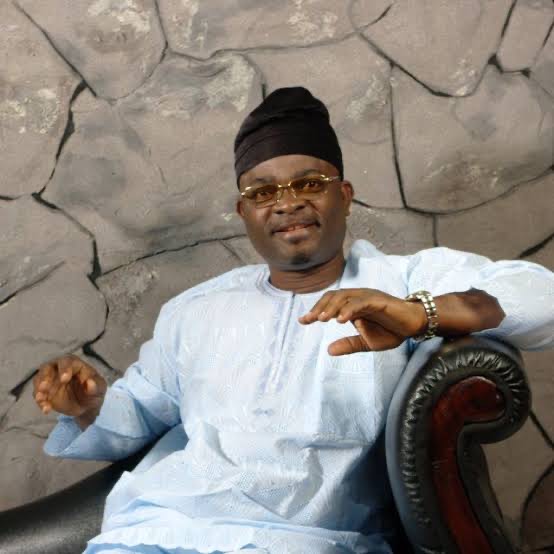
By Kolapo Ogundare
It is impressive to note that many well-meaning Nigerians are now coming out, recounting several good deeds and socio-economic empowerment programmes which Hon. Rotimi Makinde embarked on when he held sway as the representative of Ife Federal Constituency at the House of Representatives in Abuja.
There are several accounts of how the veteran actor and politician touched many lives through scholarships to brilliant but indigent students, and financial support to small and medium scale business owners.
Provision of barbering kits to barbers, and hairdressing equipment to hair dressers in large numbers; provision of buses, tricycles, motorcycles and cars to several vulnerable segments of the society etc.Notable among his midas touch even as a Muslim was the building of a church to replace the old church of popular pastor, Akinola, who was assassinated on the eve of 2011 elections, which Makinde eventually won.
Records show that the church was built in the late pastor’s memory to compensate the church leaders, the surviving widow of the church founder and other innocent people who lost their lives to the cold hands of death by men of the underworld.
In addition to this church building was a two-bedroom flat for the widow, prophetess Akinola.
The church cost over N10 million (as it then) was officially inaugurated on October 27, 2014. Makinde’s act of giving back to his community is a testament to his commitment to serving and uplifting his constituents.
Reminiscing on this significant milestone, Prophet Elijah Makufota said:
“Only a liberal Muslim by faith can build a church. Today we celebrate a remarkable philanthropist Hon Rotimi Makinde whose generosity knows no borders—bridging mosques and chapels, uniting hearts across faiths. His vision reminds us that love, compassion, and service are the truest expressions of any religion. A rise La ri ka “.
Fairness, kindness, and justice are the true compasses of a good heart—not the label of a creed. When we measure a person by the content of their character rather than the doctrine they profess, we strip away the divisions that religion often erects and focus on the common thread that binds us: our shared humanity.
In a world where every individual is judged by how they treat others, by the equity they extend in everyday interactions, and by the integrity they show when no one is watching, we create a society that thrives on cooperation rather than conflict. Let us therefore place our emphasis on the principles that unite us—fairness, compassion, and justice—and allow those values, not religious affiliation, to be the true yardstick of a person’s worth.
“A kind act is a universal prayer; a fair decision, a lasting testament. Let us be judged by the deeds we do, not the faith we claim. Rotimi Makinde remains a shining light in our body politic and surely posterity will be kind to him.
A leader with quality and distinction is characterized by their ability to inspire, guide, and support a team. They are self-aware, communicate effectively, delegate work, and encourage strategic thinking. These qualities are essential for leading with confidence and fostering a productive, motivated team. That is who Rotimi Makinde is, this true blood of Ile-Ife undoubtedly has a date with destiny and will surely be marked out for positive trajectory in our political landscape.
All our political stakeholders and decision makers must take note of this political icon, a loyal party man, he is ever patriotic and with great uncompromising spirit, he is one individual who on several occasions sacrificed his convenience in the best interest of his party All Progressives Congress (APC) and Osun State particularly.
Makinde has consistently demonstrated resilience, a strong work ethic and an unwavering commitment to excellence in the execution of any assignment given to him with high moral rectitude. I wish him best of luck in his political journey. May God bless Osun State, bless our leader and mentor, President Bola Ahmed Tinubu GCFR and also bless our dear country, Nigeria.
Kolapo Ogundare writes from Ede, Osun State.
ReplyForward
Add reaction
From Francis Sadhere, Delta
The Federal Government of Nigeria, through the National Bureau of Statistics (NBS), has officially launched the Multiple Indicator Cluster Survey Round Seven (MICS7), a nationwide household survey supported by the United Nations Children’s Fund (UNICEF).
MICS7 is the seventh round of the globally recognised Multiple Indicator Cluster Survey programme and is aimed at generating critical data on the well-being, health, education and living conditions of women and children across Nigeria.
The survey is expected to provide reliable statistics to support evidence-based policymaking and enable effective tracking of Nigeria’s progress toward achieving the Sustainable Development Goals (SDGs).
The survey covers key thematic areas such as education, health, nutrition, immunisation, water, sanitation and hygiene (WASH), and child protection. It also introduces new data collection modalities to capture emerging development indicators.
Trained enumerators are currently visiting selected households across the country, using digital data collection tools to ensure accuracy, efficiency and real-time validation of responses.
One of the major innovations of MICS7 is the introduction of anthropometric measurements for children under the age of five, which will provide more precise data on child growth, nutritional status and overall health.
The survey also features a new learning foundation component designed to capture school-related data, alongside expanded indicators that were not included in previous survey rounds.
Speaking on the exercise, the National Coordinator of MICS7 at the NBS, Dr. Isiaka Olarewaju, said the survey would track up to 40 internationally comparable indicators, making it one of the most comprehensive household data collection exercises in Nigeria.
He stressed that the success of the survey largely depends on the cooperation of selected households and urged Nigerians to welcome enumerators and provide accurate information.
MICS7 is being implemented through a collaborative partnership involving the NBS, UNICEF and state governments across the federation. The partnership, according to stakeholders, reflects a shared commitment to advancing national development through the generation of reliable and actionable data, particularly for children, women and households.
In Delta State, the Director of Statistics, Nkechi Maduemezia, has appealed to residents of selected households to fully cooperate with interviewers to ensure the success of the survey in the state.
She noted that accurate participation would contribute to improved planning, better service delivery and stronger development outcomes for both the state and the country.
The nationwide data collection exercise is expected to last about six months, after which the findings will be analysed and disseminated to inform national and state development policies, human capital development strategies and child-focused interventions.
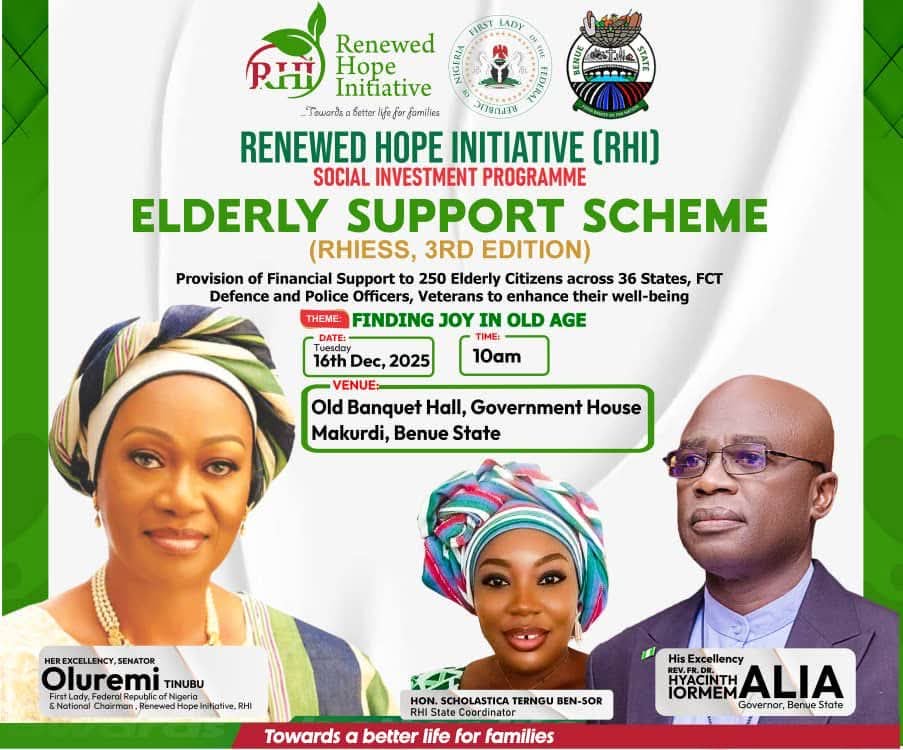
By Bridget Tikyaa
Getting to the life journey of a senior citizen should ordinarily be a source of pride, a stage of celebration in life, less hassles, basic comfort, and time to savour the fruits of one’s labour. However, the reality is that things don’t turn out to be this way in most climes.
Just like in other parts of the world, in Nigeria, the elderly population are facing numerous challenges ranging from difficulties in accessing affordable, specialized healthcare services to address age-related health issues, irregular pensions and financial support to ensure decent living, improper access to basic amenities like housing, sanitation, and nutrition, emotional support, and many others.These are essentials that can significantly improve the quality of life for elderly individuals. The difficulties in accessing them highlight the need for improved social support systems, healthcare infrastructure, and policies to protect the rights and dignity of elderly individuals in Nigeria.
However, amidst these challenges, an organisation committed to better welfare for Nigerians has significantly focused on rendering vital support to vulnerable elderly Nigerians, giving them hope, comfort, and a new lease of life. This is the Renewed Hope Initiative (RHI), through its Elderly Support Scheme.
The Renewed Hope Initiative is the flagship programme of Nigeria’s First Lady Oluremi Tinubu, focusing on women, youth, children, and the elderly. The RHI is where every Nigerian’s dream of a better life is reached and has been creating real, lasting change by focusing on families, dignity, and opportunities.
Since 2023, the Renewed Hope Initiative has consistently celebrated elderly citizens every December as a mark of appreciation for their sacrifices. On Tuesday, December 16, 2025, the RHI held the third edition of such intervention – the Elderly Support Scheme – in Benue State at the Old Banquet Hall, Government House, Makurdi, with the theme “Finding Joy in Old Age”.
It is not just an RHI agenda but part of the Nigerian government broader social investment efforts aimed at promoting the dignity, comfort, and well-being of elderly Nigerians.
During the third edition of the Elderly Support Scheme, 250 vulnerable elderly citizens aged 65 years and above were supported by the RHI in Benue State. Significantly, the same number of elderly citizens in all the states of the Federation and the Federal Capital Territory received similar support.
Each beneficiary received N200,000 during the ceremony in Makurdi, while Governor Hyacinth Iormem Alia gave each beneficiary a bag of rice. There was also a free medical outreach for the elderly, during which beneficiaries received basic health checks, consultations and medical support, underscoring the holistic approach of the initiative to both financial and health needs of senior citizens.
Benue State Coordinator of the Renewed Hope Initiative, Hon. Scholastica Ben-Sor said the initiative, a pet project of Nigeria’s First Lady Remi Tinubu, reflects a resolute determination to honour senior citizens who have contributed immensely to nation-building.
She noted that since 2023, the Renewed Hope Initiative has consistently celebrated elderly citizens every December as a mark of appreciation for their sacrifices, with a total of 9,500 beneficiaries nationwide each receiving ₦200,000, totalling N1.9 billion.
“As we approach the festive season, it is our moral duty and indeed our joy to ensure that our elderly live their twilight years in comfort, good health and dignity,” the First Lady said in the message to the event.
The purpose is to make the senior citizens remain active, find purpose in community life, and embrace joy in old age.
For Hon. Scholastica Ben-Sor, valuing elderly citizens is absolutely necessary. “What you are today is not forever. Life may take you through certain curves you don’t know. The least person you see today may be the person you will look up to tomorrow,” she said, calling on society to treat the elderly with dignity, respect, and compassion.
She hailed all those impacting lives including Governor Hyacinth Iormem Alia, whom she described as a man of integrity, sacrifice and uncommon commitment to service, who has positively impacted families, homes and society at large, stressing that family, church and school form the bedrock of any society.
Although the governor did not attend the event, Hon. Ben-Sor disclosed that he directed that each of the 250 beneficiaries receive a bag of rice through the State Emergency Management Agency (SEMA), in addition to facilitating the free medical outreach conducted for the elderly during the programme.
Goodwill messages were delivered by several dignitaries, including a representative of the wife of the Deputy Governor of Benue State, Hon. Mrs. Christy Ode, who praised the First Lady for sustaining the initiative and applauded Governor Alia for his visible developmental strides across the state while the Commissioner for Women Affairs and Social Development, Mrs Teresa Odachi Ikwe, represented by the Director of Finance and Accounts, Hon. Ifa Celestine commended the transparency of the RHI and advised beneficiaries to use the funds judiciously to improve their standard of living. Similarly, the Benue State Women Leader of the All Progressives Congress, Hon. Mrs. Helen Agaigbe appreciated the First Lady for her remarkable traits of compassion displayed through consistent support for the vulnerable in the society.



NCDMB set to Attain 100% Local Content in Africa
ShareBy Eddy Ochigbo The Nigerian Content Development Management Board (NCDMB) has reaffirmed its determination to increase the current from 56%...

The Man Rotimi Makinde: A True Progressive by All Standards
ShareBy Kolapo Ogundare It is impressive to note that many well-meaning Nigerians are now coming out, recounting several good deeds...
FG, NBS Launch Nationwide MICS7 Survey
ShareFrom Francis Sadhere, Delta The Federal Government of Nigeria, through the National Bureau of Statistics (NBS), has officially launched the...

Finding Joy in Old Age: The Renewed Hope Intervention
ShareBy Bridget Tikyaa Getting to the life journey of a senior citizen should ordinarily be a source of pride, a...


CBN Revokes Licenses of Aso Savings, Union Homes Savings, Loans
ShareBy Tony Obiechina, Abuja The Central Bank of Nigeria (CBN) has revoked the operational licences of Aso Savings and Loans...


Dangote Petitions ICPC, Accuses NMDPRA Boss of Corruption, Abuses
ShareBy David Torough, Abuja President of the Dangote Group, Alhaji Aliko Dangote, has petitioned the Independent Corrupt Practices and Other Related Offences Commission...

NDIC Liquidates Aso Savings, Union Homes, Pays N2m Deposits
ShareBy Tony Obiechina, Abuja The Nigerian Deposit Insurance Corporation (NDIC) exercised its appointment as the liquidator of Aso Savings and...


Reps Launch Nationwide Probe into Drug Abuse, Trafficking Crisis
ShareBy Ubong Ukpong, Abuja The House of Representatives has commenced a nationwide investigation into Nigeria’s worsening drug abuse and trafficking...

Clement Koko Assumes Office as CIPPON President
ShareBy David Torough, Abuja Clement Koko has been inaugurated as the President and Chairman-in-Council of the Chartered Institute of Professional...

Thousands of Drivers Wrongly Fined for Speeding Since 2021
ShareThousands of drivers could have speeding fines cancelled after a fault saw some cameras falsely triggered on English A roads...