
Health
AHF Launches Pad Bank For Menstruating Girls, Women In Benue


From Attah Ede, Makurdi
The AIDS Healthcare Foundation (AHF), a non-governmental organization, on Tuesday, promised to establish a pad bank for young girls in Angwan-Jukun, a community located in the heart of Makurdi, the Benue State capital to enable them have access to free sanitary pads.
The Foundation further said they take issues relating to women and girls seriously and want to play a part in safeguarding the menstrual health of people in the state.
Speaking during a symposium organised by the AHF -Nigeria to mark the 2024 Menstrual Health Day held at Agyogoyo, Angwan-Jukun community, Makurdi, Benue state, AHF-Nigeria Advocacy/Marketing Manager, Steve Aborisade, assured that the AHF would partner with the state government to provide sanitary pad in the State.
Steve said the idea of setting up the Pad Bank is to help those young girls that don’t have the means to get the sanitary pads to be able to access them free of charge.
According to him, some of those girls do not know when their menstrual periods start and it might just start on their way to school or the church and by this they get stained, they can just rush to the Pad Bank explain to the person there and get a free pad.
He further said the Pad Bank would be cited at the home of the traditional head in the community for easy access and AHF would collaborate with other government agencies and CSO’S to make the project a reality.
Aborisade called on national and state houses of assemblies to make legislation that could compel government at all levels to provide free sanitary pads to girl children in schools in order to ameliorate challenges faced by those who could not procure any one.
He also said this years theme was tagged Period Poverty because these girls don’t have access to sanitary pads due to the high price in the market and with that, they use things that are not to be used thereby causing damage to their body system.
” We would follow up with going to see the members of the State House of Assembly, even if it is 0.5 percent of the budget which should be devoted to the girls in providing sanitary pad for them, would be a welcomed idea.” He said
“We have about 600 girls presently benefiting from this project, and each the girls is being given two months supply of free sanitary pads and are being educated on how to use it,” Steve said .
Also speaking at the program, Hon. Peter Uche, Chairman House Committee on SDGs and NGOs Benue House of Assembly, commended AHF for organising the program, which is aimed at educating the girl children.
Hon. Peter said some of these girls are so naive about how to take care of their body and this is why the girl child education is very key especially in various homes.
” Some parents don’t want to even talk to their daughters about Sanitary hygiene and this would lead to unwanted pregnancy which brings about depression on the girl child.
“The level of illiteracy among our juvenile is quite alarming. We live in a religious society that when you talked about juvenile, it call for concerned. So many girls have lost their lives. It is good that AHF is organising this programme to educate them about their menstrual cycle.
“Parents should be involved in this campaign because they have a role to play. When an issue come, some parents send their child out of their homes, forgetting that there is needs for rehabilitation and bring the child back home.
“Some parents don’t listen to their children when they complain about their hygiene but are eager to chase them out from the house when they come home with unwanted pregnancy.
Therefore, this programme should be held across the state. What the girls are experiencing today is an opportunity to key into to earn a good living”, Uche stated.
He pleaded with parents to always put the education of their children first and be watchful of the type of friends and company they keep, and to also lecture them in proper hygiene.
Also speaking at the event, Dr. John Ugboji the Senior Regional Medical Manager AHF, cautioned the girls to pay attention to their hygiene and that AHF not only support the girls with materials, they also support them with the knowledge on personal hygiene.
He intimated the girls that, their knowledge about menstrual hygiene, would determine how their life turns out to become and by this improving their lifestyle.
On part, the Mental Desk officer of Benue State Aids Control Agency(BENSACA), Mrs. Martina Adiyia enjoined the girls to see menstrual circle as a time for celebration as it is not a curse or a disease for one to be ashamed of.
She said BENSACA which is mainly in charge of people living with HIV/AIDS would also take on the issue of providing free sanitary pads to young girls as an external program into the Agency.
One of the beneficiaries who identified herself, Monica Terna, appealed to government to come to the aid of the girl child by providing for them free sanitary pads especially in rural communities.
She said making the kits available by this it would help in reducing infections in most of the girls as some of them don’t have the means to get these pads.
highlight of the event was distribution of sanitary pads and demonstration to the girls on how to use a sanitary pad and the different types of sanitary pads to use which was done by Dr. Laadi Swende Family physician Federal Medical Centre Makurdi.
The Niger State Private Health Facilities Agency (NiSPHFA) has sealed 12 unregistered Islamic medicine stores in Minna and a health facility in Katcha Local Government Area (LGA).
The Executive Chairman of NiSPHFA, Dr.
Abdullahi Suleiman, disclosed this while receiving members of the Islamic and Prophetic Medicine Practitioners’ Association of Nigeria (IPMPAN) in Minna.The enforcement is part of the agency’s renewed efforts to protect residents from unsafe healthcare practices and ensure compliance with minimum standards.
Suleiman said the facilities were sealed over alleged non-compliance with regulatory standards.
According to him, the enforcement is not aimed at persecuting healthcare providers but at ensuring residents have access to safe, quality, and standard-compliant healthcare services.
“Our responsibility is to protect the people by ensuring that anyone providing healthcare services operates within the required standards,” he said.
He urged genuine alternative medicine practitioners to register with NiSPHFA, saying registration would enable the agency to identify operators, monitor their activities, and protect residents from unsafe products and practices.
Suleiman also announced plans to organise a trade fair for verified alternative medicine practitioners to promote legitimate practices and improve public confidence in alternative healthcare.
He emphasised the need for practitioners to maintain minimum standards of hygiene, sanitation, safe preparation and storage of medicines, proper packaging, and infection prevention.
“Practitioners should refer patients whose conditions are beyond their capacity to appropriate health facilities. Such referrals will help reduce avoidable health risks,” he said.
The chairman said sustained enforcement, stakeholder collaboration, and improved compliance would enable NiSPHFA to safeguard residents and promote a safer, more accountable, and quality-driven healthcare system across the state.
He said the NiSPHFA enforcement team inspected 10 health facilities in Katcha local government and identified various irregularities requiring improvement.
Suleiman said the affected facilities were issued 21-day notices to correct the identified deficiencies.
“One of the facilities inspected was sealed for non-compliance with established standards,” he said.
He added that the agency also secured the support of the local government area in identifying and addressing facilities operating with irregularities.
IPMPAN Chairman, Abdullahi Haske, commended the state government for establishing NiSPHFA.
He pledged the association’s cooperation in ensuring that its members complied with regulatory requirements.
Stakeholders have called for improved implementation, tracking and accountability of health sector budgets to strengthen healthcare delivery and advance Universal Health Coverage (UHC) in Kaduna State.
They made the call during an engagement on strengthening participatory budget processes, health budget tracking and advocacy on Saturday in Kaduna, with emphasis on the 2027 budget process and implementation of the Annual Operational Plan (AOP) for the health sector.
Seth Luke, a Civil Society Coach on strengthening participatory budget processes under the Open Government Partnership (OGP) Kaduna, said the engagement was aimed at strengthening the capacity of OGP Technical Working Groups and state and local government accountability mechanisms to effectively participate in budget processes and advocacy.
Seth said the engagement was particularly focused on the health sector, including tracking the implementation of the Annual Operational Plan as the state commenced preparations for the 2027 budget.
“We want to see how we can track the implementation of the Annual Operational Plan for the health sector and, from our findings, bring out recommendations around improving funding and other areas that require attention,” he said.
He said the government needed to prioritise health financing beyond budgetary allocation by ensuring effective implementation of approved programmes and projects.
According to him, budget allocation represents government plans based on expected revenue, but available resources should be prioritised toward activities capable of improving healthcare and service delivery at the grassroots.
Seth urged participants to use the knowledge and findings from the engagement to engage relevant government stakeholders on improving health financing and budget implementation.
He also encouraged them to extend the knowledge gained to other sectors and continuously engage government on budgeting, accountability and service delivery.
Similarly, Garba Mohammed, Co-Chair of the Kaduna Maternal Accountability Mechanism (KADMAM), said the engagement was aimed at reviewing health budget performance against key indicators linked to maternal mortality reduction and child survival.
Mohammed said participants examined first and second quarter performance, particularly in areas such as family planning, Maternal, Newborn and Child Health (MNCAH), nutrition, malaria, immunisation and essential medicines.
He said family planning interventions largely involved commodities at the primary healthcare level, while MNCAH activities remained largely donor-dependent.
Mohammed commended the Kaduna State Government for meeting the Abuja Declaration benchmark of allocating at least 15 per cent of its annual budget to health.
He, however, expressed concern over gaps in the implementation of some critical health budget lines, stressing that allocation alone was not enough to improve health outcomes.
“We have looked at the budget allocation, and Kaduna State has met the 15 per cent Abuja Declaration benchmark. We commend the state for that. However, there are still issues around budget performance in critical health indicators,” he said.
He said the findings would be used to identify advocacy priorities and engage key government decision-makers, including the Ministry of Health, Planning and Budget Commission, Ministry of Finance and other relevant authorities.
Mohammed said participants were expected to understand the relevant health budget lines and their implementation status and use the knowledge to undertake evidence-based advocacy in their respective organisations.
Meanwhile, Yusuf Guje, Executive Director, Civic Impact for Sustainable Development Foundation (CISDF), and a participant at the programme, told the News Agency of Nigeria (NAN) that the engagement was timely in strengthening the capacity of civil society and accountability mechanisms.
Guje said the programme would deepen participants’ capacity in budget tracking, project monitoring and social auditing, particularly within the health sector.
He described the health sector as a critical pillar of development, saying civil society organisations had an important role to play in complementing government efforts through effective monitoring and accountability.
He said CSOs needed to strengthen their ability to analyse budgets, track expenditure and visit healthcare facilities to determine whether appropriated and released funds were being properly utilised.
“Civil society needs to really improve on how effectively we analyse the budget, how we track the spending, and go down to the various facilities to see how well the money appropriated and released is being utilised,” Guje said.
He said effective monitoring would help determine the extent to which communities benefited from government investments in healthcare.
According to him, Kaduna State’s commitment to Universal Health Coverage could only be strengthened through sustainable health financing and effective accountability mechanisms.
Guje described CSOs as representatives of communities that often lacked the knowledge, skills and platforms required to engage government on public policies and resource allocation.
He therefore urged civil society actors to continuously strengthen their capacity to represent citizens effectively, particularly in health financing advocacy and accountability.
“As civil society, we need to remain committed to holding the government accountable where necessary and tracking the entire health financing process,” he said.
Guje said the ultimate objective of budget tracking and social accountability was to ensure value for money in public expenditure on health.
He added that effective monitoring of public finances would contribute to improved healthcare delivery and better health outcomes at the grassroots. (NAN)
Cross River Government has made enrolment in the state Health Insurance Scheme compulsory for all civil and public servants in the state.
The Head of Service, Bassey Okon, announced this in a circular dated Sept.
3, following the official relaunch of the Formal Sector Enrolment Programme of the Cross River State Health Insurance Agency.According to the circular in Calabar, at the weekend, the directive takes immediate effect.
Okon stated that the policy was meant to ensure that all the civil and public servants had access to affordable, quality, and timely healthcare services, while strengthening the welfare and productivity of the state workforce.
He directed all the civil and public servants to enroll in the scheme and comply with the registration and documentation requirements of the agency.
The circular also introduced a mandatory requirement for officers to attach valid health insurance enrolment cards to official correspondences relating to personnel matters.
“Correspondences concerning promotion, confirmation of appointment, loan applications, study leave, training or sponsorship, transfer or secondment, as well as other personnel-related requests or benefits, would not be processed without the attachment of a valid health insurance enrolment card,” it stated.
To facilitate the enrolment process, the government established enrolment points at the Office of the Head of Service, New Secretariat, Calabar, and the Ministry of Health, Old Secretariat, Calabar.
Okon directed all Heads of Ministries, Departments, and Agencies (MDAs) to ensure that officers under their supervision were duly informed about the circular and made to comply with the enrolment requirement without delay.
He also urged concerned officers to take advantage of the designated enrolment points for guidance and assistance and to complete their enrolment as required.
He further directed all the heads of the MDAs to bring the contents of the circular to the attention of all civil and public servants under their supervision. (NAN)




Talata Mafara Attack: ISN Demands Intelligence Overhaul, Special Courts to Crush Banditry
ShareBy David Torough, Abuja The Institute of Security, Nigeria (ISN) has called for a fundamental overhaul of Nigeria’s approach to...


Lagos Court Nullifies Onise of Ise Installation, Orders Withdrawal of Staff of Office
ShareBy David Torough, Abuja The Lagos State High Court sitting in Lagos has set aside and nullified the purported installation...
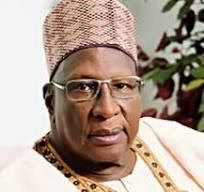

Former PDP National Chairman, Bamanga Tukur is dead
ShareFrontline business magnet and former National Chairman of Peoples Democratic Party(PDP), Alhaji Bamanga Tukur is dead. He was aged 90....

NAICOM, NCAA Partner to Strengthen Air Travellers’ Protection
ShareThe National Insurance Commission (NAICOM) and the Nigeria Civil Aviation Authority (NCAA) have signed a Memorandum of Understanding (MoU) to...

Customs Seizes N43.5bn Narcotics, Drones, Expired Goods at Apapa Port
ShareThe Nigeria Customs Service (NCS) has intercepted narcotics, controlled pharmaceuticals, drones and expired goods valued at N43.5 billion at the...


IPMAN Tasks Marketers on Local Refineries for Product Sourcing
ShareThe National President of the Independent Petroleum Marketers Association of Nigeria (IPMAN), Alhaji Abubakar Shettima, has urged independent petroleum marketers...


CBN Bags NES Distinguished Organisation Award for Economic Reforms
ShareBy Tony Obiechina, Abuja The Central Bank of Nigeria (CBN) has received the Nigerian Economic Society’s (NES) Distinguished Organisation Award...


2027: Information Minister Urges Niger APC Leaders to Back Tinubu’s Reforms
ShareBy David Torough, Abuja The Minister of Information and National Orientation, Mohammed Idris, has urged APC leaders in Niger State...


Police Arrest Two Suspected Car Snatchers in Delta
ShareThe Delta State Police Command has arrested two suspected car snatchers and recovered a Toyota Camry in the state. The...


Otti Highlights Seven Investment Priority Sectors in Abia
ShareAbia State Governor, Alex Otti has highlighted seven priority sectors and investment opportunities to drive industrialisation and economic development in...