
Agriculture
Akinwumi Adesina Strikes Again!


By Femi Adesina
Anytime he traverses the land, air or sea like a troubadour, he must bring good tidings. Each time the Nigerian President of the African Development Bank (AfDB) comes to see President Muhammadu Buhari, he never comes empty handed.
He must bring goodies and goodies for his home country.Tuesday, last week was not different. Dr Akinwumi Adesina, former Minister of Agriculture, came on a proactive rescue mission. Something was severely threatening food security in Africa, and Nigeria particularly. It calls for urgent action.
Each time the two gentlemen meet, they start with banters. So comfortable are they in each other’s company.
The jokes and bonhomie over, the AfDB President burst the speaker: “Urgent actions are needed to prevent a food crisis in Africa.”
Why? How? When? What can be done? The questions came tumbling out, like water cascading from a burst dam.
Dr Adesina provided all the answers.
“I am here Mr President to brief you on the impacts of the Russian-Ukraine war and its implications for food security in Africa, and Nigeria; and to intimate you with decisive actions being taken by the African Development Bank to avert what is a looming food crisis.”
“Russia and Ukraine dominate export of wheat and maize to Africa. With the disruption of supplies arising from the war, Africa now faces a shortage of at least 30 million metric tons of food imports from Russia and Ukraine, especially for wheat, maize, and soybeans.”
As the man spoke, suddenly Russia and Ukraine were not so faraway again. They were right there in the Diplomatic Room of the Presidential Villa.
More statistics: “Price of wheat has soared in Africa by over 45% since the war. Prices of fertilizers have gone up by 300%, and the continent faces a fertilizer shortage of 2 million metric tons. If unmet rapidly, food production in Africa will decline by 20%, and the continent would lose over $11 billion in value of food production.”
Holy Moses!
The AfDB boss quoted the UN Secretary-General, Antonio Guterres, who had said: “We are now facing a perfect storm that threatens the economies of developing countries.”
If there’s anything President Buhari is concerned about, it is that Nigerians should be able to feed themselves, without recourse to massive food importation. That was why he encouraged us to return to the land, put his money where his mouth is by funding agriculture massively, and today, we have a lot to be thankful for. Food security is almost a reality in the country.
But because the world is now a global village, and no nation is an island, the Russian-Ukraine war could still affect some fundamentals of our food security. So, what to do? Fortunately, we have our own ‘export’ to the world at the AfDB. He unfolded what he has in store for Africa, and for Nigeria, our own dear native land.
“Mr President, I know that you are also worried about the effects on Nigeria…The African Development Bank, under my leadership, is fully prepared to meet this new challenge head on. The Bank has developed a $1.5 billion Africa Emergency Food Production Plan to support countries to produce food rapidly, to mitigate the effects of the war on food prices.
“The plan will support countries to produce 38 million metric tons of food. This will include 11 million metric tons of wheat; 18 million metric tons of maize; 6 million metric tons of rice; and 2.5 million metric tons of soybeans.
“The total value of the additional food production is $12 billion. This plan, which is before the Board of Directors of the Bank for its approval, will be rolled out by the end of May and will cover all countries of the Bank.”
What is in it for me, that is the question people often ask. What’s in it specifically for Nigeria?
“Nigeria is top priority under the emergency food production plan. For the wet season of 2022, the plan will support 5 million smallholder farmers in Nigeria. They will cultivate 2.5 million hectares: one million hectares for maize; one million hectares for rice; 250,000 hectares for soybeans; and 250,000 hectares for sorghum.
“For the dry season of 2022/2023, the plan will support one million farmers across 10 northern states. We expect that this will support 500,000 hectares of wheat. Overall, the Emergency Food Production Plan for Nigeria will produce 9.5 million metric tons of food.”
Call this being proactive, or preparing adequately for the rainy day, and you are right on the money. Since 2015, President Buhari had seen into the future, repositioned the agriculture sector in the country, and he is now receiving viable support from outside. Support that won’t end up in private pockets. God bless leaders who care for their people, particularly the weak and vulnerable.
Dr Adesina said the AfDB will also support Nigeria to develop Special Agro-Industrial Processing Zones.
“We have helped to mobilize $540 million for the program. The African Development Bank has approved a total of $210 million. The Islamic Development Bank, and the International Fund for Agricultural Development (IFAD) have approved $170 million, and $160 million respectively, towards the program.”
The Special Agro-Industrial Processing Zones will be initially rolled out in 7 States: Kano, Ogun, Oyo, Kaduna, Kwara, Imo, Cross River, and the Federal Capital Territory.
Dr Adesina ended on a note of hope. “Dear Mr President, you are passionate about agriculture. Your passion is shared by me and the colleagues at the African Development Bank. What is needful now is rapid action by Nigeria to implement the program to further boost food production, reduce food price inflation, and transform the agriculture sector, while assuring food security, and creating jobs. Your leadership will be critical for success. Failure is not an option. The farmers are waiting.”
A delighted President Buhari thanked Dr Adesina profusely, encouraging him to work with the right Ministers back here, adding that Nigerian borders were closed for about two years to protect local farmers, and curb smuggling. “We made some progress,” he added.
For those who look at only the downsides of things, under President Buhari, we can be thankful to God that we can feed ourselves, and not crossing the borders to look for food. All other things shall soon be added to us.
Amen, somebody!
*Adesina is Special Adviser to President Buhari on Media and Publicity





Some residents in Lagos State have expressed concern over the recent surge in the price of tomatoes, forcing many households to adopt alternatives.
The residents made their views known in separate interviews on Wednesday in Lagos.
A market survey showed that a 50kg basket of tomatoes now sells between N115,000 and N125,000, compared to between N35,000 and N40,000 recorded last month.
Olachi Igwe, a resident of Ago Palace, said the scarcity and high cost of tomatoes had disrupted her household’s meal plans.
“I contacted my usual vendor, but she said tomatoes were scarce and difficult to source.
“A small bowl we used to buy for between N3,500 and N4,000 now sells for as high as N6,000 to N7,000, when available.
“For now, my family will resort to palm nut stew (ofe akwu) until prices stabilise,” she said.
Another resident, Mercy Okeleye of FESTAC, said although her family prefers fresh tomatoes, rising prices have forced her to consider cheaper options.
“I cannot do without fresh tomatoes because of the taste, but I may have to buy broken ones, popularly called ‘esha’, which are relatively cheaper.
“I do not consider tomato paste a suitable substitute because it is not purely made from tomatoes,” she said.
Also speaking, Tope Babalola from Dopemu, said she might adjust her cooking methods if prices remain high.
“I have not bought tomatoes in over a month, but if the price is still high, I will use more onions and peppers.
“I will not resort to artificial additives; I prefer natural ingredients for my meals,” she said.
Joan Ogugua, another resident, said she had already switched to tomato paste to cope with the situation.
“I asked my son to buy tomato paste for our meals. I cannot justify spending excessively on fresh tomatoes when other basic needs must be met,” she said.
Also, Oge Ugwu, a civil servant at Lekki, said she would resort to cucumber stew with the recent price hike.
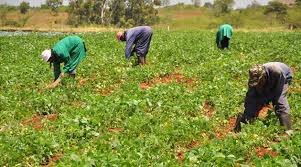
The Tomatoes Growers and Processors Association of Nigeria (TOPAN) has predicted a steady increase in the price of the produce between May and June 2026.
The Kaduna State Chairman TOPAN, Rabiu Zuntu, disclosed this in an interview recently in Lagos.
Zuntu noted that although there is no particular time for tomatoes planting season up north, seasonal weather variations can affect the production of the produce.
“Although we can plant tomatoes all-year-round, we cannot assure quality harvest all-year-round.
“Some farmers are harvesting now, while others are transplanting, and others are harvesting.
“Tomatoes are still available for sale but the price of the produce is gradually on the increase.
“Come May/June, the prices of tomatoes will be very expensive, so now is a good time to stock up the produce. There’s always a scarcity within that period.
“This is because of the nature of the weather in the north around that period, the weather is usually very hot and tomatoes cannot resist such hot temperature,” he said.
Zuntu said the price of tomatoes have started rising up in the north.
“A 50kg rafia basket of tomatoes sells from N20,000 as against N7,000 to N10,000 that was sold earlier in the year.
“While a crate of tomatoes up north is sold between N10,000 and N15,000 as against N5,000 to N6,500 sold earlier in the year.
“In most part of Kano State, where there is bumper harvest, they are rounding off their harvest. So, tomato is not that available there and most buyers have turned to where they can find it now, mostly within Kaduna State and some parts of Plateau State.
“So, that’s why the supply has decreased and the tomato supply and cost is determined by the law of demand and supply,” he said.
A 50kg basket of tomatoes in Lagos, at the moment, sells between N40,000 and N60,000 depending on the size and quality.
The Smallholder Women Farmers Organisation in Nigeria (SWOFON), Oyo State chapter, has said that the lack of irrigation facilities had become a major obstacle to dry season farming in the state.
The Chairperson of SWOFON in Oyo State, Atinuke Akinbade, said this in an interview in Ibadan on Monday.
Akinbade, who shared the experiences of women farmers in the state during the 2025 dry season, said that inadequate access to water for irrigation significantly affected the performance of many farmers during the period.
“It hindered many older farmers from participating in dry season farming and also prevented younger farmers from doing as much as they could in cultivating large acres of land,” she said.
Akinbade explained that farmers who managed to plant during the season struggled to access sufficient water to irrigate their farms, a situation worsened by the effects of climate change.
“Many farmers who depended on streams and wells to water their crops suffered major setbacks because those sources could not provide enough water for irrigation.
“Some farmers had to resort to buying water from commercial water tankers, which increased the cost of production, while at times it was even difficult to get water from the tankers,” she said.
The SWOFON chairperson warned that failure to address the problem could worsen food insecurity in the coming months.
“Even now, rainy season farming has not fully commenced because of the irregular rainfall pattern.
“This is a double burden, and if nothing is done, it may lead to serious hunger later,” she said.
Akinbade, however, acknowledged that the government had organised training for members of the association on home gardening.
She, however, said that little support was provided to address the challenges of dry season farming.
The chairman said that the home garden support package given to members consisted mainly of seedlings and one sprayer.
“They gave us two packs each of maize and pepper seeds, with six seeds in each pack, as well as one sprayer, so that we can grow food for household consumption,” she said.
Earlier, Oluwatoyin Oyedeji, SWOFON Coordinator in Oyo East, explained the severe hardship members of the organisation experienced in sourcing water for irrigation.
“Many farmers are already counting their losses because water was not available to irrigate their farms.
“Those who depended on streams and brooks were badly affected because many of them dried up, while the few that still had water had so little that farmers had to dig deeper into the ground in search of more,” Oyedeji said.
In the same vein, the Women Leader for farmers in Saki East, Musiliu Ashiru, said the absence of irrigation facilities also hampered dry season farming in her area.
According to her, many farmers still engaged in dry season farming have had to pay for water to keep their crops alive.
“Many of them buy water from the dam here to irrigate their crops. It has not been easy for them this year,” Ashiru said.




Portuguese Football Federation Backs Ronaldo to Continue with Portugal
ShareThe Portuguese Football Federation has reaffirmed its support for Cristiano Ronaldo’s continued involvement with the national team, with president Pedro...

A Nation Divided as Ronaldo Left with Big Decision on Portugal Future
ShareAs Lionel Messi prepares to get a hero’s farewell for his successful international career, Cristiano Ronaldo’s could have ended with...

FG Establishes 10 Radio Diagnostic Centres to Boost Healthcare Service Delivery
ShareThe Federal Government said it has established 10 radio diagnostic centres to enhance diagnosis and treatment of diseases in the...


Customs Auctions 22,175 Litres of Seized Petrol for N32.1m
ShareBy Tambaya Julius, Abuja The Nigeria Customs Service (NCS) has auctioned 22,175 litres of Premium Motor Spirit (PMS) seized by...


NNPCL: Accounting for Fuel Subsidy
ShareBy Uddin Ifeanyi I am not an accountant, so my opinion on the NNPCL’s recently released 2025 annual financial report...


Can ECOWAS Parliament Turn Climate Commitments into Regional Action?
ShareBy Mark Longyen West Africa’s climate crisis is becoming harder to separate from the region’s familiar struggles with poverty, displacement,...

2027 Elections: INEC Voter Register Hits 103m
ShareBy Tambaya Julius, Abuja The Independent National Electoral Commission (INEC) said Nigeria’s voter register has risen to more than 103...


Niger 37: FG Pledges Accountability Over Deaths of Miners in NSCDC Custody
ShareBy Tambaya Julius, Abuja The Federal Government has assured families of the 37 suspected miners who died in the custody...


11-year-old Girl Found Dead in Suleja Well, Church Guard Arrested
ShareFrom Dan Amasingha, Minna The disappearance of 11-year-old Christabel Albert after she left home for a birthday celebration has ended...


Jonathan Receives Bayelsa East APC Candidates
ShareFrom Mike Tayese, Yenagoa Former President of Nigeria, His Excellency, Dr. Goodluck Ebele Jonathan, has commended the quality, experience and...