
OPINION
An Observed Paradigm at TETFUND


By Adams Abonu
With widespread economic apprehension pervading her polity, the need to prudently manage Nigeria’s common patrimony becomes the more pertinent. A bogus public sector and its attendant consequences demands that resources allocation should be done in a manner that returns value to the national economy.
This is why the current disposition of the Tertiary Education Trust Fund (TETFUND) to device strategies that nip profligacy in the bud and institutionalize a culture of prudence comes to proper perspective.Since coming on board, President Bola Tinubu has not only shown a somewhat commitment towards enhancing national revival through novel policy redirection, the administration also appears poised to leave indelible footprints in the bid to place Nigeria ahead within the comity of nations.
What remains to be seen is how these reforms would transform to common good for a beleaguered citizenry.Among numerous interventions by the Tinubu administration recently in the national scheme of things, the initiative to put tertiary instruction as a solution provider for myriad national challenges indicates that there is a renewed hope in the development trajectory of Africa’s largest economy. At a time when tertiary education is the preoccupation of most development pundits in Nigeria and elsewhere around the world, it is expected that the impact indicator of TETFUND), the government agency with the core responsibility of harnessing infrastructural advancement in public (and private) higher institutions of learning, be accorded adequate attention.
This reporter took it upon himself to level-up with development effort at the Fund through the course of recent months, prompting this article, which aims at highlighting the intervention strategies and the innovations brought on board by the incumbent dispensation at TETFUND and the need for President Tinubu to sustain this verve in the interest of national development.
Since he assumed the responsibility of steering affairs of TETFUND as Executive Secretary, Arc. Sonny Echono has brought commensurate confidence and a sound sense of accountability in funds disbursement. With his robust background in public procurement, the erstwhile civil servant who rose to the pinnacle of service has revived the confidence of Nigerians in the funding agency with his innovations and up-to-date strategies.
The new helmsman brought to the job a robust wealth of experience in infrastructural development, public procurement management and a drive towards information technology and innovation, having identified these as crucial ingredients in meeting the challenges of global competitiveness.
For want of emphasis on the immediate preoccupation of the incumbent management of TETFUND, certain instances could suffice. Take a recent partnership with the Research For Innovation (R4i), an innovation incubation hub, that saw the training and harnessing of innovative potentials from Polytechnics across the federation in a bootcamp for an instance.
The training was directed at developing home-grown solutions to different technological challenges cutting across health, education, utility and other strategic sectors. Participants at the innovation camp which included lecturers, could not hide their excitement in being part of a process that could engender productivity.
Then consider the sound idea of National Research Fund initiated by the Fund to harness research and innovation prospects from scholars. This idea has seen the disbursement of over 23 billion naira to sponsor more than 900 development researches across various tertiary institutions of learning and further enhancing Nigeria’s development aspirations.
These research proposals were vetted by TETFUND’s National Research Funds Screening and Monitoring Committee which recommended the funding of researches with good potentials. The refocus on research and innovation by the incumbent leadership of TETFUND is not only timely but also a reorientation that should stand the tests of modern times.
Some of the approved research works under the Science, Engineering, Technology and Innovation thematic group include Application of Hydro-Biochemical Framework to Develop a National Rural Water Quality Assurance Plan for Sustainable Water Quality Management in Nigeria, Development of Intelligent Multichamber Evaporative Cooling Preservative System for Post-Harvest Storage of Selected Fruits in Nigeria, Development of Electric Vehicles with Tracking System Features, among other resounding research ideas.
Approval was also given for the Utilization of Scrap Tyres and Plastic Wastes as Aggregate Conductive materials for Renewable Energy Storage System, Digital Financing Inclusions under Cross-Cutting thematic group. A cursory observation with the approved research endeavours would indicate a common objective of meeting development challenges.
The Fund has revealed that this innovations that meet everyday challenges will be exhibited at Eagle Square in November. This affords the nation a chance to measure investments in the educational sector through the Education Tax Fund as this would bring researchers, inventors and creators to share their cutting-edge projects and productive ideas and innovations.
Another recent giant stride in TETFUND’s bid to improve tertiary instruction in Nigeria is the equal drive being accorded physical infrastructure. It is now a common sight in public institutions to see that a proportionate portion of new building carry the Fund’s support logo. When ES Echono revealed sometime ago when he played host to the leadership of the National Association of Nigerian Students (NANS) that hostels are to be built across campuses for students’ to address accommodation shortfalls, it was a testament to consolidate on the gains already achieved in this direction. With the Executive Secretary inculcating the students, who are the major beneficiaries of these projects in monitoring their implementations, TETFUND has demonstrated exemplary pragmatism.
“This year, we shall provide hostels for students in 36 tertiary institutions. We realise that the places where our students live are so deplorable. We also realise that only about 15 percent of our students are staying on campus while the rest stay outside the campuses, climbing Okada many times during the rains.
“These hostels will not be matchboxes and shanties but will be solid buildings that can attract students from anywhere in the world,’’ Echono stated while also hinting that work was in progress to provide free internet for students in public and private tertiary institutions to enhance qualitative learning.
When governors from different states and across different political parties take their turns and come in their numbers to a particular agency of government, it could mean they found a treasure of value in such place. These courtesy visits by various state’s governors to the leadership of TETFUND to seek further supports for States-owned tertiary institutions also reveals the widespread acceptability of the development initiatives being implemented.
As at the last count, no fewer than 20 state governors have taken their turns to come to TETFUND with each showering encomiums on the development strides of the funding agency and the sagacity of the Executive Secretary. In one of such visits, Bauchi state’s Bala Mohammed didn’t just ask for the Fund’s intervention in tertiary institutions owned by the state but also hailed the managerial acumen of Architect Echono, whom the governor described as a bright spot of the Tinubu administration.
On entrenching accountability and prudence in resources management, TETFUND under Echono has continued to set benchmarks of integrity. The innovating in project supervising and management need sustaining and deserves accolades.
In a remark in Lagos recently during a retreat for the newly constituted Bello Masari-led Board of Trustees of the Fund, Echono had charged heads of beneficiary institutions to ensure prompt and quality implementation of projects to enhance qualitative educational environment.
While stressing that the demands are crucial for enhancing institutions that can complete on a global scale, the ES also indicated that efficient supervision remained the fulcrum of this expectations.
Strategies like signing Memoranda of Understanding (MoU), the Blackboard Scheme, Supervisory Frameworks speaks to the preparedness of the Fund to engender prudent management of scarce resources. This should rightly occupy the interest of any well-meaning pundit.
Numerous recognition of TETFUND’s impact continued to accumulate from civil societies, students, teachers’ and recently the reputable African Leadership Magazine which honoured Echono at the House of Lords in London for his “dynamic innovations.”
With President Tinubu’s directives that 30 percent of TETFUND’S budgeting be dedicated to the Students Loans Program, the times couldn’t be more auspicious to institutionalize prudence. It’s a good thing that Architect Echono and his team is championing this noble course.
Thus far, it has been an era of innovation and distinctions and a paradigm of prudence at TETFUND under the pragmatic leadership of Architect Echono, who students described to this reporter as ‘’Our Architect of Good Hope.’’ While accolades continue to pour in, much remains to be done in improving the quality of tertiary education across Nigeria.
Abonu, a Public Affairs Consultant and Development Journalist, writes from Asokoro, Abuja.
By Uji Wilfred
Right from the foundations of the Independence struggle that led to self-rule, political party formations in Nigeria were crafted majorly for the capture of political power through periodic elections.
Political Parties never had ideological foundations that defined the boundaries of political recruitment and participation.
Political parties in their formation, leadership structure and ownership, belonged more to the ruling oligarchs than the people or the masses.In the First Republic, political parties had little ideological bent, framed along regional and ethnic sentiments, but little of rallying the entire nation along in a unified polity.
In the general elections of 1954 – 1956, each of the ruling political party, the Northern People’s Congress, the Action Group and the National Council of Nigerian Citizens emerged as regional parties in terms of the demographic voting pattern as well as the control of political seats.The First Republic suffered from a contradiction of centripetal and centrifugal forces within the framework of the tripartite system which eventually led to the collapse of that republic.
Political parties as well as the leadership recruitment reflected a regional and ethnic bias more than the need for the national integration of Nigeria.
Decamping across political lines, irrespective of ideological leanings, were the basic norms of the First Republic with political parties splitting out from the major political party. Formation of new political parties to fragment the dominant hold of ruling political parties were common political vices of the political class at that time. For example, Chief Akintola, despite the ideological soundness of the Action Group, splitted up the party with the formation of a new political party.
Chief Akintola’s desire was fired more by ambition than the issues of ideology and national interest.
In Northern Nigeria, the ruling Northern People’s Congress waged a war of suppression and dominance against other minority political parties with strong ideological bent that inspired minority ethnic nationalism.
The NPC through its slogan of One North, One Destiny, suppressed minority political parties such as the United Middle Belt Congress led by Joseph Tarkaa.
The point is that Nigeria from her foundations inherited a political culture where political parties have weak ideological roots as well as party and leadership recruitment.
Since 1999, Nigeria has witnessed the recycling of bourgeoisie Political Party Formation and leadership recruitment through a process of metamorphosis that defiles ideological lines and national interest.
Political participation and leadership recruitment has been centered on the urgent need to capture power at the center using political parties owned by a few powerful oligarchs.
The People’s Democratic Party in its formation and foundation was a fraternity of past and serving military generals and their civilian equivalent.
The PDP since its inception has been led by past military officers like David Mark and Atiku Abubakar, the civilian equivalent of the military.
The dream of the PDP led by these retired military generals under the leadership of former President Olusegun Obasanjo was the enthronement of Africa’s biggest political party that was to last for a century.
As good as the dream of the party was, the PDP, like the experience of the First and Second Republics lacked deep ideological roots that defined the boundaries of political recruitment and participation.
The triumph of the People’s Democratic Party forced the rival All People’s Party and the Action Congress of Nigeria into a state of collapse and submission leading up to the bourgeoisie metamorphosis that resulted to the formation of the All Progressive Congress on the eve of 2015 with the sole objective to unseat President Good luck Jonathan.
The APC was a metamorphosis and amalgamation of opposition parties including some dissenting faction of the PDP to reclaim the so called birth right of the far right North in Nigeria to produce the President of Nigeria.
Political recruitment and leadership struggle in Nigeria has never been defined by ideological needs to salvage or emancipate Nigeria as a nation. Political struggle has always been a recycling of that section of the bourgeoisie, through a process of metamorphosis, whose objective is to capture political power at the center.
The present protest and political struggle by the African Democratic Congress, the faction led by David Mark and Atiku Abubakar, is a recycling of bourgeoisie metamorphosis not too different from the experience of 2015.
At best, the David Mark and Atiku Abubakar led protest represents that desperate struggle entrenched in the thinking of the Far Right of Far Northern Nigeria, that political leadership resides in the ancestral birth right of the aristocratic ruling political class of the North.
David Mark and Atiku Abubakar perhaps are suffering from a dementia that has made them forget that they were the agents that destroyed the foundations of democracy in Nigeria through the sacking of former President Good luck Jonathan of the People’s Democratic Party.
These men formed the All Progressive Congress and wrestled power from a democratic government exploiting the dynamics of national security and developmental challenges.
In 2015, Nigerians believed their opinions and through the ballot removed Good luck Jonathan.
However, since then, has Nigeria fared better under the APC that was enthroned by oligarchs leading in the present protest under the auspices of the ADC.
Perhaps, David Mark and Atiku Abubakar may assume that Nigeria suffers from a collective dementia that has forgotten the past so soon.
There is an adage that says, he who comes to justice and equity must come with clean hands. The same forces that enthroned bad governance in Nigeria factored in the APC, through a metamorphosis, want to rebirth another Nigeria through the ADC.
In ideological terms, this does not make sense, the ADC Protest is the same old thing of old wine in a new wine bottle.
If Nigeria must experience a change, let it come through some revolutionary medium that will not exploit the people’s trust and betray them once in power.
Over the past decades, the betrayal of public trust, exploiting the innocence of the people, perhaps the naivety of the people, is what we have seen and experienced through the circles of bourgeoisie metamorphosis and political leadership recruitment.
By Raphael Atuu
Benue State, fondly referred to as the “Food Basket of the Nation,” was created on February 3, 1976, by the military administration, carved out of the old Plateau State. From its inception, the state was administered by a succession of military administrators, followed by civilian governors in Nigeria’s evolving political landscape.
Over the decades, leadership passed through several hands each leaving varying degrees of impact on the state’s trajectory.
In its early years, Benue was widely regarded as a peaceful and united society. Communities coexisted in harmony, bound by shared values, cultural pride, and a strong sense of collective identity.
The economy was largely driven by agriculture, with fertile lands producing yams, rice, cassava, and other staple crops. Institutions like the Benue Cement Company also contributed to economic activity and employment.In those days, the government was distant from the daily struggle of the average citizen. Few people concerned themselves with the affairs of Government House. Wealth and dignity were derived from hard work, farming, trading, and craftsmanship not political patronage.
The people spoke with one voice, celebrated their traditions with pride, and upheld communal respect as a guiding principle.
However, the return of democracy in 1999 marked a significant turning point, one that would reshape the state’s social and political fabric in ways few anticipated.
With democratic governance came new opportunities, but also new challenges. Politics gradually became the most attractive path to wealth and influence.
For many, Government House transformed from a symbol of public service into a gateway to personal enrichment.
The perception of politics shifted from service to self-interest.
As political competition intensified, unity began to erode. Divisions along ethnic, local government, and party lines deepened. The once cohesive voice of the Benue people became fragmented, often drowned in partisan conflicts and power struggles.
Perhaps more troubling was the subtle transformation in societal values.
The Benue man, once admired for courage, resilience, and industry, began though not universally to exhibit tendencies toward dependency and political loyalty over merit.
Sycophancy started to replace integrity, and the dignity of labor was gradually overshadowed by the allure of quick gains through political connections.
Elected officials rose to positions of authority and influence, becoming key decision-makers in society.
Yet, for many citizens, the dividends of democracy remained elusive. Infrastructure development lagged, agricultural potential remained underutilized, and poverty persisted despite abundant natural resources.
The irony is striking: a state so richly endowed, yet struggling to translate its potential into tangible progress.
Beyond economics, insecurity and communal clashes in recent years have further strained the social fabric.
The peace that once defined Benue has been challenged, forcing many communities to confront displacement and uncertainty.
While these issues are complex and multifaceted, the role of political leadership in addressing or failing to address them cannot be ignored.
So, where did the politicians get it wrong?
They lost sight of the essence of leadership service to the people. Governance became more about control than development, more about personal gain than collective good.
Long term planning gave way to short term political calculations. Investments in agriculture, which should have remained the backbone of the state’s economy, were neglected in favor of less sustainable ventures.
Moreover, the failure to foster unity and inclusive governance widened the gap between leaders and the led. Politics became a tool for division rather than a platform for progress.
Yet, all hope is not lost.
Benue still possesses immense potential, fertile land, vibrant culture, and resilient people, what is needed is a return to the values that once defined the state: hard work, unity, integrity, and community driven development.
Leadership must be reimagined, not as an avenue for wealth, but as a responsibility to uplift the people.
The story of Benue State is not just one of decline it is also one of possibility.
With the right vision, commitment, and collective will, the state can reclaim its place as a model of peace, productivity, and progress.
The question remains: will its leaders and its people rise to the occasion?
If you want, I can.

By Tanimu Yakubu
Nigeria is not collapsing; it is confronting long-avoided economic realities. The current hardship, though undeniable, reflects a deliberate process of correcting structural imbalances that have persisted for years. Distress is evident, but it must not be mistaken for systemic failure.
Countries in true economic collapse do not unify exchange rates, rebuild external reserves, regain access to international capital markets, or improve fiscal performance.
Nigeria, despite significant pressures, is making measurable progress across these indicators.Ending a Distorted Economic Order
For years, Nigeria operated under an economic framework that projected stability while masking deep inefficiencies.
Artificially suppressed fuel prices, multiple exchange rate windows, and expansionary fiscal practices incentivized arbitrage over productivity.These distortions disproportionately benefited a narrow segment of the population while imposing hidden costs on the broader economy.
Their removal has revealed the true cost structure of the system. While this transition has triggered inflationary pressures, it has also restored policy transparency and enhanced the credibility of economic management.
Strengthening the Fiscal Base
Recent fiscal data indicates a strengthening foundation. Distributable revenues to the Federation Account have risen by over 40 percent following subsidy removal, reflecting improved remittance discipline and reduced leakages.
Nigeria’s public debt remains below 30 percent of GDP, a relatively moderate level compared to peer emerging markets, according to the International Monetary Fund. Meanwhile, external reserves have surpassed $40 billion, based on figures from the Central Bank of Nigeria.
At the subnational level, increased fiscal inflows are enabling more consistent salary payments, with some states introducing inflation adjustments, an indication of gradually expanding fiscal space.
Inflation: A Transitional Challenge
Inflation remains the most immediate and visible consequence of ongoing reforms. It is being driven by exchange rate adjustments, energy price corrections, and longstanding supply-side constraints.
Global experience suggests that such inflationary spikes are often temporary when reforms are sustained. The greater risk lies not in reform itself, but in policy inconsistency or reversal.
Interpreting the Present Moment
Public frustration is both expected and understandable. Nigerians are justified in demanding tangible improvements in living standards. However, it is important to distinguish between short-term hardship and systemic collapse.
Nigeria’s institutional framework remains intact, fiscal capacity is improving, and macroeconomic reforms are actively progressing. This phase represents adjustment, not disintegration.
From Stabilisation to Impact
The next phase of reform must translate macroeconomic gains into measurable improvements in citizens’ welfare.
Strategic investments in healthcare, education, and targeted social protection will be essential to sustaining public confidence.
Ultimately, the credibility of these reforms will be judged not by policy intent, but by their impact on everyday life.
Conclusion: The Imperative of Consistency
Nigeria has long recognised its economic challenges; what has often been lacking is sustained policy execution. The greatest threat at this juncture is not reform fatigue, but reform reversal.
Abandoning the current course would erode credibility, deter investment, and reintroduce the very distortions that hindered growth.
This moment demands patience, discipline, and resolve. Nigeria is not collapsing, it is undertaking a necessary correction and laying the foundation for a more resilient economic future.
Tanimu Yakubu is DG, Budget Office of the Federation.



Wike Waives C-of-O Fees for Nigerian Law School
ShareBy Laide Akinboade, Abuja The Minister of the Federal Capital Territory (FCT), Nyesom Wike on Thursday gave an immediate waiver of fees for the Certificate of...
Study Links Alcohol to Higher Cancer Burden in Australia
ShareAustralian researchers on Thursday revealed that alcohol consumption causes a higher proportion of cancers in Australia than previous estimates. According to a statement of...


C’River Debunks False COVID-19 Report, Confirms Only One Case
ShareFrom Ene Asuquo, Calabar The Cross River State Government has refuted a publication by online platforms alleging the discovery of 10 new...


NCC Orders Airtime Credits for Poor Network Service
ShareThe Nigerian Communications Commission (NCC) said telecom operators will compensate subscribers for poor network quality through airtime credits under a strengthened regulatory enforcement framework...


CBN Orders Banks on Monthly Report of Mobile, ATM Transactions
Share The Central Bank of Nigeria has directed banks and other financial institutions to submit monthly reports on failed electronic...


Tinubu Seeks Senate Nod for $516m Sokoto–Badagry Superhighway Loan
ShareBy Eze Okechukwu, Abuja President Bola Tinubu has formally requested the National Assembly’s approval for a $516.3 million external loan...

2027: APC Begins Sale of Forms, Adopts Consensus, Direct Primaries
ShareBy David Torough, Abuja The All Progressives Congress (APC) has rolled out a comprehensive and revised timetable for its 2027...
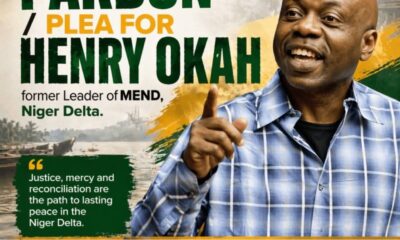

Grant Pardon to Henry Okah, Niger Delta Activists Tells Tinubu
ShareBy Raphael Atuu, Abuja Popular Niger Delta activist Nengi James OON, alongside other youths under the aegis of Advocates for...

NCoS Places Facility on Red Alert over Alleged Attack Threats in Niger
ShareFrom Dan Amasingha, Minna The Nigerian Correctional Service (NCoS) in Niger State has placed all custodial centres across the state on red...


FIBA WWC: D’Tigress Land in Tough Group B with France, Hungary, Korea
ShareNigeria’s D’Tigress will face France, Hungary, and Korea in Group B at the 2026 FIBA Women’s World Cup. The draw set up the D’Tigress for...