
NEWS
Anglican Bishops Proffer Solution to Kwara Gov’t on Hijab Crisis


From Alfred Babs, Ilorin
Bishops of the Church of Nigeria (Anglican Communion), Dioceses of Kwara state have called on Governor Abdulrahman Abdulrazaq to follow the example of the governor of Oyo state, Engineer ‘Seyi Makinde on his policy on the use of hijab in public schools in the state.
The Bishops at it meeting at the weekend appealed to the governor to adopt a solution whereby students would be allowed to wear a uniform specified by their schools so as to ensure peaceful existence in the state.
The meeting condemned the recent fracas occasioned by non-admittance of hijab-wearing students into the premises of Oyun Baptist High School, Ijagbo, Oyun local government area of Kwara state.
It however commiserated with the families of the deceased and those injured during the incidence prayed God to comfort and console them.
Presided over by Archbishop of the Ecclesiastical Province of Kwara, Most Reverend Israel Amoo, the Bishops said, “the uniforms/dress codes prescribed for schools are reflections of religious tenets and beliefs. Thus any attempt by any Government, body, organisation or individuals to alter or adulterate such uniforms amounts to blatant infringement on the fundamental rights of the pupils and children, and is capable of creating confusion in their young minds.
“We expressed displeasure on the forceful introduction of hijab to the uniforms of Christians schools in Kwara State, because it is illegal, unconstitutional and undue distraction from the needed focus which could help raise the standard of education in the state.
The church maintained that unconditional return of all Christian schools in the state to their original owners would bring a lasting solution to the problem which, it said is now assuming a terrifying and alarming magnitude.
“We hereby refer Kwara state government to the policy adopted by Oyo state which guaranteed peace and harmonious coexistence, it is herein stated as follow:
“In Muslim named/faith-based public schools, the usage/wearing of hijab as part of the school uniform is allowed in accordance with Islamic tradition/religious belief of student who may wish to do so.
“In Christian named/faith-based public schools, the student’s uniform should be in line with established tradition of the school and Christian religion.
“In Community based public schools the usage/wearing of a common hijab/beret by female students is permissible. This is however optional for parents/students who wish to do so.
“Under No circumstance or guise should any student/parents, group, or body contravene the provisions in paragraphs i, ii, and iii above. Any contravention of these provisions would attract appropriate disciplinary sanctions including immediate expulsion of affected students from school.”
“We further urge the Executive Governor of Kwara state, Mallam Abdulrahman Abdulrazaq to use his good offices to restore normalcy to schools in the state and reverse the order permitting
the use of hijab in Christian schools for the sake of peace and good neighbourliness”.


Nasarawa State Governor, Abdullahi Sule has inaugurated a 3.2-kilometre Loko Link and Township Roads project worth N2.8 billion in Nasarawa Local Government Area.
Sule, who performed the inauguration on Tuesday in Loko, described the project as one of the most personally fulfilling of his administration.
He said that the road project fulfilled a long-standing promise he made to the people of the ancient town before assuming office.
The governor recalled the difficulty of accessing Loko in the past, noting that a journey from Nasarawa town through the Ajaga-Tunga-Bakyano axis once took him about 12 hours.
According to him, the project is beyond infrastructure, as it represents a personal commitment he made to the late father of the Emir of Loko.
“I promised that if I became governor by God’s grace, I would construct this road. Though he is no longer alive, I am glad to fulfil that promise,” Sule said.
He noted that the road complements an earlier electricity project inaugurated in the community about two years ago.
Sule explained that the project was not just an access road but a complete township ring road connecting key areas, including the market and Gidan Liman, to enhance socio-economic activities.
He urged residents to take ownership of the infrastructure and ensure its protection.
The governor also reaffirmed his administration’s commitment to completing the Loko General Hospital, assuring that the project would be delivered before the end of his tenure.
He said that the delay in completing the hospital was due to ongoing health projects across the state, including facilities in Akwanga and Azara.
Sule emphasised that his administration would not inaugurate the hospital until adequate personnel and equipment were in place.
He further disclosed that the Loko road project, like others executed by his administration, was funded without borrowing.
According to him, improved revenue from federal allocations has enabled the state to undertake capital projects through internally available resources.
The Managing Director of Rockseed Engineering Nigeria Ltd., Chen Shuai said the project was awarded in October 2024.
Shuai said that the initial contract sum of N2.3 billion was revised to N2.8 billion to accommodate additional works, including concrete structures and riverbank realignment.
He added that the scope of the project included construction of the 3.2-kilometre road, a spur and hydrological structures.
The contractor also disclosed that another project under his company, the 7.3-kilometre Gbude-Nakere road, had reached about 80 per cent completion.
He expressed optimism that the project would be ready for inauguration by June.
Also speaking, Mohammed Wada-Yahaya, the Managing Director of Nasarawa Urban Development Authority (NUDA), said the road was designed to meet standard engineering requirements.
Yahaya said the project incorporated appropriate gradients and drainage systems to effectively manage stormwater and surface runoff.
He added that the road was designed to improve connectivity within Loko Township and link it to the broader road network.
The event was attended by traditional rulers, members of the State Executive Council, community leaders and residents.
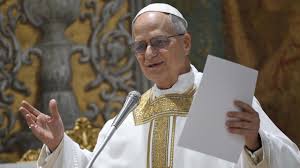
Anglophone separatists in Cameroon have announced a period of “safe travel passage” and halted fighting ahead of Pope Leo XIV’s visit to the conflict‑hit region this week.
Leaders of several armed and secessionist groups said the three‑day measure was in recognition of the “profound spiritual importance” of the papal visit, which starts on Wednesday, and the need to safeguard civilian life.
In a statement from Unity Alliance which brings the groups together – they said they would facilitate the movement of those celebrating the visit. The government is yet to comment.
A near-decade of violence in the English-speaking regions has left at least 6,000 dead and many more forced from their homes.
Pope Leo is currently in Algeria for a second day as part of his 11-day tour of the continent, in which he will also visit Cameroon, Angola and Equatorial Guinea.
Peace is one of the major themes of his visit.
The pontiff arrived in Algeria on Monday, marking the first visit by any pope to the predominantly Sunni Muslim country.
It is also the birthplace of St Augustine, and Leo XIV is the first pontiff from the order to follow his teachings.
He is currently in Annaba where the saint was a bishop – and in the afternoon, is expected to celebrate Mass at the Basilica of Saint Augustine.
The Pope’s second country stop is Cameroon, where he will visit Bamenda, the capital of the country’s North-West region.
The city is regarded as the centre of Cameroon’s conflict between Anglophone separatists and state forces.
A national dialogue organised by the government in 2019 failed to end the violence in the country’s two English‑speaking regions.
Unity Alliance said the decision to pause the fighting “reflects a deliberate commitment to responsibility, restraint, and respect for human dignity, even in the context of ongoing conflict.”
It added that the Pope’s visit should remain “spiritual” and “pastoral” in nature, and warned against any politicisation of the event.
While the Cameroonian, francophone-dominated government has not reacted to the announcement, authorities say appropriate measures had been taken to ensure security in cities scheduled to host the Pope.
Pope Leo’s visit to Bamenda is seen as a symbolic effort by the Catholic Church to promote peace and reconciliation. He is expected to hold a meeting for peace in the city’s Saint-Joseph’s Cathedral.
Officials said all sites to be attended by the Pope will be free of charge for visitors.
Pope Leo’s wide-ranging tour will include stops in 11 cities across the four countries. It is his second major foreign visit since being elected to the papacy last year, and reflects the importance of Catholicism in Africa.
More than a fifth of the world’s Catholics are in Africa, some 288 million people, according to figures from 2024.
By Eze Okechukwu, Abuja
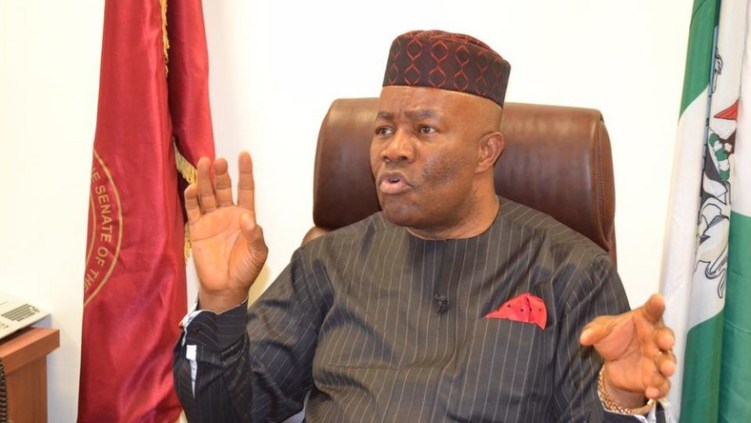
The Senate President, Godswill Akpabio has linked the worsening insecurity across the country to a gang up by opposition politicians, with the sole aim of distracting President Bola Tinubu from his reform efforts.
Akpabio who made the assertion yesterday in Abuja during a goodwill message at the official commissioning of the Nigeria Revenue Service Headquarters, Abuja maintained that
“Two weeks after you win the elections, the bomb blasts will stop.
People are sponsoring it to distract you from your work. You’re doing so well despite the gang up on your administration.”His comments came barely 24 hours after President Tinubu held a closed door session with the Chief of Defence Staff, General Olufemi Oluyede, and a French General at the Presidential Villa, Abuja.
Following the meeting, Presidency sources described the engagement as part of the government’s efforts in intensifying collaboration with the wider world to tame Nigeria’s insecurity situation.
The meeting which came three weeks after the President announced that France had agreed to supply military equipment and training to Nigerian forces battling insurgency in the North-East began at about 2:00 pm on monday.
Akpabio’s comments came against the backdrop of the rapidly deteriorating security conditions across Nigeria, including a controversial air strike on Saturday that killed over 100 civilians, and a fresh United States advisory authorizing the voluntary departure of non-emergency embassy staff from Abuja.
Recall that on Saturday, a Nigerian Air Force strike targeting Boko Haram insurgents hit the Jilli market in Yobe State, near the Borno border, killing scores with Amnesty International citing local sources, survivors and hospital authorities putting the figure as high as 200.
However, both the Presidency and military defended the operation as a precision strike on a terrorist logistics hub, but Amnesty International condemned the operation, and described it as a “reckless use of deadly force” while it called for an independent investigation.
Speaking earlier on Monday, the Special Adviser to the President on Media and Publicity, Temitope Ajayi, said, “The market was a legitimate military target because it has been turned into a logistics and trading hub by Boko Haram and ISWAP terrorists.”
Afterwards, the United States Department of State on April 8th, 2026 authorized the voluntary departure of non-emergency government employees and family members from the US Embassy in Abuja, citing a deteriorating security situation.
The move elevated 23 Nigerian states to a “Level 4: Do Not Travel” warning, the highest risk category, including newly added Plateau, Jigawa, Kwara, Niger, and Taraba states.
The US highlighted threats from Islamist insurgents in the Northeast, criminal gangs in the Northwest, and ongoing violence in parts of southern and southeastern Nigeria, including oil-producing regions.
The embassy said visa appointments in Abuja had been suspended, though the Lagos consulate continued to provide routine and emergency services.
In her reaction, the Federal Government said the US travel alert was guided by her internal protocols and did not reflect the overall security situation across Nigeria.
“While we acknowledge isolated security challenges in some areas, there is no general breakdown of law and order, and the vast majority of the country remains stable,” Mohammed Idris, the Minister of Information and National Orientation stated.



Nigeria To Host 5th High Level Ministerial Meeting On AMR
ShareBy Laide Akinboade, Abuja Nigeria said it has concluded arrangement to host the 5th high level ministerial meeting on Antimicrobial...

Sule Inaugurates N2.8bn Loko Township Roads
ShareNasarawa State Governor, Abdullahi Sule has inaugurated a 3.2-kilometre Loko Link and Township Roads project worth N2.8 billion in Nasarawa...


2026 Unity Cup: Don’t Exclude NPFL Players from Eagles, Ekpo Tells Chelle
ShareFormer Nigerian international Friday Ekpo has advised Super Eagles head coach Eric Chelle not to exclude players from the Nigeria...

Cameroon Separatists Pause Fighting Ahead Pope Visit
ShareAnglophone separatists in Cameroon have announced a period of “safe travel passage” and halted fighting ahead of Pope Leo XIV’s visit to the conflict‑hit region this week. Leaders...


Over 2,000 PhD Candidates Jostle for PTDF Overseas Scholarship
ShareThe Petroleum Technology Development Fund (PTDF) has commenced the second phase of interviews for the 2026/2027 PhD award under its...
Akpabio Ties Worsening Insecurity to Gang up Against Tinubu
ShareBy Eze Okechukwu, Abuja The Senate President, Godswill Akpabio has linked the worsening insecurity across the country to a gang up by opposition politicians,...

Yobe Hits 100 Per Cent Budget Implementation in Five Years
Share Yobe State Governor, Mai Mala Buni said the state has recorded 100 per cent budget implementation from 2021 to...

ADC Braces Odds, Holds National Convention amid Court Tussle
ShareBy David Torough, Abuja The African Democratic Congress (ADC) on Tuesday held its national convention in Abuja despite ongoing legal...

Tinubu Unveils New Tax Order, Ends ‘Broken’ Revenue System
ShareBy Tony Obiechina, Abuja President Bola Tinubu has declared that Nigeria is charting a new economic course, vowing to abandon...


Otu, Retired Naval Chief Bag UNICAL Honorary Degrees
ShareFrom Ene Asuquo, Calabar The Governor of Cross River State, Prince Bassey Otu, has been conferred with an honorary doctorate...