
Agriculture
Anti-Open Grazing Bill: Fulani Herdsmen in Oyo Moot Legal Option


From Dele Ogunyemi, Ibadan
Hundreds of Fulani herdsmen from various parts of Oyo State on Tuesday, converged on Igangan, an agrarian community in Ibarapa North Local Government area, where they met for several hours and resolved to use legal option to stop the Oyo State Open Rearing and Grazing Regulation Bill 2019, which has already passed through second reading at the State House of Assembly.
The bill, which was jointly sponsored by the Speaker of the Assembly, Rt. Hon. Adebo Ogundoyin and the deputy Speaker, Hon. Abiodun Fadeyi had two weeks ago witnessed a public hearing where stakeholders including farmers groups and the Fulani community bared their minds on how to make it workable.
The National Chairman of Gan Allah Fulani Development Association of Nigeria, Alhaji Sale Bayari, in an 18-page position paper presented at that forum, stated that “it is impossible in our country for any peasant small scale herdsman to go into ranching” and submitted that the bill if passed into law would punish poor herders.
The Fulani herdsmen, at their Igangan meeting presided over by the Sarkin Fulani of Oyo State, Alhaji Saliu Abduk-Kadir described the Oyo State Anti-Open Grazing Bill as “too draconian” and targeted at crippling Fulani herdsmen from practising their age-long cattle rearing activities across the state.
“We will go to court. We will seek legal redress if Oyo State Government insists on imposing this Bill on us,” the Fulani herdsmen unanimously resolved at the end of the meeting which lasted over five hours at the popular Kara Market in Igangan.
Reeling out the communiqué of the meeting to journalists, the Oyo State Secretary of Gan Allah Fulani Development Association, Mr. Garba Umar said the Fulani herdsmen had resorted to rejecting the Bill in its totality because they perceived it as one that would cause serious setback to their means of livelihood.
For the Anti-Open grazing bill to be implementable, the Fulani herdsmen appealed to Oyo State Government to provide RUGA or grazing reserve for cattle rearers where there would be easy accessibility to water and grazing facilities.
Failure to do this, the Fulani herdsmen maintained, “the implementation of the Bill as it is will cause commotion.”
Making an illusion to Benue State where the Anti-Open Grazing law is currently applicable, the Fulani herdsmen stated that it was the bill that resulted in that State having about four different Internally Displaced Persons (IDP) camps as opposed to the situation before in the state.
“It is simply this issue that threw up IDP Camps in Benue. And we don’t want all this to happen here in Oyo State where we have been living peacefully with our fellow farmers for ages,” the Fulani herdsmen submitted.
The communiqué read further: “However, if we are pushed to the wall, we know the next level. Our next level is to seek the legal option. We will go to the court of law over the matter.
“But for now, we are begging Oyo State Government to see us as Nigerians and partners in progress who, for ages immemorial, have added values to the economy of the State.
“It is also a matter of fact that we Fulani dominate large percentage of voters in Oyo State. Government only recognize us during electioneering and voting periods. Government is not giving us any facility or loan to boost our cattle rearing business while the farmers, on the other hand, get agric loans, fertilizers, etc. Is this the only way Government is now repaying us for our patriotism?
“We are equally opposed to ranching which is capital intensive. Why not ask the farmers also to fence their farm holdings? How much are we going to be spending per caged cow per annum in form of feeding, etc.? We do not agree.
“Government should rather checkmate the inflow of foreign Fulanis who have been responsible for the security challenges in the land.”







Some residents in Lagos State have expressed concern over the recent surge in the price of tomatoes, forcing many households to adopt alternatives.
The residents made their views known in separate interviews on Wednesday in Lagos.
A market survey showed that a 50kg basket of tomatoes now sells between N115,000 and N125,000, compared to between N35,000 and N40,000 recorded last month.
Olachi Igwe, a resident of Ago Palace, said the scarcity and high cost of tomatoes had disrupted her household’s meal plans.
“I contacted my usual vendor, but she said tomatoes were scarce and difficult to source.
“A small bowl we used to buy for between N3,500 and N4,000 now sells for as high as N6,000 to N7,000, when available.
“For now, my family will resort to palm nut stew (ofe akwu) until prices stabilise,” she said.
Another resident, Mercy Okeleye of FESTAC, said although her family prefers fresh tomatoes, rising prices have forced her to consider cheaper options.
“I cannot do without fresh tomatoes because of the taste, but I may have to buy broken ones, popularly called ‘esha’, which are relatively cheaper.
“I do not consider tomato paste a suitable substitute because it is not purely made from tomatoes,” she said.
Also speaking, Tope Babalola from Dopemu, said she might adjust her cooking methods if prices remain high.
“I have not bought tomatoes in over a month, but if the price is still high, I will use more onions and peppers.
“I will not resort to artificial additives; I prefer natural ingredients for my meals,” she said.
Joan Ogugua, another resident, said she had already switched to tomato paste to cope with the situation.
“I asked my son to buy tomato paste for our meals. I cannot justify spending excessively on fresh tomatoes when other basic needs must be met,” she said.
Also, Oge Ugwu, a civil servant at Lekki, said she would resort to cucumber stew with the recent price hike.
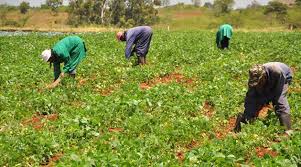
The Tomatoes Growers and Processors Association of Nigeria (TOPAN) has predicted a steady increase in the price of the produce between May and June 2026.
The Kaduna State Chairman TOPAN, Rabiu Zuntu, disclosed this in an interview recently in Lagos.
Zuntu noted that although there is no particular time for tomatoes planting season up north, seasonal weather variations can affect the production of the produce.
“Although we can plant tomatoes all-year-round, we cannot assure quality harvest all-year-round.
“Some farmers are harvesting now, while others are transplanting, and others are harvesting.
“Tomatoes are still available for sale but the price of the produce is gradually on the increase.
“Come May/June, the prices of tomatoes will be very expensive, so now is a good time to stock up the produce. There’s always a scarcity within that period.
“This is because of the nature of the weather in the north around that period, the weather is usually very hot and tomatoes cannot resist such hot temperature,” he said.
Zuntu said the price of tomatoes have started rising up in the north.
“A 50kg rafia basket of tomatoes sells from N20,000 as against N7,000 to N10,000 that was sold earlier in the year.
“While a crate of tomatoes up north is sold between N10,000 and N15,000 as against N5,000 to N6,500 sold earlier in the year.
“In most part of Kano State, where there is bumper harvest, they are rounding off their harvest. So, tomato is not that available there and most buyers have turned to where they can find it now, mostly within Kaduna State and some parts of Plateau State.
“So, that’s why the supply has decreased and the tomato supply and cost is determined by the law of demand and supply,” he said.
A 50kg basket of tomatoes in Lagos, at the moment, sells between N40,000 and N60,000 depending on the size and quality.

The Smallholder Women Farmers Organisation in Nigeria (SWOFON), Oyo State chapter, has said that the lack of irrigation facilities had become a major obstacle to dry season farming in the state.
The Chairperson of SWOFON in Oyo State, Atinuke Akinbade, said this in an interview in Ibadan on Monday.
Akinbade, who shared the experiences of women farmers in the state during the 2025 dry season, said that inadequate access to water for irrigation significantly affected the performance of many farmers during the period.
“It hindered many older farmers from participating in dry season farming and also prevented younger farmers from doing as much as they could in cultivating large acres of land,” she said.
Akinbade explained that farmers who managed to plant during the season struggled to access sufficient water to irrigate their farms, a situation worsened by the effects of climate change.
“Many farmers who depended on streams and wells to water their crops suffered major setbacks because those sources could not provide enough water for irrigation.
“Some farmers had to resort to buying water from commercial water tankers, which increased the cost of production, while at times it was even difficult to get water from the tankers,” she said.
The SWOFON chairperson warned that failure to address the problem could worsen food insecurity in the coming months.
“Even now, rainy season farming has not fully commenced because of the irregular rainfall pattern.
“This is a double burden, and if nothing is done, it may lead to serious hunger later,” she said.
Akinbade, however, acknowledged that the government had organised training for members of the association on home gardening.
She, however, said that little support was provided to address the challenges of dry season farming.
The chairman said that the home garden support package given to members consisted mainly of seedlings and one sprayer.
“They gave us two packs each of maize and pepper seeds, with six seeds in each pack, as well as one sprayer, so that we can grow food for household consumption,” she said.
Earlier, Oluwatoyin Oyedeji, SWOFON Coordinator in Oyo East, explained the severe hardship members of the organisation experienced in sourcing water for irrigation.
“Many farmers are already counting their losses because water was not available to irrigate their farms.
“Those who depended on streams and brooks were badly affected because many of them dried up, while the few that still had water had so little that farmers had to dig deeper into the ground in search of more,” Oyedeji said.
In the same vein, the Women Leader for farmers in Saki East, Musiliu Ashiru, said the absence of irrigation facilities also hampered dry season farming in her area.
According to her, many farmers still engaged in dry season farming have had to pay for water to keep their crops alive.
“Many of them buy water from the dam here to irrigate their crops. It has not been easy for them this year,” Ashiru said.




2027: Benue People Are Not ‘Shenanigans’, Alia Owes You No Apology, Ex-Ambassador Tells Ortom
ShareFrom Attah Ede, Makurdi A former Nigerian Ambassador to Namibia, Terhemen Tarzoor, has criticized former Benue State Governor Samuel Ortom...


JPMorgan’s Entry into Nigeria: Turning Global Finance into a National Development Opportunity
ShareBy Uche Joe Uwaleke The proposed establishment of JPMorgan Merchant Bank Nigeria Limited presents Nigeria with an important opportunity to...


WAHO Steps Up Regional Health Surveillance After Ebola Case Confirmed in Abuja
ShareBy David Torough, Abuja The West African Health Organisation (WAHO) has intensified regional health surveillance following the confirmation of an...


2027: Don’t Call Benue People Shenanigans, Alia not answerable to you- Ex- Amb, Tarzoor Tells Ortom, Wike.
ShareFrom Attah Ede, Makurdi Ex -Nigeria’s Ambassador to Namibia, Terhemen Tarzoor, has warned the immediate past Governor of Benue State...

DBN Signs $61m Credit Deal With AfDB, Unveils Support Initiative Report
ShareBy Tony Obiechina, Abuja The Development Bank of Nigeria Plc (DBN) has launched DAWN: DBN Action for Women in Nigeria,...


NLC Threatens Nationwide Action as Talks With FG Collapse
ShareBy Tambaya Julius, Abuja The Nigeria Labour Congress (NLC) has threatened possible nationwide industrial action following the failure of talks...

Top10 Magazine Names Umaru Kwairanga as Man of the Year 2026
ShareAlh. (Dr) Umaru Kwairanga, Group Chairman, Nigerian Exchange Group (NGX Group), has been named as the Top10 Magazine’s Man of...


UK, Nigeria to Deepen Defence, Security Cooperation
ShareThe United Kingdom has reaffirmed its commitment to deepening defence and security cooperation with Nigeria, with emphasis on military training,...


2027: INEC Steps Up Preparations, Completes Nine Activities
ShareBy Tambaya Julius, Abuja The Independent National Electoral Commission (INEC) has completed nine of the 14 activities on its timetable...


2027: Tinubu Accords Benue Security Top Priority, Tompolo Tells Supporters
ShareLeader of the PBAT Door-to-Door Movement, Government Tompolo, has called on the people of Benue state to come out enmasse...