
NEWS
APC Caretaker Committee Plots Tenure Extension

There are great prospects that the Caretaker/Extraordinary Convention Planning Committee (CECPC) of the All Progressives Congress (APC) may have concluded arrangements to stay in office beyond the June this year.
Recall that the Committee which was set up last year after the removal of former National Chairman, Comrade Adams Oshiomhole was initially given the mandate of running the party and conducting the National Convention by December 2020.
But before then, the committee headed by the governor of Yobe State, Mai Mala Buni had sought and got a tenure extension which indicated that the Convention would hold by June this year.
But the body language of the Committee suggests that it wants to remain in office much longer.
They started by organizing the ongoing registration and revalidation exercise which has also been criticized by some party stalwarts.Sources very close to the National Secretariat of the party informed DAILY ASSET that “all the indices on ground suggest that they will stay beyond 2021.”
According to our source who is also eying the APC governorship ticket of his state in 2023, given the line of activities, it will be difficult for the Committee to conclude and organize the National Convention.
He said; “By the new time table with the Caretaker Committee, the ongoing membership Registration/Revalidation exercise would extend till the end of April, after that the registration, the ward and local government Congresses would be held in May and June, also the state congresses have been slated for July/August.”
The party stakeholder equally noted that the recently constituted Constitution Review Committee set up by the Caretaker Committee is another indicator that National Convention will never hold in June or any time before December.



The US has imposed sanctions on the Rwandan army and four of its senior commanders, accusing them of fuelling the conflict in neighbouring Democratic Republic of the Congo.
Fighting has persisted despite a US-brokered peace deal in December between the Congolese and Rwandan governments aimed at ending the long-running conflict in eastern DR Congo.
The US treasury department accused the Rwandan army of undermining the peace deal by training, equipping and fighting alongside the M23 rebel group.
Rwanda swiftly rejected the accusations, saying the sanctions had unfairly targeted one side and “misrepresented the reality and distorted the facts of the conflict”.
Kigali denies supporting the M23, despite overwhelming evidence, and says its military presence in the region is a defensive measure against threats posed by armed groups in DR Congo to Rwanda’s security.
The sanctions come three months after Congolese President Félix Tshisekedi and his Rwandan counterpart Paul Kagame signed the Washington Accords, aimed at ending hostilities.
The ceremony was hosted by US President Donald Trump, who expressed optimism that it would bring lasting peace and described the signing as “historic”.
The M23 rebels were not signatories but have been part of a parallel peace process led by Qatar, a US ally that has strong ties with Rwanda.
Days after the Washington deal, the M23 captured the strategic Congolese city of Uvira, near the border with Burundi, forcing thousands to flee.
The group later withdrew under pressure from the US government.
However, the treasury department said on Monday that the M23’s continued presence near Burundi’s border “carries the risk of escalating the conflict into a broader regional war”.
Thousands of Rwandan troops were deployed across eastern DR Congo “where they actively engage in combat operations and facilitate M23’s control of territory”, it added.
The US expected “the immediate withdrawal of Rwanda Defence Force troops, weapons, and equipment”, Treasury Secretary Scott Bessent said.
In a separate statement about the sanctions, US state department spokesman Tommy Pigott said the M23 was “responsible for horrific human rights abuses, including summary executions and violence against civilians, including women and children”.
The sanctioned Rwandan officials include army chief of staff Vincent Nyakarundi, Ruki Karusisi, commander of the 5th Infantry Division, Mubarakh Muganga, Rwanda’s chief of defence staff and Stanislas Gashugi, head of special operations.
The sanctions freeze any assets held in the US by the RDF or the four officers, and bar US individuals and entities from conducting financial transactions with them.
The Congolese government expressed its “deep appreciation” to the US and said the sanctions were “a clear signal of support” for the respect of its “sovereignty and territorial integrity”.
The Trump administration said it was “prepared to use all available tools” to ensure Rwanda and the DR Congo delivered on their promises.
Trump had hailed the December deal as a way to secure critical minerals from eastern DR Congo – the country has reserves of copper and cobalt, which are used to make batteries for products including mobile phones and electric vehicles.
The mineral-rich east of DR Congo has been dogged by conflict for more than 30 years, since the 1994 Rwandan genocide.
Numerous armed groups have since competed for power and control of a potential fortune.
The latest unrest escalated early last year when the M23 captured Goma, the capital of North Kivu province, on the border with Rwanda.
By Ubong Ukpong, Abuja
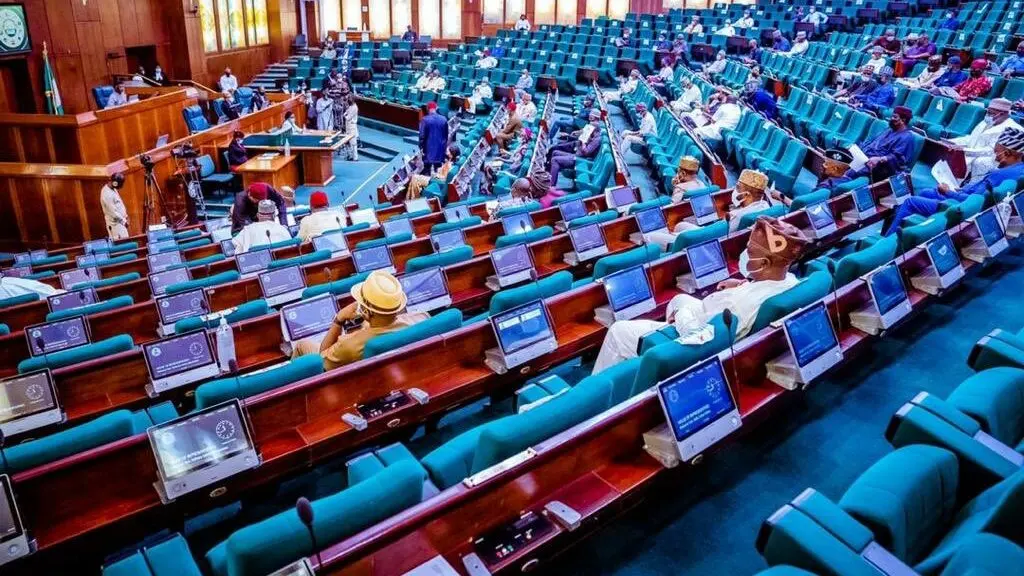
The House of Representatives on Tuesday, said it was very imperative to intentionally invest in the nation’s Polytechnics System, towards national economic growth.
The House committee on federal polytechnics and Higher Technical Education has, which unanimously adopted the budget performance of federal polytechnics in the country as a working document, said that the federal polytechnics were partners in progress.
Chairman of the committee, Rep. Faud Laguda, who reiterated the imperatives of improving the polytechnics, promised that the House would work in synergy with them.
“We are always partners in progress, everything we do is to improve and make things work better,” he said.
The lawmaker however called on the Committee of Federal Rectors (COFER) to ensure that few of the polytechnics that have not submitted their budgets do so.
According to him, federal polytechnics Ede, and some others are yet to submit their budgets.
Laguda also on behalf of the committee mandated the Registrar, Computer Professional Registration Council of Nigeria (CPN) seven days to submit all necessary documents.
He interrogated the rationale behind the coordination of eight regions offices by just 58 staff of the council.
The Registrar, Computer Professionals Registration Council of Nigeria (CPN), Mr, Adebayo Adegbiji assured of its capacity in pursuing their constitutional mandate.
Adegbiji, asserted that the council has the mandate to accredit private organizations in terms of Information and Communication Technology (ICT).
He however assured the committee of making available all the necessary documents needed by the committee in the stipulated seven days.
From Nicholas Dekera, Kaduna
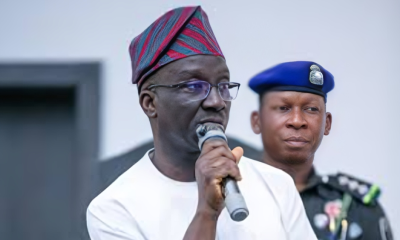
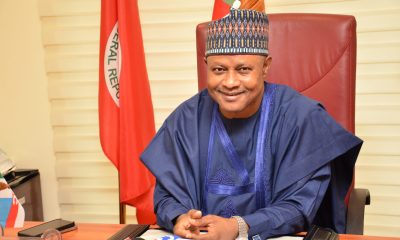
Kaduna State Governor, Uba Sani has declared that his administration will not tolerate any individual or group seeking to undermine peace and security in Kaduna State, warning that those he described as “conflict merchants” would be dealt with in accordance with the law.
The governor spoke on Monday while hosting heads of security agencies to an Iftar (breaking of fast) at Government House, Kaduna, where he emphasised that the state’s diverse and delicate nature requires responsible conduct from political actors and citizens alike.
He said although his government welcomes constructive criticism from opposition parties, it would not condone the spread of falsehoods capable of inciting unrest.
“Freedom of speech is not a licence to spread fake news that could lead to loss of lives and property,” the governor said. “Some people sit in the comfort of their homes and circulate rumours on social media. We will not accept that in Kaduna State.”
Sani warned that individuals who attempt to exploit the political season to foment trouble would face the full weight of the law, stressing that peace remains non-negotiable.
According to him, Kaduna is home to people of diverse ethnic and religious backgrounds who have coexisted peacefully over the years, noting that his administration is determined to preserve the state’s long standing culture of hospitality and tolerance.
The governor reminded the security chiefs that political activities would soon intensify as party primaries are scheduled to commence in April and conclude in May, in line with the timetable released by the Independent National Electoral Commission (INEC).
He cautioned that some politicians who may lose out during party primaries could resort to misinformation and victimhood narratives to cause confusion, urging security agencies to remain vigilant and proactive.
Sani also called for greater synergy between security agencies, local government chairmen, and traditional and religious leaders at the grassroots to strengthen intelligence gathering and prevent security breaches.
He commended the security agencies for their cooperation and dedication, noting that Kaduna State has not recorded any ethno-religious crisis since he assumed office.
While acknowledging that the state is relatively peaceful, the governor said his administration remains committed to addressing residual challenges of banditry and kidnapping, adding that his doors remain open to suggestions on improving security across the state.




Benue, Taraba Governors Visit IDPs on Border Communities
ShareTaraba State Governor, Agbu Kefas and Benue State Governor, Hycienth Alia on Monday visited IDPs on the border communities of the two states. Alia said the Benue government was...


Falcons Seek Redemption against Cameroon in Second Friendly
ShareReigning African champions Nigeria are keen to redeem themselves after losing to a late goal by Cameroon’s Indomitable Lionesses on Saturday in the first of two friendly matches in...

US Sanctions Rwanda’s Military, Top Commanders over Fight in DR Congo
ShareThe US has imposed sanctions on the Rwandan army and four of its senior commanders, accusing them of fuelling the conflict in neighbouring Democratic Republic of the Congo. Fighting has persisted despite a US-brokered...


Reps Reiterate Imperatives of Improving Polytechnics System
ShareBy Ubong Ukpong, Abuja The House of Representatives on Tuesday, said it was very imperative to intentionally invest in the nation’s Polytechnics System, towards...

Sani Warns Conflict Merchants, Pledges to Safeguard Peace in Kaduna
ShareFrom Nicholas Dekera, Kaduna Kaduna State Governor, Uba Sani has declared that his administration will not tolerate any individual or group seeking to undermine peace and...

ShareDisCos Meter 109,556 Customers in 2025 – NERC The Nigerian Electricity Regulatory Commission (NERC) said Electricity Distribution Companies (DisCos) metered...


Petrol Price Climbs N960 in Abuja, Lagos Sells N935 Per Litre
ShareBy Tony Obiechina, Abuja The escalating military confrontation involving the United States, Israel and Iran has begun to bite hard...

FG Outlaws Cash Tax Collection, Roadblocks Nationwide
ShareBy David Torough, Abuja The Federal Government yesterday formally banned the collection of taxes in cash and prohibited the mounting...
Tinubu’s Renewed Hope Agenda gaining traction, Amgbare Lauds RTIFN
ShareFrom Mike Tayese, Yenagoa Managing Director/CEO of the Niger Delta Basin Development Authority (NDBDA), Prince Ebitimi Amgbare, has expressed confidence...

NGF Backs Tinubu on Direct Federation Account Remittance
ShareBy Tony Obiechina, Abuja The Nigeria Governors’ Forum (NGF), under the chairmanship of AbdulRahman AbdulRazaq, has expressed strong support for...