
NEWS
APC Crisis Deepens as Yargwa Aligns With Abdullahi in ADC

From Abel Zwanke, Lafia
Former Nasarawa State Commissioner for Youth and Sports Development, Dr. Isaac Lucky Yargwa, who formally defected from the All Progressives Congress (APC) to the African Democratic Congress (ADC) has declared that the ruling All Progressive Congress has failed Nigerians and that a new political direction is urgently needed ahead of the 2027 elections.
Speaking in an interview with journalists on Monday in Lafia, Dr.
Yargwa said his decision to leave the APC was driven by what he described as the “harsh socio-economic realities” under President Bola Tinubu’s administration. He said the ruling party had lost its identity and internal democratic values, both at the national and state levels.According to him, “APC, under the current administration, has come with hardship and misery. It has skyrocketed poverty, insecurity, and suffering in virtually every household. Any right-thinking Nigerian will understand why we need an alternative government.”
Dr. Yargwa, who played a key role in Governor Abdullahi Sule’s re-election campaign as co-chairman for Wamba Local Government and co-director of youth mobilization, said his loyalty to the governor remained intact despite his departure from the party. He described Governor Sule as a mentor and father figure, noting that his respect for the governor was not tied to APC’s national failures.
He said the APC in Nasarawa State had become factionalized and hijacked by “new entrants whose interest is to undermine the governor ahead of 2027”, making it difficult for genuine stakeholders to contribute meaningfully. “The party’s structures are being manipulated, and internal democracy no longer exists,” he stressed.
Explaining why he chose ADC, Dr. Yargwa said the party offered a credible alternative for Nigerians seeking unity, integrity, and meaningful governance. He noted that ADC’s nearly two decades of existence and inclusive leadership made it a viable platform for change.
“ADC is not just another political vehicle. It is a platform for Nigerians who want an alternative. Many political actors from APC are quietly supporting ADC because they recognise the need for reform,” he said.
On fears that defections may destabilize his new party, Yargwa maintained that ADC was fundamentally different from other political parties, insisting that it is driven by principles rather than personal ambitions. He revealed that his transition to the party three months ago had been smooth and widely accepted across stakeholder groups.
Speaking on national political alignments, Yargwa welcomed collaborations with prominent opposition figures such as Peter Obi, Atiku Abubakar, and Nasir El-Rufai, saying their involvement would strengthen the push for reforms and good governance.
He further emphasized that ADC was becoming a rallying point for those dissatisfied with APC, PDP, and other mainstream parties, adding that Nigerians must unite behind a common front for national redemption.
On his political alignment in Nasarawa, Yargwa expressed confidence in the leadership of Barrister Mohammed Abdullahi, a key figure in ADC, whom he described as experienced and well-prepared for governance. He praised Abdullahi’s track record at the local, state, and national levels, noting that his capacity positioned him as the right leader for Nasarawa in 2027.
“Barrister Mohammed has the pedigree, experience, and vision. He has served at all three levels of government. When he becomes governor, he will hit the ground running. Our focus is on planning, consultation, and delivering a blueprint for sustainable development,” he stated.
Calling on the people of Nasarawa State to embrace ADC, Yargwa urged voters to show courage and choose a new direction rather than remain trapped in hardship. He argued that the ruling party had brought widespread poverty, insecurity, and economic instability.
“This is the time for courage and vision. APC has represented hardship and corruption for too long. ADC is offering a genuine alternative. I encourage every eligible voter to obtain their membership cards and mobilize for change,” he said.
He appealed particularly to young Nigerians to rewrite the nation’s political story in 2027 by choosing leaders committed to development, security, and prosperity.
“Nigeria cannot continue on this path of economic collapse and insecurity. The Naira is worthless, poverty is widespread, and the government is failing. Change is not just possible — it is necessary,” he added.
Dr. Yargwa reaffirmed his commitment to mobilizing grassroots support for ADC, saying his move signaled a new era in Nasarawa politics as the state inches closer to the 2027 general election.


By Tony Obiechina, Abuja
The Central Bank of Nigeria (CBN) has reaffirmed its commitment to maintaining monetary and financial system stability, pledging to sustain policies aimed at curbing inflation, ensuring price stability and fostering long-term economic growth.
The assurance was given during a one-day stakeholders’ fair held in Bauchi, where the apex bank engaged the public on its policies, promoted financial inclusion and encouraged greater awareness of its services.
The Acting Director of Corporate Communications and Investor Relations, Hakama Sidi-Ali, represented by the CBN Branch Controller in Bauchi, Michael Dalyop, said recent reforms introduced by the bank were beginning to deliver positive results.
According to her, the reforms have contributed to improved macroeconomic stability, easing inflation and stronger confidence in the foreign exchange market.
She disclosed that Nigeria’s external reserves climbed above $52.5 billion as of July 17, 2026, marking the highest level in 17 years and surpassing the CBN’s annual target. The increase, she said, was driven by stronger foreign exchange inflows, renewed investor confidence and increased participation across asset classes.
Sidi-Ali also noted that inflation continued to moderate, with headline inflation falling from 15.93 per cent in May to 15.91 per cent in June 2026. Food and core inflation also declined, a trend she attributed to disciplined monetary tightening, exchange rate reforms and improved market transparency.
She added that the naira had continued to strengthen, with the gap between the official exchange rate and Bureau De Change rates narrowing to below two per cent, reflecting increased stability in the foreign exchange market.
The CBN highlighted several reforms implemented over the past 34 months, including the unification of the foreign exchange market, banking sector recapitalisation, the introduction of the Non-Resident Bank Verification Number, the B-Match foreign exchange trading platform, the Nigeria Payments System Vision 2028 and a 75 per cent Cash Reserve Ratio on non-Treasury Single Account public sector deposits to improve liquidity management and reduce inflationary pressure.
The bank also announced its collaboration with the Financial Markets Dealers Association to introduce the Nigerian Overnight Financing Rate, a transparent benchmark for short-term funding transactions aligned with international best practices.
Sidi-Ali said the stakeholders’ fair was designed to deepen financial inclusion, promote alternative payment channels and strengthen public engagement with the CBN. She encouraged participants to seek information on financial consumer protection, payment system innovations, microfinance, monetary policy and currency management.
She also reiterated the bank’s warning against the abuse of the naira, urging Nigerians to avoid spraying, hawking, mutilating or counterfeiting the national currency, while advising the public to rely only on verified CBN platforms for information.
Also speaking, Bauchi CBN Branch Controller Michael Dalyop, represented by Assistant Director Salahu Bello Mohammed, said the bank’s 2024–2028 strategy was focused on achieving monetary, price and financial system stability to drive inclusive economic growth.
He said reforms in the foreign exchange market had improved transparency, strengthened investor confidence and helped boost the country’s foreign reserves beyond $50 billion. He added that inflation was on a downward trend and that the successful recapitalisation of banks had strengthened the financial sector’s capacity to support businesses and economic development.
Dalyop urged Nigerians to take advantage of formal financial services by keeping their money in banks instead of at home and called on citizens to treat the naira with dignity and respect.
CBN Reaffirms Commitment to Monetary Stability, Economic Growth
By Tony Obiechina, Abuja
The Central Bank of Nigeria (CBN) has reaffirmed its commitment to maintaining monetary and financial system stability, pledging to sustain policies aimed at curbing inflation, ensuring price stability and fostering long-term economic growth.
The assurance was given during a one-day stakeholders’ fair held in Bauchi, where the apex bank engaged the public on its policies, promoted financial inclusion and encouraged greater awareness of its services.
The Acting Director of Corporate Communications and Investor Relations, Hakama Sidi-Ali, represented by the CBN Branch Controller in Bauchi, Michael Dalyop, said recent reforms introduced by the bank were beginning to deliver positive results.
According to her, the reforms have contributed to improved macroeconomic stability, easing inflation and stronger confidence in the foreign exchange market.
She disclosed that Nigeria’s external reserves climbed above $52.5 billion as of July 17, 2026, marking the highest level in 17 years and surpassing the CBN’s annual target. The increase, she said, was driven by stronger foreign exchange inflows, renewed investor confidence and increased participation across asset classes.
Sidi-Ali also noted that inflation continued to moderate, with headline inflation falling from 15.93 per cent in May to 15.91 per cent in June 2026. Food and core inflation also declined, a trend she attributed to disciplined monetary tightening, exchange rate reforms and improved market transparency.
She added that the naira had continued to strengthen, with the gap between the official exchange rate and Bureau De Change rates narrowing to below two per cent, reflecting increased stability in the foreign exchange market.
The CBN highlighted several reforms implemented over the past 34 months, including the unification of the foreign exchange market, banking sector recapitalisation, the introduction of the Non-Resident Bank Verification Number, the B-Match foreign exchange trading platform, the Nigeria Payments System Vision 2028 and a 75 per cent Cash Reserve Ratio on non-Treasury Single Account public sector deposits to improve liquidity management and reduce inflationary pressure.
The bank also announced its collaboration with the Financial Markets Dealers Association to introduce the Nigerian Overnight Financing Rate, a transparent benchmark for short-term funding transactions aligned with international best practices.
Sidi-Ali said the stakeholders’ fair was designed to deepen financial inclusion, promote alternative payment channels and strengthen public engagement with the CBN. She encouraged participants to seek information on financial consumer protection, payment system innovations, microfinance, monetary policy and currency management.
She also reiterated the bank’s warning against the abuse of the naira, urging Nigerians to avoid spraying, hawking, mutilating or counterfeiting the national currency, while advising the public to rely only on verified CBN platforms for information.
Also speaking, Bauchi CBN Branch Controller Michael Dalyop, represented by Assistant Director Salahu Bello Mohammed, said the bank’s 2024–2028 strategy was focused on achieving monetary, price and financial system stability to drive inclusive economic growth.
He said reforms in the foreign exchange market had improved transparency, strengthened investor confidence and helped boost the country’s foreign reserves beyond $50 billion. He added that inflation was on a downward trend and that the successful recapitalisation of banks had strengthened the financial sector’s capacity to support businesses and economic development.
Dalyop urged Nigerians to take advantage of formal financial services by keeping their money in banks instead of at home and called on citizens to treat the naira with dignity and respect.
By David Torough, Abuja
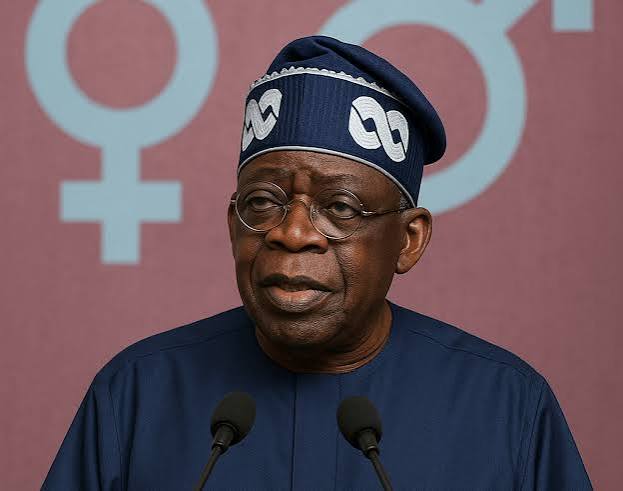
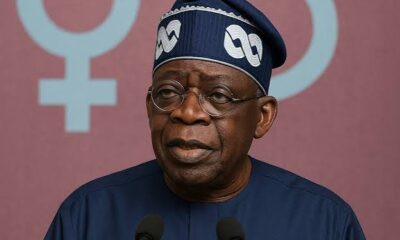
President Bola Tinubu on Thursday ordered the Economic and Financial Crimes Commission (EFCC) to immediately return to court and vacate the order freezing the bank accounts of the Osun State Government, describing the timing of the action as embarrassing and capable of undermining public confidence in the democratic process.
The President, in a statement issued by the State House, stressed that while he remained committed to the operational independence of anti-corruption agencies, the decision to freeze the state’s accounts just days before the Osun governorship election created an unfortunate perception that federal institutions could be influencing the electoral process.
Tinubu said he was not questioning the EFCC’s statutory powers or the legality of its investigation but was compelled to intervene because every action of a federal institution is ultimately attributed to the Presidency.
“I feel deeply embarrassed not by the EFCC’s exercise of its mandate backed by a court order, but by the timing of the agency’s action,” the President said, adding that he had not been fully briefed on the circumstances leading to the commission’s decision.
He reiterated that since assuming office, he had deliberately refrained from interfering in the operations of the EFCC and other law enforcement agencies, insisting that independent institutions are essential to the rule of law and democratic governance.
However, Tinubu said the proximity of the Osun governorship election made it imperative to avoid any action capable of creating the impression that the Federal Government was using the EFCC to influence the outcome of the poll.
“Nothing ought to be done to give an impression that the EFCC or any other agency of the Federal Government is being used to interfere with the election,” he said.
Consequently, the President directed the anti-graft agency to immediately return to court to vacate the freeze order and discontinue the action against the Osun State Government in the overriding public interest.
The EFCC had secured the court order as part of an ongoing investigation into the alleged diversion of about N11 billion in public funds by the Osun State Government.
The commission maintained that its action was lawful and unrelated to the forthcoming governorship election, arguing that investigators uncovered suspicious transfers from government accounts into several corporate entities and had to act swiftly to prevent further movement of funds.
EFCC spokesman and Director of Public Affairs, Wilson Uwujaren, also defended the commission’s powers, insisting that under the law, the agency could place temporary restrictions on suspicious accounts before obtaining judicial approval for an extended freeze.
The commission further rejected allegations that its intervention was politically motivated.
The account freeze, however, drew widespread criticism from the Osun State Government, opposition parties, the Nigerian Bar Association and legal practitioners, who questioned both the timing and legality of the action.
Governor Ademola Adeleke denied allegations of financial misconduct, dismissed claims that his administration diverted public funds and directed the state’s Attorney-General to challenge the freeze order in court.
Tinubu’s intervention is expected to ease political tensions ahead of the governorship election, while renewing debate over the balance between anti-corruption enforcement and the need to safeguard public confidence in the electoral process.
By David Torough, Abuja
The Independent Corrupt Practices and Other Related Offences Commission (ICPC) has uncovered two additional fictitious government agencies in its investigation into the controversial Presidential Foreign Investment Promotion Council (PFIPC), as President Bola Tinubu received the commission’s interim report recommending the prosecution of the alleged mastermind, Adeniyi Matthew Adeyemi.
Briefing State House correspondents after presenting the report at the Presidential Villa, Abuja, ICPC Chairman, Dr.
Musa Adamu Aliyu, said investigations established that Adeyemi was never appointed by the Federal Government and that the PFIPC, also referred to in some documents as the Presidential Foreign Intervention Promotion Council, had no legal backing, having neither been created by an Act of the National Assembly nor by an Executive Order.Aliyu disclosed that the appointment letter and other documents used by Adeyemi were forged, while the syndicate unlawfully occupied the offices of the defunct Presidential Economic Advisory Council (PEAC), using the premises to project legitimacy and allegedly deceive government officials, foreign diplomats and other stakeholders.
The ICPC also uncovered two additional fake agencies, the FCT Investment Promotion Agency and the Foreign Investment Promotion Agency/Public-Private Partnership, which were allegedly created with forged legislative instruments and used to open bank accounts for illegal activities.
According to the commission, Adeyemi later altered the name of the organisation from the Foreign Investment Promotion Council to the Foreign Intervention Promotion Council in a bid to broaden its operational scope.
Aliyu, however, stated that investigations found no evidence that Federal Government funds were approved or disbursed to the fake agency, while no security breach was detected within the Presidency or the Central Bank of Nigeria.
The commission identified weaknesses in verification processes, inter-agency coordination and oversight across several Ministries, Departments and Agencies (MDAs), including the Office of the Secretary to the Government of the Federation, the Office of the Head of the Civil Service of the Federation, the Office of the Accountant-General of the Federation, the Budget Office and the National Information Technology Development Agency (NITDA), saying the lapses enabled the syndicate to operate undetected.
The ICPC recommended the prosecution of Adeyemi, disciplinary action against public officials whose acts of omission facilitated the operation of the fake agency, and reforms to strengthen internal controls across government institutions, stressing that investigations remain ongoing to identify additional collaborators.
Meanwhile, the House of Representatives Ad-hoc Committee investigating the PFIPC uncovered fresh inconsistencies in documents used to establish the purported agency during its hearing on Thursday.
Representing the Permanent Secretary, State House, Director of Administration Abdulkadri Idris told lawmakers that the Presidency neither requested the Office of the Accountant-General of the Federation to create a budget code for the council nor authorised its establishment.
He described fraudulent documents purportedly issued by the State House, noting that the signatory identified as “Akande Adewale” had never served as Director of Administration and that no Directorate of Administration and Support Services existed within the Presidency.
Committee Chairman Yusuf Gagdi said the testimony exposed glaring discrepancies between documents obtained from the Accountant-General’s Office and authentic records submitted by the State House, raising further questions over how the council gained official recognition.
The Federal Road Safety Corps (FRSC), however, defended its decision to allocate seven official Federal Government number plates to the PFIPC, explaining that it acted on documents presented by the applicants, verification of a government-domain website and a physical inspection of the organisation’s office.
Corps Marshal Shehu Mohammed said the agency later discovered that the PFIPC was not a legitimate Federal Government body and had commenced steps to retrieve the official number plates while tightening its verification procedures.
Lawmakers directed the FRSC to provide details on the current location and status of all vehicles registered under the council and announced that the committee would conclude its investigation next week.
The House is also probing how the fictitious agency allegedly secured a N1.3 billion allocation in the 2026 Appropriation Act despite lacking any legal foundation. Meanwhile, Adeyemi, who is facing criminal charges bordering on conspiracy, forgery and impersonation, is expected to appear before the Federal High Court later this month.




City Boy Movement Replaces Oyo Coordinator over Alleged Misconduct
ShareThe City Boy Movement (CBM) has replaced its Oyo State Coordinator, Ahmed Ajibola, following allegations of gross misconduct, insubordination, and...


Democracy Must Deliver Real Impact Beyond Elections – Sanwo-Olu
ShareLagos State Governor, Babajide Sanwo-Olu has said that democracy must transcend periodic elections to deliver tangible improvements in the lives...

Osun 2026: Adeleke’s Outbursts Sign of Irredeemable Defeat – Oyebamiji
ShareFrom Ayinde Akintade, Osogbo The Governorship Candidate of the All Progressives Congress APC in the forthcoming governorship election in Osun...


CBN Reaffirms Commitment to Monetary Stability, Economic Growth
ShareBy Tony Obiechina, Abuja The Central Bank of Nigeria (CBN) has reaffirmed its commitment to maintaining monetary and financial system...

Tinubu Intervenes in EFCC Osun Account Freeze, Directs Re- open
ShareBy David Torough, Abuja President Bola Tinubu on Thursday ordered the Economic and Financial Crimes Commission (EFCC) to immediately return...

PFIPC Scandal: ICPC Uncovers Two More Phantom Agencies
ShareBy David Torough, Abuja The Independent Corrupt Practices and Other Related Offences Commission (ICPC) has uncovered two additional fictitious government...

Suswam Leads Exco Members to Mourn Late Salifu, Condemns Killing as Barbaric
ShareBy David Torough, Abuja Former Benue State Governor, Senator Gabriel Suswam, has described the killing of former Secretary to the...
Tinubu Dismisses One-Party State Claims, Pledges Stronger Partnership with Catholic Bishops
ShareBy David Torough, Abuja The Federal Government has reaffirmed its commitment to strengthening collaboration with the Catholic Bishops’ Conference of...
2027: Nasarawa SDP Boasts of Landslide Victory
ShareThe Social Democratic Party (SDP) in Nasarawa State has expressed confidence that the party would win the governorship seat and...

2027: Sani’s Running Mate Receives Hero’s Welcome after Nomination
ShareJerry Adams, the newly nominated running mate to Gov. Uba Sani of Kaduna for the 2027 election has received a...