
POLITICS
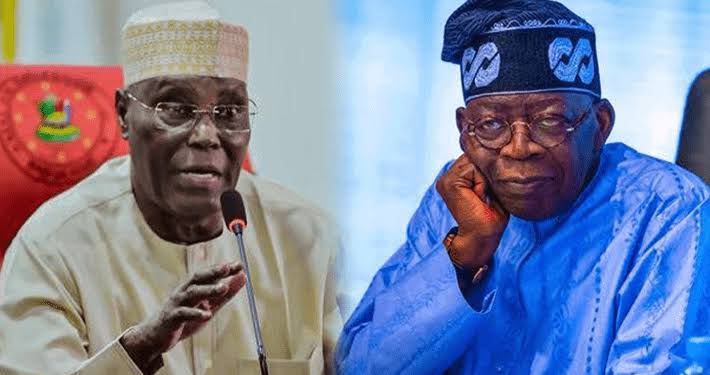
Atiku Slams Tinubu Over Fuel Subsidy Policy

By David Torough, Abuja
Former Vice President Atiku Abubakar has criticised President Bola Tinubu over the removal of petrol subsidy, accusing the administration of worsening economic hardship while retaining what he described as opaque costs in the petroleum sector.
In a statement issued on Friday by his Senior Special Assistant on Public Communication, Phrank Shaibu, Atiku said Tinubu was wrong to describe his proposed petroleum-sector intervention as economically ignorant.
Atiku argued that the economic conditions that existed before Tinubu assumed office had changed significantly following the removal of fuel subsidy, the floating of the naira and rising inflation.
He said his proposal was not a return to the previous open-ended subsidy regime but a targeted, capped, budgeted and time-bound production-support mechanism that would be independently audited and linked to domestic production.
According to him, the government removed the benefit of subsidy from consumers while allegedly retaining substantial petroleum-sector under-recoveries and energy-security costs.
The statement cited figures from NNPC’s audited accounts, claiming approximately ₦17.5 trillion in energy-security costs and petroleum under-recoveries, including about ₦7.13 trillion classified as energy security and ₦8.67 trillion in under-recoveries.
“If subsidy is dead, why are under-recoveries alive?” Atiku asked, arguing that Nigerians had been left with higher costs while questions about government expenditure remained unresolved.
He also rejected the Presidency’s argument that increased Federation Account Allocation Committee (FAAC) disbursements to states represented a major benefit of subsidy removal.
Atiku said higher allocations to state governments should not be celebrated if they came at the expense of household purchasing power, citing rising transport costs, food prices and production expenses.
He further argued that increased FAAC allocations could encourage states to depend on federal transfers instead of expanding their productive economies, attracting investment and broadening their internally generated revenues.
The former vice president also demanded explanations for what he described as approximately ₦30 trillion in Federation Account revenues, deductions, savings and transfers, as well as ₦12.8 trillion allocated to the Service-Wide Vote in the 2026 budget.
Atiku said the administration should provide greater transparency over its finances rather than dismissing criticism of its economic policies.
He maintained that the success of economic reform should not be measured solely by rising government revenues while citizens experience declining purchasing power.
“The real ignorance is believing suffering is economic policy,” Atiku said.
He accused the Tinubu administration of transferring the burden of fiscal adjustment to ordinary Nigerians and warned against subjecting the country to another four years of what he called a failed economic experiment.
The statement was signed by Shaibu on behalf of Atiku, the 1999–2007 vice president and presidential candidate of the African Democratic Congress (ADC).





POLITICS
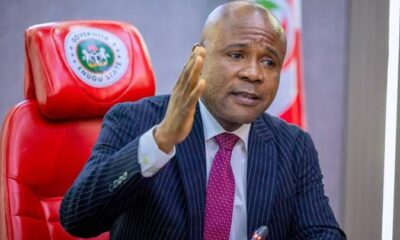
2027: Don’t Call Benue People Shenanigans, Alia not answerable to you- Ex- Amb, Tarzoor Tells Ortom, Wike.
From Attah Ede, Makurdi
Ex -Nigeria’s Ambassador to Namibia, Terhemen Tarzoor, has warned the immediate past Governor of Benue State Samuel Ortom and the Minister of the Federal Capital Territory (FCT), Nyesom Wike, to stop making derogatory remarks about governor Alia and calling Benue people shenanigans.
He also frown on their recent comments on Governor Hyacinth Alia, the Catholic Church and Federal Allocation accruing to the State.
Tarzoor gave the warning while speaking with journalists in Makurdi, Thursday.
The former speaker of the Benue State House of Assembly, described the ex-governor Ortom’s outing on a TV programme, last week, as inappropriate saying the reported remarks by Ortom referring to Alia as a “419”, “a fake Reverend Father” and calling some Benue people “shenanigans” was uncalled for and condemnable.
Tarzoor insisted that political differences should not justify the use of language capable of undermining the office of the Governor and the dignity of the people of the state.
Tarzoor who is Benue State coordinator of Renewed Hope Initiative (RHI) campaign for President Bola Tinubu ahead of the 2027 general elections, said Ortom should be mindful of his public comments about the incumbent governor.
“My take is that the former governor is not in the position to call the number one citizen 419. He has no right to call him that.”
“Ortom as an elder brother whom I respect, made me worried that political disagreements are being expressed in ways I consider unnecessary and capable of worsening tensions in the state.
“I Ortom’s reported comments on the administration of the Catholic Church, shows that he is not sufficiently informed about the Church’s financial accountability mechanisms to make such assertions”, Tarzoor said.
He also expressed reservations that the former Governor had the audacity to pontificate on the Catholic Church administration quoting Ortom as saying that “The Reverend Father (referring to Alia) is running Benue State like a Parish where priests just earn moneys, offertories and spend as they want. Invariably, he is saying there is no accountability in the Catholic Church.
“As a Knight of St. John International, I want to disabuse his mind and the minds of people who listened to that programme that there is a high level of accountability in the Catholic Church,” Tarzoor said.
He explained that the Catholic Church vehemently upholds a strong administrative accountability structures, from the priests to the church faithful and reasons why they have church councils, elders and laity councils, to provide oversight and ensure that priests were accountable to the faithful.
“There is no Catholic priest that can just earn money and spend at ease in the Catholic Church and I therefore say Ortom does not have the equipage to pontificate on such a subject matter,” he said, urging him to be cautious about making statements on the internal administration of a religious institution.
Tarzoor maintained that public officials, particularly those who had occupied high political offices, should demonstrate responsibility in their public engagements and avoid comments that could be interpreted as attacks on religious institutions.
The former lawmaker, who also faulted what he described as an unfair comparison between Ortom’s eight-year administration and Alia’s government, which has served for three years plus, argued that any assessment of the two administrations should consider their respective periods in office, resources available and development targets before drawing conclusions about their performances.
Tarzoor further condemned Ortom’s reported description of the people of Benue as “shenanigans,” saying such language was unbecoming of a political leader who had benefited from the support of the state’s electorate.
“I see that as repugnant, I see that as unbefitting of a personality who have benefitted enormously from the votes of Benue people all his life.”
He urged political leaders to distinguish between disagreements with an incumbent administration and the need to respect the people they once governed, saying “If he has issues, he should apply the right language, apply decorum in the manner to address matters. That is the only legacy we can leave for our children, those yet unborn and not to talk down on someone in the person of the Governor because you are bitter.”
On Wike’s reported comments concerning the revenue accruing to Benue State and the need for the state government to disclose its income and expenditure, Tarzoor questioned what he considered the minister’s selective attention to the state’s finances.
The former Ambassador who wondered when Wike became the Minister of Finance or Minister of Information, argued that if the FCT minister’s objective was to promote transparency in the management of public funds, similar questions should be directed at other states rather than concentrating on Benue.
“Has he spoken about the one coming to Nasarawa, or the one going to Rivers State? Has he published the one in Rivers? Has he published the one in Kano?” Tarzoor asked stating that the disclosure of public revenue and expenditure was a legitimate issue but insisted that such demands should be pursued through appropriate channels and applied consistently across the country.
The former governorship candidate of PDP alluded that the Alia administration was open to scrutiny, noting that members of the public could request relevant government records through established procedures, including the Freedom of Information framework.
“Governor Hyacinth Alia is open to all criticisms. The law is clear on freedom of information. You test it; the records will be there for you to see,” he said.
“I must caution people against uncoordinated demands for financial information. Government officials should be allowed to concentrate on governance while legitimate enquiries were handled through appropriate channels.
“The media had an important role to play in promoting accountability by seeking accurate information from relevant government agencies rather than relying solely on political exchanges”, he said.

By Tambaya Julius, Abuja
The Independent National Electoral Commission (INEC) has completed nine of the 14 activities on its timetable for the 2027 general elections, while addressing complaints from political parties over alleged omissions and discrepancies in candidates’ lists.
The development emerged at a youth engagement programme in Abuja, where electoral stakeholders also called for measures to protect young voters from violence and strengthen public confidence in the electoral process.
The INEC Chairman, Prof. Joash Amupitan, represented by the National Commissioner for Information and Voter Education, Dr.
Mohammed Haruna, said the commission was reviewing its preparations and working to resolve outstanding issues ahead of the polls.The event, titled “The Electorate: A Youth Dialogue with INEC,” was organised by Abuja Global Shapers Community (AGC) in partnership with Nigeria Youth Futures Fund, Yiaga Africa Abuja and Enough is Enough Nigeria, under the theme, “Let’s Talk About the 2027 Elections.”
Haruna said the commission had made progress on key activities, including the publication of candidates nominated by political parties for elective positions.
He acknowledged that the publication had generated complaints from some parties over alleged omissions and discrepancies, adding that INEC had invited the affected parties to submit petitions for consideration before finalising the list.
He described the voters’ register as central to the electoral process, noting that it would serve as the basis for identifying and accrediting eligible voters on election day.
Haruna also said INEC had increased the frequency of its meetings to review preparations, assess progress and take decisions necessary for the smooth conduct of the elections.
He explained that the commission comprises a chairman and 12 national commissioners responsible for policy decisions, alongside resident electoral commissioners across the 36 states and the Federal Capital Territory.
The Curator of Abuja Global Shapers Community, Solape Sonuga, urged participants to engage INEC on its readiness for the elections and the measures needed to ensure credible polls.
Sonuga described the 2027 elections as particularly important to young Nigerians, saying the engagement was designed to promote youth participation, strengthen voter education and encourage civic responsibility beyond election day.
The Programme Manager for Governance at Yiaga Africa, Yetunde Bakare, called for deliberate efforts to ensure that young Nigerians could participate safely and meaningfully in the elections.
Citing Yiaga Africa’s voting intention survey, Bakari said 84 per cent of Nigerians surveyed were likely or very likely to vote in 2027. She said 61 per cent feared electoral violence could prevent them from participating, while only 40 per cent of young respondents said they were very likely to vote.
She described the figures as a concern for electoral stakeholders, stressing that voter mobilisation alone would not be sufficient without a safe and accessible environment for participation.
Bakare commended INEC’s preparations, including online voter registration, printable Permanent Voter Cards, planned nationwide mock accreditation exercises and efforts to strengthen the governance of electoral technology and artificial intelligence.
She urged the commission to communicate promptly with voters when technical or operational challenges arise, ensure transparency in the use of electoral technologies and make adequate provisions for eligible voters in hard-to-reach communities.
She also encouraged young Nigerians to seek credible information, reject electoral violence and misinformation, and hold elected officials accountable beyond election day.
Bakari said transparency, effective communication and credible electoral processes were essential to building public trust and ensuring that the 2027 elections reflected the will of Nigerians.
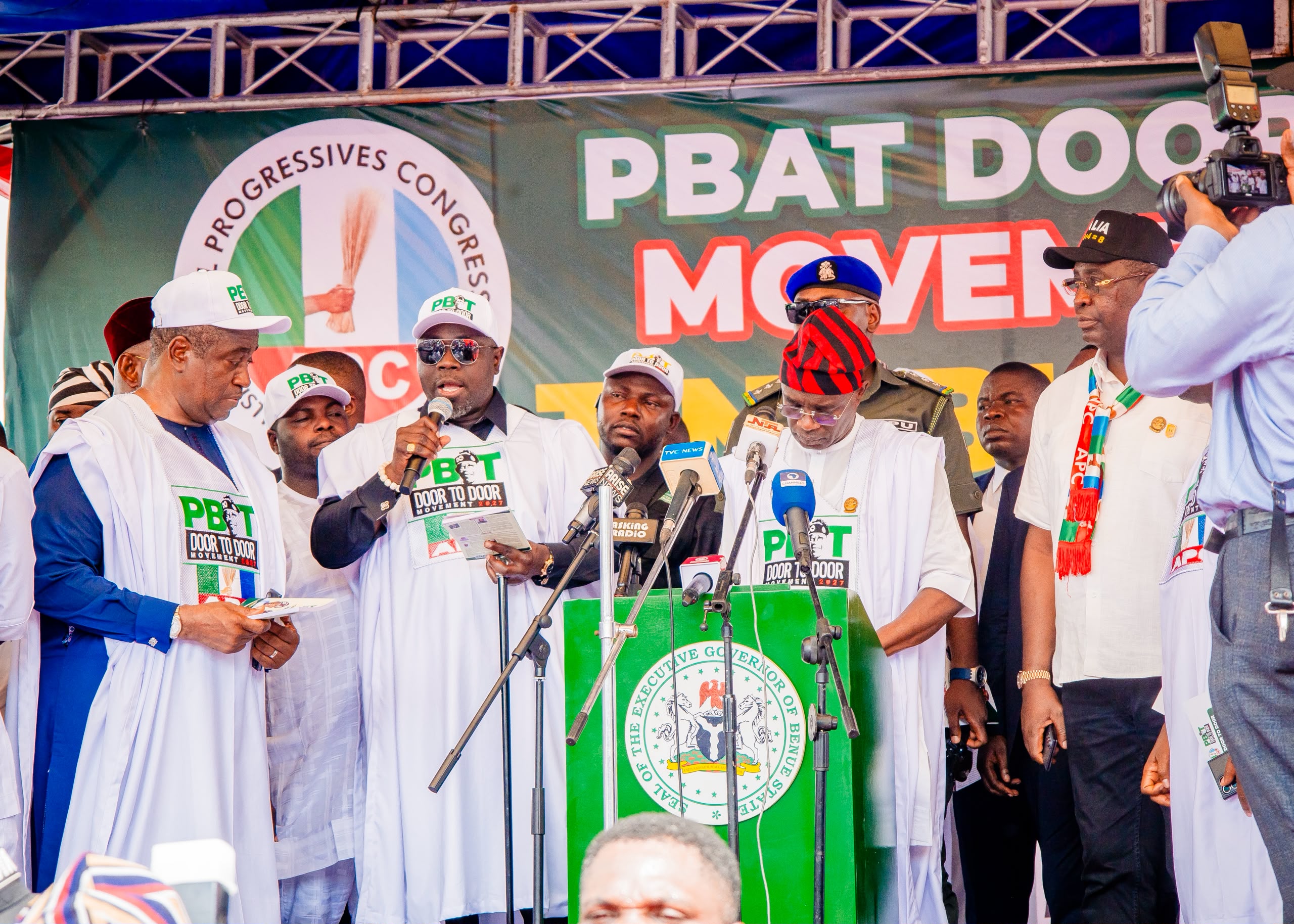
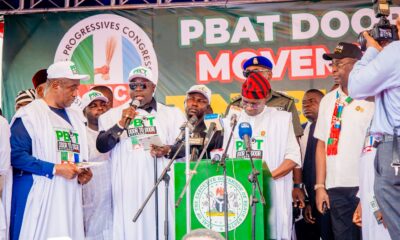
Leader of the PBAT Door-to-Door Movement, Government Tompolo, has called on the people of Benue state to come out enmasse and vote for President Bola Tinubu in the 2027 election as he has demonstrated great concern for the security of life and property of the people, with the creation of the 5 Division of the Nigerian Army with headquarters in Makurdi, the state capital.
He described Tinubu as a leader, who said meant well for Nigeria and has shown this through bold policies and reforms including the State Police Bill, Local Government Autonomy Bill, Electricity Bill, and removal of petrol subsidy as well as the student loans programme, NELFUND, among others.
Ekpemupolo, also known as Tompolo, stated this in Makurdi, on Thursday, during the inauguration of the state chapter of the movement and distribution of 25 campaign vehicles to the state coordinators.
According to Tompolo, who was represented by Kestin Pondi, Managing director of Tantita, only a leader with love for his people could come up with such policies within such a short period of time.
“He is a president that wants Nigeria to be better than he met it. Tinubu is doing what no leader before him had the courage to do even though he knew it will turn the people against him.
“We like to compare Nigeria with Asian countries that are doing so well but one thing we forget to remember is that these countries reforms were done in more than eight years,” he said.
Continuing, Tompolo said: “They had bold leaders, they had courageous leaders who said we must reform and they stood by those reforms and today, they are the envy of the world. They are some of the most developed and civilised countries of the world.”
“Here in Nigeria, we have Tinubu, a man that is as courageous or even more courageous than those leaders. The man said we must reform and he has embarked on the reforms,” he added.
Governor Hyacinth Alia, in his remarks said President Tinubu was the secret behind all the development the people of the state praise him for.
“Each time you thank me for working for Benue people, that is the man behind it,” he stated.
Alia showered praises on President Tinubu for making it possible for governors to work for their people, emphasising that Benue is working because of Tinubu’s support.
He called on the people to campaign assiduously and vote massively for Tinubu’s re-election to continue to enjoy the policies and programmes of his administration.
The governor appreciated the president for prioritising the security of Benue, particularly for siting the 5 division in Makurdi earlier in the year, a development that had led to deployment of the military to crisis areas and borders, bringing about security, such that some previously internally displaced persons were returning home on their own to continue with farming.
This development, the governor pointed out, will ensure Benue maintains its place as the food basket of the nation.
Alia also listed factories the state had built, the 670 kilometres road network, free basic education, rehabilitation, mechanised agriculture, and upgrade and equipping of health centres and hospitals as some of the things the state was enjoying from the Tinubu administration, adding that there is more in stock if he gets re-elected.
Earlier, National Coordinator of the Movement, Comrade Sunday Asuku, noted that Nigeria is currently on the right trajectory be ause a competent leader is in the saddle.
According to him, the security of Benue, which had been plagued by insecurity for years, is a priority by the Tinubu administration, hence the establishment of an army division in the state among other measures, which have improved the state’s security.
Asuku said a vote for Tinubu will ensure that his good initiatives for the state are fully delivered.
The National coordinator also advised the voters to ignore leaders who swore to remove petrol subsidy but became turncoats after seeing that it is a tough choice, but rather vote for a leader like Tinubu who has brought bold reforms are laying a solid foundation for a better Nigeria.
“Say no to cowardice, no to those only interested in selling Nigeria’s assets. Ask them what they did when they were in office. A vote for Tinubu is a vote for NELFUND, improved security and better infrastructure,” he added.
Also speaking, former governor of the state, Senator Gabriel Suswam, called on the people to vote for Tinubu, pointing out that his policies are laying a foundation for young Nigerians.
“Yes, there’s suffering now but there’s no way you can build a future without experiencing some pains. You’re experiencing some hardship but tomorrow will be better.
“We are suffering today because those steps were not taken by previous administrations. So if you have a leader that is taking steps towards building a nigeria for the future he deserves support,” he stated.



2027: Benue People Are Not ‘Shenanigans’, Alia Owes You No Apology, Ex-Ambassador Tells Ortom
ShareFrom Attah Ede, Makurdi A former Nigerian Ambassador to Namibia, Terhemen Tarzoor, has criticized former Benue State Governor Samuel Ortom...

JPMorgan’s Entry into Nigeria: Turning Global Finance into a National Development Opportunity
ShareBy Uche Joe Uwaleke The proposed establishment of JPMorgan Merchant Bank Nigeria Limited presents Nigeria with an important opportunity to...


WAHO Steps Up Regional Health Surveillance After Ebola Case Confirmed in Abuja
ShareBy David Torough, Abuja The West African Health Organisation (WAHO) has intensified regional health surveillance following the confirmation of an...

2027: Don’t Call Benue People Shenanigans, Alia not answerable to you- Ex- Amb, Tarzoor Tells Ortom, Wike.
ShareFrom Attah Ede, Makurdi Ex -Nigeria’s Ambassador to Namibia, Terhemen Tarzoor, has warned the immediate past Governor of Benue State...

DBN Signs $61m Credit Deal With AfDB, Unveils Support Initiative Report
ShareBy Tony Obiechina, Abuja The Development Bank of Nigeria Plc (DBN) has launched DAWN: DBN Action for Women in Nigeria,...

NLC Threatens Nationwide Action as Talks With FG Collapse
ShareBy Tambaya Julius, Abuja The Nigeria Labour Congress (NLC) has threatened possible nationwide industrial action following the failure of talks...

Top10 Magazine Names Umaru Kwairanga as Man of the Year 2026
ShareAlh. (Dr) Umaru Kwairanga, Group Chairman, Nigerian Exchange Group (NGX Group), has been named as the Top10 Magazine’s Man of...

UK, Nigeria to Deepen Defence, Security Cooperation
ShareThe United Kingdom has reaffirmed its commitment to deepening defence and security cooperation with Nigeria, with emphasis on military training,...


2027: INEC Steps Up Preparations, Completes Nine Activities
ShareBy Tambaya Julius, Abuja The Independent National Electoral Commission (INEC) has completed nine of the 14 activities on its timetable...

2027: Tinubu Accords Benue Security Top Priority, Tompolo Tells Supporters
ShareLeader of the PBAT Door-to-Door Movement, Government Tompolo, has called on the people of Benue state to come out enmasse...