
Oil & Gas
Bayelsa Communities Demand $10million Pay From Shell

Communities hosting Shell’s Estuaries Area (EA) oilfields in Bayelsa has urged the oil firm to review its annual development funding from $1 million to $10 million and other social obligations to them.
The communities, which make up four Cluster Development Boards (CDBs), Iduwini, Mein, Kou, and Bassan funded by Shell also demanded the payment of outstanding $14 million for sea anchorage for vessels deployed by Shell.
According to them, the amount, which accrued from 2006 till date must be offset within the next 21 days or they will be compelled to stage a peaceful protest at Shell’s EA oilfield in Bayelsa.
They lamented plight of some 80 members of the host communities who were engaged by Shell in the ongoing oil drilling campaign to acquire experience but regretted they had been rendered redundant and paid ‘Stay at Home Allowance’ for the past one year..
The communities in Ekeremor and Southern Ijaw Local Government Area of Bayelsa in a news conference in Yenagoa said the oilfirm was marginalising the communities despite their hospitable nature.
Mr Wuka Brisibe, Chairman of Community Development Community (CDC), in Ekeni on the 12 communities hosting the oilfields regretted that development had eluded the coastline settlements despite operating the Global Memorandum of Understanding (GMoU) with Shell.
“The sum of One million dollars irregularly paid to the four CDBs covering the 12 host communities of the E.A, fields as the GMOU funds is inadequate.
“Each of the host communities receives approximately 83,333 dollars which upon conversion at the present rate of =N= 450.00 per dollar amounts to N37,499,850 only per annum.
“Our people cannot bear the brunt of years of oil and gas exploration and exploitation and not benefit from contracts, supplies and services provided for the operations of the said facilities.
“We are utterly displeased by the disposition of the Shell Petroleum Development Company (SPDC), in awarding vessel, service and supplies contracts envisaged within the local community content to non-natives and their companies whom we know are members of staff of SPDC or its cronies.
“This is done in flagrant disregard for the capacity and capability of natives of host communities to provide the said services or execute such contract.
“We totally condemn the ungentlemanly attitude of the SPDC in its non-compliance with the Local Community Content Policy and practice against its hosts at the E.A. oil field in Bayelsa,” Brisibe said.
They called for a review of the GMOU to limit the interference by Shell officials in determining the pace of the GMOU especially concerning remuneration of contractors upon completion of contracts or milestones.
Meanwhile, SPDC had said its official contribution to the development of host communities in Bayelsa was now over N23 billion
The company said under the GMoU, a model which places the choice of community projects on the people while the company provides the funding and necessary mentoring.
SPDC General Manager External Relations, Mr Igo Weli, said the amount represented about half of the company’s GMoU spend in its host communities in Niger Delta since the introduction of the community development model in 2006.
On the demand for the review of the $1 million annual obligation, Mr Bamidele Odugbesan, SPDC’s Media Relations Manager said that he would would look at the issues raised and respond soon


From Sylvia Udegbunam Enugu
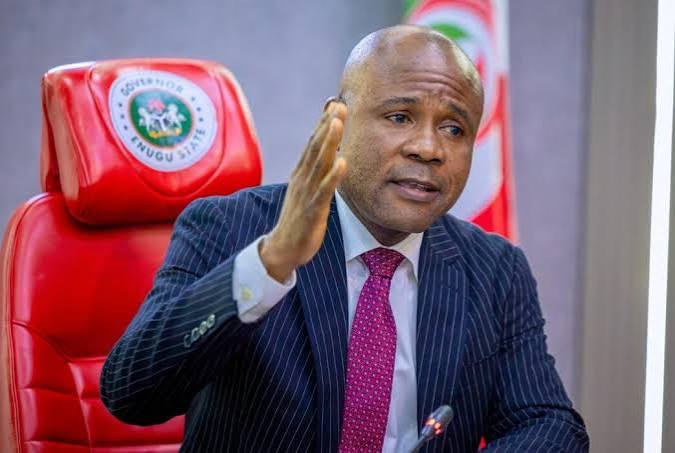
Governor of Enug State, Dr. Peter Mbah, has doubled down in his support for the removal of fuel subsidy by President Bola Tinubu’s administration, saying it was undebatable and inconceivable for anyone to imagine a return to the old order.
Mbah spoke at the “Meet the Candidates” town hall meeting organised by Afia TV in Enugu on Wednesday, where he also said that his administration had delivered good governance to the people of the state across all sectors.
He described it as a pathetic misconception of the country’s situation and the direction it was headed for anyone to talk about the reintroduction of fuel subsidy.
“If you reintroduce fuel subsidy today, we will lose ten times whatever we are currently trying to gain in terms of the removal of subsidy. The poverty rate that you are going to experience will be very high because the naira would be automatically devalued.
“We cannot go back to subsidy. And I do not think it is in the interest of the country for us to even debate that.
“Again, we should not even debate it because we do not want to send a signal to prospective investors that we are contemplating it. That would take us back. It is going to create panic in the system. It is going to get investors to pull back.
“Those that are coming in today to invest in that sector will become jittery. So, it is not even a subject to debate. It is something that we have moved on from, and we should be thinking about how to ensure that the natural benefits cascade to the households, create jobs and generate wealth for our people,” he said.
He said the nation should focus on how to further encourage private capital to flow, noting the growth the nation had experienced in the stock exchange space.
He added that Tinubu’s policies had stabilised the macro indicators, thus encouraging foreign direct investment.
“You can see quite a lot of funds coming into our country, not just portfolio investments, but also direct investments. It is also going to strengthen because the macro indicators are right,” he stated.
Mbah maintained that whereas fuel subsidy removal enables the government to target the less privileged, fuel subsidy as earlier practised benefited the rich more.
“By the way, I do not think the subsidy we practised before the President removed it was even the right one for the country because even the people we were looking at benefiting from it were only insignificantly benefiting from it. It was largely beneficial to our wealthy folks.
“But now, you can almost notice that the government is doing that in targeting the poor, using proceeds from subsidy removal. The government is aggressive on cash transfers. There is also the programme where the government is targeting 1,000 persons per ward across the entire country to be able to provide seed capital for them to become productive,” he added.
Meanwhile, on his stewardship so far, Mbah said his administration had kept faith with the people of Enugu State, delivering good governance across all sectors in line with his campaign manifesto.
He said the people of the state only needed to imagine where the state was before his inauguration as governor and where it is currently headed.
“Let us imagine the Enugu we knew four years ago. Let us just imagine an Enugu without Hotel Presidential. Let us imagine an Enugu without the International Conference Centre. Let us imagine an Enugu without Enugu Air. Let us imagine Enugu without the transport terminals, the 268 Smart Green Schools, 260 Type 2 Primary Healthcare Centres.
“You do not want them to imagine an Enugu without the International Hospital. You do not want them to imagine an Enugu without the CNG buses, the Nigergas. I think the list is endless.
“But I even think that we can stretch that imagination further because the work ahead will be more profound. Just imagine an Enugu where our children are receiving education that prepares them for the world because they have been imbued with evolving 21st-century skills. Imagine again an Enugu where you do not have any part of the city with an unpaved road.
“Also, imagine an Enugu in four years’ time that generates 660 megawatts of electricity; where we are able to provide 24-hour power supply; where you cannot come into your house and have the light off; and where people can run their businesses for a whole week without worrying about the cost of diesel. Just imagine an Enugu where you generate electricity and the people of Enugu are buying that at 120 naira because they own the coal that feeds the power plant.
“Imagine an Enugu where you now have to ride, not just on our CNG buses, but you have the monorail that can take you from point A to point B. Imagine an Enugu where you can fly from here to the United Kingdom, to the United States and other parts of the world,” he charged the electorate.
He urged the people to keep faith with the journey of greatness, growth and development, defending the gains of his first term and guaranteeing the promises of his second term by working for his re-election.
“If these imaginations capture our fancy, then we have a duty to fight for it. We do have a duty to continue to make sure that the bar does not come down and that the standard we have set in Enugu is sustained,” he concluded.
The Nigerian Upstream Petroleum Regulatory Commission (NUPRC) has opened discussions with Indonesia on petroleum investments, with Indonesian national oil company Pertamina expressing interest in Nigeria’s 2026 Licensing Round.
The development followed a meeting between the NUPRC Chief Executive, Oritsemeyiwa Eyesan, Indonesia’s Vice Minister of Foreign Affairs, Arif Havas Oegroseno, and Toriq Abdat, Vice President, Upstream Business Development, Pertamina.
Head, Corporate Communications and Media, NUPRC, Eniola Akinkuotu, made this known in a statement on Sunday.
Nigeria and Indonesia shared similar priorities, including energy security, resource utilisation and investments into the sector as both countries seek to increase oil production, with Nigeria targeting three million barrels per day (bpd) by 2030.
Nigeria currently produces about 1.6 million to 1.7 million bpd, while Indonesia produces about 600,000 bpd and is also seeking to increase output.
Abdat said Pertamina had been mandated to expand its operations internationally and was exploring opportunities in countries including Malaysia, Iraq and Nigeria.
“In Indonesia, we are producing only around 600,000 barrels. We are working on exploration towards deepwater but we found more gas than oil.
“That is why we go outside Indonesia, Malaysia, then the Middle East, Iraq and Nigeria,” he said.
Abdat said Pertamina was seeking producing assets, projects nearing production or opportunities ahead of Final Investment Decision (FID).
He said the company was open to both competitive bidding and bilateral arrangements with governments.
“We would like to be in projects with governments, producing assets, near production or before FID.
“Now we are looking at how we can help you reach the three million, and also help us provide more energy for our own consumption,” Abdat said.
He expressed interest in opportunities beyond crude oil and natural gas, particularly in the fertiliser sector, adding that Pertamina was developing a fertiliser plant to reduce Indonesia’s dependence on supplies from the Middle East amid disruptions caused by global conflicts.
He linked food security to the oil and gas sector, noting the importance of phosphate and other elements used in fertiliser production.
Responding, Eyesan said Nigeria’s production target was ambitious, adding that the 2026 Licensing Round was one of the strategies being deployed to achieve it.
“We have very aggressive targets, three million barrels per day by 2030, and today we are at 1.6, 1.7.
“We are committed to the objective and the licensing round is one of the strategies we are utilising,” she said.
Eyesan said licensing rounds had become a recurring exercise in Nigeria rather than an occasional process, following their institutionalisation under the Petroleum Industry Act (PIA) 2021.
She said the most recent commercial bid conference, held in July, featured 50 assets, with 37 awarded.
The NUPRC boss said Nigeria had also reviewed its fiscal terms in response to competition for the same pool of global investment capital.
She said the country had reduced entry barriers, including signature bonuses, to encourage investment in the upstream sector.
Nigeria, in turn, is diversifying its phosphate sources, including through a long-term transatlantic pipeline project with Morocco aimed at serving West Africa.
The meeting ended with both sides agreeing to sustain commercial and diplomatic engagements on potential areas of cooperation.(NAN)

By Tony Obiechina, Abuja
The Revenue Mobilisation Allocation and Fiscal Commission (RMAFC) has inaugurated a Planning Committee to coordinate preparations for the forthcoming Oil and Gas Investment forum scheduled to take place in China later this year.
The Chairman of the Commission Dr.
Mohammed Bello Shehu represented the Investment Monitoring Committee and Federal Commissioner representing Anambra State, Hon. Ekene Enefe, chaired the inaugural meeting held at the Commission’s headquarters in Abuja.In his remarks, Dr. Shehu underscored the importance of strategic planning, effective coordination and strong institutional collaboration in ensuring the successful implementation of the program.
He noted that the forum would provide a credible platform for showcasing Nigeria’s investment opportunities across the oil and gas value chain and attracting meaningful investments into the country.He charged the Planning Committee to develop a comprehensive framework for the event, identify priority investment opportunities, coordinate stakeholder participation, and facilitate strategic engagements with prospective investors and partners in China.
According to him, the Investment forum would feature business-to-business engagements, investment matchmaking, technical presentations and policy dialogue aimed at promoting sustainable partnerships and strengthening cooperation between Nigeria and China in the oil and gas sector.
The Chairman reaffirmed the Commission’s commitment to collaborating with relevant institutions and stakeholders within its constitutional mandate, to support initiatives that strengthen investment, improve revenue generation and promote sustainable economic development.
According to a statement by Maryam Umar Yusuf, Head, Information and Public Relations Unit the inauguration of the Planning Committee marks an important step towards the9 coordinated preparation for the China oil and gas Investment forum aimed at promoting Nigeria’s investment opportunities in the international oil and gas market.
The Committee comprises representatives of the Nigerian Upstream Petroleum Regulatory Commission (NUPRC), Nigerian Midstream and Downstream Petroleum Regulatory Authority (NMDPRA), Nigerian Investment Promotion Commission (NIPC), Federal Ministry of Industry, Trade and Investment, Oil and Gas Free Zone Authority, Nigeria-China Business Council, the Director of the Gas and Investment Department, RMAFC, and staff members of the Department.
Also in attendance were the Federal Commissioner representing Kogi State, Hon. Abdulaziz Idris King and other members of the Investment Monitoring Committee.



UK, Nigeria to Deepen Defence, Security Cooperation
ShareThe United Kingdom has reaffirmed its commitment to deepening defence and security cooperation with Nigeria, with emphasis on military training,...


2027: INEC Steps Up Preparations, Completes Nine Activities
ShareBy Tambaya Julius, Abuja The Independent National Electoral Commission (INEC) has completed nine of the 14 activities on its timetable...
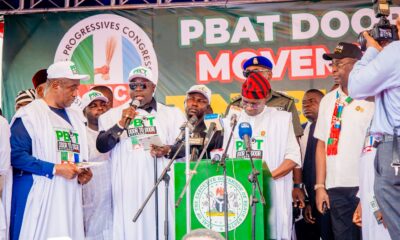

2027: Tinubu Accords Benue Security Top Priority, Tompolo Tells Supporters
ShareLeader of the PBAT Door-to-Door Movement, Government Tompolo, has called on the people of Benue state to come out enmasse...


Senate Demands Compulsory Screening of Foreign Arrivals
ShareBy Eze Okechukwu, Abuja The Senate yesterday ordered mandatory health screening for every international passenger arriving Nigeria airports, seaports, land...

Reps Summon Telecom Operators over Poor Network Services
ShareBy Ubong Ukpong, Abuja The House of Representatives on Wednesday, summoned telecommunication operators in the country to appear before it...


Bill to Design, Manufacture, Commercialize Drones Passes Second Reading in Reps
ShareBy Ubong Ukpong, Abuja A bill for an Act to move the nation to developing the capacity to design, manufacture...


Otu Presents N987.8bn Budget Estimate to Assembly
ShareFrom Ene Asuquo, Calabar Cross River State Governor, Sen. Bassey Edet Otu, has presented a proposed budget of ₦987, 808,...

Borno Police Arrest Six Suspects over Mobile Phone Theft, Recover N5.65m
ShareThe Police Command in Borno has arrested six suspects over alleged mobile phone theft and fraudulent withdrawal of ₦5.65 million...

Election Campaigns: FRSC Bars Officers from Politicians’ Escort
ShareThe Federal Road Safety Corps (FRSC) has barred its personnel from escorting politicians during campaigns for the 2027 general elections....

2027: NITDA Raises The Alarm Over AI-driven Election Manipulation
Share By Elijah Oguche, Abuja The National Information Technology Development Agency (NITDA) has warned that artificial intelligence (AI)-powered misinformation, deepfake...