
NEWS
Bayelsa Reaffirms Transparency in Financial Management


From Mike Tayese, Yenagoa
The Bayelsa State Commissioner for Information, Orientation and Strategy, Ebiuwou Koku Obiyai, has called on residents of the state to desist from rumor mongering and unverified information capable of causing unnecessary tension, panic and disunity.
Obiyai made the appeal in Yenagoa at the weekend during the monthly transparency briefing for the months of May, June, and July 2025. She emphasized that false information not only distorts facts but also undermines peace, security, and the developmental efforts of the government.According to her, the advent of social media and digital platforms has made it easier for misinformation to spread rapidly, hence the need for Bayelsans to take personal responsibility in verifying any piece of news before sharing. She warned that rumor mongering could incite violence, damage reputations, mislead the public, and ultimately threaten societal harmony.The Commissioner equally appealed to media practitioners in the state to uphold professionalism, accuracy, and ethical standards in their reportage. She cautioned against sensationalism and the deliberate spread of falsehood, noting that such practices are detrimental to press credibility and could hinder democratic growth. While reiterating the government’s openness to constructive criticism, she urged residents to always seek clarifications from the appropriate authorities rather than rushing to conclusions.Obiyai further reassured citizens that the government will continue to engage the public through transparent communication channels. She outlined some of the ongoing priority projects of the Prosperity Administration, including “the construction of nine-storey secretariat buildings, a FIFA-standard stadium, the Nembe-Brass road, Yenagoa-Oporoma road, and the Ekeremor-Agge road.” She stressed that these projects have been duly planned for and budgeted, assuring Bayelsans of their completion.Ebiuwou also appealed to journalists to support the government’s programs and policies by practicing balanced reporting and developmental journalism.She urged them to investigate thoroughly before publishing and avoid unsubstantiated claims, especially as the state approaches another election season. She praised the media’s role in public enlightenment and called for stronger collaboration between the press and government in projecting Bayelsa’s progress and protecting its good image.On the financial status of the state, the Special Adviser to the Governor on Treasury and Accounts, Mr. Timipre Seipolo, disclosed that as of July 2025, Bayelsa had a balance of approximately N165.87 billion in its coffers.Seipolo explained that the state’s monthly income and expenditure for May stood at N167.28 billion, following a deduction of N7.2 billion deficit from the April carried-forward balance of N174.48 billion. For June, the state received a total of N85 billion after FAAC allocations, leaving a net balance of N66.05 billion before recurrent and capital expenditures. With N41.82 billion spent on these payments, the state closed June with a balance of N24.23 billion.When added to the May closing balance of N167.28 billion, the total funds carried forward into July amounted to approximately N191.52 billion.The Commissioner reassured Bayelsans that the state government remains committed to accountability, prudent financial management, and completion of all ongoing projects while maintaining peace and stability in the state.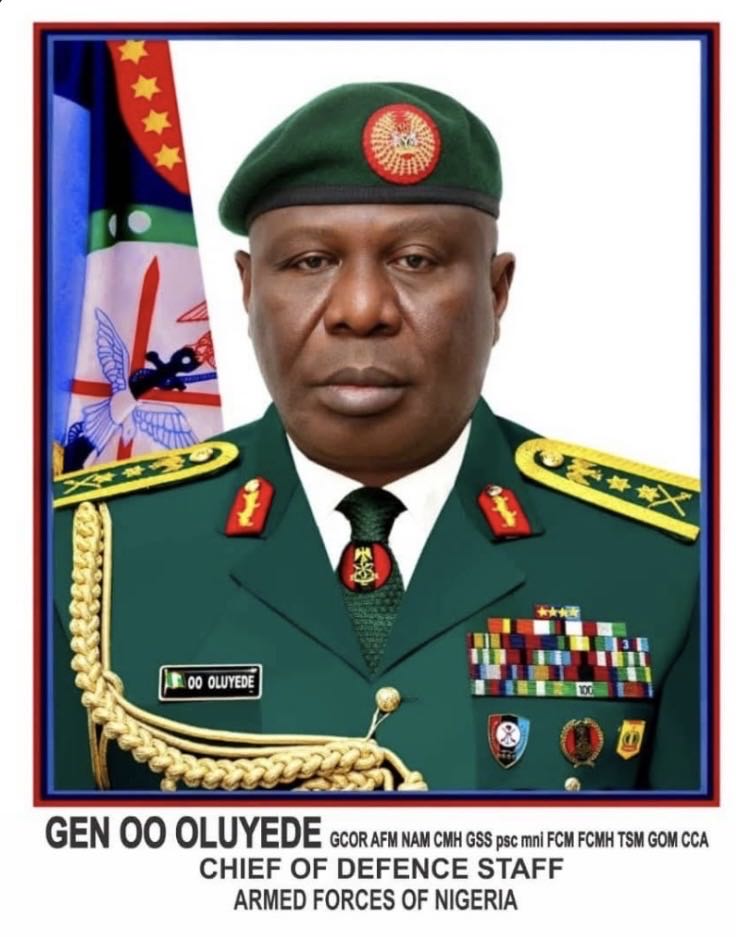
By David Torough, Abuja
The Armed Forces of Nigeria says its troops killed scores of terrorists, rescued dozens of kidnapped victims and arrested suspected collaborators and logistics suppliers during operations across the country between August 7 and 13, 2026.
The military said the operations, conducted under various joint task forces, also disrupted terrorist supply networks, recovered weapons and ammunition, and targeted crude oil theft and illegal refining activities in the Niger Delta.
In the North East, troops of Operation HADIN KAI reported the neutralisation of terrorists in Borno and Adamawa states, the arrest of suspected logistics facilitators and collaborators, and the surrender of 19 terrorists and their associates.
Five female abductees who escaped from a terrorist enclave in the Mandara Mountains were also rescued in Gwoza Local Government Area of Borno State.
The military said troops also intercepted a terrorist infiltration attempt in Nganzai, killing one terrorist and recovering an assault rifle, ammunition, anti-tank bombs, a rocket-propelled grenade charger and a communication radio.
In the North West, Operation FANSAN YAMMA recorded several encounters with terrorists in Zamfara, Katsina and Kebbi states.
The military said 18 terrorists were killed during an operation at Makuku Village in Sakaba Local Government Area of Kebbi State. It added that two suspected foreign nationals believed to be Improvised Explosive Device experts were arrested in Zurmi, Zamfara State.
Troops also arrested suspected terrorist collaborators and logistics suppliers, including one suspect from whom ₦5.3 million allegedly intended for terrorist associates was recovered.
In the North Central, Operation WHIRL STROKE rescued 25 kidnap victims in Kogi State in two separate operations. Sixteen victims—six men, six women and four children—were rescued along the Ojuwo-Ajengo-Memarebo and Ojiwo-Itobe axes, while nine others were rescued along the Ajaokuta-Itobe Road.
The operation also led to the arrest of five suspected associates of a wanted kidnap kingpin in Benue State and the recovery of locally fabricated rifles, motorcycles and mobile phones.
Operation ENDURING PEACE also rescued a woman abducted from Dong Village in Jos North Local Government Area of Plateau State after sustained pressure forced her kidnappers to abandon her.
In Niger State, Operation SAVANNAH SHIELD rescued nine male kidnap victims in Mariga Local Government Area, while troops in Kwara State arrested four suspected terrorist collaborators.
The military’s account of air operations in Niger State included a major strike against terrorists in the Sangeko and Baba-Doka areas of Mariga. It said initial reports indicated that about 120 bodies and 300 motorcycles were recovered following the August 9 air operation, although assessment of the strike was still ongoing.
The Air Component also reported another operation on August 13 in the Maburya area of Mariga, where terrorists were reportedly sighted fleeing with rustled cattle. The military said the targets were engaged, resulting in the reported neutralisation of 46 terrorists.
In the South-South, Operation DELTA SAFE rescued a kidnapped farmer in Edo State and killed one of his abductors during a covert operation. Troops also recovered ₦1.5 million reportedly intended as ransom.
Military operations in Rivers State targeted oil theft, with troops recovering about 24,000 litres of suspected stolen crude oil, discovering an illegal refining site and intercepting a speedboat carrying approximately 17,000 litres of suspected illegally refined Automotive Gas Oil. Additional operations along the Oteghele axis uncovered concealed storage facilities containing about 105,000 litres of suspected stolen crude oil.
In the South East, Operation UDO KA intensified efforts against a kidnap syndicate operating in Enugu and neighbouring states. The military said one syndicate commander was killed during an August 9 ambush, while another suspect was wounded. A subsequent arrest led troops to a forest hideout where they recovered four AK-47 rifles, seven magazines and 133 rounds of ammunition.
The Defence Headquarters said the reported successes demonstrated the military’s sustained offensive against terrorism, kidnapping, criminality and economic sabotage.
The Chief of Defence Staff, General Olufemi Olatubosun Oluyede, commended troops and other security agencies for their cooperation and urged members of the public to continue providing credible information to support ongoing operations.
The Director of Defence Media Operations, Major General Michael Onoja, said the Armed Forces remained committed to protecting lives and property and restoring peace across the country.
By David Torough, Abuja
The Minister of Information and National Orientation, Mohammed Idris, has described Nigeria’s diversity as a source of strength, urging citizens to promote unity and mutual understanding, noting that what binds Nigerians together is far greater than what divides them.
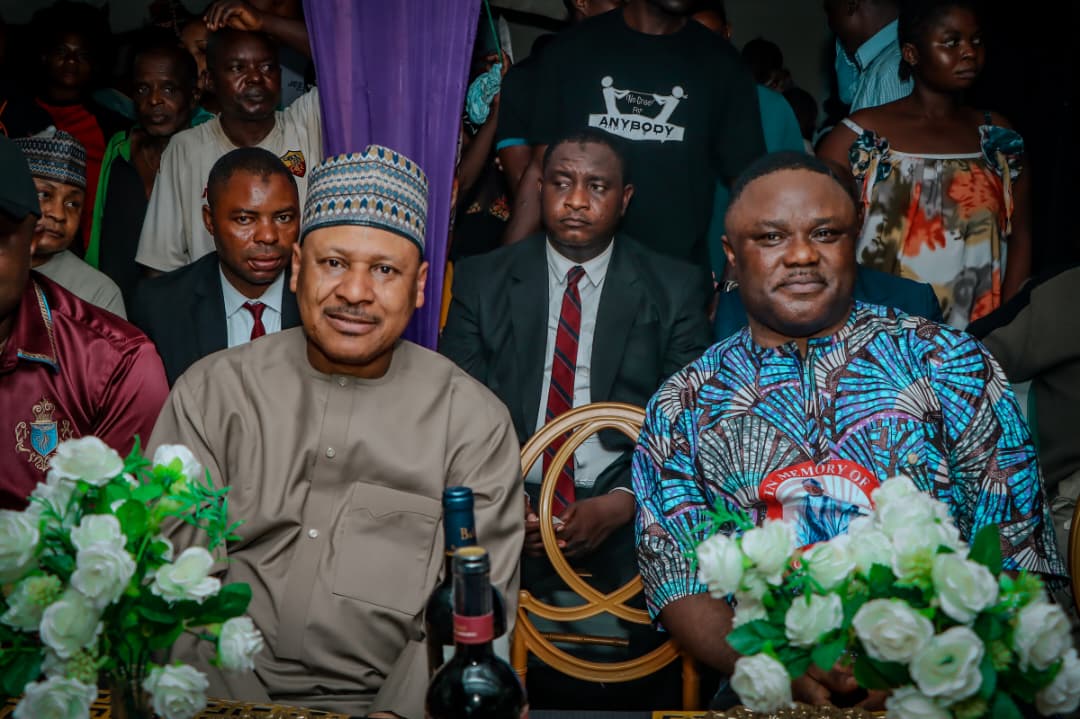
Idris stated this on Friday, when he attended the wake-keep of the late Ukandi Placidus Ugar Ogar in Obudu, Cross River State, alongside family members, friends, and dignitaries, including the Deputy Governor of Cross River State, Rt.
Hon. Peter Odey; former Governor of Cross River State, Senator Prof. Ben Ayade; Chief of Staff to the Governor of Cross River State, Dr. Emmanuel Ironbar; and the Cross River State Commissioner for Lands, Dr. Erasmus Ekpang.The late Ukandi Placidus Ugar Ogar, who died at the age of 76, was an elder brother to Senator Ayade and Dr. Frank Ayade.
The Minister said the gathering reflected the richness of Nigeria’s diversity and the ability of citizens from different backgrounds to unite in solidarity.
“What I have seen today is the diversity of Nigeria and how it can be further harnessed to promote unity in this country. Nigerians from all walks of life are Nigerians first. Therefore, we must celebrate them wherever they are,” he said.
While expressing condolences to the bereaved family, Idris noted that the occasion also provided an opportunity to honour a life that fostered unity among people.
“It is a moment of sorrow that he has passed on, but also a moment of gratitude that he lived a worthy life, one that helped bring people together,” the Minister said.
He called on Nigerians to continue to promote unity and shared values, while leveraging the country’s diverse cultures and traditions as assets for national development.
“We must strengthen our unity, uphold our shared values, and also see our diversity as a resource that can contribute meaningfully to the growth of our economy,” he said.
Idris reaffirmed that Nigeria’s strength lies in its people and their collective ability to rise above differences in pursuit of the common good.
From Attah Ede Makurdi
The three Socio Cultural Organizations in Benue State(Mdzough U Tiv, Ochetoha K’ Idoma and Omi Ny’Igede, has called on the Federal Government to prioritize the safe return and resettlement of all the Internally Displaced Persons(IDPs) to their ancestral homes before embarking on implementation of any ranching pilot scheme in the State.
The tribal group made the call against the backdrop of the federal government proposed establishment of ranches in Nigeria, using Benue, Nasarawa and Plateau States as a pilot scheme.
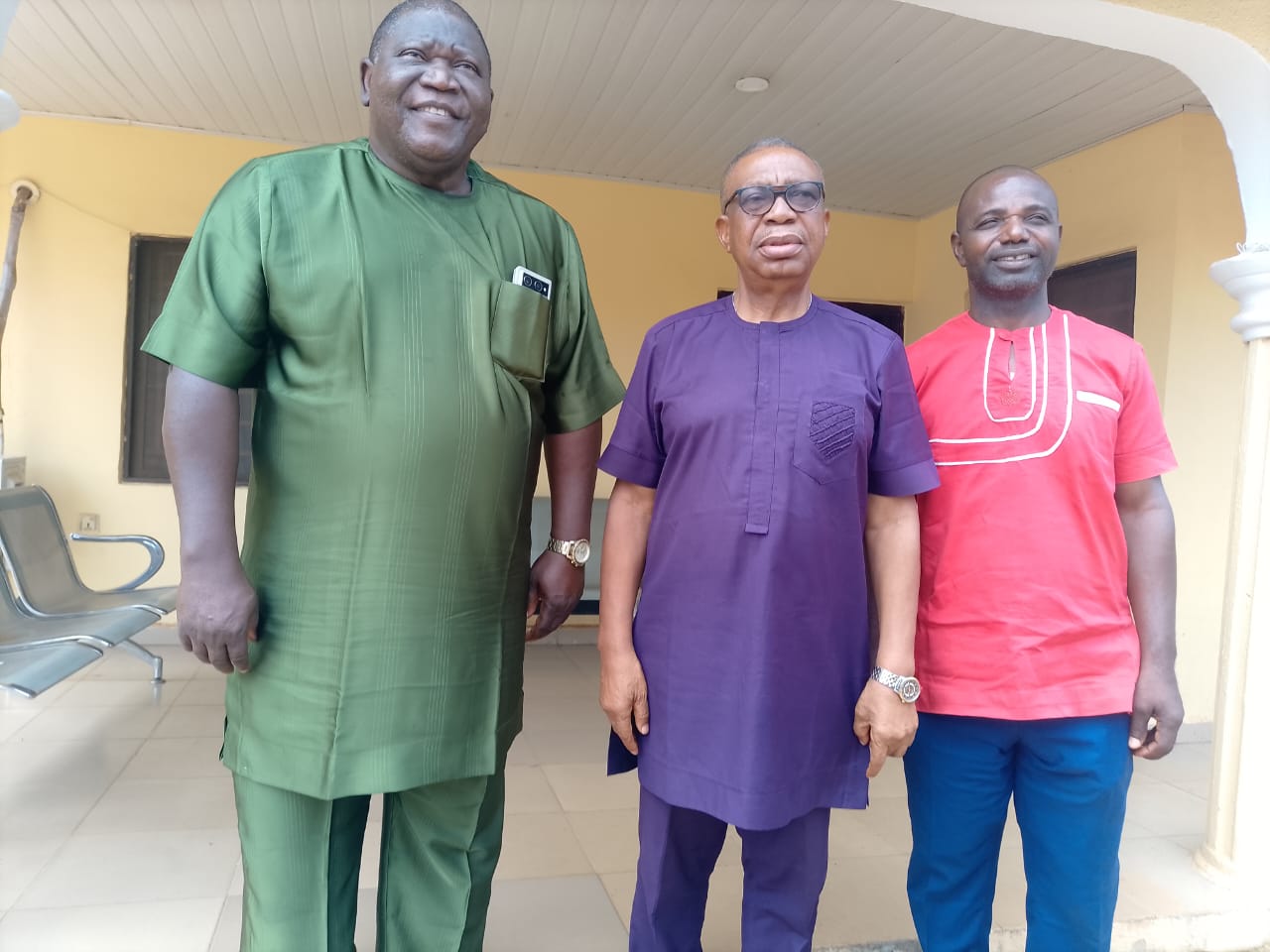
Addressing newsmen at a press conference in Makurdi on behalf of the Ochetoha K’ Idoma and Omi Ny’Igede, the President General of Mdzough U Tiv and Chairman of Benue Socio Cultural Organizations, Air Commodore Titus Agbecha (Rtd), disclosed that Benue is currently have over 5000 people living in Internally Displaced Persons’ Camps across the State who have no home to return to, no shelter, no farms, and no livelihood.
The Mdzough U Tiv leader who was flanked by the presidents of Ochetoha K’ Idoma, Prof. Yakubu Ochefu and President of Omi Ny’Igede, Daniel respectively insisted that Federal government must carry out a genuine mediation, uphold security of lives, and restoration of occupied communities as peace must precede policy.
The group noted that dialogue and consent are quite essential as any ranching program must be done through proper consultation, consent, and compensation with host communities.
According to the group, land remains a sensitive issue and cannot be imposed and therefore, there has been no comprehensive mediation, no justice, and no resettlement of these communities.
“We have received with mixed feelings the announcement by the Federal Government on the establishment of ranches in the country; using Benue, Nasarawa, and Plateau States as a pilot scheme.
“Ordinarily, ranching as a modern practice of animal husbandry is welcome. It can reduce farmer-herder conflict and improve food security. However, due to the peculiar realities on ground in Benue and neighboring States, we have three critical realities that must be addressed first;
“We currently have over 5000 Benue people living in Internally Displaced Persons’ Camps across Benue State. They have no home to return to, no shelter, no farms, and no livelihood.
“Thus, it is unjust to talk about new land use for ranches when the owners of the land are still refugees in their own state.
For over 5 years, several communities in Benue State have been under siege. Our villages have been attacked, occupied, and our people killed or chased away.
“Establishing ranches under this atmosphere will be seen as rewarding violence and dispossession. With rapid population growth, available land in Benue and neighboring states is under immense pressure for agricultural production.
“Benue remains the food basket of the nation. Any program that involves large-scale land acquisition must not undermine food production.
“We are not against modern ranching, but federal government should fulfill the above conditions before embarking on any pilot scheme”, Agbecha reiterated.
The chairman assured that the three Socio- Cultural Organisations would continue to consult with relevant stakeholders, agencies and authorities to ensure that their voices are heard and would not rest on its oar to ensure that the right thing is done.
“We will give room for negotiation but the government should not play on our sense”, the chairman said.
Corroborating, the national president of Ochetoha K’ Idoma, Prof. Yakubu Ochefu, revealed that the Benue socio cultural organisations is currently working on documents with regards to provide roadmap for the establishment of any scheme Benue people.



Troops Kill Terrorists, Rescue 39 Kidnap Victims in One Week – DHQ
ShareBy David Torough, Abuja The Armed Forces of Nigeria says its troops killed scores of terrorists, rescued dozens of kidnapped...

Nigeria’s Diversity, Our Greatest Asset, Says Idris
ShareBy David Torough, Abuja The Minister of Information and National Orientation, Mohammed Idris, has described Nigeria’s diversity as a source...

Groups Reject Grazing Reserves, Insist on Resettlement of IDPs in Benue
ShareFrom Attah Ede Makurdi The three Socio Cultural Organizations in Benue State(Mdzough U Tiv, Ochetoha K’ Idoma and Omi Ny’Igede,...
Babangida: Why I Could Not Save Vatsa From Coup Conviction
ShareBy Dan Amasingha,Minna. Former Military President, General Ibrahim Badamasi Babangida (rtd.), has broken his silence on one of the most...

FG Inaugurates New NSIWC Board, Tasks Members on Fair Wages, Productivity
ShareBy David Torough, Abuja The Federal Government has inaugurated a new Board of the National Salaries, Incomes and Wages Commission...


Nigeria’s Celebrity Golfer, Leo Edochie Shines at London’s Shire
ShareBy Julius Tambaya, Abuja Chief Leo Edochie, Nigeria’s number one celebrity golfer turned heads with a jaw-dropping appearance at The...

Fadahunsi, Osun and the Price of Political Rhetoric
ShareBy Willie Adegbite A video clip has placed Senator Francis Fadahunsi at the centre of a political firestorm. In it,...
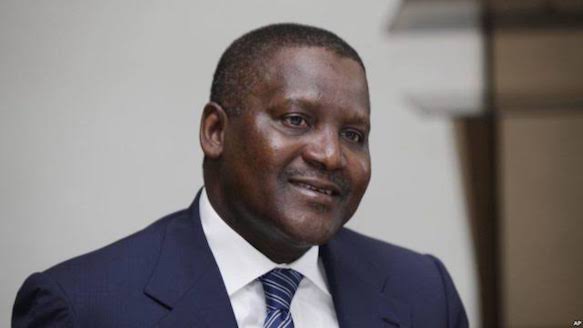
What Investing in Africa Means to Aliko Dangote
ShareBy Ehi Braimah When conversations turn to investment in Africa, one name consistently dominates the discussion: Aliko Dangote. Over the...

It’s not Tinubu’, Femi Kuti Reveals Nigeria’s Real Problem
ShareAfrobeat legend, Femi Kuti has claimed that President Bola Tinubu is not the major problem facing Nigeria. He argued that...


Brain Jotter Cries out after Harassment by Lagos Touts
ShareNigerian content creator, Brain Jotter, has cried out on social media after being harassed by Lagos touts, popularly known as...