
Education
Bells Varsity Honours 91 Students with First Class at 16th Convocation

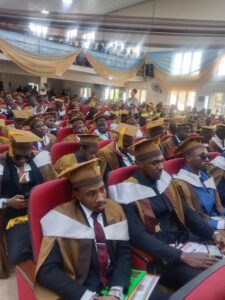
Bells University of Technology, Ota, Ogun, on Saturday awarded 91 students of the institution First Class (Honours) at its 16th Convocation Ceremonies.
The convocation ceremonies are for the 2023/2024 academic session.
Ojediran said that a total of 969 students graduated in the academic session.
He said that they comprised the 91 students who made First Class grade, 505 who secured Second Class (Upper Division), 313 with Second Class (Lower Division) and 60 graduating with Third Class.
The vice-chancellor said that 220 students were graduating in the post-graduate category.
Mr Sally Farouk from the university’s Department of Architecture emerged the overall best student with a Cumulative Grade Point Average of 4.94, according to Ojediran.
He said that the institution set out to proffer best solutions from collective knowledge, shared experiences and resources, recognising that education was a lifelong activity.
The vice-chancellor lauded the staff of the university for cooperation and dedication to giving the students quality education.
“You have joined hands with the management of the institution to work on this fertile ground,” he said.
The Pro-Chancellor of the institution, Prof. Bart Nnaji, said that university was the first private university of technology in Nigeria, noting that it was established in 2005.
Nnaji said that the institution had made remarkable achievements in teaching and research as part of its vision to contribute to the growth and development of Nigeria.
“Let me also congratulate the graduating students who have distinguished themselves through their hard work and discipline and are being rewarded today.” he said.
In his remarks, the Chancellor of the institution, Dr Ibrahim Dankwambo, commended former President Olusegun Obasanjo for contributions to education development in the country.
Dankwambo also congratulated a former Executive Secretary of National Universities Commission (NUC), Prof. Peter Okebukola, and the Executive Director of Sahara Group, Mr Temitope Shonubi, for honorary doctoral degree given them by the university.
Report says that Okebukola and Shonubi were conferred with the degree for their outstanding pedigrees and services to humanity. (NAN)

The Federal Government has approved N4bn for the payment of allowances to Nigerian students studying abroad under the Bilateral Education Agreement.
The approval follows outcries from the beneficiaries who had lamented that they were being pushed into forced labour and prostitution due to prolonged hardship occasioned by the nonpayment of their allowance by the Federal Government.
The Minister of Education, Tunji Alausa, disclosed that the fund, representing part of the N8bn budgeted for the programme this year, had been released as the first tranche to address outstanding payments owed to the scholars.
“The Federal Ministry of Finance has approved N4bn to pay the first tranche, and I am working with the Minister of Finance to settle the remaining N4bn. Hopefully, in the next few weeks, they will receive all their allowances for 2025 and 2026.
According to him, efforts are ongoing between both ministries to ensure that all outstanding payments are cleared, with the balance expected to be released within four weeks.
The development follows a disturbing viral video from affected students across countries, including Russia, Serbia and Venezuela, who said delays in stipends spanning over a year had left many struggling to survive, with some resorting to menial jobs while others claimed female students had been forced into prostitution.
The outcry comes barely a year after the Federal Government terminated the scholarship programme and promised to ensure that current students are funded to complete their studies.
In 2025, the minister cited inefficiency and misallocation of national resources as reasons for terminating the programme, following similar complaints from previous beneficiaries.
The programme, established through diplomatic partnerships, had enabled Nigerian students to study in countries such as China, Russia, Hungary, Morocco, Algeria, Egypt and Serbia.
He explained that the scheme had become unsustainable, noting that the government planned to spend about N9bn on just 1,200 students in 2025.
However, the minister assured that all current beneficiaries of the scheme would continue to receive full government support until they complete their studies and return to Nigeria.
Despite assurances that current beneficiaries would not be affected, several students said they had not received stipends for over two years, leaving them stranded.
In the viral video, about 16 Nigerian scholars in Russia appealed to the government for urgent intervention, describing their situation as dire.
One of the students, a fifth-year medical student in Rostov, said many had been pushed into extreme conditions to survive.
A student leader in Russia, who spoke on condition of anonymity, confirmed the development recently, lamenting that the rising cost of living and currency challenges had worsened their situation.
She added that restrictions on student work permits in some countries further limit their ability to earn income.
Another student in Venezuela described the situation as abandonment, noting that scholars from other countries receive regular support from their governments.
He said, “It is only Nigerians that are abandoned. Other countries like Mozambique, Burkina Faso, and Brazil, send delegates to check on their students and pay them, but no one comes from Nigeria.
A parent of an affected scholar, who spoke anonymously with our correspondent, said relevant government agencies had been engaged to facilitate the payment.
“The situation requires prompt attention. These children were sent abroad through a government programme. There have been delays in stipends despite repeated appeals to the Ministry of Finance, Ministry of Education and other agencies.”
The Federal Government had earlier, in January, dismissed claims that Nigerian scholarship students in Morocco were abandoned, following a viral video that showed some students facing hardship, including homelessness and lack of medical support.
The video, shared on X by activist Martins Otse, featured interviews with Nigerian students in Morocco who alleged they had gone for years without receiving financial support despite being beneficiaries of government scholarships.
Reacting, the Federal Ministry of Education, in a statement signed by its Director of Press and Public Relations, Boriowo Folasade, insisted that no student on a valid Federal Government scholarship had been neglected.
Alausa was quoted as saying that all beneficiaries enrolled under the Bilateral Education Scholarship Programme before 2024 had received payments up to the 2024 budget year in line with government obligations.
The statement noted that any delays in outstanding payments were due to fiscal constraints and were being addressed through ongoing engagements between the Ministry of Education and the Ministry of Finance.

The Federal Government has approved N4bn for the payment of allowances to Nigerian students studying abroad under the Bilateral Education Agreement.
The approval follows outcries from the beneficiaries who had lamented that they were being pushed into forced labour and prostitution due to prolonged hardship occasioned by the nonpayment of their allowance by the Federal Government.
The Minister of Education, Tunji Alausa, disclosed that the fund, representing part of the N8bn budgeted for the programme this year, had been released as the first tranche to address outstanding payments owed to the scholars.
“The Federal Ministry of Finance has approved N4bn to pay the first tranche, and I am working with the Minister of Finance to settle the remaining N4bn. Hopefully, in the next few weeks, they will receive all their allowances for 2025 and 2026.
According to him, efforts are ongoing between both ministries to ensure that all outstanding payments are cleared, with the balance expected to be released within four weeks.
The development follows a disturbing viral video from affected students across countries, including Russia, Serbia and Venezuela, who said delays in stipends spanning over a year had left many struggling to survive, with some resorting to menial jobs while others claimed female students had been forced into prostitution.
The outcry comes barely a year after the Federal Government terminated the scholarship programme and promised to ensure that current students are funded to complete their studies.
In 2025, the minister cited inefficiency and misallocation of national resources as reasons for terminating the programme, following similar complaints from previous beneficiaries.
The programme, established through diplomatic partnerships, had enabled Nigerian students to study in countries such as China, Russia, Hungary, Morocco, Algeria, Egypt and Serbia.
He explained that the scheme had become unsustainable, noting that the government planned to spend about N9bn on just 1,200 students in 2025.
However, the minister assured that all current beneficiaries of the scheme would continue to receive full government support until they complete their studies and return to Nigeria.
Despite assurances that current beneficiaries would not be affected, several students said they had not received stipends for over two years, leaving them stranded.
In the viral video, about 16 Nigerian scholars in Russia appealed to the government for urgent intervention, describing their situation as dire.
One of the students, a fifth-year medical student in Rostov, said many had been pushed into extreme conditions to survive.
A student leader in Russia, who spoke on condition of anonymity, confirmed the development recently, lamenting that the rising cost of living and currency challenges had worsened their situation.
She added that restrictions on student work permits in some countries further limit their ability to earn income.
Another student in Venezuela described the situation as abandonment, noting that scholars from other countries receive regular support from their governments.
He said, “It is only Nigerians that are abandoned. Other countries like Mozambique, Burkina Faso, and Brazil, send delegates to check on their students and pay them, but no one comes from Nigeria.
A parent of an affected scholar, who spoke anonymously with our correspondent, said relevant government agencies had been engaged to facilitate the payment.
“The situation requires prompt attention. These children were sent abroad through a government programme. There have been delays in stipends despite repeated appeals to the Ministry of Finance, Ministry of Education and other agencies.”
The Federal Government had earlier, in January, dismissed claims that Nigerian scholarship students in Morocco were abandoned, following a viral video that showed some students facing hardship, including homelessness and lack of medical support.
The video, shared on X by activist Martins Otse, featured interviews with Nigerian students in Morocco who alleged they had gone for years without receiving financial support despite being beneficiaries of government scholarships.
Reacting, the Federal Ministry of Education, in a statement signed by its Director of Press and Public Relations, Boriowo Folasade, insisted that no student on a valid Federal Government scholarship had been neglected.
Alausa was quoted as saying that all beneficiaries enrolled under the Bilateral Education Scholarship Programme before 2024 had received payments up to the 2024 budget year in line with government obligations.
The statement noted that any delays in outstanding payments were due to fiscal constraints and were being addressed through ongoing engagements between the Ministry of Education and the Ministry of Finance.

The Federal Government has approved exemption of candidates seeking admission into the National Certificate in Education (NCE) programme with a minimum of four credits from sitting for the Unified Tertiary Matriculation Examination (UTME).
The Minister of Education, Dr.
Tunji Alausa, announced the policy on Monday in Abuja, at the 2026 Policy Meeting on Admissions into Tertiary Institutions organised by the Joint Admissions and Matriculation Board (JAMB).The event also featured the 6th Edition of the National Tertiary Admissions Performance-Merit (NATAP-M) awards.
Alausa said the decision followed consultations with stakeholders aimed at expanding access to teacher education and strengthening enrollment in Colleges of Education (CoE) nationwide.
He explained that eligible candidates would, however, be required to register with JAMB for proper screening, verification and issuance of admission letters through the Central Admissions Processing System (CAPS).
According to him, the exemption is part of deliberate reforms to harness the admission capacity of colleges of education, particularly within local communities.
“Accordingly, candidates seeking admission into the NCE programme, who possess a minimum of four credit passes, will no longer be required to sit for the UTME.
“However, it is imperative to emphasise that such candidates shall mandatorily register with JAMB, and their credentials shall be duly screened, verified, and certified for the issuance of admission letters thr“In recognition of this reality, the Federal Ministry of Education, in consultation with relevant stakeholders, has taken a deliberate policy position.
ough CAPS, in accordance with extant regulations.”
The minister added that the exemption would also apply to candidates seeking admission into National Diploma programmes in non-technology agricultural and agriculture-related courses.
He said the measure was designed to ease pressure associated with UTME, while encouraging participation in critical sectors essential to national development.
He reiterated that admissions conducted outside CAPS remained illegal and would not be recognised by the government.
He also warned that institutions violating established admission procedures risked sanctions, including suspension of operating licences where applicable.
Alausa reaffirmed the government’s position on 16 years as the minimum admission age into tertiary institutions, noting that the decision aimed at maintaining inclusivity and academic readiness.
He noted that the federal government was implementing wide-ranging reforms in the education sector focused on access, quality, governance and accountability.
He commended JAMB for deploying technology-driven solutions that enhanced fairness and credibility in the admissions process.
He added that efforts were ongoing to deepen inclusion for Persons living With Disabilities through application fee waivers and targeted support initiatives.
“This initiative is not only humane but also a powerful affirmation of our national commitment to equity and equal opportunity.
“The increasing participation of candidates with disabilities in our examinations and admissions processes is clear evidence that when barriers are removed, potential is unleashed,” Alausa said.
The minister further disclosed that the government was advancing digital transformation in education through expanded computer-based testing and integration of artificial intelligence and emerging technologies into curricula.
He said the federal government had equally achieved progress in stabilising the university system, following successful renegotiation of agreements aimed at ensuring uninterrupted academic calendars.
Alausa reaffirmed the government’s commitment to combating examination malpractice through strengthened verification systems and enhanced collaboration among relevant agencies.
He urged stakeholders to uphold integrity and fairness in admissions decisions, noting that outcomes of the policy meeting would affect millions of Nigerian youths seeking tertiary education opportunities.


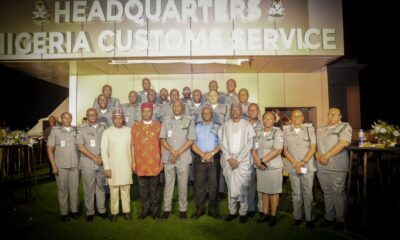

Nigeria Customs Hosts Diplomatic Reception to Strengthen Global Partnerships, Trade Relations
ShareBy Tambaya Julius, Abuja The Nigeria Customs Service (NCS) on 3 June 2026 hosted a high-level diplomatic cocktail reception in...


Tinubu To Commission Fruit Juice Factories, BIPC Motorcycle Assembly Plant In Benue
ShareFrom Attah Ede, Makurdi President Ahmed Bola Tinubu is set to visit Benue State to commission the newly built ultra modern Bensono Concentrate Plant, Benva Juice Factory, and the Motorcycle Assembly...


Dangote Refinery Surpasses Capacity Target, Eyes 1.4m bpd Expansion
ShareBy David Torough, Abuja Dangote Petroleum Refinery and Petrochemicals has achieved a major operational milestone by increasing its crude oil processing capacity to 700,000 barrels...


Alia Appoints New Acting Head of Service in Benue
ShareFrom Attah Ede, Makurdi Benue State Governor, Rev Fr .Hyacinth Alia has approved the appointment of Dr. Ihu Eunice Ogbenyi as new Acting Head of Service (HoS)...
Oshonaike Hails Steady Progress of Nigerian Table Tennis Players
ShareSeven-time Olympian Olufunke Oshonaike said Nigerian table tennis players are making steady progress in spite of the challenges they face in competing...

Poland Bans Smartphones in Primary Schools
SharePoland plans to ban mobile phones in all primary schools from next academic year under draft legislation approved by the government on Tuesday. The...
Reps Minority Picks Ugochinyere as New Leader
ShareBy Ubong Ukpong, Abuja Following the defection of the former minority Leader of the House of Representatives, Kingsley Chinda, the minority caucus has nominated Hon. Ikenga...
Kano Revokes Private School Licences over Sexual Abuse
ShareFrom Aliyu Askira, Kano The Ungogo Local Government Area of Kano State has withdrawn the licences of all private schools within its jurisdiction following allegations that...


CBN Approves Regular Commercial Operations for Abbey Mortgage Bank
ShareBy Tony Obiechina, Abuja Abbey Mortgage Bank Plc, one of Nigeria’s longest‑standing primary mortgage banks, has secured regulatory approval from...


Owo Church Massacre: Court Sentences Four to Death for Terrorism
ShareBy David Torough, Abuja More than three years after the gruesome attack on St. Francis Xavier Catholic Church, Owo, Ondo...