
Agriculture
Benue Govt Makes U-turn, Adopts FG’s National Livestock Plan

From Chris Gaga, Makurdi
Benue State Government through its stakeholders have accepted the proposed
National Livestock Transformation Plan as brought forward by the Federal
government.
This is few hours after the Benue stakeholders had rejected the plan at a
meeting between the committees in government house in Makurdi.
The Federal Government delegation from Federal Ministry of Agriculture and
Natural Resources led by Dr Joseph Nyanger had on Wednesday met with
stakeholders in the state on the proposed plan.
The stakeholders during the first meeting had unanimously rejected the
plan, described it as Ruga in another form.
“The National Livestock Transmission Plan is a Ruga in different regalia,”
the stakeholders drawn from traditional institutions, the church,
socio-cultural organisations, the academia, members of the Benue State
Executive Council and the civil society had submitted.
But in the statement made on behalf of the stakeholders, the State
Commissioner for Agriculture and Natural Resources, Dr Timothy Ijir noted
that the stakeholders’ earlier stand was uninformed.
Ijir in a statement made available to journalists on Friday said that the
group met again and deliberated on the Federal Government proposed National
Livestock Transformation Plan, stating that the plan was earlier rejected
due to lack of adequate information.
Parts of the statement read, “After exhaustive deliberations, stakeholders
resolved to reconsider their position in view of the fact that they now
have enough information to make an informed decision.
“It was also resolved during the meeting that a technical team of experts
be put together to study the NLTP document and identify areas suitable for
implementation in Benue State based on peculiarities of the state.
“The meeting also resolved that the NLTP should be domesticated in Benue
State and to ensure that it conforms with the Open Grazing Prohibition and
Ranches Establishment Law of the state,” parts of the statement read.
The statement further stated that the State Government is evolving its
Agricultural Development Policy which captures the people’s interest.







Agriculture
Livestock Ministry Defends Abuja Headquarters Acquisition, Insists Due Process Was Followed
By Raphael Atuu, Abuja
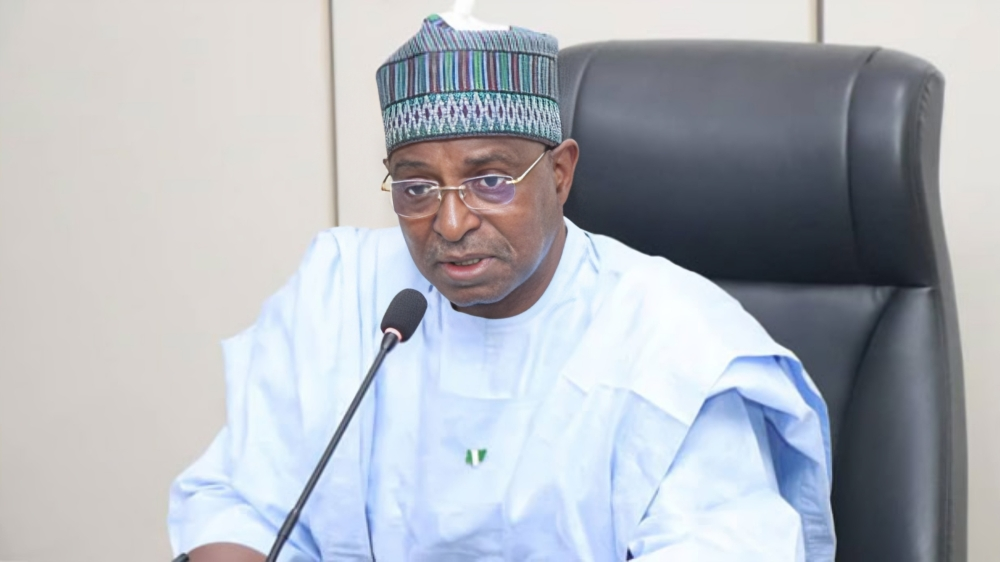
The Federal Ministry of Livestock Development has defended the acquisition of its headquarters building located along Aminu Kano Crescent, Wuse II, Abuja, insisting that the transaction followed established government approval and procurement procedures.
The Ministry described recent media publications questioning the acquisition as misleading and a misrepresentation of the facts, stressing that all necessary government authorisations were obtained before the transaction was concluded.
In a press statement issued by its head Press and Public Relations Unit,Henrietta Okokon, the Ministry maintained that suggestions that the acquisition was carried out without the required government approval were factually incorrect.
According to the Ministry, the transaction was conducted in line with the prescribed administrative and procurement framework, with the requisite approvals secured from the appropriate government authorities.
The Ministry also clarified the status of the estate firm involved in the transaction, Osas & Oseji Estate Surveyors & Valuers, stating that the company is duly registered and remains active, as confirmed by records of the Corporate Affairs Commission (CAC).
It further stated that the Honourable Minister of Livestock Development, Idi Mukhtar Maiha, and the Permanent Secretary, Dr. Chinyere Ijeoma Akujobi, ensured that the entire process complied with established government procedures and administrative requirements.
The Ministry explained that the acquisition was necessitated by the urgent need for suitable office accommodation following the establishment of the Federal Ministry of Livestock Development.
It noted that providing an appropriate operational environment was essential to enabling the Ministry to effectively discharge its statutory responsibilities and coordinate its activities.
The establishment of the Ministry is part of the Federal Government’s efforts to reposition the livestock sector, address longstanding challenges affecting livestock production and improve its contribution to national economic development.
With its mandate covering livestock development, the Ministry is expected to play significant roles in promoting investment, improving productivity, creating employment opportunities and strengthening the country’s livestock value chain.
It stressed that adequate office accommodation was therefore necessary to support its administrative operations and the effective implementation of its programmes.
Reaffirming its commitment to transparency and accountability, the Ministry stated that it remains guided by the principles of due process, prudent management of public resources and institutional responsibility.
It added that all relevant documents and records relating to the acquisition are available to duly authorised government oversight and audit institutions for verification.
The Ministry maintained that it would continue to uphold transparency in its activities and ensure that public resources are managed in accordance with established government regulations.

The Federal Government has called for a stronger agricultural value chains, increased agro-industrialisation and improved market access to boost food security in Nigeria.
The Permanent Secretary, Federal Ministry of Agriculture and Food Security, Dr.
Marcus Ogunbiyi, made the call on Monday in Enugu during the Technical Session of the National Council on Agriculture and Food Security.The theme of the event is “Enhancing Agricultural Value Chains, Agro-Industrialization and Market Access for Economic Growth.”
Ogunbiyi, who doubled as the Chairman of the Technical Session, said that the country must move beyond subsistence farming and embrace a commercially driven agricultural system capable of supporting industries, improving farmers’ incomes and expanding export opportunities.
“Our task goes beyond increasing the volume of food produced.
“We must build an agricultural economy that creates wealth, supports industries, generates decent employment, expands exports, improves rural livelihoods and contributes meaningfully to national economic growth,” he said.
The Permanent Secretary identified inadequate storage and processing facilities, limited access to finance, poor logistics and weak links between farmers and processors as major challenges affecting the competitiveness of agricultural products.
He called for increased investment in agro-processing facilities, rural roads, irrigation, electricity, cold-chain infrastructure and modern technologies to reduce post-harvest losses and promote local value addition.
“Agro-industrialisation is central to the transformation we seek to achieve. It provides the bridge between agriculture and industry.
“It also enables agricultural production to serve as a reliable source of raw materials for manufacturing and other productive sectors of the economy.
“The value of this Council will ultimately be determined by the quality of its resolutions and the extent to which those resolutions are implemented,” Ogunbiyi stated.
He also urged state governments to identify priority commodities, establish clear production and processing targets, attract private-sector investment and strengthen partnerships with research institutions and development partners.
In his remarks, the Enugu State Commissioner for Agriculture and Agro-industrialisation, Patrick Uburu, said that the state government was committed to agro-industrialisation to boost farmers’ income, create jobs and generate wealth.
Uburu, who described the technical sessions as a platform for translating policies into practical solutions, urged delegates to prioritise farmers and agribusiness operators in their deliberations.
He emphasised the need for stronger collaboration among state governments, federal agencies and development partners to address food security challenges, noting that recommendations from the meeting should be measurable and implementable.
The commissioner called for practical policies and investments that would improve farmers’ productivity and expand market access for agricultural produce.
Technical Lead Policy Advisory, GIZ ECOWAS & Nigeria, Dr Abiodun Ihebuzor, advocated for stronger partnerships and increased investment in agricultural value chains to reduce post-harvest losses and improve food security in Nigeria.
Ihebuzor noted that previous engagements at the 46th Council in Calabar and the 47th Council in Kaduna had provided opportunities to advance agricultural development.
He expressed optimism that the current meeting would strengthen collaboration among government institutions, development partners and private-sector operators.
According to him, healthy soils, efficient markets and improved storage systems were essential to sustainable food security.
On her part, Geraldine Onu, Deputy Director, Administration and Supply, Enugu State Ministry of Agriculture and Agro-Industrialisation, disclosed that the State Government had intensified efforts to transform agriculture from subsistence farming to commercial and mechanical farming as part of its economic development agenda.
She noted that investments in irrigation, storage, processing and agricultural infrastructure were aimed at increasing production, attracting private investment, reducing post-harvest losses and improving farmers’ livelihoods.
“In Enugu State, under the visionary leadership of Gov. Peter Mbah, agriculture occupies a strategic position in the state’s economic transformation agenda.
“The initiatives include the 300,000-hectare agricultural land bank, the development of Smart Farm Estates across the 17 Local Government Areas, the 260 Farm Estate Programme and the establishment of a tractor assembly plant,” Onu added.(NAN)

Some residents in Lagos State have expressed concern over the recent surge in the price of tomatoes, forcing many households to adopt alternatives.
The residents made their views known in separate interviews on Wednesday in Lagos.
A market survey showed that a 50kg basket of tomatoes now sells between N115,000 and N125,000, compared to between N35,000 and N40,000 recorded last month.
Olachi Igwe, a resident of Ago Palace, said the scarcity and high cost of tomatoes had disrupted her household’s meal plans.
“I contacted my usual vendor, but she said tomatoes were scarce and difficult to source.
“A small bowl we used to buy for between N3,500 and N4,000 now sells for as high as N6,000 to N7,000, when available.
“For now, my family will resort to palm nut stew (ofe akwu) until prices stabilise,” she said.
Another resident, Mercy Okeleye of FESTAC, said although her family prefers fresh tomatoes, rising prices have forced her to consider cheaper options.
“I cannot do without fresh tomatoes because of the taste, but I may have to buy broken ones, popularly called ‘esha’, which are relatively cheaper.
“I do not consider tomato paste a suitable substitute because it is not purely made from tomatoes,” she said.
Also speaking, Tope Babalola from Dopemu, said she might adjust her cooking methods if prices remain high.
“I have not bought tomatoes in over a month, but if the price is still high, I will use more onions and peppers.
“I will not resort to artificial additives; I prefer natural ingredients for my meals,” she said.
Joan Ogugua, another resident, said she had already switched to tomato paste to cope with the situation.
“I asked my son to buy tomato paste for our meals. I cannot justify spending excessively on fresh tomatoes when other basic needs must be met,” she said.
Also, Oge Ugwu, a civil servant at Lekki, said she would resort to cucumber stew with the recent price hike.




Kohol tasks NUBESS Leaders on Service, Accountability, Legacy
ShareBy David Torough, Abuja The founder of Menroi Rural Priority Organisation, Professor Kohol Iornem has challenged leaders of the National...


Stakeholders Celebrate Zikism at 7th Nnamdi Azikiwe Annual Award Lecture in Abuja.
ShareBy Raphael Atuu, Abuja As Barrister Henry Okeke Says The gathering provided another opportunity for Nigerians to reflect on the...


2027 Elections: CHRICED Trains 36 Journalists To Combat Fake News, Promote Peaceful Polls
ShareBy Orjime Moses Abuja As Nigeria prepares for the 2027 general elections, the Resource Centre for Human Rights and Civic...

Livestock Ministry Defends Abuja Headquarters Acquisition, Insists Due Process Was Followed
ShareBy Raphael Atuu, Abuja The Federal Ministry of Livestock Development has defended the acquisition of its headquarters building located along...


World Diabetes Day: FAAF Advocates Early Detection, Affordable Care
ShareBy David Torough, Abuja The Florence Ayodele Ajao Foundation (FAAF) has called for increased awareness and early detection of diabetes...


WHO Recommends Multiple Daily Insulin Injections to Manage Type 1 Diabetes
ShareThe World Health Organisation has recommended that people with type 1 diabetes receive insulin injections several times per day, with...
Benue Begs Newly Inducted Doctors to Return Home, Tackle Shortage of Medical Personnel
ShareFrom Attah Ede, Makurdi The Benue State Government has told the newly inducted medical doctors of Benue origin to return...
World Diabetes Day: Nigeria Must Fix Food Environment to Curb Diabetes Burden, Says CAPPA
ShareFrom Mike Tayese, Yenagoa As the world marks World Diabetes Day 2026 on November 14, under the theme “Early Action...


Pope Says Inca Heartland ‘Suffering’ as Villages Empty
SharePope Leo XIV warned Saturday that the heartland of the ancient Inca Empire was “suffering,” as the remote, poverty-stricken communities...
Pope Says Inca Heartland ‘Suffering’ as Villages Empty
SharePope Leo XIV warned Saturday that the heartland of the ancient Inca Empire was “suffering,” as the remote, poverty-stricken communities...