
FEATURES
Benue: Reflections On Rev. Fr. Hyacinth Alia’s One Year In Office.


By Attah Ede
May 29 marks one year anniversary of the the Tinubu-led administration at the centre. In most of the states too, Governors have rolled out drums to celebrate their first year in office.
Despite the change in the date of celebration, elected officials still consider the period to reflect on their performances and achievements in office within the period.In the case of Benue State, a catholic priest, Reverend Father Hyacinth Alia was sworn in as the fifth democratically elected Governor on May 29th, 2023, where he brought his priestly acumen with the democratic tenet to change the way politics is being played in the State.
It is appropriate to state the fact that Rev. Fr. Alia is making the people take ownership of the politics and the governance process in the state. He has detached himself from those he considered had the tendency to exert undue influence on him to the detriment of his effectiveness in the official discharge of his duties and responsibilities in office.
The Governor under one year, has no doubt taken the path that will forever ensure that his name is written in gold as he is using the instrumentality of government to refocus the critical sectors of the economy that affect the lives of the people.
He has given impetus to the execution of numerous projects in developing a new Benue State within just one year of his administration.
In one year, Rev. Fr. Alia has demonstrated a glowing capacity as a performing Governor who has etched his name in the Hall of fame as his development agenda knows no bound in the State.
His credible leadership strides are strategic for everyone to see across the State. The Alia administration has been impactful in the delivery of infrastructure, thus making him a performer and a leader loved by the people, which has earned him so many awards both nationally and internationally.
The Reverend gentleman on assumption of office rolled-out his administration’s manifesto tagged “seven- point agenda”. The seven-point agenda is a developmental plan to guide the progress towards the Renewed Hope Agenda of the All Progressives Congress (APC)-led government in Nigeria.
The initiation of new projects that are critical to the development of the State, and the putting in place of a robust feedback mechanism towards improving the quality of lives of the people as well as the strengthening of investment in economic and human capital for sustainable development is part of the governor’s policy.
Though faced with myriad of challenges ranging from unpaid salaries and pensions left by the previous administration, herdsmen invasion, over-bloated wage bill and dwindling economy amongst others, the governor has made modest achievements in spite of the daunting challenges.
Consequently, the seven-point agenda is anchored on the security of lives and property; agriculture and rural development; commerce and industry; human capital and social development; infrastructure and environment; information and communications technology; and political and economic governance.
The Governor said that Benue people were waiting for Hope and Renewed hope for that matter and assured that “Benue hope is here”.
One year after assumption of office, it is obvious that the Alia-led administration is making significant progress in its determination to transform the state to greater heights.
The governor’s continued provision of infrastructure, such as roads, security, electricity and other critical facilities that remain the bedrock for attracting investors as well as reducing rural – urban migration, enhancing gender quality and strengthening the public private partnership is what the Alia administration is known for.
In the last twelve months, the provision of the enabling business environment for attracting development partners, domestic and foreign investors as well as maintenance of peace and security have equally taken the center stage of his Government.
His government has been instrumental to changing the life and face of ordinary people particularly civil servants and pensioners through welfarist and visionary programs within the last one year.
His government has also initiated a continuous capacity development scheme for all civil servants in the state. The aim is to enhance productivity and optimal performance.
Since coming on board, the governor has been consistent in the payment of salaries and pensions. Under his administration, every civil servant including teachers and pensioners receive salary and pension as from 23rd – 25th of every month. This singular act has greatly improved the livelihoods of Benue people.The workers have already nicknamed “Mr 25th”in appreciation of the commitment to early payment of salaries and pensions.
Now, retirees receive his or her payment of gratuities at 100% upon retirement within one month, unlike the previous administration that do not care about the plight of workers and the senior citizens.
The governor in the period under review, awarded contracts and mobilised contractors to site for the construction of 16 strategic roads within Makurdi metropolis. Some of the roads have been completed and are already being used by commuters.
He has extended the road construction projects to Katsina-Ala, Gboko, Konshisha, Vandeikya and Otukpo as well as other parts of the State. The aim is to ease the movement of people, goods, and services to facilitate social and economic growth.
Only recently, the governor announced that his administration would award contracts for the construction of 50 roads across the state to be completed in the next 12 months.
Again, his administration has commenced construction of underpasses at high level area in the state capital Makurdi and in Gboko, the traditional headquarters of Tiv nation.
On the day of his birthday celebration, May 18, the governor equally announced that his government would soon commence construction of similar flyover in Otukpo, the headquarters of the Benue south senatorial district of the State.
To provide a befitting environment that will attract positive outcome in terms of providing quality legislature, the governor awarded contract for the reconstruction and modernization of the Benue State House of Assembly Complex with modern facilities, alongside the assembly Clinic with state-of-the-art amenities to ensure quality healthcare for the lawmakers and the assembly staff.
Furthermore, in the education sector, as a catalyst for development of the State, Rev Father Hyacinth Alia embarked on major reforms, which have led to the improvement of teaching and learning.
In a bid to strengthen the educational system in the State, he created a new office called Bureau of State Quality Assurance Agency in addition to the already existing State Ministry of Education. The agency is saddled with the responsibility of carrying out strict supervision and monitoring of schools to ensure total commitment to quality and excellence standard of education in the State.
To make public schools more attractive and reduce the burden from parents and guardians in line with his policy thrust, Governor Alia paid for examination fees for all students in government-approved public secondary schools in the state sitting for the West African Examination Council (WAEC) and National Examination Council (NECO) examinations, respectively.
This is beside the reopening of the School of Nursing, Makurdi, which was earlier shut down by the previous administration and affiliated to the Benue State University for the award of degrees in Nursing. The administration of Governor Hyacinth Alia saw the need to have a nursing institution that affords people of the State the opportunity to obtain diploma and other certificate courses, hence his decision to reopen the school.
He had also reawakened the reintroduction of the Medical Bond Scheme for medical students of the School of Health Sciences, Benue State University, Makurdi, by approving monthly stipends of about N150,000 per student.
His administration also approved the payment of N100,000 monthly allowances for each Doctor-Corps member serving in Benue State, as well as increasing the monthly allowances of all other corps members posted to the state by N15,000 monthly.
Under his administration there has been massive engagement of the teeming youth in meaningful ventures and creating employment for them. For instance, 10,000 Benue youths are currently being sponsored by government to undergo training on ICT in collaboration with tech giants Google and Microsoft. This is a deliberate efforts to make them become self-reliant.
In a bid to boost entrepreneurship and alleviate poverty in the state, Alia administration established the Entrepreneurship and Wealth Creation Bureau, as well as the Benue State International Cooperation and Development Bureau.
It is on that strength that his government concluded plan to hold an economic summit in partnership with some foreign investors, particularly the Chinese investors by November 2024, with a view to establish an economic city that could attract at least 50 companies to boost various market activities for industrialisation to thrive in the state and create job opportunities for the teeming unemployed youths in the State.
Alia succeeded in lobbying the FG to successfully launched the Expanded National MSME Clinic in the State, marking the first stop on a nationwide journey to empower small and medium sized businesses.
During the launch of the Expanded National MSME Clinic in Makurdi, Vice President Kashim Shettima announced ambitious plans to support MSMEs nationwide. The event showcased the government’s dedication to fostering a thriving MSME ecosystem and emphasized the importance of these businesses in job creation and economic development.
Furthermore, Governor Alia’s robust engagements with authorities in the seat of power in Abuja has led to the FG’s presence in the state, providing regular interventions through humanitarian services by donor organizations, to alleviate the suffering of IDPs and assist security operations.
His administration has initiated so many plans with relevant stakeholders in emergency management to ensure the resettlement of IDPs and make them to their respective ancestral homes.
Under Governor Alia, a landmark was achieved by his administration with the construction of Housing Estate for high and low income earners in the State by Benue Investment and Property Company(BIPC) . It will be a master piece when completed.
Similarly, a transport scheme for inter-city routes at subsidized price is another plus for the Alia administration. Towards this end, the governor procured 100 buses for the State -owned transport outfit-Benue Links Limited.
At the Benue State University Teaching Hospital, Makurdi, Fr. Alia installed solar power and provided 33 kVA for constant electricity supply.
He immediately opened the Muhammadu Buhari Mother and Child Hospital for service to boost healthcare delivery in the state. The MBMCH was built, equipped by FG and donated to the State government with the aim of reducing the maternal mortality rate and offering prompt and almost free services to women and children below the age of 5 but was abandoned by the previous administration.
Alia was the first governor in Nigeria to implement the Revised Medical Residency Training Fund (MRTF) 2023 for resident doctors at the revised rate and reintroduced the Medical Bond Scheme for medical students of the School of Health Sciences, Benue State University, Makurdi, by approving monthly stipends of about N150,000 per student.
By Rotimi Ijikanmi
For four days, the road into Benue became a moving test of perception, with a presidential media team traversing routes once feared for attacks, without incident.
The Renewed Hope Ambassadors Presidential Media Team, led by Mr Bayo Onanuga, the Special Adviser to the President on Information and Strategy, embarked on the journey on Aug.
5.The mission was to inspect Federal Government and state infrastructure projects across Nasarawa and Benue states, but the journey also offered an opportunity to test prevailing narratives about insecurity.
The journey also unfolded against sustained Federal Government efforts under President Bola Tinubu to strengthen security nationwide through expanded deployments, intelligence, recruitment and inter-agency coordination.
The team travelled from Abuja to Makurdi, then ventured into interior communities and remote locations where reports of attacks by bandits, kidnappers and other criminal elements had previously generated concerns.
No fewer than 40 senior editors,, social media handlers, cameramen, photographers and other support staff members from the Presidential Villa joined the journey, making the convoy a sizeable travelling media contingent.
Among the officials were Mr Tunde Rahman, Senior Special Assistant to the President on Media and Special Duties; Mr Tope Ajayi, Senior Special Assistant on Media and Publicity, Director in the Villa Media Unit, Mr Abiodun Oladunjoye.
Others included Mr Abdulaziz Abdulaziz, Senior Special Assistant on Print Media; Mr Otega Ogra, Senior Special Assistant on Digital Media; and Ms Linda Akhigbe, Senior Special Assistant on Strategic Communication.
The first leg of the journey provided an immediate indication of changing conditions along the Abuja-Makurdi corridor, where improved road infrastructure has transformed travel on sections once associated with delays and hazards.
The reconstructed highway now offers wider lanes, improved shoulders, safer overtaking opportunities and better traffic flow, reducing motorists’ exposure to isolated bottlenecks and prolonged stops.
The road, a major gateway linking the Federal Capital Territory with Benue and the South-East, carries passengers, agricultural produce, fuel, livestock and other goods across the region.
The journey continued beyond Makurdi to Taraku Mill in Gwer East Local Government Area, Otobi Water Works and Treatment Plant, Benue Brewery and other infrastructure sites.
These locations, some situated away from major urban centres, offered another opportunity to assess the security situation beyond the main highways.
The team also inspected the ongoing 258-kilometre Makurdi-Otukpo-Enugu highway and travelled through the Aliade-Oju axis, areas where insecurity had previously affected movement and economic activities.
At Buruku, the team visited the ongoing bridge project across the Katsina-Ala River, a location historically associated with dangerous river crossings and significant loss of lives.
Mr Raymond Aondoakura, Chairman of Buruku Local Government, said almost 200 people had reportedly died in boat mishaps on the river within three years.
The ongoing bridge, therefore, represents more than infrastructure.
It is expected to eliminate a dangerous crossing, improve movement and connect communities previously constrained by geography and inadequate transportation links.
For the presidential media team, however, the significance of the journey extended beyond the projects inspected.
It provided an opportunity to experience directly a security environment often portrayed as uniformly dangerous across Benue and other parts of the North Central.
For four days, the team travelled through several locations without an attack or security incident, an experience that appeared to contrast with perceptions of pervasive insecurity.
The experience does not mean security challenges have disappeared from Benue, but it suggests that the situation may be more nuanced than broad descriptions of the state as entirely unsafe.
Across the North-West, the Tinubu’s administration has sustained Operation Fansan Yamma and intensified joint operations against bandit camps and kidnapping networks in Zamfara, Sokoto, Katsina, Kebbi and neighbouring states.
Gov. Hyacinth Alia has also pointed to improving security as evidence of changing conditions, particularly the gradual return of displaced residents to their ancestral communities.
During a media chat with the team, Alia disclosed plans to close some Internally Displaced Persons’ camps because occupants had voluntarily returned to their homes in order to farm.
The governor said 15 IDP camps had been established following attacks and displacement, but improved security was enabling many residents to return and rebuild their livelihoods.
He said security agencies, traditional institutions and residents were monitoring developments across the state, while the government continued working with international organisations to achieve durable returns.
The changing security picture is also reflected in renewed economic activity, as government revives abandoned industries and improves roads connecting farms, markets and production centres.
At Taraku, the government is reviving a N70 billion mill that had remained moribund for about 40 years, with the facility expected to process soybean, maize and animal feed.
The mill’s General Manager, Mr Terngwu Kyuve, said the facility could create no fewer than 2,000 direct and indirect jobs when fully operational.
Such investments require security because factories cannot thrive where workers, investors, farmers and transporters fear travelling to production locations.
Similarly, improved roads are helping farmers move produce faster, reducing journey times and limiting the prolonged exposure to isolated stretches that can heighten vulnerability.
The evidence from the road journey, therefore, points to a gradual change rather than a complete victory over insecurity.
Benue still faces security challenges, but improved roads, increased movement, government intervention and returning residents suggest that the state’s security narrative is evolving.
For the presidential media team, the four-day journey became an unconventional field test and evidence that the state is moving beyond its troubled past.
The experience also underscored the connection between security and development.
Roads, bridges, industries and economic opportunities can strengthen communities while reducing isolation that often creates vulnerabilities.
As the convoy returned after traversing highways, bridges, industrial sites and interior communities without incident, one conclusion stood out: Benue’s security story may no longer be as bleak as commonly portrayed.(NAN)
By David Torough
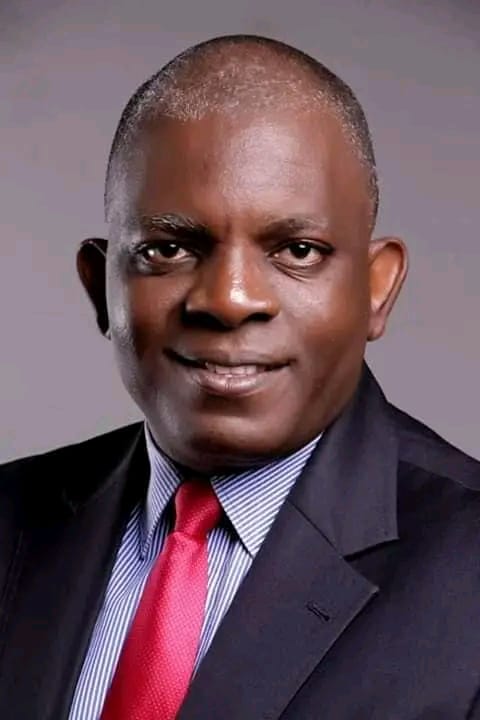
It has become very safe, perhaps, to conclude that the Executive Secretary and Chief Executive Officer(CEO) of Nigerian Shippers’ Council(NSC), Dr. Pius Akutah is the only maritime agency head who has become not only media but stakeholder-friendly.
He is easily accessible and gives ears to complaints while being ready to receive visitors on short notice.
He does not discriminate. It does not presuppose that he is not busy with schedules. It simply means that he understands what leadership entails.In Nigeria, any agency CEO that has bills before the National Assembly, awaiting passage is worth being sympathized with because he has no time of his, and must always be on his or her toes to source unbudgeted or budgeted funds to service the nauseating financial demands of the legislators on both chambers.
Therefore, Dr. Akutah deserves all the sympathy he can get for choky schedules with external and internal office demands.
Navigating the passage of the Council’s Nigerian Port Economic Regulatory Agency(NPERA) Bill at the National Assembly, only is time consuming not to talk of the Minister’s attention and his immediate constituency’s calls.
Surprisingly, with a plane to catch at the airport for an international trip, he found it rewarding to hold a media lunch with Maritime Editors and Reporters, penultimate Saturday in Ikeja, Lagos.
He gives account of his brief stewardship since assuming office, putting paid to the insinuation that the Council has been in comatose as a result of an unfounded story of a political ambition. He presents in financial terms the intervention of the Council in the port industry, while laying bare the future outlook of the agency.
The report is good enough for personal assessment of the agency. We present the full report unabridged. Enjoy it.
Since assuming office in November 2023, the Management of the Nigerian Shippers’ Council (NSC), “Under my leadership, has pursued a focused reform agenda to strengthen the Council’s role as Nigeria’s Port Economic Regulator and reposition it as a modern, efficient and globally competitive institution”.
Guided by the Renewed Hope Agenda of His Excellency, President Bola Ahmed Tinubu, GCFR, and the policy direction of the Honourable Minister of Marine and Blue Economy, His Excellency Adegboyega Oyetola, CON, the Council has delivered measurable progress in economic regulation, consumer protection, trade facilitation, digital transformation, institutional renewal and stakeholder engagement.
Within the period under review, the Council protected over ₦90.60 billion and US$1.348 million in economic value for Nigerian shippers and the national economy.
This includes preventing ₦86.06 billion in unjustified demurrage payments and securing savings of ₦4.54 billion and US$1.348 million through Alternative Dispute Resolution(ADR) and regulatory interventions.
The Council also achieved major institutional milestones, including the passage of the Nigerian Port Economic Regulatory Agency (NPERA) Bill by both Chambers of the National Assembly, approval of its statutory funding mechanism through the 2025 Appropriation Act, active participation in the National Single Window Project and resolution of key issues delaying implementation of the International Cargo Tracking Note (ICTN).
These reforms are improving regulatory certainty, reducing the cost of doing business and supporting the Federal Government’s vision of building a US$1 trillion economy by 2030.
Key Achievements at a glance include: Prevented over ₦86.06 billion in unjustified demurrage payments, Saved Nigerian shippers more than ₦4.54 billion and US$1.348 million through ADR and regulatory interventions, Received 558 complaints and resolved 295 commercial disputes, Harmonised bonded terminal invoice charges from 18 charge categories to six, Facilitated passage of the NPERA Bill, now awaiting Presidential Assent, Secured statutory funding for the Council for the first time since 1978, Advanced implementation of the National Single Window and ICTN, Deployed the Enterprise Content Management System and introduced the Leadership and Succession Planning Project and Substantially concluded preparations for the 18th International Maritime Seminar for Judges.
The passage of the NPERA Bill by both Chambers of the National Assembly represents a landmark reform in Nigeria’s maritime sector.
Once assented to, the legislation will establish an independent Port Economic Regulator with enhanced powers to regulate tariffs, service standards, competition and commercial conduct, thereby strengthening transparency and investor confidence across the port industry.
Another significant milestone is the approval of the Council’s statutory funding mechanism, captured in the 2025 Appropriation Act for the first time since the Council’s establishment in 1978.
This provides a sustainable framework for effective regulation, with collection to be integrated into the National Single Window platform.
The Council has actively supported the National Single Window Project, which is expected to simplify cargo clearance, improve coordination among government agencies and reduce the time and cost of doing business at Nigerian ports.
Similarly, outstanding issues delaying implementation of the ICTN have been resolved. Once operational, the ICTN will strengthen cargo visibility, improve trade intelligence, enhance supply chain security and support regulatory compliance.
As Nigeria’s Port Economic Regulator, the Council has continued to promote fairness, transparency and efficiency in port operations through effective economic regulation and consumer protection.
During the period under review, the Council reviewed and approved tariff requests for shipping companies, terminal operators and Inland Dry Ports after rigorous regulatory assessment.
It also continued to confirm the reasonableness of freight rates, charter party fees and vessel demurrage for foreign exchange transactions, as well as freight charges on export cargoes, thereby supporting transparency and helping to curb capital flight.
To improve pricing transparency, terminal operators were directed to publicly display approved tariffs, while shipping companies were required to establish holding bays outside the ports to facilitate the return of empty containers and reduce congestion along port access roads.
The Council also abolished unauthorised surcharges introduced by some shipping lines, developed minimum service standards for shipping companies and terminal operators, and collaborated with the Nigerian Ports Authority and the Federal Ministry of Marine and Blue Economy to assess compliance with Port Concession Agreements and Key Performance Indicators.
A major achievement was the prevention of over ₦86.06 billion in unjustified demurrage payments through regulatory oversight.
The Council also harmonised bonded terminal invoice charges, reducing charge categories from 18 to 6, thereby eliminating duplication and improving billing transparency.
Through stakeholder engagement and collaboration with key regulatory agencies, including the Federal Competition and Consumer Protection Commission and the Nigeria Customs Service, the Council has deepened compliance and reinforced confidence in Nigeria’s port regulatory framework.
The Council also facilitated a landmark Collective Bargaining Agreement between the Maritime Workers’ Union of Nigeria and employers in the shipping industry, resulting in a new ₦200,000 minimum wage for junior workers after almost two decades of negotiations. Discussions on an agreement for senior staff are at an advanced stage.
Alternative Dispute Resolution(ADR) remains one of the Council’s most effective mechanisms for protecting Nigerian shippers and reducing the cost of doing business.
Between the fourth quarter of 2023 and the second quarter of 2026, the Council received 558 complaints, resolved 295 cases and secured savings exceeding ₦4.54 billion and US$1.348 million.
The disputes covered container deposits, demurrage, detention charges, terminal charges, cargo claims, export fraud and related commercial matters.
The Council also concluded out-of-court settlements involving APM Terminals Nigeria Limited, CMA CGM and Maersk Nigeria Limited in matters arising from charges paid above approved tariffs.
These interventions protected Nigerian shippers, reduced litigation and reinforced confidence in the Council’s dispute resolution framework.
The Council continues to promote an integrated multimodal transport system through the development of Inland Dry Ports, Vehicle Transit Areas and Border Information Centres.
Operational Inland Dry Ports in Kaduna, Kano and Funtua continue to improve cargo movement, support customs operations and stimulate economic activity in inland regions.
Vehicle Transit Areas complement this strategy by supporting orderly movement and temporary storage of imported vehicles outside congested port environments.
The Border Information Centre Programme is also being expanded. Following the completion of the Idiroko Centre in Ogun State, work is advancing on new Centres in Jigawa, Benue, Borno and Kebbi States, while existing Centres along Nigeria’s major border corridors are being upgraded.
Following the destruction of the Jibia Centre by a heavy rainstorm in June 2026, the Council prioritised its reconstruction as part of its infrastructure renewal programme.
To provide more sustainable facilities, the Council has commenced engagement with State Governments for land to develop permanent Border Information Centre complexes.
These facilities will improve trade information services, strengthen regulatory coordination and support legitimate cross-border trade under the African Continental Free Trade Area, while reducing logistics bottlenecks and positioning Nigeria as a preferred maritime and logistics hub in West and Central Africa.
Council has continued to implement internal reforms aimed at building a modern, technology-driven and high-performing regulatory institution.
A major milestone is the deployment of the Enterprise Content Management System, which has transformed records and document management through the digitisation of thousands of legacy files, automation of workflows, improved document security and faster retrieval of official records.
This has reduced dependence on paper-based processes and improved operational efficiency.
The Council has also strengthened its Performance Management System by aligning individual targets with institutional goals, while prioritising local and international training, professional certification, workforce planning and competency-based deployment.
A key initiative introduced during the period is the Leadership and Succession Planning Project, designed to identify and prepare future leaders for critical management positions.
This is supported by the Middle Management Leadership Retreat, which is equipping emerging leaders with strategic, managerial and leadership competencies.
Staff welfare has also been enhanced through timely promotion exercises, confirmation of appointments, career progression, recognition of long-serving officers, retirement appreciation programmes and improved communication between Management and staff.
As part of preparations for the transition to NPERA, Management has undertaken organisational restructuring, reviewed departmental functions, strengthened HR governance, updated HR policies and reinforced compliance with Public Service Rules.
The Nigerian Shippers’ Council remains committed to strengthening maritime jurisprudence as a foundation for a modern, efficient and globally competitive maritime industry.
In July 2024, the Council successfully hosted the 17th International Maritime Seminar for Judges in Abuja under the theme, “Navigating the Intersection of Admiralty Law and Environmental Sustainability: Charting a Course for Nigeria’s Blue Economy.”
The seminar brought together judicial officers, maritime law practitioners, regulators, academics and industry stakeholders to deliberate on emerging legal issues affecting the maritime sector.
Building on that success, the Council is fully prepared to host the 18th International Maritime Seminar for Judges, scheduled to hold from 22 to 24 July 2026 in Abuja.
Organised in collaboration with the National Judicial Institute and the Nigerian Maritime Law Association, the seminar will bring together Justices of the Supreme Court, Court of Appeal, Federal and State High Courts, senior maritime law practitioners, academics, regulators and maritime experts from Nigeria and other African countries.
Invitations have also been extended to the Chief Justices of Ghana, The Gambia, Sierra Leone, Liberia and Kenya.
The seminar will promote legal certainty, support harmonisation of maritime business laws, strengthen investor confidence and advance the implementation of the African Continental Free Trade Area.
Preparations have been substantially concluded, with venue, logistics and faculty arrangements in place.
Going forward, the Nigerian Shippers’ Council will continue to deepen port economic regulation, strengthen consumer protection, accelerate digital transformation, expand trade facilitation infrastructure and promote multimodal transport.
“The Council will support the implementation of the National Single Window and the International Cargo Tracking Note, while consolidating the transition to the Nigerian Port Economic Regulatory Agency once the NPERA Bill receives Presidential Assent.
“Priority will also be given to the development of permanent Border Information Centre facilities, leadership development, succession planning, workforce transformation and stronger collaboration with stakeholders across the maritime value chain.
“Our objective is clear: to build a transparent, efficient and globally competitive port economic regulatory system that protects Nigerian shippers, promotes fair competition, improves port efficiency, attracts investment and supports Nigeria’s emergence as the leading maritime and logistics gateway in West and Central Africa,” Akutah stated.
The achievements recorded since November 2023 demonstrate the Nigerian Shippers’ Council’s commitment to effective regulation, institutional excellence, trade facilitation and national economic development.
“The Council is entering a new phase of institutional growth. Our focus is not only to regulate the port environment, but to help build a more transparent, competitive and investment-friendly maritime economy that delivers measurable value to businesses, consumers and the nation.
“We will continue to work closely with government, industry stakeholders, development partners and the media to sustain these reforms and ensure that Nigeria fully harnesses the enormous opportunities in the Marine and Blue Economy.
“The Council deeply appreciates the enduring partnership of the maritime media. Your role in informing the public, educating stakeholders and promoting accountability remains vital to the growth of the maritime sector.
“We remain committed to transparency, constructive engagement and continued partnership as we work together to build a stronger, more competitive and globally respected maritime economy for Nigeria,” Akutah Concluded.
By Tambaya Julius, Abuja
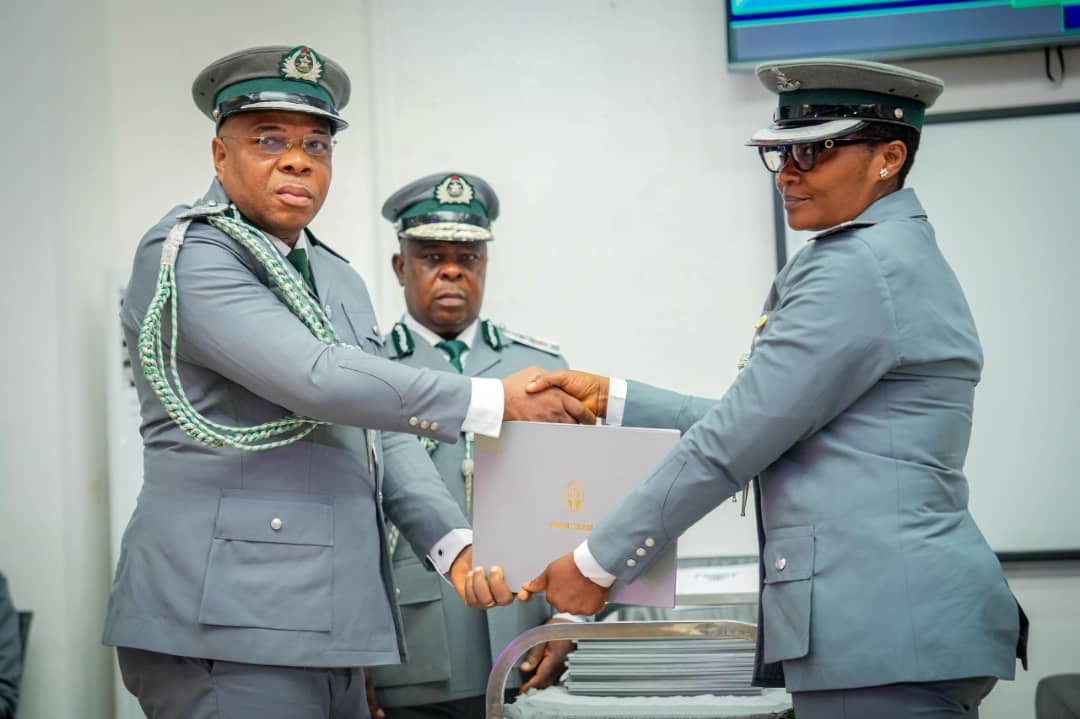
The Nigeria Customs Service (NCS) has graduated 50 officers from the Nigeria Customs Command and Staff College (NCCSC), Gwagwalada, with two officers from the Service’s National Public Relations Unit emerging as the Overall Best and Second Best Graduating Students in Senior Course 14/2026.
A major highlight of the graduation ceremony, held at the Ahmed Makarfi Hall of the College on Friday, 26 June 2026, was the emergence of Chief Superintendent of Customs Ridwan Yusuf as the Overall Best Graduating Student and Chief Superintendent of Customs Nuruddeen Sa’idu as the Second Best Graduating Student.
Both officers serve in the Service’s Public Relations Unit.In his message to the graduating officers, the Comptroller-General of Customs, Adewale Adeniyi, represented by the Commander, Training and Doctrine Command (TRADOC), Deputy Comptroller-General of Customs Sulaiman Chiroma, congratulated them on completing one of the Service’s most demanding professional training programmes.
DCG Chiroma charged the officers to uphold the highest standards of professionalism, discipline and courage, saying, “To whom much is given, much is expected. On behalf of the Comptroller-General of Customs, I urge you to remain mission-focused and continue to serve the nation with honesty, integrity and dedication.”
Earlier, the Commandant of the College, Assistant Comptroller-General of Customs Duwoh Gaura, reaffirmed the institution’s commitment to producing competent officers in line with the Comptroller-General’s vision of a more efficient, technology-driven and professional NCS.
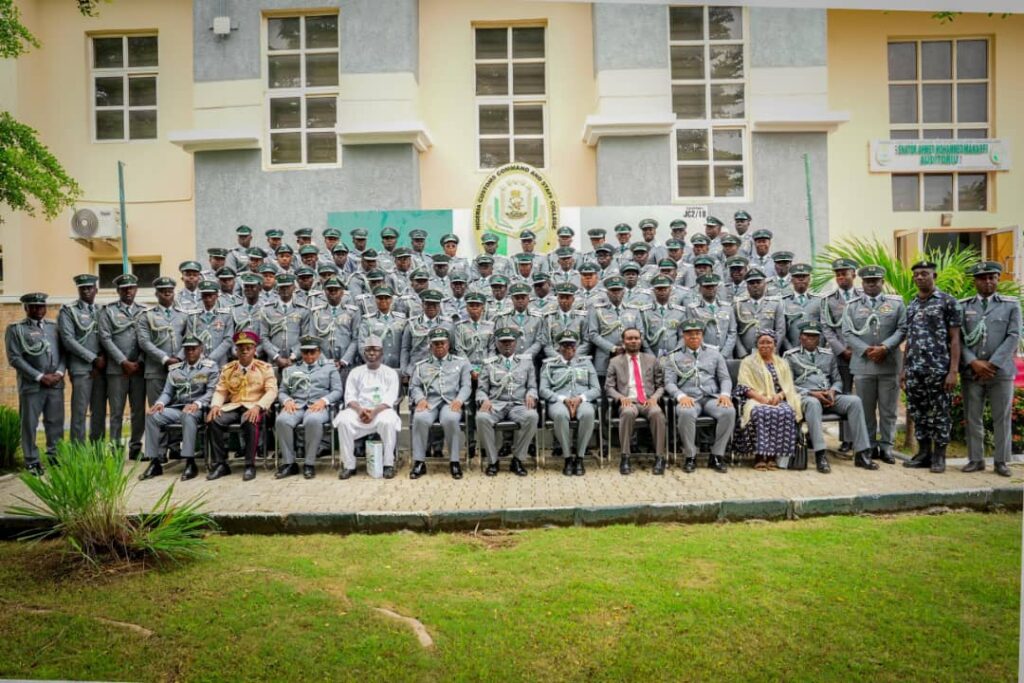
The graduation marked another milestone in the Service’s commitment to developing highly skilled officers capable of meeting the evolving demands of Customs administration and border management.
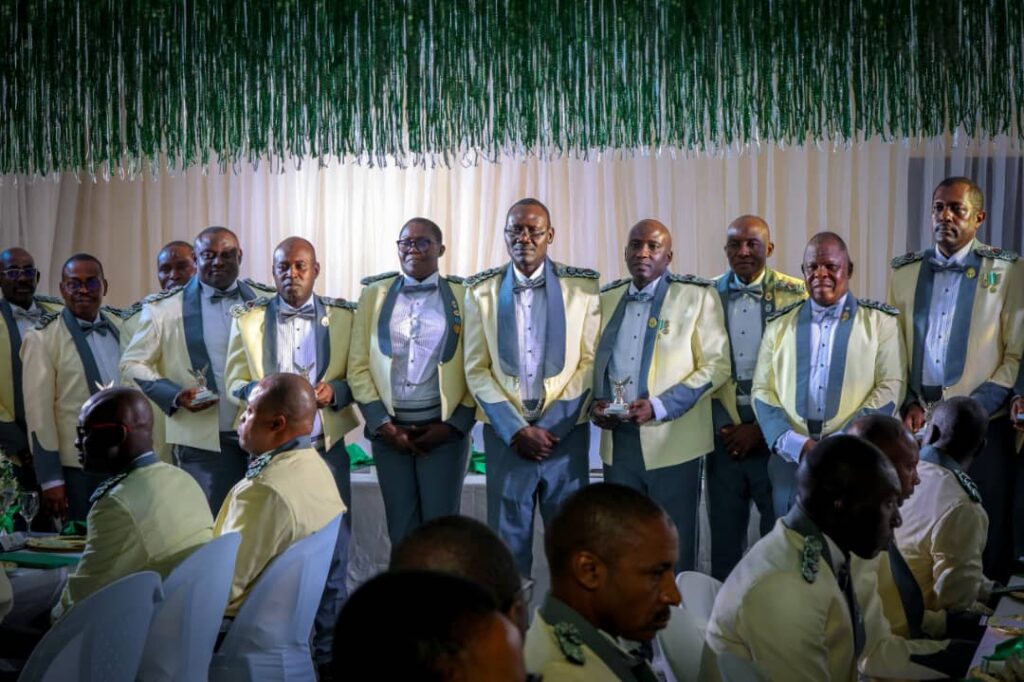
The College had earlier, on Wednesday, 24 June 2026, held a Regimental Dinner at the NCCSC Hotel, Gwagwalada, in honour of the graduating officers. The event was attended by members of the Service’s Management Team, senior officers and guests. It was graced by the Comptroller-General of Customs, Adewale Adeniyi, represented by DCG Sulaiman Chiroma.



Troops Kill Terrorists, Rescue 39 Kidnap Victims in One Week – DHQ
ShareBy David Torough, Abuja The Armed Forces of Nigeria says its troops killed scores of terrorists, rescued dozens of kidnapped...

Nigeria’s Diversity, Our Greatest Asset, Says Idris
ShareBy David Torough, Abuja The Minister of Information and National Orientation, Mohammed Idris, has described Nigeria’s diversity as a source...

Groups Reject Grazing Reserves, Insist on Resettlement of IDPs in Benue
ShareFrom Attah Ede Makurdi The three Socio Cultural Organizations in Benue State(Mdzough U Tiv, Ochetoha K’ Idoma and Omi Ny’Igede,...
Babangida: Why I Could Not Save Vatsa From Coup Conviction
ShareBy Dan Amasingha,Minna. Former Military President, General Ibrahim Badamasi Babangida (rtd.), has broken his silence on one of the most...

FG Inaugurates New NSIWC Board, Tasks Members on Fair Wages, Productivity
ShareBy David Torough, Abuja The Federal Government has inaugurated a new Board of the National Salaries, Incomes and Wages Commission...


Nigeria’s Celebrity Golfer, Leo Edochie Shines at London’s Shire
ShareBy Julius Tambaya, Abuja Chief Leo Edochie, Nigeria’s number one celebrity golfer turned heads with a jaw-dropping appearance at The...

Fadahunsi, Osun and the Price of Political Rhetoric
ShareBy Willie Adegbite A video clip has placed Senator Francis Fadahunsi at the centre of a political firestorm. In it,...
What Investing in Africa Means to Aliko Dangote
ShareBy Ehi Braimah When conversations turn to investment in Africa, one name consistently dominates the discussion: Aliko Dangote. Over the...

It’s not Tinubu’, Femi Kuti Reveals Nigeria’s Real Problem
ShareAfrobeat legend, Femi Kuti has claimed that President Bola Tinubu is not the major problem facing Nigeria. He argued that...


Brain Jotter Cries out after Harassment by Lagos Touts
ShareNigerian content creator, Brain Jotter, has cried out on social media after being harassed by Lagos touts, popularly known as...