
NEWS
Bridging Urban-Rural Water Gap in Nasarawa – Muhammed Muluku

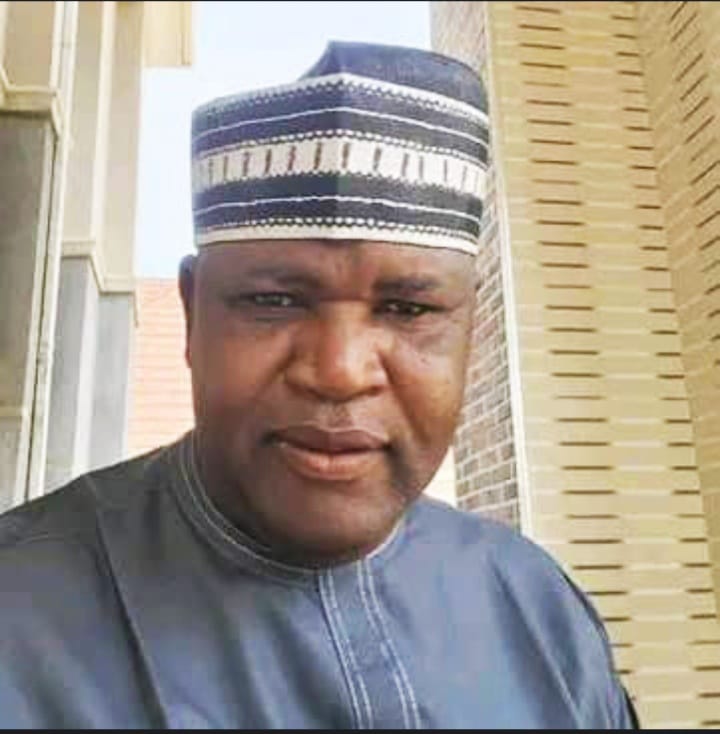
Against this backdrop, the Nasarawa State Ministry of Water Resources and Rural Development has, in recent months, embarked on a series of interventions aimed at addressing long-standing infrastructure gaps, strengthening water supply systems and expanding access to safe water across the state.
In this exclusive interview with our Correspondent Abel Zwanke, Hon.
Muhammed Muluku reflects on his first 11 months in office, outlining the philosophy that guides his leadership, the projects executed and those currently underway, as well as the ministry’s plans for the 2026 fiscal year.He also speaks on sustainability, institutional capacity, partnerships with development agencies and the broader goal of ensuring equitable access to clean water for communities across Nasarawa State.
Honourable Commissioner, when you assumed office in February 2025, what realities did you meet in the water and rural development sector?
When I assumed office on February 21, 2025, following my appointment by His Excellency, Governor Abdullahi A. Sule, the realities were very clear and, in some cases, quite sobering. Water scarcity remained a major challenge across many communities, particularly in rural areas. Some existing water facilities were either overstretched, obsolete or poorly maintained.
In urban centres like Lafia and Keffi, population growth had outpaced infrastructure capacity, while in rural communities, access to potable water was still largely inadequate.
Beyond infrastructure, there were institutional challenges. The ministry needed stronger technical capacity to effectively plan, execute and monitor projects. So, from day one, we understood that addressing water scarcity would require both physical interventions and institutional strengthening.
What guiding philosophy shaped your approach in the last 11 months?
Our guiding philosophy has been impact, sustainability and equity. We did not want projects that would look good on paper but fail after a short period. That is why we deliberately prioritised solar-powered systems, rehabilitation of existing infrastructure, and strategic interventions that address systemic issues.
Equity was also central. Water is a basic necessity, not a luxury. Whether you live in an urban centre or a remote rural community, you deserve access to clean and safe water. That principle guided our project distribution across local government areas.
Water scarcity is often described as both a social and economic issue. How does your ministry see this challenge?
Water scarcity is indeed multidimensional. Socially, it affects public health, sanitation and quality of life. Economically, it affects productivity, agriculture, livestock and even education, especially for children who spend hours searching for water.
When communities lack reliable water supply, women and children are disproportionately affected. That is why our interventions are designed not just to provide water, but to reduce hardship, improve hygiene and support livelihoods, particularly in agrarian communities.
Can you outline the major achievements recorded under your leadership so far?
In 11 months, we have recorded several tangible achievements. We facilitated the provision of five solar-powered boreholes in Madagwa Hausawa Development Association in Lafia LGA, covering Madagwa Hausawa, Tudun Okpu and Tudun Abosho. These boreholes are completed and currently serving the people.
We also completed a solar-powered borehole at the NDLEA Headquarters in Lafia, supporting institutional water needs. In partnership with NARUWASSA, we handed over 40 simple solar-powered boreholes in Keffi and Doma LGAs, alongside four toilet facilities across Keffi, Karu, Doma and Keana LGAs.
Other completed projects include a solar-powered borehole at the Mararaba abattoir in Karu LGA, a toilet facility at Government Junior Secondary School, Kaduna Koro in Obi LGA, five solar-powered boreholes across communities in Akwanga town, two solar-powered boreholes at Brekete Family Smart City Estate in Karu LGA, and the conversion of a motorized borehole to solar power at the Nigerian Correctional Service Commandant’s residence in Lafia.
Solar-powered boreholes appear to be a major feature of your interventions. Why this emphasis?
The emphasis on solar-powered boreholes is deliberate. Diesel-powered systems are expensive to maintain and often break down due to fuel shortages or mechanical issues. Solar systems, on the other hand, are cost-effective, environmentally friendly and more sustainable in the long term.
By adopting solar-powered solutions, we reduce recurrent costs and ensure that communities can enjoy uninterrupted water supply. It is a forward-looking approach that aligns with global best practices in water resource management.
Beyond completed projects, what major initiatives are currently ongoing?
We currently have several important projects at various stages of implementation. One is the establishment of a small pilot irrigation scheme at Ungwan Mamman in Daddere Development Area of Obi LGA. This project is designed to support dry-season farming and improve food security.
At the Nasarawa State University, Gudi Campus, we are providing three solar-powered boreholes, converting an existing conventional borehole to solar power, and constructing 100,000-litre and 20,000-litre overhead tanks to support academic and residential water needs.
We are also constructing a solar-powered borehole with a 100,000-litre overhead tank at the Federal Fire Service Base along Jos Road in Lafia to support emergency response operations.
The dredging of River Amba and the construction of a booster station have attracted attention. Why are these projects significant?
They are extremely significant. River Amba is the major source of raw water for the Lafia Water Works. Over time, siltation reduced its capacity, limiting the volume of water available for treatment. Dredging the river increases raw water availability, which directly translates to improved water supply for Lafia metropolis.
The booster station at Garaku is another strategic project. It will enable water from the Mada Water Works to reach Keffi metropolis with improved pressure and consistency. These are long-term investments that strengthen the backbone of our water supply system.
How has the ministry addressed internal capacity challenges?
We recognised early that infrastructure delivery is only as effective as the institution driving it. That is why we facilitated the addition of technical manpower at the ministry’s headquarters in Lafia. These technical staff have since resumed work and are contributing significantly to planning, supervision and quality control.
Strengthening internal capacity ensures accountability, efficiency and sustainability in project execution.
Looking ahead, what should residents expect in the 2026 fiscal year?
The 2026 fiscal year will be very active for the ministry. We have earmarked several projects, including additional solar-powered boreholes at St. Mathew’s Anglican Church and the entire Kemu community in Nasarawa LGA, as well as Dogon Dutse community.
We also plan to provide additional solar-powered boreholes in correctional centres located in Keffi, Nasarawa and Wamba. Furthermore, potable water supply will be extended to seven government veterinary clinics across the state to support animal health and public safety.
Are there plans to improve water quality monitoring?
Yes, absolutely. We plan to establish a water quality testing laboratory at the ministry’s headquarters in Lafia. This facility will enable regular monitoring of water quality, ensuring compliance with health standards and safeguarding public health.
Water quality is just as important as water availability, and this laboratory will strengthen our regulatory and monitoring capacity.
How important are partnerships in achieving your goals?
Partnerships are critical. We are currently negotiating grants with the Arab Bank for Development in Africa (BADEA) to support water supply systems in Obi, Nasarawa Eggon and Akwanga LGAs.
We are also working closely with the Federal Government through matching grants under NARUWASSA to deliver potable water across several local government areas. Additionally, the Sustainable Power and Irrigation for Nigeria (SPIN) project is set to take off in Doma, Akwanga and Keffi LGAs.
Finally, what message do you have for the people of Nasarawa State?
My message is one of assurance and commitment. This administration understands that water is fundamental to health, dignity and development. Under the leadership of Governor Abdullahi Sule, we are determined to expand access to clean and safe water in a sustainable and equitable manner.
The journey is ongoing, but the foundation has been laid. We will continue to listen, to plan responsibly, and to deliver projects that truly improve the lives of our people.
From Mike Tayese, Yenagoa
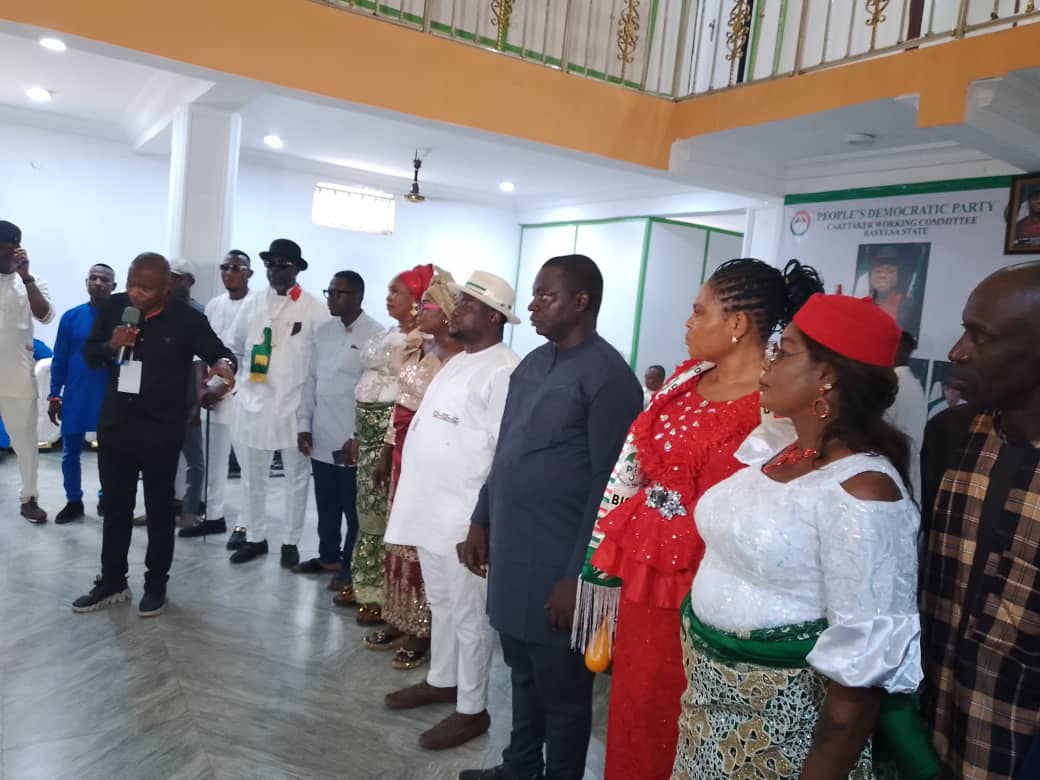
Alabh George Turnah has emerged as the newly elected Chairman of People’s Democratic Party (PDP) Bayelsa state chapter with other elective officers to pilot the affairs of the party in the state.
Barr. Turnar who was the Acting Chairman of the Party in the state following the sack of former state working committee led by Solomon Agwana was dully elected as the chairman of the party in a concencious votes by the delegates on Saturday 14th March 2026.
The State Elective Congress was conducted under the watchful eyes of the representatives of the Independent National Electoral Commission (INEC) observers, National officers of PDP, stakeholders, Media among the rest.
Speaking during the acceptance speech, the newly elected Chairman Barr. Alabh George Turnah said, he accepted the responsibility as the chairman of People’s Democratic Party (PDP) in Bayelsa state and his elective officers to reposition the party for greater works.
Turnar said, they take the mandates as sacred given to them by the people and they will not betray the confidence the people have repose in them. “We will work with all our hearts in line with the oath office we have taken before you today. I assure you, it’s a new down as from today for PDP in Bayelsa state”.
“PDP is Bayelsa and Bayelsa is PDP, what seems to look like PDP is an opposition in Bayelsa is theoretical . What is practical is that PDP is a majority party in Bayelsa state and at the right time, the people will reciprocate as we always done in appreciation to the party that have given an Ijaw man everything we would have ever ask for in this project called Nigeria.
“We are not an ungrateful people, we will continue to stand by this party PDP. The God who stand by the Party in 2019 is still the same God today and He still rules in the affairs of men. Come 2027 PDP under our leadership will not only make strong statement but will also deliver to the expectations of the world.
“Bayelsa Creek Haven belongs to PDP. This Secretariat is open for all and activities has begun in enerst with immediate state working committee meeting to kick start our work. We have already hit the ground running, I assure you of our loyalty, I assure you of our commitment, I assure you that we will operate open door administration . PDP will stand for you and we also expect that you will stand for PDP”.
He commended INEC, the panelists, observers and others for their hard work for the country. “I seek the co-operation of my team in order for us to work together. United we stand divided we fall”, Turnar said.
The newly elected Chairman Alabh George Turnah also used the occasion to commissioned the new PDP Secretariat building situated along Issac Boro express way in Yenagoa the state capital.
The Benue State Security Trust Fund Bill, 2026, passes second reading on Thursday at the Benue State House of Assembly.
Leading the debate, Thomas Dugeri, the Majority Leader, emphasised that the bill sought to create a pool of resources to support the acquisition of security equipment and the deployment of both human and material resources necessary for all security agencies operating in the state.
Dugeri said that part of the fund would be earmarked for the training and retraining of security personnel, ensuring that they were equipped to meet the evolving security challenges facing Benue.
“Our people are confronted with insecurity from multiple fronts.
“Security is everybody’s business, and it is imperative that we invest in the sector proactively to prepare for the rainy day,” he said.
He urged his colleagues to support the bill to pass second reading and subsequent passage.
Samuel Agada (APC/Ogbadibo) described the bill as apt, timely, and necessary.
Also, Cephas Dyako (APC/Konshisha), highlighted that members of the public would also be encouraged to contribute financially to the fund.
Anthony Agom (APC/Okpokwu), said that the initiative would help the government address persistent security gaps and fulfill its responsibilities more effectively.
Emmanuel Onah (PDP/Oju I), cited the example of Zamfara, where the governor purchased and distributed security vehicles to law enforcement agencies to combat insecurity.
He noted that Benue currently faced significant security challenges and pledged that his constituents were ready to contribute to the proposed fund.
After the debate, the Speaker, Alfred Emberga, called on the Clerk, Dr Bem Mela, to read the bill for the second time.
Emberga further referred the bill to the Committee on Local Government, Security and Chieftaincy Affairs to conduct a public hearing.
He said that after the public hearing, the bill was expected to receive accelerated passage.
Senegal’s parliament has approved a new law doubling to 10 years the maximum prison term for sexual acts by same-sex couples and criminalising the “Promotion” of homosexuality.
A total of 135 MPs voted in favour, zero against and three abstained.
The next step will be for the president to sign it, then it will become law.The legislation, which was a campaign promise of President Bassirou Diomaye Faye and Prime Minister Ousmane Sonko, was sent to parliament after a wave of arrests over alleged same-sex relationships, already banned under Senegalese law.
The government spokesman dismissed international criticism of the bill, arguing that the move reflected the views of Senegalese people.
“The majority of Senegalese do not accept homosexuality. Our culture rejects it and we are firmly opposed to it,” said Amadou Moustapha Ndieck Sarré.
Some conservative activists in Senegal have long demanded harsher penalties.
The movement And Sàmm Jikko Yi, which campaigns to defend what it calls Senegalese moral values, has repeatedly urged authorities to adopt stricter legislation criminalising homosexual acts. Its leaders argue the law is necessary to protect Senegalese cultural and religious norms.
However, rights groups warn the move could worsen discrimination and violence against sexual minorities. Human Rights Watch researcher Larissa Kojoué said the proposed changes were worrying.
“Criminalising same-sex conduct and arresting people for their sexual orientation violates multiple internationally protected rights, including equality and non-discrimination.”
She added that such measures risked exposing people who were already stigmatised to “violence and fear.”
Alioune Tine, founder of the think-tank Afrikajom Center, said that the current climate could worsen social tensions. “If it is true that social concerns must be addressed, [the law] also has to respect human rights and protect public-health policies.”
Others have pointed out that same-sex relationships are a part of life and cannot be abolished by a law.
“Most of the same-sex relationships were hidden anyway. There are even people who are married in the society and who are still entertaining a safe-sex relationship because of the norm and the cultural norm in that society,” Senegal LGBTQ Association head and medical doctor Charles Dotou said.
All that will happen is “people will be hiding more, it will create more fear and people will be scared to live normally in that community. So there will be an exodus of people, particularly people who were already exposed so that that creates a bit of chaos in society,” Dr Dotou added.
The toughening of Senegal’s law follows a wave of arrests last month over alleged same-sex relationships. Police detained 12 men – among them two public figures and a prominent journalist.
Some supporters of the tougher legislation say they have concerns about HIV transmission, although it has long been scientifically established that people of any sexuality can contract and spread the illness.
Experts warn that further criminalising same-sex relations could vilify gay people living with HIV to the point that they shy away from receiving the vital medical care they need.
Senegal has been praised for its efforts to control HIV. Between 42,000 and 44,000 people are living with the virus in the country, with a national prevalence of about 0.3% among adults, one of the lowest rates in West Africa, according to the health ministry.
At the Fann University Hospital in Dakar, the executive secretary of the National Council for the Fight Against Aids (CNLS) – the body that has coordinated the country’s HIV response for decades – is worried about the situation with LGBTQ+ people.
“We have managed to control the HIV epidemic and we are moving towards eliminating Aids as a public health problem in Senegal,” Dr Safiétou Thiam said. “But what is happening now risks undermining the results of 30 to 35 years of efforts in the fight against the disease.”
Ousmane Sonko, the longtime firebrand opposition leader appointed prime minister in 2024, had told lawmakers the bill would punish what it describes as “acts against nature” with fines of up to 10,000,000 CFA francs ($17,600; £13,000) and prison sentences ranging from five to 10 years, compared with the current one- to five-year terms in the Muslim-majority country.
Several other African countries have also introduced tough new laws against the LGBTQ+ community in recent years.
In September last year, Burkina Faso’s transitional parliament approved a bill banning homosexual acts, following its neighbour Mali in 2024.
In 2023, Uganda voted in some of the world’s harshest anti-homosexual legislation meaning that people engaging in same-sex relationships can be sentenced to death in certain circumstances.
Ghana is also planning to re-introduce an anti-homosexual bill that activists say threatens basic human rights, safety and freedom.

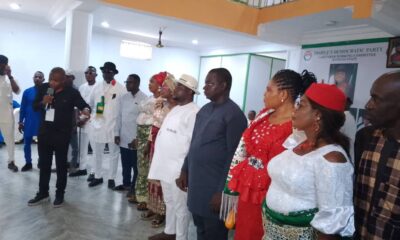

Turnah Emerges as Bayelsa PDP Chairman
ShareFrom Mike Tayese, Yenagoa Alabh George Turnah has emerged as the newly elected Chairman of People’s Democratic Party (PDP) Bayelsa...
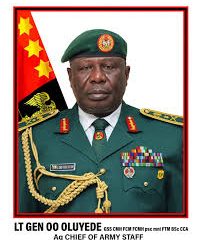

Military Repels Attacks, Neutralizes Terrorists, Rescues Kidnap Victims in Nationwide Operations
ShareBy David Torough, Abuja The Armed Forces of Nigeria have recorded multiple operational successes across the country between March 7...

PDP Commissions New Secretariat in Bayelsa, Holds State Elective Congress
ShareFrom Mike Tayese, Yenagoa All is set for the leadership of the People’s Democratic Party (PDP) in Bayelsa State to...
Benue Security Trust Fund Bill Passes Second Reading
ShareThe Benue State Security Trust Fund Bill, 2026, passes second reading on Thursday at the Benue State House of Assembly. Leading the debate, Thomas Dugeri, the Majority Leader, emphasised that the bill sought...
Over 20 Schools Set for Third Athletics School Games in Lagos
ShareNo fewer than 20 schools are set to participate in the third edition of the Athletics School Games (TASG), a grassroots athletics competition for school children scheduled to be held in Lagos. The...

Senegal Approves Tougher Anti-gay Law as Rights Groups Raise Concerns
ShareSenegal’s parliament has approved a new law doubling to 10 years the maximum prison term for sexual acts by same-sex couples and criminalising the...

Have Children Out of Wedlock, Marriage Doesn’t Work – Timaya
ShareNigerian singer, Timaya has shared his opinion on having children out of wedlock and marriage. The Dem Mama crooner sparked...

Ayra Starr Picks Wizkid, Tiwa Savage, Rema as Goats of Afrobeats
ShareNigerian singer, Ayra Starr has named her greatest Afrobeats artistes of all time, otherwise called “Afrobeats Big 3.” In a...

Leprosy Mission Boosts Patient Care in Niger with 25 Electronic Beds
ShareFrom Daniel Amasingha, Minna. As part of efforts to improve the treatment and welfare of leprosy patients, the Leprosy Mission Nigeria (TLMN) has...


NNPCL Cuts Petrol Pump Price by N100 in Lagos, N95 in Abuja
ShareThe Nigerian National Petroleum Company Limited has reduced the pump price of petrol at its retail outlets to N1,130 per...