
Foreign News
Britain’s Foreign Secretary Truss Confirms Bid to Replace PM Johnson


Britain’s Foreign Secretary Liz Truss announced her bid to become the Conservative party’s new leader on Sunday, making her the tenth contender in the race.
The new Tory leader will replace Prime Minister Boris Johnson, who was forced to step down after dozens of members of government resigned in protest after a series of scandals.
Truss, a senior Cabinet minister widely expected to be a front-runner in the already crowded race, promised to “start cutting taxes from day one” to help with the cost of living.
She joins contenders including trade minister Penny Mordaunt, former health secretaries Sajid Javid and Jeremy Hunt, ex-chancellor Rishi Sunak, his successor Nadhim Zahawi, and Transport Secretary Grant Shapps.
Former minister Kemi Badenoch and senior backbencher Tom Tugendhat have also thrown their hats into the ring.
Truss’s pledge to scrap a controversial national insurance rise which came into effect in April, mirrors that of rival Javid.
It marks a departure from her defence of the policy as a minister in Johnson’s Cabinet, prior to his resignation, when she was bound by collective responsibility to support the move publicly.
The levy was introduced to raise funds for the NHS and social care, but has proved controversial at a time when households are feeling the squeeze from soaring food and energy bills.
Truss argued “it isn’t right to be putting up taxes now”, and as leader she would take “immediate action” to assist with living costs.
She said she would “keep corporation tax competitive” – hinting that she wants to look again at Sunak’s plans to hike the rate in April 2023, but did not go so far as to match some of her fellow contenders’ pledges to scrap the rise entirely.
Truss said she would “get the private sector growing faster than the public sector, with a long-term plan to bring down the size of the state and the tax burden”.
Writing in The Telegraph, she said: “Under my leadership, I would start cutting taxes from day one to take immediate action to help people deal with the cost of living.
“I would reverse the national insurance increase that came in during April, make sure we keep corporation tax competitive so we can attract business and investment into Britain, and put the Covid debt on a longer-term footing.”
Truss said her plan would get the country back on track towards becoming a “high-growth and high-productivity powerhouse”.
“It is built on a clear and longstanding Conservative philosophy, including bold supply-side reform,” she added.
She said she had “led the way” in making the most of Britain’s “new-found freedoms” outside the EU, but insisted “we can go further, whether it is doing more to champion innovation or charting our own course on regulation”.
She said she would bring “clear and decisive leadership” to Downing Street, adding: “Colleagues know I mean what I say and only make promises I can keep. I can be trusted to deliver.”
Truss said the Tories can win the next election, but acknowledged it will be “an uphill battle”.
Earlier, announcing her bid for the top job, Mordaunt said the UK’s leadership “needs to become a little less about the leader and a lot more about the ship”.
Candidates populated the Sunday morning broadcast round, with Hunt, Javid, Shapps and Tugendhat all making appearances to promote their campaigns.









At least 72 civilians who had been prospecting for gold in a border region of Sudan have been killed in air strikes, a regional rights group said.
Emergency Lawyers, based in the Sudanese capital, Khartoum, said jets targeted the so-called artisanal miners at a popular gold mining site on Saturday.
Neither the Egyptian government nor the de facto Sudanese authorities have so far commented.
Cairo has previously faced accusations of deadly strikes on gold prospectors as part of a crackdown on illicit activity along its southern border.
Emergency Lawyers noted the previous alleged attacks and said they represented not only a violation of Sudan’s sovereign territory but demonstrated the government’s lack of control over the region.
“The deliberate targeting of unarmed civilians violates international humanitarian law and the right to life,” it said in a statement on Sunday. “These acts may constitute war crimes.”
It noted that its death toll was provisional and could rise.
The Paris-based Sudan Tribune reported that the death toll could far exceed the number reported by Emergency Lawyers, citing a survivor of Saturday’s attack who said many more people had been injured.
Eyewitnesses said the attack began around 06:00 local time (04:00 GMT), with the aircraft firing more than five missiles directly at the miners’ camps, destroying them and excavation pits with people still inside, the newspaper wrote.
The Sudan Tribune reported claims in June that Egyptian forces had used drones and artillery to target artisanal mining sites in the same region, killing several, after sporadic incidents of Egyptian border guards of burning equipment, torching temporary shelters, and firing live ammunition to disperse mine workers.
Days later, Egypt’s border agency announced that it and the military had begun a sweeping security campaign along the border to foil illegal migration, drug smuggling and illegal mining.
At the same time, Sudan’s de facto leader announced an investigation into the alleged strikes, which were said to have killed dozens.
Gold lies at the core of the border tensions.
Sudan’s ongoing civil war has led to a surge in artisanal mining – and often risky practice conducted by civilians with rudimentary tools and without official permission – particularly in remote areas near its borders.
Gold-rich areas lie along porous borders in terrain historically associated with cross-border smuggling routes, with artisanally mined gold potentially feeding into those channels.
Egypt’s border force said in June that it had seized 86 tonnes of gold ore along with amateur prospecting equipment.
Artisanal mining has also reportedly continued in Sudan’s conflict zones and smuggled gold may be a source of income for armed insurgent groups.
This has raised concerns of illicit Sudanese gold undermining the legitimate Egyptian gold market.

Several German fighter jets will take part in the Northern Atlantic Treaty Organisation (NATO) annual nuclear defence exercise this week as troops from 17 countries take part in the Steadfast Noon drill.
The German Air Force said three Tornado jets will take part in the exercise hosted by Italy, which starts Tuesday and runs for about a week and a half.
The jets are normally stationed in Büchel in the German state of Rhineland-Palatinate.
NATO has not revealed the exercise scenario but said its scale would be comparable to last year’s drill, which involved around 2,000 personnel and more than 70 aircraft.
Last week, NATO’s head of nuclear policy, Nassima Barrows, said the exercise was designed to demonstrate the alliance’s readiness and ability to defend its territory.
No real nuclear weapons will be used, she added.
NATO said the exercise was not linked to current events or directed at any specific country.
Military experts say the drills, held regularly in October, include practising the safe transport of weapons from underground storage facilities to aircraft and mounting them on fighter jets.
Only practice bombs without real nuclear warheads are used during the drills.
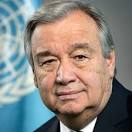
UN Secretary General Antonio Guterres has called on governments, the private sector, civil society, and community leaders to scale up investment in proven solutions, and ensure they reach every girl, everywhere.
Guterres made the call in his message to mark the 2026 International Day of the Girl Child under the theme “End child marriage and invest in girls’ rights!”
International Day of the Girl, celebrated annually on October 11, is a global moment to celebrate girls everywhere, amplifying their voices, actions and leadership.
The UN chief, however, used the 2026 celebration to call for end to child marriage.
“Together, let us defend the right of all girls to a childhood, and ensure every daughter, every sister, grows up free to shape her own future,’’ he said.
According to him, every three seconds, child marriage cuts a girl’s childhood short and one in five girls worldwide is married before the age of 18.
“Child marriage compromises the education, health, and safety of millions of girls across the globe. Fundamentally, it is rooted in poverty.
“The risk goes up in times of conflict, climate shocks, and displacement, leaving families with fewer options for their daughters.”
Guterres said educating girls and providing economic opportunities for their families would halt the harmful practice.
“But we know how to halt this harmful practice. Keeping girls in school, improving economic opportunities for families, enhancing social and legal protections, and challenging discriminatory gender norms all help girls reclaim their agency.
“Over the past 25 years, such solutions have prevented an estimated 68 million child marriages.
“Yet recent funding cuts threaten progress. At the rate we’re going, it will take centuries to eliminate child marriage,’’ he said.



Former Delta Governor Uduaghan Dies at 70
ShareFrom Francis Sadhere, Delta Former Governor of Delta State, Dr. Emmanuel Eweta Uduaghan, has died. Uduaghan, who governed the state...


Customs Opens Review for Disqualified Recruits, Flags 397 Applicants
ShareBy Tambaya Julius, Abuja The Nigeria Customs Service (NCS) has opened a review process for applicants disqualified during its recent...


World Bank Tasks FG, States on Sustainable Cash Transfers
ShareBy Tambaya Julius, Abuja The World Bank has urged the Federal Government and state governments to establish a sustainable social...


NDLEA Nabs 85-year-old Woman, Seizes 407kg Cannabis
ShareThe National Drug Law Enforcement Agency (NDLEA) has arrested an 85-year-old grandmother and five other suspected drug traffickers during coordinated...

Economy would’ve Collapsed without Tinubu’s Reforms, Says Shettima
ShareVice President Kashim Shettima has said Nigeria’s economy would have collapsed had President Bola Tinubu not taken what he called...


House of Reps Seeks 90-Day Fuel Reserve for Nigeria by 2027
ShareFrom Rabiu Sanusi, Kano The House of Representatives has backed plans to increase Nigeria’s strategic petroleum reserve from 20 days...

56,000 Candidates Register for 2026 Private WASSCE
ShareThe West African Examinations Council (WAEC) said no fewer than 56,000 candidates registered for the 2026 West African Senior School...


JAMB Warns Varsities Against Issuing Admission Letters
ShareThe Joint Admissions and Matriculation Board (JAMB) has warned universities against issuing admission letters to candidates, insisting that only admissions...
Beyond Survival: Building A Healthier Nigeria For A Longer Life
ShareBy Yussuf Mubaraq Damilare What does it mean to live a long life if access to basic medical care remains...


Jigawa to Increase Corps Members Allowance – Namadi
ShareThe Jigawa government has announced plans to increase monthly allowance for the National Youth Service Scheme (NYSC) members posted to...