
Education
Buhari Awards Scholarship to Three Young Scientists


By Mathew Dadiya, Abuja
President Muhammadu Buhari Monday granted full scholarship up to the Doctor of Philosophy (PhD) degree level to three secondary students who emerged winners at the year 2020 Young Nigerian Scientists Presidential Award Competition.
The scholarship, according to the President, was in any science-related discipline of their choice at any university in the country.
President Buhari announced the award of the scholarship while declaring open the 2020 Science, Technology and Innovation Expo with the theme ”Enhancing The Growth Of A Diversified Economy Through Science And Technology”, in Abuja.
Buhari commended the creativity and competitive spirit of the three young scientists who emerged tops in the competition tagged 774 Young Nigerian Scientists Presidential Award (774 YONSPA).
The students are: Masters Akintade Abdullahi Akanbi of Osun State from Osogbo Government High School Osogbo, Osun State, who came first; while the second positions went to Uwakwe Nelson Kamsiyochukwu of Anambra State from British Spring College, Awka and Aimofumhe Eshiobomhe Sigmus of FCT from the School of the Gifted, Gwagwalada, Abuja, respectively.
The President said that Nigeria’s greatest resource was its human capital, assuring that his administration would continue to support human resource development.
He said, ”This is richly embodied in our youth who make up tens of millions of incredibly talented persons, constantly pushing and striving towards greatness. The future of Nigeria belongs to our youth.
”This Administration will therefore continue to create the enabling environment for them to develop to the fullest, their potentials.
”We will harness their energy and their talents to make Nigeria achieve true greatness,” he said.
The President reiterated the commitment of the Federal Government to partner with the private sector on science, technology and innovation sector development towards ensuring that the sector plays the very important role in advancing the frontiers of knowledge for nation building.
”Government will continually support the creation of intervention funds to strengthen research and development, human capacity building programmes and collaboration with the organized private sector.
”We will continue to work towards the realisation of the National Research and Innovation Fund. I am aware, this Fund will help promote research activities in our country.”
He therefore, directed the ministers of science and technology to create the needed opportunities to ensure that Nigerian scientists work towards providing solutions to the nation’s challenges of insecurity, unemployment, poverty, healthcare delivery and power, among others.
The President affirmed that if Nigerian potentials in the Science and Technology Sector are properly harnessed, with the enabling environment created, 100 million Nigerians will be taken out of poverty in the next ten years.
”This remains my aim for Nigerians,” he stressed, noting that Nigerians at home and abroad have always demonstrated remarkable ingenuity and inventiveness and with the right environment, and policy framework, there is no limit to how far Nigerian innovation can go.
”A prime example of an outstanding Nigerian is Mal. Jelani Aliyu, who is now Director-General of the National Automatic Design and Development Council.
”Malam Jelani designed the General Motors of America’s leading auto brand the Chevrolet Volt. Now he is assuring Nigerians that all the cars that took part in Argungu Motor Rally were assembled in Nigeria,” he said.
In his remarks, the Minister of Science and Technology, Dr Ogbonnaya Onu thanked the President for the many efforts in promoting STI, including recognizing the sector as being at the centre of all economic activities under the Economic Recovery and Growth Plan (ERGP) 2017-2020.
The Minister said that in the last six months of the second term of President Buhari, the STI sector helped create over 900,000 jobs while data from the National Bureau of Statistics (NBS) show that Nigeria saved over N1 trillion in the importation of raw materials in both 2017 and 2018.
”The data for 2019 is yet to be released. Patents from scientists and engineers, who passed through the National Office for Technology Acquisition and Promotion (NOTAP), an agency under the supervision of the Federal Ministry of Science and Technology, have continued to increase.
”In 2015, the first year of the Buhari administration, it was only six. In 2016; it was 16, 50 in 2017, 55 in 2018 and 57 in 2019,” he said.
As the Covid-19 crisis spreads across the globe, Dr Onu declared that what is happening around the world is a wake-up call to intensify efforts to manufacture goods locally and patronize made-in-Nigeria products.
”The Presidential Executive Order No. 5 and the National Strategy for Competitiveness in Raw Materials and Product Development in the country already passed by the Federal Executive Council will help in realizing this noble objective,” he said.




From Joseph Amedu, Lokoja
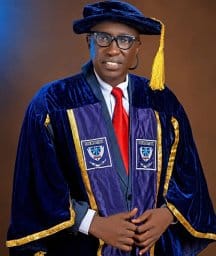
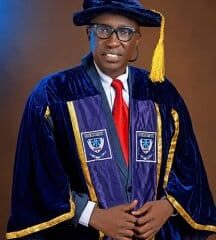
A Professor of Entrepreneurship and Corporate Strategy at the Federal University, Lokoja, John Alabi has called for more investment in the entrepreneurship/innovation sector to tackle Nigeria’s dwindling economy.
Professor Alabi who made the call while delivering the 46th Inaugural Lecture series of the University at its Felele Campus in Lokoja,on Wednesday, also stressed the need for government at all levels to prioritize investment in the sector to take care of the rising unemployment situation in Nigeria.
In his Lecture titled “Entrepreneurship Leadership through Entrepreneurial Education and Empowerment: Building an Entrepreneurial Economy in Vuca World” Professor Alabi advised that governments must provide enabling policies, universities must produce innovative graduates, industries must become active partners, financial institutions must support enterprise growth, and entrepreneurs themselves must embrace continuous learning, resilience, ethical leadership, and technological adaptation.
He explained that through entrepreneurial education and empowerment, nations can transform uncertainty into opportunity and build inclusive, resilient, and globally competitive economies.
“Governments should position entrepreneurship as a national development strategy rather than an employment intervention.
“Align entrepreneurship policies with national industrial and digital transformation agendas and investment in entrepreneurship ecosystems at federal, state, and local government levels.
“Building an entrepreneurial economy in a VUCA world requires more than increasing the number of entrepreneurs; it demands developing entrepreneurial leaders who can envision opportunities amid uncertainty, inspire innovation, mobilize resources, and create sustainable value
Professor Alabi also advocated that universities should focus on producing job creators rather than job seekers, establish functional entrepreneurship centres linked to industry, reward commercialization of research and innovation and encourage faculty-industry collaboration.
Other recommendations advanced by Professor Alabi includes, “Integration of entrepreneurship education across all levels of education, from primary to tertiary institutions.
“Shift from certificate-oriented learning to competency and problem-solving-based education.
“Promotion of interdisciplinary learning combining entrepreneurship, digital technology, leadership, and sustainability.
“Strengthen experiential learning through internships, incubators, business simulations, and enterprise projects.
“Developing a National Entrepreneurial Leadership Policy as well as establishment of a coordinated national framework for entrepreneurial leadership development.
“Encouragement of collaboration among government, academia, industry, and civil society”
In his welcome address, the Vice Chancellor of the Federal University, Lokoja, Professor Gbenga Ibileye gave an assurance that his administration would continue to encourage delivery of inaugural Lecture to ensure sustainability in the academic system.
Professor Ibileye said that the essence of the academic tradition is an opportunity for the academic staff to showcase their intellectual capacity in their field of study.
The Vice Chancellor described the topic of the lecture as timely and a welcome development that would go a long way in addressing the current economic reality in Nigeria.
He extolled Professor John Alabi, the Inaugural Lecturer, for his choice of contemporary topic that would add value to the people and the nation at large.

The Joint Admissions and Matriculation Board (JAMB) said its Central Admissions Processing System (CAPS) has been fully restored and is now operational after being unavailable for 96 hours.
The board made this known in its weekly Bulletin issued on Monday in Abuja.
It said the platform was restored on Sunday, Sept.
27, and urged tertiary institutions to speed up their admission processes to recover the time lost during the disruption.“The Board consequently urges all institutions to immediately accelerate their admission processes to recover the time lost during the period of the disruption and ensure compliance with the admission deadlines agreed at the 2026 Policy Meeting on Admissions,” it said.
It said the temporary unavailability of CAPS was caused by an administrative challenge involving its hosting organisation.
The board said it had worked with relevant service providers to restore the platform and ensure its stability.
It also apologised to candidates, institutions and other stakeholders for the inconvenience caused by the disruption.
“The Board sincerely regrets the inconvenience the temporary unavailability of the platform may have caused candidates, institutions and other stakeholders,” it said.
It said institutions should now intensify their admission processes, while candidates should promptly accept admission offers made to them.
It recalled that stakeholders at the 2026 Policy Meeting agreed that admissions for the 2026/2027 academic session should be concluded within specified deadlines.
According to the board, public universities are expected to conclude admissions on or before Oct. 31, private universities by Nov. 30, while other tertiary institutions have until Dec. 31.
“Consequently, all admissions for the 2026/2027 academic session are expected to be concluded by Dec. 31, 2026,” it said.
It particularly urged public universities to intensify their admission processes following the release of the 2026 Senior School Certificate Examination (SSCE) results by the National Examinations Council (NECO).
It said the development had provided institutions with the results needed to process more admissions before the Oct. 31 deadline.
“Following the release of the 2026 NECO results, the Board urges universities, especially public universities, to intensify admissions and meet the Oct. 31 deadline,” it said.
JAMB also advised candidates who had been waiting for their NECO results to immediately upload or verify their results on the appropriate platform.
It assured stakeholders that it would also speed up the consideration and approval of admission recommendations submitted by institutions through CAPS.
It said the Board was also working on measures to make CAPS more stable and reliable and reduce the impact of possible future disruptions.
It said the measures would include having alternative systems and arrangements to ensure that the admission process could continue if one hosting or service environment experienced problems.
“The Board remains committed to building systems that work reliably for the people we serve,” It said. (NAN)
From Dan Amasingha, Minna
The National Examinations Council (NECO) has released the results of the 2026 Senior School Certificate Examination (SSCE) Internal, with 804,948 candidates, representing 58.67 per cent of those who sat for the examination, obtaining at least five credits including English Language and Mathematics.
The figure represents a 1.
59 percentage-point decline from the 60.26 per cent recorded in 2025, when 818,492 candidates met the same benchmark.Announcing the results yesterday at the council’s headquarters in Minna, Niger State, NECO Registrar and Chief Executive, Prof.
Dantani Ibrahim Wushishi, said 1,378,048 candidates registered for the 2026 examination, comprising 682,352 males and 695,696 females.He said 1,371,992 candidates eventually sat for the examination, including 678,903 males and 693,089 females.
Wushishi, however, disclosed that the overall five-credit performance improved slightly, with 1,162,118 candidates, representing about 84.67 per cent, obtaining five credits and above irrespective of English Language and Mathematics.
The figure compares with 1,144,496 candidates, or 84.26 per cent, recorded under the same benchmark in 2025.
In absolute terms, the number of candidates who secured five credits including the two core subjects fell by 13,544, from 818,492 in 2025 to 804,948 in 2026. By contrast, the number who obtained five credits irrespective of English and Mathematics increased by 17,622.
The number of candidates who sat for the examination also rose by 13,653, from 1,358,339 in 2025 to 1,371,992 in 2026.
Malpractice records sharp decline
The council also reported a substantial reduction in examination malpractice, with 1,406 candidates implicated in various forms of malpractice in 2026, compared with 3,878 candidates in 2025.
The latest figure represents a 63.74 per cent decline from the previous year’s record. NECO had recorded 10,094 malpractice cases in 2024.
Wushishi attributed the reduction to improved examination processes, strengthened monitoring and collaboration with security agencies and other stakeholders.
He specifically acknowledged the support of the Nigeria Security and Civil Defence Corps and the Department of State Services, saying their involvement helped reinforce discipline, deter malpractice and safeguard the examination process.
Kano leads state figures
Kano State recorded the highest number of candidates who obtained five credits and above, including English Language and Mathematics, with 74,413 candidates.
Lagos followed with 72,496, while Oyo recorded 55,543 candidates under the same benchmark.
At the geopolitical-zone level, the Southwest accounted for the largest share of candidates with five credits and above irrespective of English and Mathematics, at 24.60 per cent. It was followed by the Northwest with 22.10 per cent, North Central with 19.00 per cent, Northeast with 14.70 per cent, South-South with 10.53 per cent and Southeast with 9.07 per cent.
The council also released separate state, geopolitical-zone and gender rankings based on the different performance benchmarks.
In the North Central, Benue led with 3.82 per cent, followed by Nasarawa with 3.66 per cent. Anambra led the Southeast with 2.92 per cent, ahead of Enugu with 2.14 per cent.
Rivers topped the South-South ranking with 3.03 per cent, followed by Edo with 2.17 per cent, Delta with 1.84 per cent, Akwa Ibom with 1.61 per cent and Cross River with 1.30 per cent.
Wushishi also disclosed that candidates at NECO examination centres in Saudi Arabia and Niger Republic recorded no candidate with five credits and above under the stated benchmark.
Exam held in Nigeria, six countries
The 2026 SSCE Internal examination was conducted from June 15 to July 23 across the 36 states, the Federal Capital Territory and six foreign countries—Benin Republic, Equatorial Guinea, Niger Republic, Côte d’Ivoire, Togo and Saudi Arabia.
The nationwide marking exercise was conducted between August 17 and September 4.
A total of 1,334 candidates with special needs participated in the examination, with the council maintaining that measures were put in place to promote inclusiveness.
Wushishi thanked the Federal Government, education authorities, the NECO Governing Board, National Assembly, security agencies, state governments, schools and other stakeholders for their support.
He declared the results released and said candidates could access them through the NECO website using their examination registration numbers.
The registrar urged candidates to remain focused on their academic pursuits, assuring stakeholders that the council would continue to uphold the credibility, fairness and integrity of its examinations.



Insecurity: FCTA Completes Ushafa, Saburi Divisional Police Headquarters, 10 Underway
ShareBy Laide Akinboade, Abuja In order to boost security, the Federal Capital Territory Administration (FCTA) on Wednesday said it has...

2027: I ‘ll Resign As Minister If Tinubu Loses FCT, Rivers – Wike
ShareBy Laide Akinboade, Abuja The Minister of the Federal Capital Territory (FCT), Nyesom Wike, has declared that he will step...

JAMB Extends Deadline for 2021–2025 Outstanding Admissions to Nov 30
ShareThe Joint Admissions and Matriculation Board (JAMB) has extended the deadline for candidates with outstanding admission offers from the 2021...

BIPC Board Inspects Taraku Mills Preparatory to Test Running
ShareFrom Attah Ede, Makurdi The Board of Directors of the Benue Investment and Property Company Limited (BIPC) has inspected the...


UBEC Renovates 287 Schools, over 4,000 Classrooms Nationwide
ShareThe Universal Basic Education Commission (UBEC) said it has renovated 287 schools and more than 4,000 classrooms across the country...


Nigeria at 66: FG Declares Thursday, Public Holiday
ShareThe Federal Government has declared Thursday as a public holiday to mark Nigeria’s 66th Independence Anniversary. The Minister of Interior,...

Tinubu Signs 2025 Budget Amendment Bill
ShareBy David Torough, Abuja President Bola Tinubu has signed the Appropriation (Amendment) (No. 4) Bill, 2025, extending the implementation period...

NAN Backs Insurance Sector’s Transformation Agenda, hails NAICOM
ShareBy Tony Obiechina, Abuja The National Association of Nigerian Students (NANS) National Secretariat, the umbrella body representing over 40.1 Million...

Don Calls for More Investment in Entrepreneurship/Innovation in Nigeria
ShareFrom Joseph Amedu, Lokoja A Professor of Entrepreneurship and Corporate Strategy at the Federal University, Lokoja, John Alabi has called...


Tinubu Submits NDDC 2026 Appropriation Bill
SharePresident Bola Tinubu has submitted the 2026 Statutory Budget Proposal of the Niger Delta Development Commission (NDDC) to the House...