
Business News
Buhari Orders Ajaokuta Steel Company Completion

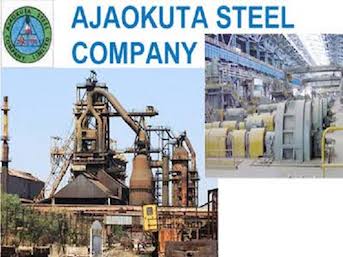
The 40-year-old moribund Ajaokuta Steel Company is at the verge of reincarnation as the Federal Government has given the Ministry of Mines and Steel Development, the marching order for the completion of the nearly moribund company.
The company, established in 1979 with a starting capital of $4.
6bn, was to run with 40 of the 43 plants at the facility having been hoped for a 98% completion in 1994.Having spent the capital over the years, the project now required another $400million before it could be completed and President Muhammadu Buhari, would not rest on his oases than to ensure the completion of the project in regulation time.
Minister of Mines and Steel Development Mr.
Olamilekan Adegbite, told newsmen that President Buhari has given marching orders to his ministry for the completion of Ajaokuta Steel Company.Adegbite disclosed this in Abuja, yesterday during an interactive session with newsmen on the proposed Nigerian solid minerals downstream workshop scheduled to hold December 2.
Speaking through his Special Adviser on Special Duty, Mr Sunny Ekozin, the minister said the ministry had been working ’round the clock to actualise the ‘presidential directives’.
“For the past three months, we have been doing everything possible to ensure we make progress and we are happy to let the nation know that the president has given us full backing in this assignment.
“The support given by the president include political backing to ensure that Ajaokuta works and by the grace of God it will work soon,” he said.
The minister also said part of the directives by Buhari was for the sector to solve long intractable problems bedeviling the solid minerals and to ensure Nigeria could rely on the sector to diversify its economy.
He said after articulating the problems for the past three months, the administration was on the path to harnessing the potential that abound in the minerals sector for the benefit of the people in the country.
Adegbite explained that one of the steps taken was the current process of developing the Nigerian Downstream Mineral Policy.
According to him, the policy is first of its kind in the history of the country.
“The downstream mineral policy will trigger the nation with a clear diversification blue print in a sustainable manner, especially for the revamping of Ajaokuta Steel Company.
“And also effective harnessing of the abundant minerals endowment spread across the 36 states and the Federal Capital Territory (FCT).
“As part of the process leading to the revamping of the entire solid minerals sector, we are sensitising key stakeholders, especially large investors of this novel initiative for the development of solid mineral downstream value chains.
“This will help to create massive jobs, wealth and industrialisation.”
Adegbite added that the ministry was determined and committed to ensuring that the president’s mandate was realised within the next three years.
He said that the present government would stem the exports of jobs and wealth by unwittingly exporting 35 million of unprocessed mineral products annually.
The minister pledged to open the sector to genuine indigenous and foreign investors to actively participate in the downstream licensing of mineral plants.
In a related development, the Federal Government also abolished the policy of catchment areas in admission of new students into federal government-owned universities.
The government threatened sanction any universities that contravened this decision.
It said the new policy would commence from 2020. President Muhammadu Buhari, who stated this at the 45th convocation ceremony of the University of Benin in Edo State, was represented by the Deputy Executive Secretary, National Universities Commission (NUC), Suleiman Yusuf.
He further directed all federal universities to ensure that every local government, all states and all geopolitical zones are represented in their admission of the new entrance.
Need to Review Zonal Intervention Projects
Meanwhile, participants at a two-day National Summit on Diminishing Corruption in the Public Sector, have alluded that the mode of payment and execution of the Zonal Intervention Projects (ZIP) involving Nigerian lawmakers are enmeshed in corruption and should be reviewed.
The two-day summit, which was organised by the Office of the Secretary to the Government of the Federation in collaboration with Independent Corrupt Practices and other related offences Commission (ICPC), had President Muhammadu Buhari in attendance among over 400 participants from government, civil society, and the media.
In his address, President Buhari lamented that there was little to show for over one trillion Naira budgeted for constituency projects of the National Assembly members in the last 10 years.
The zonal intervention projects in Nigeria were first introduced during the administration of former President Olusegun Obasanjo in 1999. It aims to ensure equity in the allocation of projects sited in the constituencies of state and federal lawmakers by various Ministries, Departments, and Agencies (MDAs) of government in the budgets of the federation or state.
In their communique issued after the summit, the participants urged that the projects be retained despite the challenges, saying, however, that transparency and accountability must be visible in the conception, planning, and implementation processes.
They also called for a robust sensitisation to ensure citizens engagement on the existence of ZIPs and their operation as they affect their local communities.
The participants further urged that the project sponsors must ensure due diligence and proper project costing with the executing agency before inserting a figure in the budget.
According to the communique, the ZIPs should only comprise physical infrastructure projects rather than soft projects such as empowerment which is heavily prone to corruption.
The participants, therefore, suggested the suspension of capacity-building constituency projects, and particularly the so-called “grants”, which they described as just free money without accountability, aside being difficult to track.



By Jennifer Enuma, Abuja
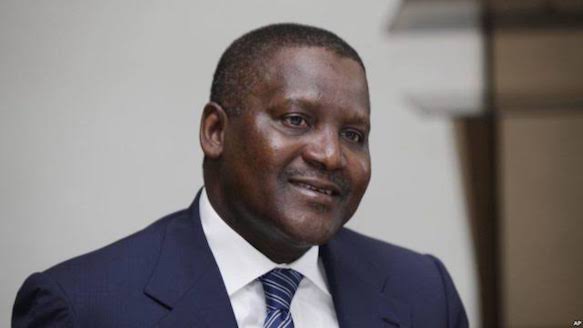
President Bola Tinubu has congratulated Alhaji Aliko Dangote, the President of Dangote Group, on his appointment to the World Bank’s Private Sector Investment Lab, a body tasked with promoting investment and job creation in emerging economies.
In a statement by Special Adviser on Media and Publicity, Bayo Onanauga, the President described the appointment as apt, given Dangote’s rich private sector experience, strategic investments, and many employment opportunities created through his Dangote Group.
The Dangote Group became one of Africa’s leading conglomerates through innovation and continuous investment.
Dangote Group’s business interests span cement, fertiliser, salt, sugar, oil, and gas. However, the $20 billion Dangote Petroleum Refinery and Petrochemicals remains Africa’s most daring project and most significant single private investment.
“President Tinubu urges Dangote to bring to bear on the World Bank appointment his transformative ideas and initiatives to impact the emerging markets across the world fully” the statement said.

The World Bank announced Dangote’s appointment on Wednesday, as part of a broader expansion of its Private Sector Investment Lab. The lab now enters a new phase aimed at scaling up solutions to attract private capital and create jobs in the developing world.
The CEO of Bayer AG, Bill Anderson, the Chair of Bharti Enterprises, Sunil Bharti Mittal, and the President and CEO of Hyatt Hotels Corporation, Mark Hoplamazian, are on the Private Sector Investment Lab with Dangote.
The World Bank said the expanded membership brings together business leaders with proven track records in generating employment in developing economies, supporting the Bank’s focus on job creation as a central pillar of global development.
By Joel Oladele, Abuja
The Nigeria Customs Service (NSC) has generated an impressive N1,751,502,252,298.05 in revenue during the first quarter of 2025.
The Comptroller-General (CG) of the Service, Bashir Adeniyi, disclosed this yesterday, during a press briefing in Abuja.
According to Adeniyi, the achievement not only surpasses the quarterly target but also marks a substantial increase compared to the same period last year, reflecting the effectiveness of recent reforms and the dedication of customs officers across the nation.
“This first quarter of 2025 has seen our officers working tirelessly at borders and ports across the nation.
I’m proud to report we’ve made real progress on multiple fronts—from increasing revenue collections to intercepting dangerous shipments,” Adeniyi stated.He attributed this success to the reforms initiated under President Bola Tinubu’s administration and the guidance of the Honourable Minister of Finance and Coordinating Minister of the Economy, Olawale Edun.
The CG noted that the revenue collection for Q1 2025 exceeded the quarterly benchmark of N1,645,000,000,000.00 by N106.5 billion, achieving 106.47% of the target. This performance represents a remarkable 29.96% increase compared to the N1,347,705,251,658.31 collected in Q1 2024.
Adeniyi highlighted the month-by-month growth, noting that January’s collection of N647,880,245,243.67 surpassed its target by 18.12%, while February and March also showed positive trends.
“I’m pleased to report the Service’s revenue collection for Q1 2025 totaled N1,751,502,252,298.05.
“Against our annual target of N6,580,000,000,000.00, the first quarter’s proportional benchmark stood at N1,645,000,000,000.00. I’m proud to announce we’ve exceeded this target by N106.5 billion, achieving 106.47% of our quarterly projection. This outstanding performance represents a substantial 29.96% increase compared to the same period in 2024, where we collected N1,347,705,251,658.31.
“Our month-by-month analysis reveals even more encouraging details of this growth trajectory,” Adeniyi said.
In addition to revenue collection, Adeniyi said the NCS maintained robust anti-smuggling operations, recording 298 seizures with a total Duty Paid Value (DPV) of ₦7,698,557,347.67.
He stated that rice was the most seized commodity, with 135,474 bags intercepted, followed by petroleum products and narcotics.
“From rice to wildlife, these seizures show our targeted approach,” Adeniyi remarked, noting the NCS’s commitment to combating smuggling and protecting national revenue.
Adeniyi also highlighted key initiatives, including the expansion of the B’Odogwu customs clearance platform and the launch of the Authorized Economic Operators Programme, which aims to streamline processes for compliant businesses. The NCS’s Corporate Social Responsibility Programme, “Customs Cares,” was also launched, focusing on education, health, and environmental sustainability.
Despite these achievements, the CG noted that the NCS faced challenges, including exchange rate volatility and non-compliance issues. Adeniyi acknowledged the need for ongoing adaptation and collaboration with stakeholders to address these challenges effectively.
Looking ahead, the NCS aims to continue its modernization efforts and enhance service delivery, ensuring that it remains a critical institution in Nigeria’s economic and security landscape.
“Results speak louder than plans; faster clearances through B’Odogwu, trusted traders in the AEO program, and measurable food price relief from our exemptions. We’ll keep scaling what works,” he concluded.
 |
By Tony Obiechina Abuja
The Nigeria Sovereign Investment Authority (NSIA) yesterday disclosed that its net assets grew from N156bn in 2013 to N4.35 trillion in 2024.
Similarly, the Authority has remained profitable for 12 consecutive years, leading to cumulative retained earnings of N3.
74 trillion in 2024.Managing Director and Chief Executive Officer of NSIA, Aminu Umar- Sadiq made these disclosures at a media engagement in Abuja, highlighting its audited financial results for the 2024 fiscal year.
According to him, the results underscored the resilience of the authority’s investment strategy and the strength of its earnings, driven by a well-diversified revenue base and robust risk management practices, despite a challenging global macroeconomic and geopolitical environment.
Total operating profits, excluding share of profits from associates and Joint Venture (JV) entities, increased from N1.17 trillion in 2023 to N1.86 trillion in 2024, driven by the strong performance of
NSIA’s diversified investment portfolio, infrastructure assets, gains from foreign exchange movements, and derivative valuations.
In addition, Total Comprehensive Income (TCI), inclusive of share of profits from associates and JV entities, reached N1.89 trillion in 2024, reflecting a 59 per cent increase from N1.18 trillion in 2023.
Core TCI (excluding foreign exchange and derivative valuation gains) rose by 148 per cent to N407.9 billion in 2024 compared to N164.7 billion in 2023, supported by robust returns on financial assets measured at fair value through profit and loss, including collateralised securities, private equity, hedge funds, and Exchange-Traded Funds (ETFs).
Umar-Sadiq said the authority’s outstanding financial performance in 2024 reflected the “strength of our strategic vision, disciplined execution and unwavering commitment to sustainable socio-economic advancement.”
He said, “By leveraging innovation, strategic partnerships and sound risk management, we have not only delivered strong returns but also created value for our stakeholders
“As we move forward, we remain focused on driving economic transformation, expanding opportunities, scaling transformative impact and ensuring long-term prosperity for current and future generations of Nigerians.”
The CEO reaffirmed the authority’s commitment to managing the country’s SWF, and delivering the mandates enshrined in the NSIA Act.
He said NSIA remained poised to continually create long-term value for its stakeholders by delivering excellent risk-adjusted financial results, developing a healthy and well-diversified portfolio of assets and large-scale infrastructure projects, and enhancing the desired social outcomes.
He noted that NSIA was committed to its mandate of prudent management and investment of Nigeria’s sovereign wealth.
“In adherence to its Establishment Act, NSIA prioritises transparency, disclosure, and effective communication with all stakeholders and counterparties,” he said.
He pointed out that in the year under review, a new board, led by Olusegun Ogunsanya as Chairman, was appointed by President Bola Tinubu, in accordance with the provisions of the NSIA Act.
The new board will provide strategic direction and oversight, in addition to playing a pivotal role in critical decision making.
He remarked that under the guidance of the Board, the Authority will retain focus on its primary mandate of creating shared value for all stakeholders based on its continued adoption of corporate governance practices.
“NSIA prides itself an investment institution of the federation established to manage funds in excess of budgeted oil revenues and its mission is to play a pivotal role in driving sustained economic development for the benefit of all Nigerians through building a savings base for the Nigerian people, enhancing the development of the county’s infrastructure, and providing stabilisation support in times of economic misadventure,” he added.

Nigeria Clinches Bronze in Judo at 4th African Youth Games
ShareTeam Nigeria clinched a bronze medal in judo at the ongoing 4th African Youth Games after winning the 63kg category bout against Zimbabwe. The...
NCDMB Set to Attain 100 Per Cent Local Content in Africa
ShareBy Eddy Ochigbo, Abuja The Nigerian Content Development Management Board (NCDMB) has reaffirmed its determination to increase the current from...


Trump Expands US Travel Ban to Five More Countries
SharePresident Donald Trump has expanded a US travel ban, barring nationals of five additional countries and people travelling on Palestinian Authority-issued documents from entering the US. The White...


Farouk Ahmed, Gbenga Komolafe Resign after Dangote Petition
ShareBy Eze Okechukwu, Abuja President Bola Tinubu has nominated new chief executives for Nigeria’s two foremost petroleum regulatory agencies following the resignation...

NLC Stages Nationwide Strike over Insecurity
ShareLabour Takes Nationwide Protest to Streets over Insecurity The Nigeria Labour Congress (NLC) yesterday led a nationwide protest across major...

Presidency Transmits N43.5trn 2026 Appropriation Bill to Reps
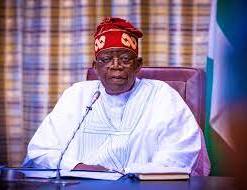
SharePresident Bola Tinubu yesterday, transmitted the appropriation (Repeal and Re-enactment Bill 2024/2025 bill to the House of Representatives for consideration and expected approval...

SMEDAN Unveils MSMEs New Policy in 2026, Targets Funding Expansion
ShareThe Small and Medium Enterprises Development Agency of Nigeria (SMEDAN) said it will deepen business formalisation, expand access to affordable financing and unveil a new national MSMEs policy in 2026....


NCDMB set to Attain 100% Local Content in Africa
ShareBy Eddy Ochigbo The Nigerian Content Development Management Board (NCDMB) has reaffirmed its determination to increase the current from 56%...

The Man Rotimi Makinde: A True Progressive by All Standards
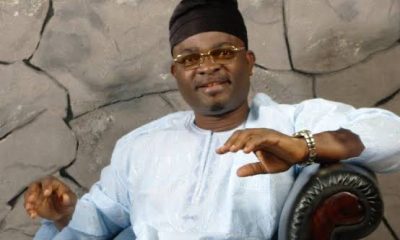
ShareBy Kolapo Ogundare It is impressive to note that many well-meaning Nigerians are now coming out, recounting several good deeds...
FG, NBS Launch Nationwide MICS7 Survey
ShareFrom Francis Sadhere, Delta The Federal Government of Nigeria, through the National Bureau of Statistics (NBS), has officially launched the...