
NEWS
Buhari Visits IDPs’ Camp, Laments Rising Security Threats


By Mathew Dadiya, Abuja
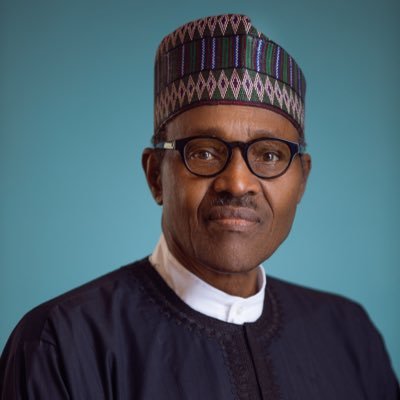
President Muhammadu Buhari Wednesday, expressed worry over the rising level of insecurity globally, noting that only local, sub-regional and regional alliances will curb the spread of violence.
The President spoke when he visited the Internally Displaced Persons (IDPs) in Batsari Local Government Council, Katsina State.
He assured all victims of banditry attacks that the Federal Government will deploy security measures and strengthen operations to safeguard lives and property, warning that perpetrators will not go unpunished.
He stated that he had earlier sent a top military assessment team based on the reports on the security situation in the state and had directed massive deployment of security personnel and military hardware, urging citizens to support the security agencies.
Speaking to Internally Displaced Persons (IDP), drawn from seven local governments that were affected in Katsina at Basari council secretariat, the President said that the Federal Government was fully aware of the plight of citizens and will remain focused on delivering on its mandate of securing the lives of citizens.
He said: “I am very sad that the consequences of these actions have brought hardship and affected the socio-economic life of our people in the localities.
”Agriculture, which is the mainstay of the economy and the source of livelihood is worse affected.
“I would like to assure you that the Federal Government is fully aware of your situation as I receive daily reports from security agencies and the Governor, Aminu Bello Masari, who personally visited and briefed me on the killings and wanton destruction by the armed bandits not only in Katsina but in other states as well.
“Let me assure all and sundry that the protection of lives and property of the citizenry is the prime essence of government. We shall be focused and determined to protect our citizens.’’
While commending the government of Katsina State for supporting security agencies and facilitating some of their operations, President Buhari said he had directed service chiefs in a meeting last week to completely re-strategize operations and reposition for optimum results.
Buhari appreciated the interventions of the First Lady, Aisha Buhari, and her foundation in providing succour to those affected by banditry attacks, also listing Alhaji Aliko Dangote, Alhaji Dahiru Mangal and a bank, Stanbic IBTC, National Commission for Refugees and Displaced Persons and other philanthropic organisations.
President Buhari directed the National Emergency Management Agency (NEMA) to act fast and extend support to the victims in the affected frontline local councils.
The President, who called for more patience and forbearance, went round to condole with IDPs.
In his remark, Governor Masari expressed appreciation for the President’s visit and the quick response of the military in providing reinforcement that had drastically reduced incidents of theft, kidnapping, banditry and cattle rustling.
He said that some attacks were still recorded because of the vastness of the Rugu forest that provides cover for criminals.
The Emir of Katsina, Dr Abdulmumini Kabir Usman, advised citizens against reprisal attacks which could lead to anarchy.
The Emir called for more patience and tolerance as security agencies tackle those against the progress of the state.








The Inspector General of Police (I-G), Kayode Egbetokun, on Tuesday, began a three-day working visit to Ogun, with an approval for creation of additional area commands in Ifo, Imeko and Idi-Iroko areas of the state.
Reports says that Egbetokun arrived the command’s headquarters at Eleweran in Abeokuta, in the company of the Assistant Inspector General (AIG), Zone ll, Olatoye Durosimi and the Commissioner of Police in the state, Abiodun Alamutu.
While addressing stakeholders and the rank-and-file of the police, Egbetokun charged officers of the command to step up their efforts at fighting crime in the state.
He, however, called for more support for the police to enable them effectively combat crime in the state.
“I have heard your request for an area command in Ifo and that request is hereby granted.
“We are not, however, going to stop at creating an area command in Ifo, we will also create two area commands in the two border areas of Idi-Iroko and Imeko.
“On the issue of manpower, lack of vehicles and operational logistics for Ogun command, I have whispered to the CP that he should give me the list of all the needs of the command and we are going to pay attention to all of them.
“Whatever that we need to do to stop kidnapping in Ogun state, we are going to do it. The fact that there are few crimes being committed here and there does not affect the peaceful status of Ogun state,” he said.
Earlier in his remarks, Alamutu noted that Ogun remains one of the safest states in Nigeria in spite of its fair share of security challenges.
Alamutu expressed optimism that the I-G’s visit would re-energise the officers and men for better service delivery.
He promised that men and officers of the Ogun command would remain loyal and committed to the ideals and vision of the force.
NAN reports that Egbetokun , thereafter, inaugurated the newly built Main Office, the Technical Intelligence Unit and the Complaints Unit within the premises of the command.
The I-G is also expected to visit the four paramount rulers of Egba, Ijebu, Remo and Yewa on his three-day visit to the state. (NAN)

The Abia State Harmonized Task Force (ASHTF), Aba Zone, on Tuesday began the enforcement of the law against street trading, illegal parking, indiscriminate dumping of refuse and environmental nuisance.
The Aba zone team, led by Chief Uche Wogu, the Transitional Chairman of Aba South Local Government Area, began the enforcement from Bata Junction down to Aba Main Park.
The enforcement also continued throughout the entire city centre, after two weeks of sensitisation.
Addressing newsmen during the exercise, Chief Wogu said that ASHTF would ensure that all wrong methods of enforcement were eliminated from the system.
“What will change is that nothing will be business as usual as there are massive reorientation of the mentality of the people of this town.
“In the past, you had all sorts of people in the task force doing things recklessly but now, we believe in the rule of law.
“You see people jumping into vehicles, causing accidents and all manner of things. ASHTF has six zones, two in Umuahia, and four in Aba and each zone has Mobile Courts attached to them.
“We have four mobile courts in Aba and when anybody defaults, we would all make use of the mobile courts and the court will issue the penalty charges.
Wogu said that each offence had its penalty and any offence that had a cash payment had to be paid into the single treasury account.
Prince Emmanuel Ahumibe, the Coordinator of ASHTF, Aba Zone-B, has also assured residents that there would be no harassment of any sort.
Ahumibe added that ASHTF was a task force with a difference that would do its job with human face, sensitisation and civil enforcement.
“We will use the mobile courts adequately to ensure that road obstruction, illegal parking, street trading and too many other things were eliminated,” Ahumibe assured. (NAN)

The Federal Competition and Consumer Protection Commission (FCCPC) says it will intensify monitoring and enforcement in formal and informal markets to ensure that business owners do not unfairly inflate prices.
Dr Adamu Abdullahi, the Acting Executive Vice Chairman of the Commission, was reacting to complaints by consumers that in spite of the appreciation of the Naira against the dollar, prices of goods were still increasing.
Abdullahi said in a statement in Abuja on Tuesday, that the situation was unacceptable, and the Commission was committed to protecting consumers from exploitation.
He said that the operatives of FCCPC would work with trade associations, farmer groups, and other stakeholders to combat price-fixing, and dismantle cartels.
This, according to Abdullahi, will encourage increased competition and ultimately lead to lower prices for consumers.
”The FCCPC understands the significant financial strain these rising prices are placing on Nigerian households. As a result, the Commission is taking proactive steps to addressing this issue.
”While the FCCPC cannot directly regulate prices, the Commission will utilise its existing legal framework to enforce fair competition and consumer protection provisions.
”This includes monitoring and investigating unusual price hikes, addressing complaints filed by consumers, and taking action against any businesses found to be engaging in anti-competitive practices such as price-fixing, price gouging or cartel formation.
”The Commission remains committed to educating consumers about their rights and empowering them to make informed choices.
”We will engage in advocacy and public awareness campaigns to raise awareness about price gouging and other unfair trade practices and provide guidance on how to identify and report such practices.
”We will collaborate with relevant regulatory bodies to develop a comprehensive and coordinated response to anti-competitive practices, price gouging, and other consumer protection issues,” he said.
He encouraged consumers to continue to report suspected price gouging and other unfair trade practices through contact@fccpc.gov.ng.
”Together, we can work towards a more stable, fair, and competitive marketplace for all Nigerians.” (NAN)


I-G visits Ogun, Approves Area Commands for Ifo, Imeko, Idi-Iroko
ShareThe Inspector General of Police (I-G), Kayode Egbetokun, on Tuesday, began a three-day working visit to Ogun, with an approval...

Abia Govt. Declares War Against Indiscipline, Task Force Enters Streets
Share The Abia State Harmonized Task Force (ASHTF), Aba Zone, on Tuesday began the enforcement of the law against street...


Seplat Energy Pays $2bn Tax to FG in 10 Years
ShareSeplat Energy, an independent indigenous energy company, on Tuesday, said it had paid two billion dollars tax contribution to the...
Naira Appreciation: FCCPC Intensifies Enforcements to Discourage Unfair Price Hike
Share The Federal Competition and Consumer Protection Commission (FCCPC) says it will intensify monitoring and enforcement in formal and informal...

Police Arrest Enugu Resident with Fake Naira Notes
ShareThe Police Command in Enugu State has arrested an Enugu resident, one Mmaduabuchi Okonkwo, 24, suspected to be in possession...


Lagos to Extend Blue Rail Line to Agbara in Ogun
ShareThe Lagos State Government is currently in discussions with the Ogun government to extend the Blue Rail Line further down...

We Shall Return to Aso Villa in 2027 – PDP Reps Caucus Says
Share The Peoples Democratic Party (PDP) caucus in the House of Represebtatives says it must regain the presidency it lost...
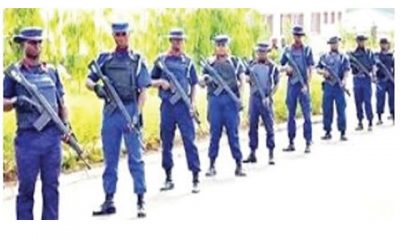

NSCDC Official Calls for Increased Vigilance to Enhance Security
ShareUmar Mohammed, the Kwara Commandant of Nigeria Security and Civil Defence Corps (NSCDC), on Tuesday in Ibadan called for an...

Mbappe says Winning Champions League Matter of Pride
Share Paris St Germain’s Kylian Mbappe has said that helping his hometown club to finally win their first Champions League...


Mbah Charges FRSC on Safer Roads, Stricter Compliance with Traffic Laws
ShareFrom Sylvia Udegbunam, EnuguEnugu State’s commitment to safer roads and enhanced traffic compliance received a significant boost as Governor Peter...